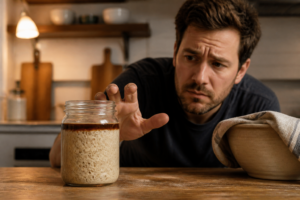
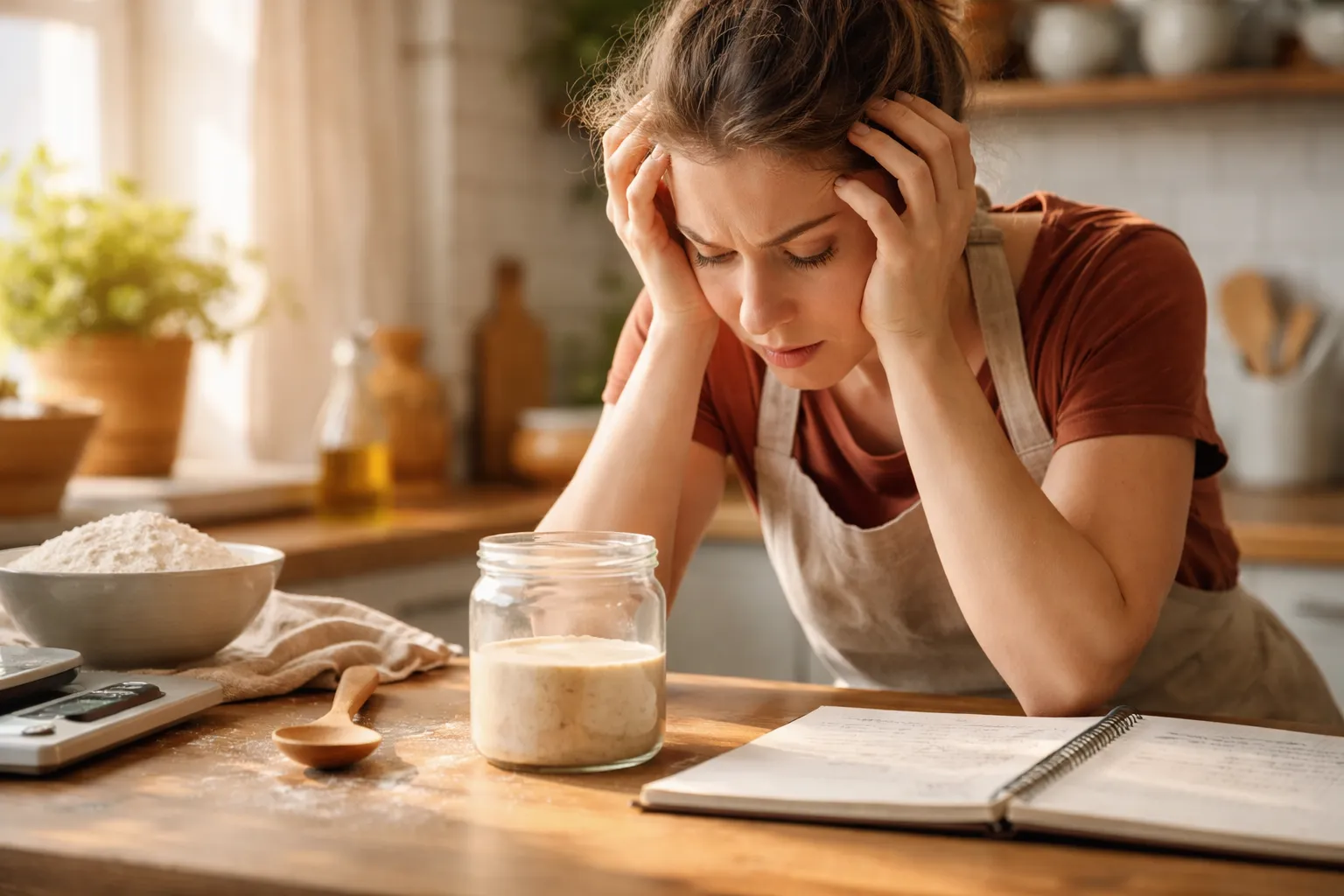
A brutal cold snap had locked onto my kitchen that January, and by day fourteen it had quietly exposed the real problem. The jar sitting on my counter looked like slightly lumpy paste — no bubbles, no dome, nothing that resembled life. Sourdough starter won’t rise, I typed into Google for what had to be the hundredth time, flour still dusted across my knuckles, a half-empty bag of all-purpose slumped on the counter beside me, and one nagging question circling my head: maybe I just didn’t have what it took for this.
I’d been religious about feeding that starter for a full two weeks straight. I spoke to it out loud. I gave it a name — Harold, since you’re asking. And Harold, plainly, had zero interest in playing along.
If any of that sounds familiar — the exhaustion, the confusion, the growing temptation to just grab a loaf from the grocery store and call it a day — keep reading. I’m laying out my entire three-week diagnosis diary here: every mistake I was making without realizing it, plus the exact changes that finally pulled Harold back from the brink. Spoiler alert — he’s flourishing these days, and yours can get there too.
| Problem | Temperature Range | Yeast Activity |
|---|---|---|
| Above 70°F | 70°F+ | Active |
| Slowed activity | Under 70°F | Slows down considerably |
| Shutdown | Below 65°F | More or less shuts off entirely |
| Author’s kitchen (winter) | 58–62°F | No activity for two weeks |
Week One: A Hopeful Start That Quietly Fell Apart
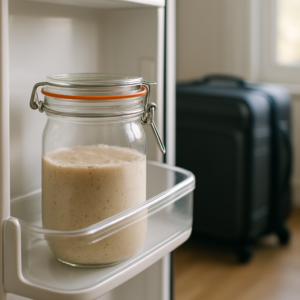
Like most people diving into this hobby, I kicked things off brimming with confidence and a freshly printed feeding chart pulled from some baking blog. Day one felt easy enough — flour and water mixed together, a cloth draped over the jar, the whole thing perched on top of my fridge because I’d read that spot ran warm. I felt like I’d officially joined the club.
Then came days two through seven, and barely a bubble showed up. A thin layer of liquid collected on top — hooch, as I’d later learn to call it — accompanied by an aroma somewhere between a gym bag and spoiled vinegar. Still, I kept feeding it, telling myself stubbornness would eventually pay off.
What I had no clue about at the time was that I was stacking up at least three separate mistakes all at once.
- The water was way too chilly. My kitchen tap runs about 58°F during winter months. Wild yeast slows down considerably under 70°F, and it more or less shuts off entirely below 65°F. I hadn’t put that together.
- The flour barely had any protein in it. I’d grabbed a generic all-purpose bag that had been sitting on my shelf forever. Low-protein flour just doesn’t give the yeast much fuel.
- My proportions were a mess. I was doing 1:1:1 starter-flour-water by volume rather than weight, so my measurements shifted unpredictably every single feeding.
None of that had clicked yet, though. All I knew was Harold refused to budge, and I was starting to take it personally.
Week Two: Falling Into the Sourdough-Starter-Won’t-Rise Forum Vortex
By the second week, I’d burned through something like forty YouTube videos, joined two separate sourdough Facebook groups, and opened a notes app file bluntly titled “Harold Problems.” The volume of contradictory advice out there was almost comical. Feed it twice daily, some said; once is plenty, said others. Whole wheat, rye, bread flour only — pick your camp. One commenter suggested parking it near a lit candle for extra warmth, an idea I skipped entirely because it sounded like a home-insurance claim waiting to happen.
Underneath all that chaos, though, a couple of patterns kept surfacing, and they both traced back to the same two suspects: temperature and flour quality.
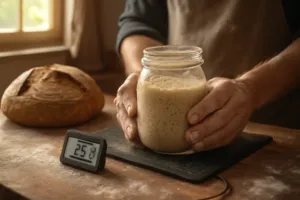
That is when I bought my first instant-read thermometer, and honestly it changed everything. I had been guessing at the temperature of my water and my kitchen environment this entire time. Guessing! With fermentation! I picked up the TempPro TP02S Digital Food Thermometer, which has a long probe that is perfect for checking water temperature right in the measuring cup. I started using it religiously. I also grabbed the 0.5 Sec Instant Read Meat Thermometer as a backup to keep near my starter station so I could check ambient temperature without walking across the kitchen every time.
The realization stung a little. My kitchen counter was hovering at 64°F that winter. The fridge top I’d assumed was cozy was actually sitting at 62°F. Without ever intending to, I’d been cold-fermenting Harold for a solid two weeks. No mystery why he wasn’t budging.
How a Simple Thermometer Exposed My Too-Cold Starter Problem
For two entire weeks I assumed the worst — that my starter was dead or permanently broken — when the real issue was just its location, a spot that never crept past 62°F. A five-dollar kitchen thermometer would have handed me that answer on day two, not day fourteen.
What works
- The probe gives you a reliable reading within seconds — no more guessing whether that “cozy corner” is actually warm enough for fermentation or just wishful thinking on your part.
- The backlit LCD lets you check numbers at odd hours without flipping on a light or waking anyone up, and it’s actually readable in dim kitchen conditions — my old analog dial never managed that.
- It completely reshaped how I understood my starter — once I confirmed my kitchen sat between 58–62°F, I relocated the jar somewhere warmer and saw real activity inside 48 hours, sparing me weeks of unnecessary doubt.
What doesn’t
- The probe itself is fairly slender and bends easily if you’re rough with it — I’ve come close to snapping mine by jamming it into cold starter harder than necessary.
- It needs a beat or two to settle on a final number — not the instant readout the name implies — so rushing it means you might trust an early number that isn’t quite right yet.
I almost returned it after a week because I was frustrated that I couldn’t use it to troubleshoot my proofing box temperature fluctuations, but then I realized the real problem was the thermometer’s limitations, not the thermometer itself—it’s built for quick spot-checks, not logging data. That said, for nailing starter temperature and knowing exactly why your fermentation is stalling, grab the TempPro TP02S Digital Food Thermometer.
Frequently Asked Questions
Why won’t my sourdough starter rise in winter?
Cold temperature is likely the culprit. Wild yeast slows down considerably under 70°F and more or less shuts off entirely below 65°F. Sam’s kitchen counter hovered at 64°F during a cold snap, and his starter didn’t show real activity until he relocated it somewhere warmer. An instant-read thermometer revealed the problem within seconds.
What’s the best flour for feeding a starter?
Higher-protein flour works better than generic all-purpose. Sam’s starter Harold wasn’t rising partly because he’d grabbed a generic all-purpose bag with barely any protein in it. Low-protein flour doesn’t give yeast much fuel. Switching to better flour, combined with fixing temperature issues, helped Harold recover.
Should I measure starter feedings by volume or weight?
Weight is more reliable than volume. Sam was using 1:1:1 starter-flour-water by volume, which meant his measurements shifted unpredictably every feeding. Switching to weight-based proportions eliminated that guesswork and helped him maintain consistent feedings for his starter Harold.
How quickly does an instant read thermometer work?
The TempPro TP02S gives a reliable reading within seconds, though it needs a beat or two to settle on a final number rather than being truly instant. Sam found it perfect for checking water temperature in a measuring cup or ambient kitchen temperature, transforming his understanding of why Harold wasn’t fermenting properly.
About This Article

Written by Sam Whitaker. Sam Whitaker has been baking sourdough for over a decade, including three years baking commercially, and now works out of a home kitchen in the Pacific Northwest. Sam's eleven-year-old starter, Harold, is the foundation for every recipe and troubleshooting guide on Sourdough Rising — real bread tested over and over until it works. More about this site.
Scope and limits. Sam is a home baker with no formal culinary training. Follow current food safety guidance for storage and handling, particularly with enriched or filled doughs.
Verify this against a primary source
Specifics change, and your situation may differ from the one described here. These are the authorities worth checking directly:
- USDA FoodData Central — flour and ingredient composition data
- FoodSafety.gov — safe handling and storage