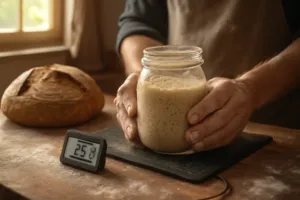
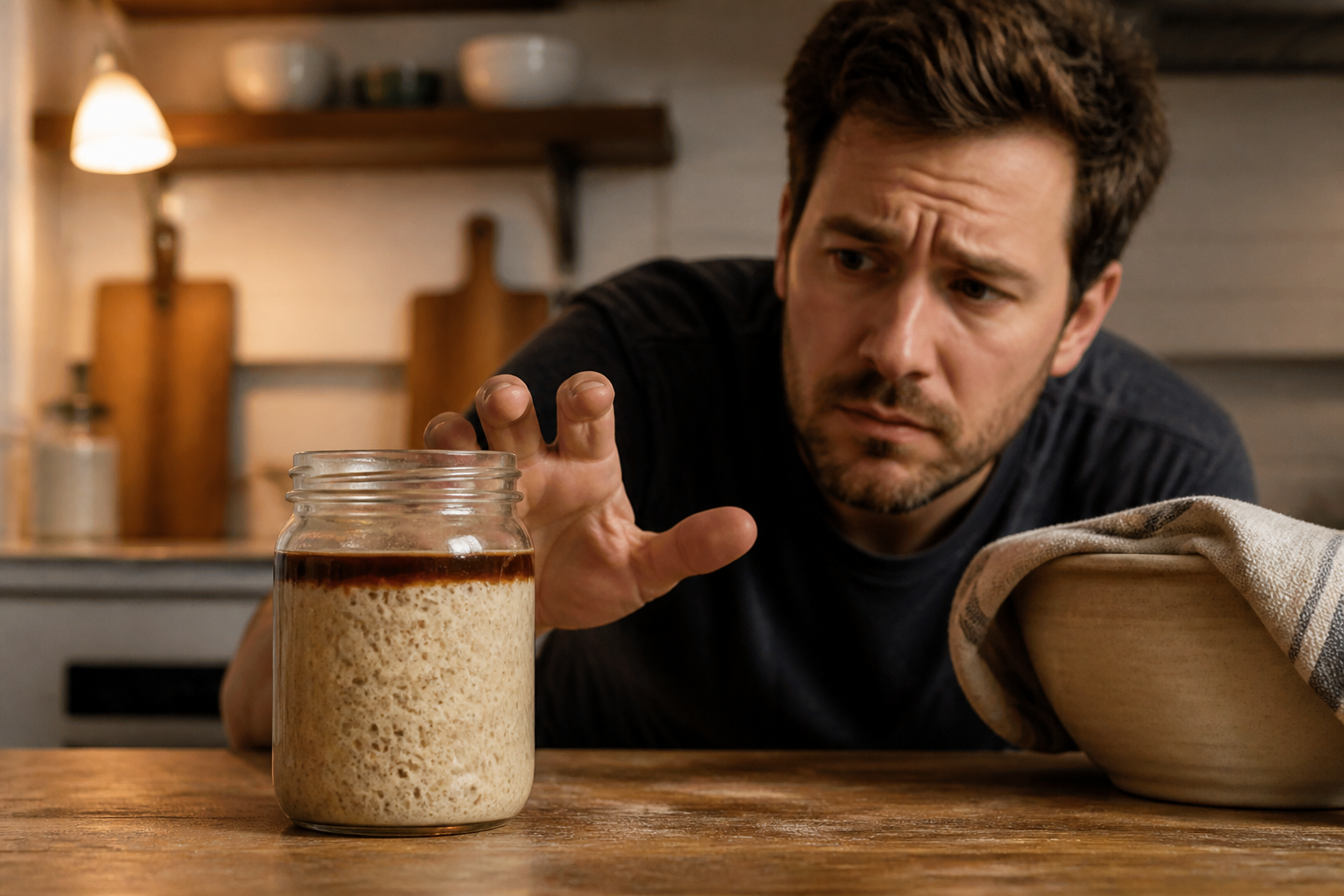
That back corner of my counter, right next to the old proofing box I built during my microbakery years, is where Harold’s jar has lived for as long as I can remember. My husband wandered past one morning, leaned down out of habit for a whiff, and snapped his head back like he’d just inhaled paint thinner straight from the can. His eyes watered. He took two full steps backward, dead certain something in our kitchen had gone catastrophically wrong.
“Relax, that’s just hooch,” I told him, trying not to laugh at how spooked he looked. Truth is, I couldn’t have explained what hooch actually was if he’d pressed me on it. I’d watched that brownish film sit on top of my starter dozens of times across my baking years and never once dug into why it showed up or why it smelled like someone had cracked open a bottle of nail polish remover in a sealed jar. Brushing off that question almost cost me a whole batch during the stretch when I was cranking out big weekend orders for neighbors, and figuring out the answer turned into one of the more useful things I’ve learned at the bench.
| Hooch Handling Option | Best Timing | Effect on Starter |
|---|---|---|
| Fold it back in | Most days; within 1-2 hours of feeding | Reintroduces flavor compounds, wild yeast, bacteria |
| Pour it off | Right before a scheduled feeding | No harm to culture |
| Use as fermentation booster | Add 1-2 tablespoons to dough | Kicks fermentation into higher gear, builds complex flavor |
So What Exactly Is This Hooch Sitting on Your Starter?
Here’s the reassuring part first: that odd liquid pooling on your sourdough starter hooch isn’t mold, it isn’t spoilage, and it’s nothing to lose sleep over. It’s a totally ordinary side effect of fermentation doing its job, and once the mechanism clicks, you’ll never eye it with dread again.
Hooch is a mix of alcohol and water that pulls away from your starter once the wild yeast and bacteria have burned through their food supply. In plain terms: your starter is home to a living population of Saccharomyces cerevisiae (that’s the wild yeast) plus Lactobacillus (the lactic acid bacteria). Feed your starter, and this crew goes to work devouring the flour and water you just handed them, kicking out alcohol and carbon dioxide as they go. Leave that same starter unfed for several days, though, and the microorganisms run out of things to eat, alcohol keeps building as a byproduct of their labor, and eventually that liquid rises up and separates, forming a visible layer on top of the denser starter beneath it.
That sharp, chemical odor? Straight-up alcohol. It’s strong, it’s unmistakable, and yes, it really does read as nail polish remover to anyone’s nose. The longer a starter goes without a feeding, the more hooch pools up and the more intense that smell becomes. Looking back, my husband’s reaction was entirely fair.
Why That Hooch Smell Gets So Sharp
The odor ramps up the longer a starter sits neglected, and I really clocked this during the years I had several starters running at once for heavy weekend baking. I figured I could get away with feeding them all on a once-a-week rhythm to save time. Ten days into that experiment, I’d crack open my fermentation cabinet and immediately question whether cleaning supplies had somehow ended up stored next to my flour bin.
A stronger smell simply means a higher concentration of alcohol. The yeast has been putting in overtime, and the starter has sat long enough for that alcohol to build up and start evaporating into the air around it. A hooch that smells mild, fruity, or a bit tangy tells you your starter hasn’t been ignored for too long. But if opening that jar feels like walking into a nail salon, your starter has been hungry, and hungry for a while.
What took me a while to appreciate: this is your starter’s own way of talking to you. That smell isn’t a warning of failure — it’s a request. It’s telling you, in the only language it has, that it’s time to feed it. Now.
Handling Sourdough Starter Hooch: Your Real Options
This is where things get interesting for me personally. Deep into my busiest weekend-baking stretch, I was juggling eight separate starter jars, each on its own feeding rhythm. One Thursday I popped open the cabinet and found one jar practically floating in hooch — the liquid layer had to be close to half an inch deep. My gut reaction was to panic and pour the whole thing out, assuming I’d ruined it.
Instead of dumping it, I finally did the thing I should have done ages earlier: I actually looked into what that liquid was good for.
What I found rewired how I think about it entirely. There are three legitimate paths forward, and what looked like a mess turned out to be something I could actually use.
Option 1: Fold It Right Back In (The Low-Effort Move)
The easiest move is to just stir that hooch back into the starter. For most bakers, most days, this is the right call. That liquid is loaded with flavor compounds along with wild yeast and bacteria that matter to your starter’s character, so folding it back in reintroduces all of that. The alcohol level is far too low to cause any harm, and honestly, it deepens the flavor profile your sourdough ends up with.
I’d guess I do this roughly 80% of the time, especially when a feeding is already coming up within the hour or two anyway. It’s the low-friction choice, and frankly it’s the correct one in most situations.
Option 2: Pour It Off (The Quick Fix)
When you’re pressed for time, or the smell is just too much to deal with, pouring the hooch off and tossing it is completely fine. This works especially well right before a scheduled feeding — drain it, feed as usual, and carry on with your day. Your culture won’t suffer for it one bit. That liquid isn’t what’s keeping your starter alive; it’s simply a leftover from the fermentation process.
Option 3: Repurpose It as a Fermentation Boost (My Go-To Trick)
This is the option that genuinely changed how I bake. That hooch is essentially a concentrated shot of your wild yeast and bacteria in liquid form. So when a dough needs a little more push, stirring a tablespoon or two of hooch into it kicks fermentation into a higher gear and builds noticeably more complex flavor.
Back during those heavy weekend-baking years, I got into the habit of skimming the clearest hooch off my starters and using it as a booster liquid in enriched doughs and slower-fermenting batches. The results spoke for themselves — quicker fermentation, richer flavor, shorter wait times overall. So on that Thursday when I found the jar swimming in hooch, I made a call: skim it off, use it to boost a whole wheat sourdough I had planned, and see what happened.
That loaf turned out to be one of the best I’ve ever pulled from the oven. Fermentation timing was spot-on, the flavor came out complex and pleasantly sour, and the crumb was gorgeous. What looked at first like a mistake had quietly upgraded my whole process.
Cutting Down on Hooch Before It Builds Up
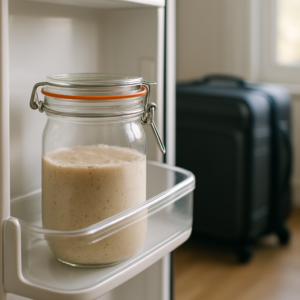
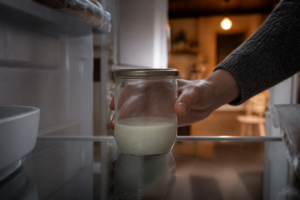
If you’d rather skip the hooch conversation altogether, the fix is boringly simple: feed consistently. Stick to a regular rhythm — once or twice a day if you’re baking weekly. Baking less often? Park your starter in the fridge between sessions. Cold slows fermentation way down, and less fermentation activity means less hooch pooling up top.
Harold lives in his own jar on the counter during any week I’m actively baking, and any backup or overflow starters go straight into the fridge. Those refrigerated jars build hooch at a fraction of the pace, which buys me flexibility without turning my kitchen into something that smells like a nail salon.
The Jar That Stopped Me From Popping the Lid Every Five Minutes
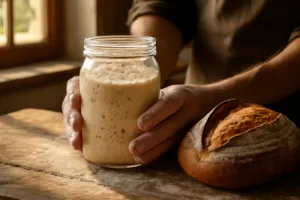
Every time I lifted the lid just to peek for hooch, I was letting gas escape and messing with the exact fermentation conditions I was trying to keep an eye on. A straight-sided, clear glass jar with a seal you can actually trust lets you watch what’s going on inside — hooch layer included — without turning every check-in into a disruption to the culture itself.
Where it earns its keep
- The narrow, tall build makes the hooch layer separate right at the top in plain view, so you can catch it fast and decide on the spot whether to stir it back in or pour it off — no guesswork involved.
- The glass has enough heft that you’re not bracing for a crack every time you wash it or set it down, and the seal genuinely does its job — nothing leaks out into your fridge.
- At a 1-liter capacity, it’s sized just right for a home starter — plenty of headroom for rising without spilling over, yet compact enough not to eat up your whole shelf.
Where it falls short
- Once it’s full, the glass gets heavy, and if you’re moving your starter around often or your hands aren’t at their steadiest on a given morning, it’s a lot less forgiving than a plastic container would be.
- It looks great sitting out, tulip shape and all, but a kitchen that gets a lot of direct sun can mean unwanted light hitting your starter through that glass (you might need to relocate it or throw a cloth over it).
I almost returned mine after the first week because I kept forgetting the weight and nearly knocked it over, but once I found its permanent home on the back of my counter, it became the one jar I actually trust to show me what’s really happening inside. If you’re tired of guessing whether that liquid on top is hooch or contamination, grab the Weck Tulip Jars 1 Liter.
Frequently Asked Questions
Why does my sourdough starter smell like nail polish remover?
That sharp, chemical odor is alcohol—a byproduct of fermentation. When your starter runs out of food, the wild yeast and bacteria keep producing alcohol, which builds up and evaporates into the air. The longer your starter goes unfed, the stronger and more intense that smell becomes.
Is the liquid on top of my starter mold or spoilage?
No. That liquid, called hooch, is a totally ordinary side effect of fermentation. It’s a mix of alcohol and water that separates from your starter once the wild yeast and bacteria have burned through their food supply. It’s nothing to lose sleep over.
Can I stir hooch back into my sourdough starter?
Yes, and it’s the easiest move. Folding hooch back in reintroduces flavor compounds along with wild yeast and bacteria that matter to your starter’s character. The alcohol level is far too low to cause harm, and it deepens your sourdough’s flavor profile.
What can I do with hooch instead of throwing it away?
You can repurpose it as a fermentation booster. Hooch is essentially concentrated wild yeast and bacteria in liquid form. Stirring a tablespoon or two into dough kicks fermentation into a higher gear and builds noticeably more complex flavor, especially in enriched doughs and slower-fermenting batches.
About This Article

Written by Sam Whitaker. Sam Whitaker has been baking sourdough for over a decade, including three years baking commercially, and now works out of a home kitchen in the Pacific Northwest. Sam's eleven-year-old starter, Harold, is the foundation for every recipe and troubleshooting guide on Sourdough Rising — real bread tested over and over until it works. More about this site.
Scope and limits. Sam is a home baker with no formal culinary training. Follow current food safety guidance for storage and handling, particularly with enriched or filled doughs.
Verify this against a primary source
Specifics change, and your situation may differ from the one described here. These are the authorities worth checking directly:
- USDA FoodData Central — flour and ingredient composition data
- FoodSafety.gov — safe handling and storage