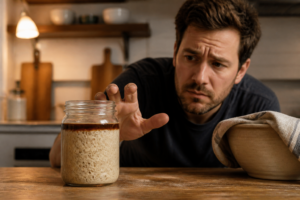
Scroll through enough sourdough forums and you’ll run into two flatly opposite pieces of advice about a stalled starter in winter: one crowd insists you just need to wait it out because sourdough always sorts itself out eventually, and the other tells you to feed more often to force activity. The first one is just plain wrong — waiting doesn’t fix a starter that’s simply too cold to function, it just burns through flour while nothing happens at all. I learned this the hard way on a Tuesday morning in February, standing in my kitchen in two pairs of socks, staring down a jar of what looked less like a living culture and more like sad, defeated goo. My starter — eight months in the making by that point — hadn’t shifted a single millimeter overnight. Again. Fourth morning in a row. Anyone who’s battled a sourdough starter through a genuinely cold kitchen in winter already knows exactly where this story is headed.
This is the story of the winter that nearly talked me out of sourdough for good — the frisbee-flat loaves, the starter that turned into something closer to library paste than an active culture, and the blunt education I got in just how quietly cold air can undo everything you’ve been building. Good news up front, though: it turned out well in the end. Pour yourself something hot, and let’s get into it.
| Temperature | Starter Activity | Doubling Time | Flavor Profile |
|---|---|---|---|
| 76°F | Doubles reliably | 4 hours | Layered, complex |
| 62°F | 10% growth over 8 hours | 12+ hours | More sour, less complex |
| 70°F | Slows dramatically | Extended | Not specified |
| 65°F and below | Practically inactive | Not specified | Not specified |
| 75–78°F (proofing box) | Active, on schedule | Normal range | Normal range |
The Moment Cold Air Turned My Starter Into a Ghost Town
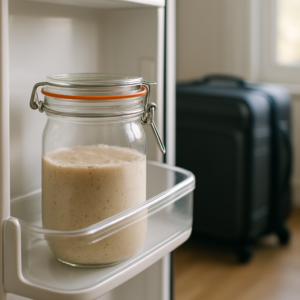
Our house is old — the kind of old where the original cast-iron radiators clank at 3 a.m. and somehow only manage to heat one room properly. That February brought a brutal cold snap that dragged our kitchen down to about 61°F during the day and closer to 57°F once night fell. At first I didn’t think twice about it. I’d already been baking sourdough for the better part of a year and figured I had a handle on things — feed the starter, let it do its work.
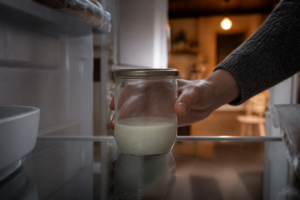
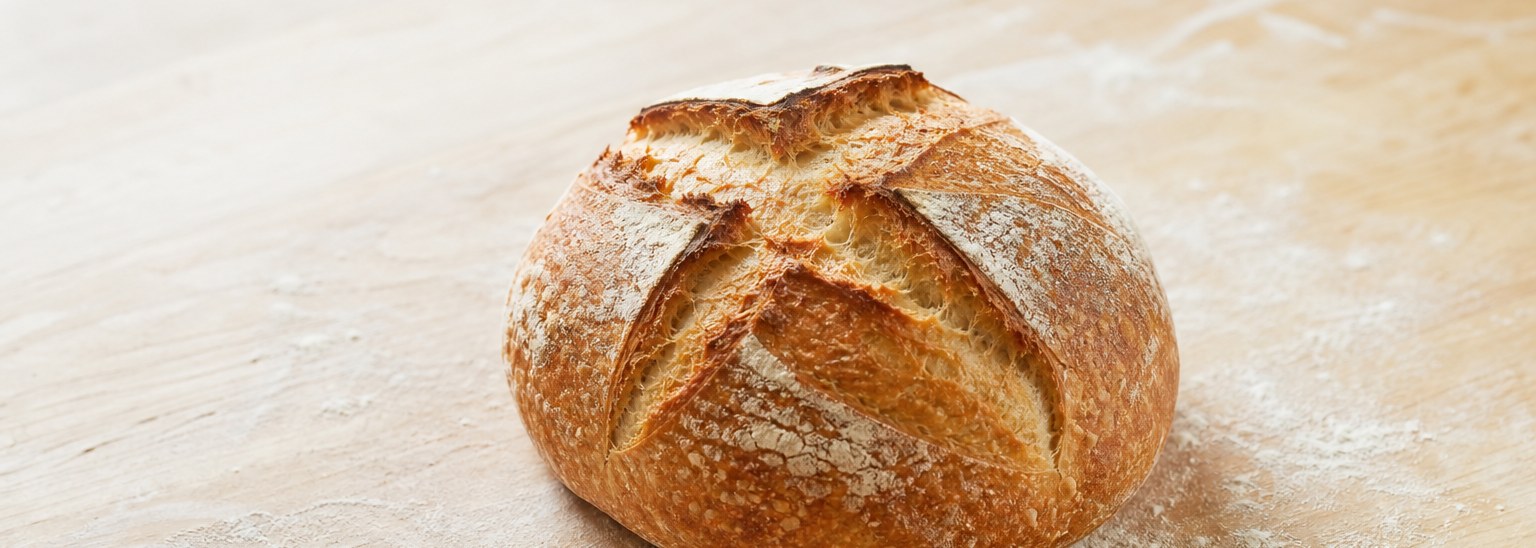
Except nothing happened. My starter — named Harold, don’t ask — managed maybe 10 percent growth over eight hours before collapsing without a single bubble worth bragging about. The loaves that followed came out gummy, dense, and nowhere close to the open, airy crumb I’d been chasing since summer. One loaf turned out so flat I genuinely considered pressing it into service as a trivet.
Here’s what nobody spelled out for me clearly enough when I started: sourdough activity is almost entirely a function of temperature. The wild yeast and lactic acid bacteria that give your starter its power slow down dramatically once you drop below 70°F, and below 65°F they’re practically clocked out. A starter that doubles in four hours at 76°F might need twelve-plus hours at 62°F, and the flavor shifts along with it — more sour, less layered and complex. Cold doesn’t kill a starter outright. It just quietly smothers it.
Every Workaround I Tried Before Landing on Something That Actually Worked
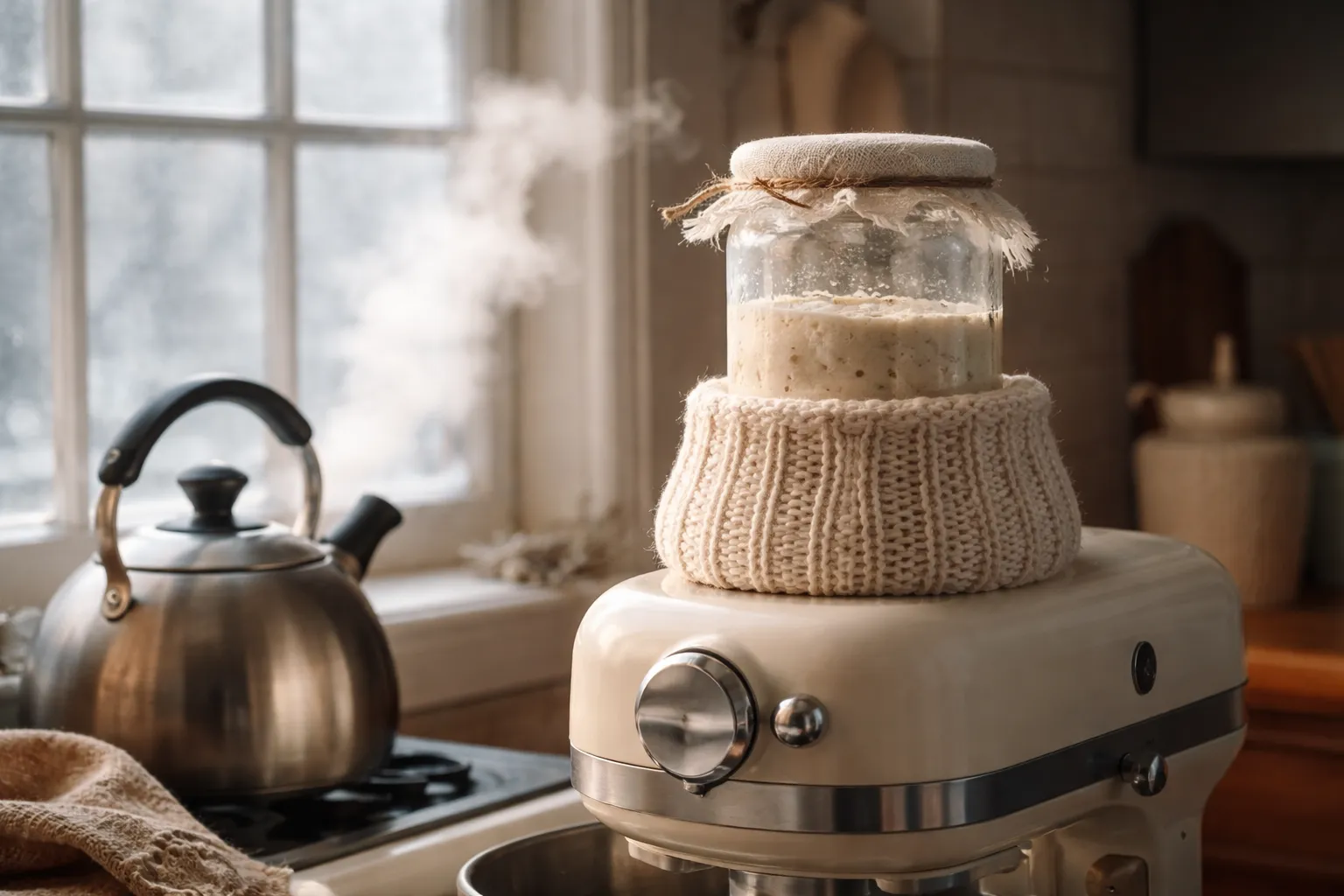
Stubborn barely covers it, so before I found real solutions, I ran through a string of increasingly desperate experiments. I perched Harold on top of the fridge, which bought maybe two degrees. I wrapped his jar in a dish towel, which changed exactly nothing. I set him near the oven whenever I was baking something else, which worked sometimes and once triggered a wildly overactive overproof I’d rather not detail here, except to say the ceiling was involved.
I also tried a stiffer starter consistency, since it holds warmth slightly better, and warmer feeding water for a quick short-term boost — both gave temporary relief but did nothing about the underlying room-temperature problem. Worth knowing, both of them, but they’re patches, not fixes.
What actually turned things around was accepting that I needed to build a dedicated warm environment for my starter and dough instead of hoping the kitchen would eventually cooperate. The second I reframed it that way, the right solutions became obvious.
The Setup I Now Rely On to Bake Sourdough Through a Cold Kitchen All Winter
I’d rather be genuinely useful than vague here, so let me walk through exactly what I use now and why each piece earned its place in my kitchen.
The Proofing Box That Rescued Both My Starter and My Sanity
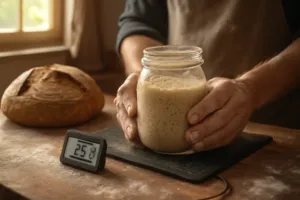
When your kitchen’s sitting at 58°F and your starter refuses to move, you’re up against physics, not a flaw in your technique. A dedicated proofing box gives your starter and bulk dough the steady warmth they need to properly ferment, rather than just barely limp along.
Where it delivers
- Holds a rock-steady 75–78°F inside — right where sourdough wants to sit — so you’re done watching ambient swings tank your rise.
- Roomy enough for a full-size banneton and dough bowl together, so starter, bulk dough, and shaped loaf can all proof at once in one small footprint.
- Folds down flat once winter survival mode is over, so it doesn’t linger as one more appliance cluttering your kitchen the rest of the year.
Where it falls short
- There’s no built-in timer or temperature display, so you’ll still be checking your dough manually and leaning on a separate thermometer to dial in the exact temp.
- It claims real counter or cabinet space, and if your kitchen’s already tight, that’s one more thing to work around during busy stretches.
I was skeptical that a $60 box could actually make the difference when my cold kitchen had beaten me down so thoroughly, but within three days of turning it on, my starter was rising on schedule again. If you’re in the same frozen-kitchen situation I was, grab a GIYUDOT Folding Bread Proofing Box.
Frequently Asked Questions
What temperature was Sam’s kitchen during the cold snap?
Sam’s kitchen dropped to about 61°F during the day and closer to 57°F at night during the February cold snap. At those temperatures, sourdough activity slows dramatically because wild yeast and lactic acid bacteria slow down below 70°F and are practically inactive below 65°F.
How much did Harold grow overnight in the cold?
Harold managed only about 10 percent growth over eight hours before collapsing without bubbles worth noting. At 62°F, a starter might need twelve-plus hours to double compared to four hours at 76°F, and the flavor becomes more sour and less layered and complex.
Does waiting fix a stalled winter starter?
No, waiting doesn’t fix a starter that’s simply too cold to function — it just burns through flour while nothing happens. Cold doesn’t kill a starter outright, but it quietly smothers activity. You need to build a dedicated warm environment instead of hoping the kitchen will eventually cooperate.
What temperature does Sam’s proofing box maintain?
The GIYUDOT Folding Bread Proofing Box holds a rock-steady 75–78°F inside, right where sourdough wants to sit. It’s roomy enough for a full-size banneton and dough bowl together, so starter, bulk dough, and shaped loaf can all proof at once in one small footprint.
About This Article

Written by Sam Whitaker. Sam Whitaker has been baking sourdough for over a decade, including three years baking commercially, and now works out of a home kitchen in the Pacific Northwest. Sam's eleven-year-old starter, Harold, is the foundation for every recipe and troubleshooting guide on Sourdough Rising — real bread tested over and over until it works. More about this site.
Scope and limits. Sam is a home baker with no formal culinary training. Follow current food safety guidance for storage and handling, particularly with enriched or filled doughs.
Verify this against a primary source
Specifics change, and your situation may differ from the one described here. These are the authorities worth checking directly:
- USDA FoodData Central — flour and ingredient composition data
- FoodSafety.gov — safe handling and storage