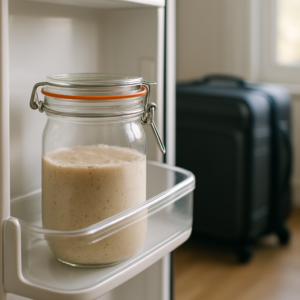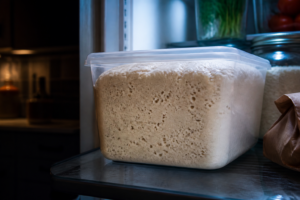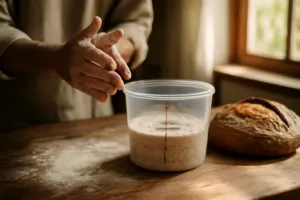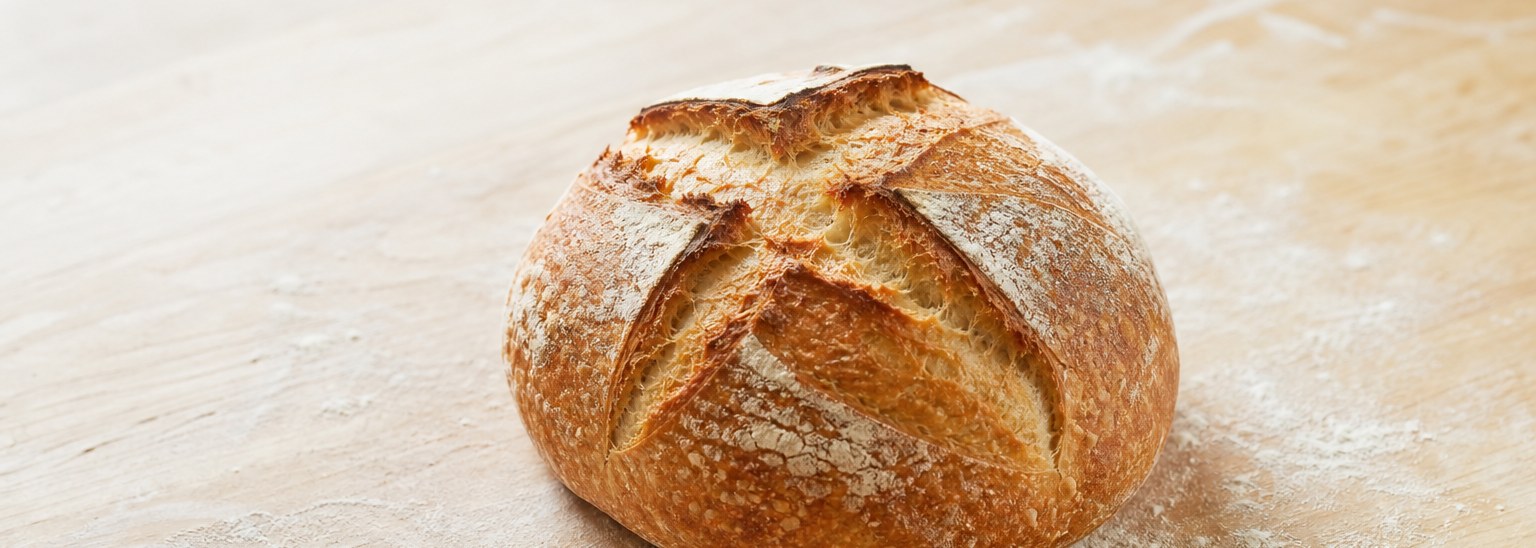
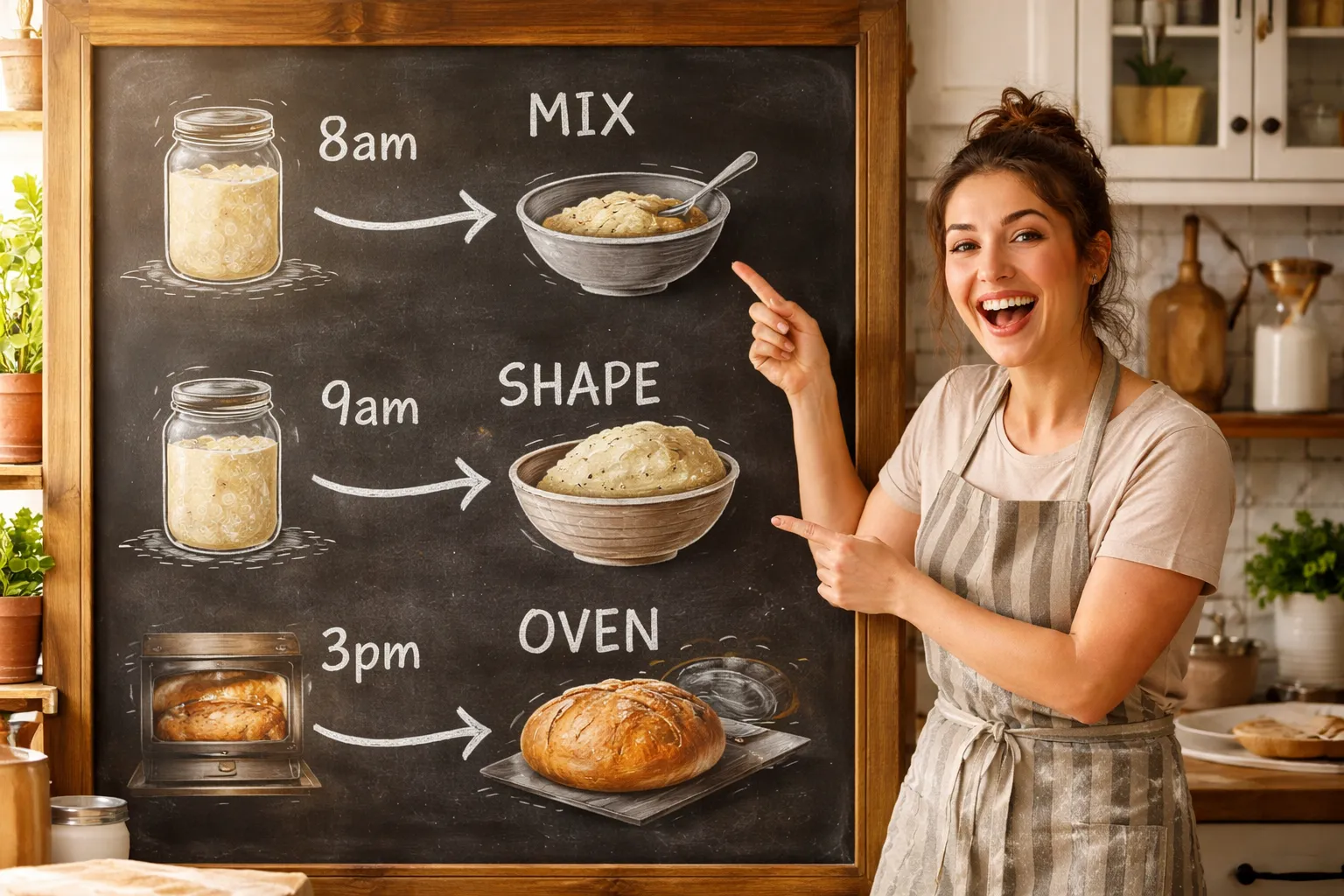
The jar on my counter told the whole story before I even touched the dough: barely a bubble breaking the surface, that flat, dull sheen instead of the domed, frothy cap I’d trained myself to expect. My starter had gone quiet overnight, and I didn’t catch it until I was standing there in mismatched socks staring down a boule that had spread out flat instead of holding its shape — the kind of loaf with zero chance of impressing anyone by dinnertime. My mother-in-law was due at 6 PM, a homemade sourdough boule already promised, and my starter had basically clocked out for the weekend. That morning is the reason I went down the rabbit hole of same day sourdough in 8 hours, and it rewired how I bake, full stop.
If sourdough has ever felt like a moody houseguest running on its own clock with zero consideration for yours, we’re clearly cut from the same cloth. The typical recipe wants 24 to 48 hours of lead time, which sounds lovely on paper and rarely matches the chaos of my actual week. What I needed was a shortcut — and after plenty of failed attempts and one genuinely mortifying incident I’ll get into shortly, I landed on a method that actually produces a tangy, open-crumbed loaf you can finish start to finish in a single day.
The Science Behind Squeezing Real Sourdough Into 8 Hours
Here’s the underlying logic: heat and duration are two knobs controlling the exact same outcome. An overnight, chilly 18-hour rise and a warmer, tightly managed 6-to-8-hour rise can land you in nearly the same place, provided you actually understand what fermentation is doing rather than just clocking hours. It isn’t a waiting game — it’s a chemical one. Crank up the warmth in a controlled way, and the wild yeast and bacteria living in your starter race through their work, layering in flavor, building structure, and forming the airy pockets every sourdough baker is chasing.
A proofing box is what actually makes this whole 8-hour approach possible, and I’ll say it as bluntly as I can. Before I owned one, my method was shoving the dough into the oven with just the light bulb on and hoping for the best. Sometimes that gamble paid off. More often it didn’t. A real proofing box holds a steady, exact temperature for the entire rise, which turns your fermentation window from a guessing game into something you can actually plan your day around.
The Proofing Box That Turned My 8-Hour Bakes From Gamble to Routine
Racing to proof a loaf in 8 hours rather than the usual 12 to 16 means temperature control shifts from a bonus to the whole ballgame. A kitchen that reads 68°F at breakfast and climbs to 72°F by mid-afternoon is enough to throw your entire schedule sideways — something I found out the hard way when my dough blew past peak while I sat there certain I still had two hours of buffer left.
What Works Well
- Maintains a rock-steady 75–78°F range the whole time, which keeps bulk fermentation on schedule and gets you to a passing windowpane test at nearly the same point in every single bake.
- Collapses down flat when you’re finished with it — a real relief, since a bulky, permanently-set-up proofing box was eating half my already tight counter space and starting to sour me on the whole hobby.
- Comfortably holds a banneton or a big mixing bowl, so you’re no longer improvising a proof out of kitchen towels and an oven light left on for warmth.
Where It Falls Short
- Needs roughly 20 to 30 minutes to warm up and settle at temperature, so you can’t just toss the dough in cold and expect it to start working right away — you have to build that lag into your plan.
- After about six months of steady use, the fold-flat hinges have started to feel a bit shaky, and more than once I’ve half-expected one to give out while I was collapsing it.
I almost sent mine back after the first week because I wasn’t seeing the 2-3x rise I expected, then realized I hadn’t actually preheated it like the instructions said—operator error, not equipment failure. But once I got my routine locked in, same-day sourdough went from stressful lottery to something I could almost guarantee. Grab the GIYUDOT Folding Bread Proofing Box if you’re serious about shortening your fermentation timeline.
Frequently Asked Questions
Can you make sourdough in 8 hours at home?
Yes. Heat and duration are two knobs controlling the same outcome—an overnight 18-hour rise in a chilly kitchen and a warmer, tightly managed 6-to-8-hour rise can land you in nearly the same place. A proofing box holding a steady, exact temperature for the entire rise turns fermentation from a guessing game into something you can actually plan your day around.
What temperature should a proofing box maintain?
A proofing box should maintain a rock-steady 75–78°F range throughout bulk fermentation. This temperature control keeps fermentation on schedule and gets you to a passing windowpane test at nearly the same point in every single bake, which is essential for consistent 8-hour same-day sourdough.
How long does a proofing box take to warm up?
A proofing box needs roughly 20 to 30 minutes to warm up and settle at temperature. You can’t just toss dough in cold and expect it to start working right away—you have to build that lag into your plan for accurate timing.
What makes 8-hour sourdough possible instead of 24 hours?
Temperature stability makes an 8-hour timeline possible. A kitchen that reads 68°F at breakfast and climbs to 72°F by mid-afternoon throws your schedule sideways. A proofing box holding steady warmth lets wild yeast and bacteria race through their work, layering flavor and building structure in a compressed timeframe.
About This Article

Written by Sam Whitaker. Sam Whitaker has been baking sourdough for over a decade, including three years baking commercially, and now works out of a home kitchen in the Pacific Northwest. Sam's eleven-year-old starter, Harold, is the foundation for every recipe and troubleshooting guide on Sourdough Rising — real bread tested over and over until it works. More about this site.
Scope and limits. Sam is a home baker with no formal culinary training. Follow current food safety guidance for storage and handling, particularly with enriched or filled doughs.
Verify this against a primary source
Specifics change, and your situation may differ from the one described here. These are the authorities worth checking directly:
- USDA FoodData Central — flour and ingredient composition data
- FoodSafety.gov — safe handling and storage