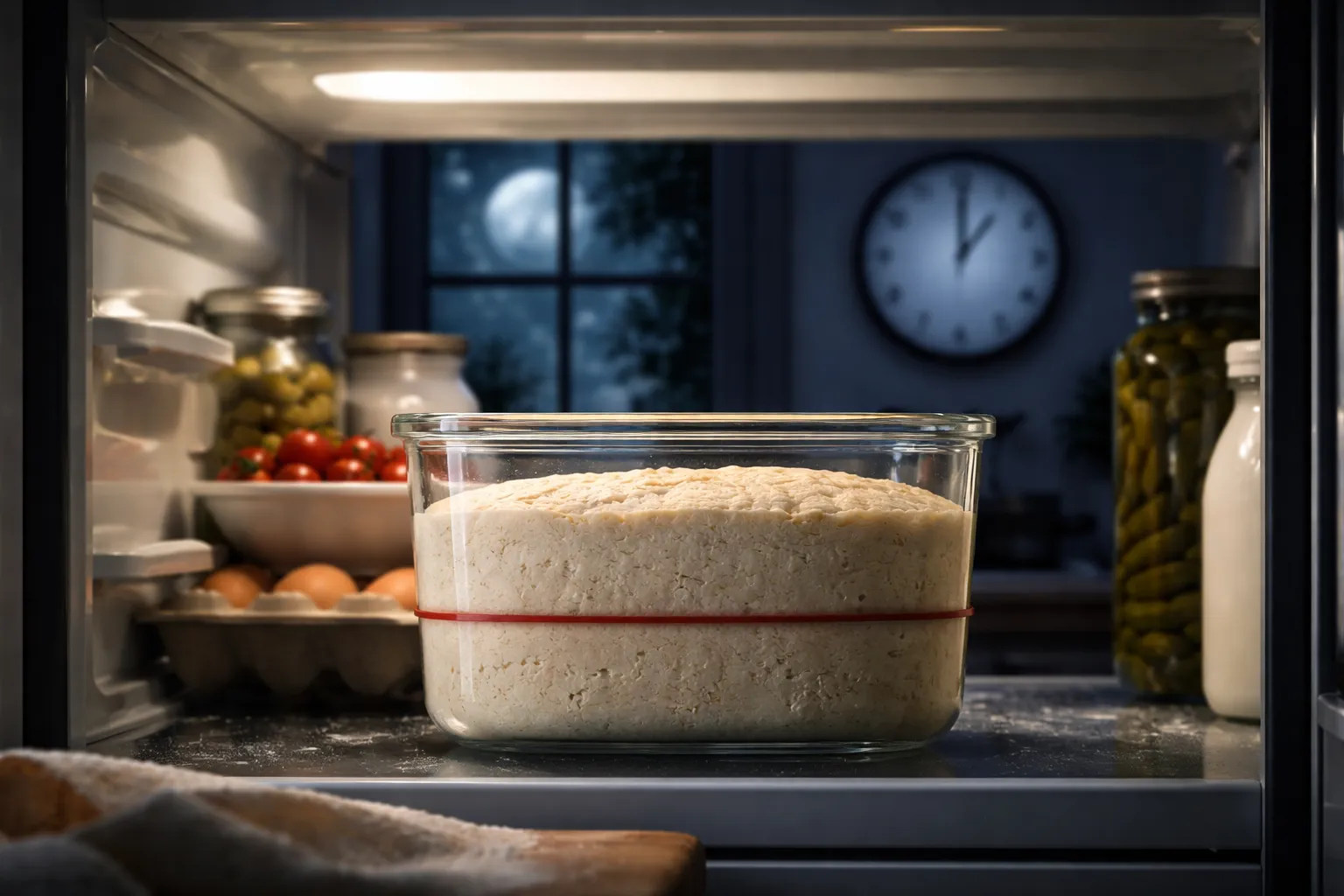
Almost every home baker assumes that any bowl with a lid is good enough for keeping tabs on an overnight bulk ferment, as long as it’s roomy enough for the dough to expand. I held that same belief until a Tuesday night close to midnight, when I found myself in mismatched socks, squinting into an opaque mixing bowl, unable to tell whether — four hours in — my dough had truly doubled or whether I was simply seeing what I hoped to see. That single frustrating night is the reason I finally invested in a vessel built specifically for observing fermentation as it happens, rather than guessing at it through cloudy plastic.
Anyone who’s run through the overnight bulk ferment routine — mix in the evening, head to bed, wake up with zero clue whether the dough peaked hours back or still has time left to go — knows the real solution rarely comes from tweaking your schedule. What actually fixes it is a container you can read in a single glance. Here’s the one that did that for me.
| Attribute | Cambro RFSCW2135 | Opaque Mixing Bowl |
|---|---|---|
| Visibility during ferment | Transparent polycarbonate | Opaque; requires lid-lifting to check |
| Capacity | 2 quarts (700–900g dough) | Varies; often oversized |
| Lid included | No; sold separately | Usually included |
| Seal during overnight ferment | Snug, non-airtight; 8–14 hours | Loose cover; gases escape inconsistently |
| Clarity after 6 months use | Becomes hazy from scraper marks | Remains opaque throughout |
Cambro RFSCW2135 Camwear Round Storage Container: My Full Review
Running dough through an overnight bulk ferment means you’re often working half-blind — staring at some opaque tub at two in the morning, trying to decide if the rise looks sufficient yet. Swap in a clear container with a snug-fitting lid, though, and that guesswork disappears; you can genuinely *watch* the fermentation progress instead of cracking the lid every hour and bleeding out the warm air your dough needs.
Breaking Down the Specs
- Capacity: Holds 2 quarts, which lines up nicely with one standard loaf of dough — around 700 to 900 grams before it puffs up to double.
- Material: Made from polycarbonate that’s NSF certified, safe for the dishwasher, and rated across a -40°F to 210°F range — meaning it can go straight from a chilly fridge shelf to a warm countertop without splitting.
- Dimensions: Roughly 7 3/16 inches across the opening and 4 3/16 inches in height, with built-in molded handles you can grab one-handed while your other hand is buried in flour.
- Lid: No lid comes included — you’ll need to grab Cambro’s matching RFSCWC2135 round lid separately (though certain Amazon listings package them together). Skipping this step isn’t advisable; draping plastic wrap or a loose cover over the top undoes the whole benefit of a see-through, snugly sealed setup.
Where It Delivers
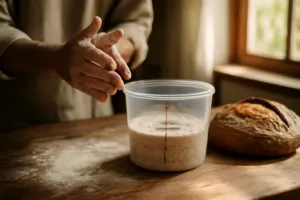
- Because the polycarbonate walls are transparent, you can track the rise and bubble activity without ever popping the lid — meaning you spot the actual moment bulk fermentation finishes instead of relying purely on a clock.
- That 2-quart size hits a sweet spot for a single loaf of dough — roomy enough to handle a 75% hydration rise without spilling over the edge, yet not so oversized that you’re stuck with a bunch of dead air space above the dough.
- When you add the matching lid, the seal holds tight enough to keep the dough from crusting over during an 8–14 hour cold overnight ferment, yet it stops short of fully airtight, so gases from fermentation can escape gently without any drama.
Where It Falls Short
- You have to buy the lid on its own, and that’s not exactly advertised — a detail you usually discover only after the container has already arrived and you’re waiting on a follow-up order to actually use it.
- There’s no venting built into either the container or the lid, so a vigorous room-temperature ferment can build up enough internal pressure to pop the lid loose a bit — a lesson I learned the messy way.
- Polycarbonate marks up fast under scraper contact and everyday handling, so roughly six months of steady use leaves the surface hazy — right when clear visibility matters most, it starts working against you.
By the second week, I was ready to send mine back — one bottom corner had clouded over so much that my dough basically vanished from view — until it clicked that I could simply spin the container mid-ferment to line up the clearest panel with my eyes. There’s nothing glamorous about it; this is essentially a piece of restaurant kitchen gear pressed into duty for a baking headache. And that’s precisely the point — it was engineered for constant viewing and constant washing, which happens to be exactly what tracking an overnight bulk ferment requires.
Should You Actually Buy One?
For anyone still bulk fermenting inside a mixing bowl topped with a plate or a sheet of plastic wrap, the answer is yes — it’s an inexpensive step up that eliminates a lot of real uncertainty. But if you’ve already got some clear, lidded 2-quart container with measurement lines on the side, there’s no real need to swap it out just for this one. What makes the RFSCW2135 worthwhile isn’t anything mysterious — it comes down to the fact that it was purpose-built for this exact job: clear sightlines, a seal that’s snug without trapping gas, and dimensions matched to a single loaf, rather than being some leftover-storage container pressed into a role it was never meant for.
Cambro RFSCW2135 Camwear Round Storage Container
Frequently Asked Questions
Does the Cambro RFSCW2135 come with a lid included?
No, the lid doesn’t come included. You’ll need to buy Cambro’s matching RFSCWC2135 round lid separately, though certain Amazon listings package them together. Skipping this step isn’t advisable if you want a snugly sealed setup.
What size dough batch fits in the Cambro RFSCW2135?
The 2-quart capacity lines up nicely with one standard loaf of dough—around 700 to 900 grams before it puffs up to double. It’s roomy enough to handle a 75% hydration rise without spilling over the edge.
How long does the Cambro container stay clear with regular use?
Polycarbonate marks up fast under scraper contact and everyday handling, so roughly six months of steady use leaves the surface hazy. You can spin the container mid-ferment to line up the clearest panel with your eyes.
Can the Cambro RFSCW2135 handle cold overnight fermentation?
Yes. The matching lid’s seal holds tight enough to keep dough from crusting over during an 8–14 hour cold overnight ferment, yet it stops short of fully airtight so gases from fermentation can escape gently without drama.
About This Article

Written by Sam Whitaker. Sam Whitaker has been baking sourdough for over a decade, including three years baking commercially, and now works out of a home kitchen in the Pacific Northwest. Sam's eleven-year-old starter, Harold, is the foundation for every recipe and troubleshooting guide on Sourdough Rising — real bread tested over and over until it works. More about this site.
Scope and limits. Sam is a home baker with no formal culinary training. Follow current food safety guidance for storage and handling, particularly with enriched or filled doughs.
Verify this against a primary source
Specifics change, and your situation may differ from the one described here. These are the authorities worth checking directly:
- USDA FoodData Central — flour and ingredient composition data
- FoodSafety.gov — safe handling and storage