
No recipe card ever warns you about this part: standing there in your pajamas at 5:47 on a Tuesday, flour dusted across the ceiling for reasons you can’t explain, with exactly 43 minutes before you need to be out the door, and a loaf on the counter that looks stunning and is still raw in the middle. I’d blown my timing. Again.
If you’ve ever attempted to bake sourdough before work and watched the whole morning spiral, this scene will feel familiar. Here’s the silver lining: that ceiling-flour disaster ended up being the exact moment things clicked into place for me. Below is the 5am starter routine I built afterward — the one that rescued my mornings, my loaves, and my sanity in one go.
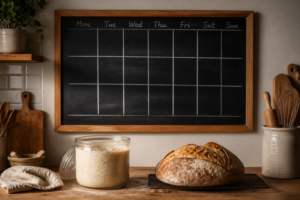
| Step | Time | Action | Temperature |
|---|---|---|---|
| Starter feed | 8:00pm | Feed with 1:5:5 ratio | 70–75°F (with heat mat) |
| Dough mix | 8:30pm | Mix dough together | 70–75°F (with heat mat) |
| Stretch and folds | 9:00pm–10:30pm | 3–4 rounds, 30 min apart | 70–75°F (with heat mat) |
| Shape and retard | 10:30pm | Shape, banneton, cover, refrigerate | Fridge |
| Preheat | 5:05am | Slide Dutch oven in oven | 500°F |
| Bake covered | 5:45am–6:05am | Load dough, score, lid on | 500°F |
| Bake uncovered | 6:05am–6:30am | Remove lid, lower heat | 450°F |
| Cool | 6:30am+ | Rest before slicing | Room temperature |
How Baking Sourdough Before Work Became My Obsession (And Nearly My Downfall)
Let me rewind to where this really started. I need to be upfront: mornings are not my strength. I’m the person setting four alarms and hitting snooze on every single one. So when I announced I was going to become someone who baked fresh bread before heading to the office, my friends assumed I’d finally cracked. My husband, for his part, just started quietly heading to bed earlier out of solidarity.
Here’s the truth: I’d fallen hard, embarrassingly hard, for sourdough. I craved the crackly crust, the open crumb, that smell that fills the whole kitchen around 7am and makes the neighbors wonder what you’re up to. Weekends alone stopped cutting it. I wanted it on an ordinary Tuesday. I wanted it on a random Thursday. I wanted to be the kind of person who has that level of life together.
So I tinkered, botched things spectacularly, and eventually settled on a routine that actually fits around a normal work schedule. The flour-on-the-ceiling episode was simply part of figuring it out — a strange, dramatic part, but part of it nonetheless.
Why the Real Work Happens the Night Before
Nobody mentions this when you’re trying to bake sourdough before work: the heavy lifting isn’t at 5am at all — it’s the evening before. Once that clicked for me, the whole routine transformed. Set things up right, and your 5am self will owe your 9pm self a serious debt of gratitude.
Your Evening Prep Schedule
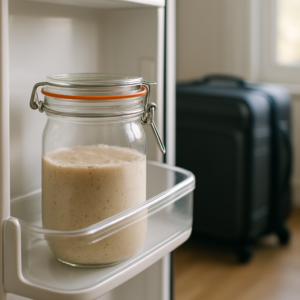
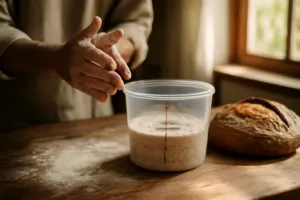
- 8:00pm: Feed your starter using a 1:5:5 ratio (starter:flour:water) so it climbs gradually overnight instead of peaking and crashing too soon.
- 8:30pm: Mix the dough together (if you want extra extensibility, autolyse the flour and water alone for 30 minutes beforehand).
- 9:00pm to 10:30pm: Work through 3 to 4 rounds of stretch and folds, each about 30 minutes apart.
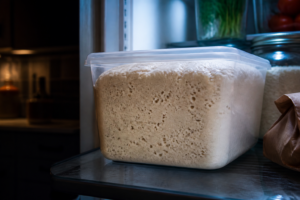
- 10:30pm: Shape the loaf, settle it into the banneton, cover it, and slide it into the fridge for an overnight cold retard.
That overnight cold retard does most of the heavy lifting for you. A slow, chilled ferment means there’s no 5am clock to race against — the dough simply sits there, patient, waiting. Your starter, on the other hand, is not so forgiving; mine once peaked and sank into a deflated, sorry-looking puddle while I was busy binging a cooking show. Anyway, moving on.
The One Trick That Locked In Consistent Starter Timing
My kitchen turns genuinely frigid come winter, and when it does, my starter simply isn’t lively enough by 8pm to go into the dough. This is exactly where a seedling heat mat changed the game for me. Yes, it sounds like equipment meant for growing tomato seedlings, not bread. But plenty of bakers rely on them precisely because they deliver steady, gentle warmth that reliably wakes a sluggish starter and keeps the bulk ferment right on track.
I use the BN-LINK Durable Seedling Heat Mat and it has been an absolute revelation. It keeps the temperature around 70 to 75 degrees Fahrenheit right at the base of my jar, which means my starter is reliably ready when I need it. If you want another solid option, the VIVOSUN Durable Waterproof Seedling Heat Mat is UL and MET certified and works just as beautifully. Both are waterproof, which matters because sourdough baking is a messy, splashy business and you know it.
The Actual 5am Routine for Baking Sourdough Before Work
This is where it all pays off. Since the hard part happened the night before, your 5am routine stays refreshingly simple. Mostly you just need to be conscious enough to run an oven — which, fair warning, requires at least a full cup of coffee in my case.
Minute-by-Minute, Alarm to Oven
- 5:00am: Get up and start the coffee right away. This step is not optional.
- 5:05am: Slide your Dutch oven into the oven and preheat to 500 degrees Fahrenheit (260 Celsius). The cold dough goes directly from the fridge into that hot Dutch oven — don’t let it warm up on the counter first.
- 5:45am: Once the Dutch oven has fully preheated, take the dough straight from the fridge, turn it into the pot, score it with confidence, and get the lid on.
- 5:50am: Bake covered at 500 degrees for 20 minutes, then take the lid off, drop the temperature to 450 degrees, and bake another 20 to 25 minutes until it’s a deep golden brown.
- 6:35am: Take your loaf out. Resist the urge to get emotional over how good it looks. Give it at least a full hour to cool before slicing, no matter how impossible that feels.
Your total hands-on time in the morning adds up to roughly 15 minutes. The oven handles the rest while you shower, get dressed, and do your best impression of someone who has everything together.
Keeping Your 5am Dough From Blowing Past Bulk Fermentation
When you’re up against the clock before work, the last thing you can afford is bulk fermentation wrapping up in 3 hours instead of 4 — or worse, an under-proofed loaf still waiting in the fridge overnight. A seedling heat mat hands you real control over how fast fermentation moves, instead of leaving it up to whatever temperature your kitchen happens to be.
The upside
- Holds your dough at a steady 75–78°F, so bulk fermentation follows your schedule instead of the season’s mood or your kitchen’s drafty tendencies.
- Small enough to tuck under a proofing box or bowl, so it stays out of your way during the morning scramble instead of hogging counter space.
- The thermostat genuinely stays put — I’ve watched it closely, and it doesn’t wander the way I worried it might.
The downside
- It’s yet another appliance in your morning lineup, and forgetting to switch it on before bed wrecks your temperature consistency for the entire schedule.
- During summer, when the kitchen is already warm, the mat can push temperatures too high even on its lowest setting, so you’ll need to watch it or time its use carefully.
I almost ditched mine after the first week because I wasn’t turning it on consistently, but once I made it part of my evening prep routine (flip the mat on, set a phone reminder), the 5am math actually started working. If you’re serious about pre-work baking, grab a BN-LINK Durable Seedling Heat Mat.
Frequently Asked Questions
What starter feeding ratio works for a 5am bake?
Feed your starter at 8pm using a 1:5:5 ratio of starter to flour to water. This ratio makes your starter climb gradually overnight instead of peaking and crashing too soon, so it’s reliably ready when you need it for mixing dough at 8:30pm.
What temperature should bulk fermentation hold?
A seedling heat mat keeps bulk fermentation steady at 75–78°F, so fermentation follows your schedule instead of depending on kitchen temperature or season. This consistency is essential when you’re baking before work and can’t afford timing surprises.
How long does the actual 5am baking routine take?
Your total hands-on time in the morning is roughly 15 minutes. You preheat the Dutch oven at 5:05am, load the dough and score it at 5:45am, then bake covered at 500 degrees for 20 minutes before dropping to 450 degrees for another 20 to 25 minutes.
Why is overnight cold retard essential for before-work baking?
The overnight cold retard in the fridge means there’s no 5am clock to race against—the dough simply waits patiently while slow, chilled fermentation happens. This removes the timing pressure and lets you bake fresh bread before work without the morning stress.
About This Article

Written by Sam Whitaker. Sam Whitaker has been baking sourdough for over a decade, including three years baking commercially, and now works out of a home kitchen in the Pacific Northwest. Sam's eleven-year-old starter, Harold, is the foundation for every recipe and troubleshooting guide on Sourdough Rising — real bread tested over and over until it works. More about this site.
Scope and limits. Sam is a home baker with no formal culinary training. Follow current food safety guidance for storage and handling, particularly with enriched or filled doughs.
Verify this against a primary source
Specifics change, and your situation may differ from the one described here. These are the authorities worth checking directly:
- USDA FoodData Central — flour and ingredient composition data
- FoodSafety.gov — safe handling and storage