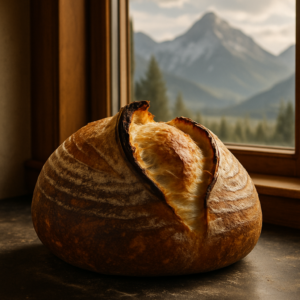
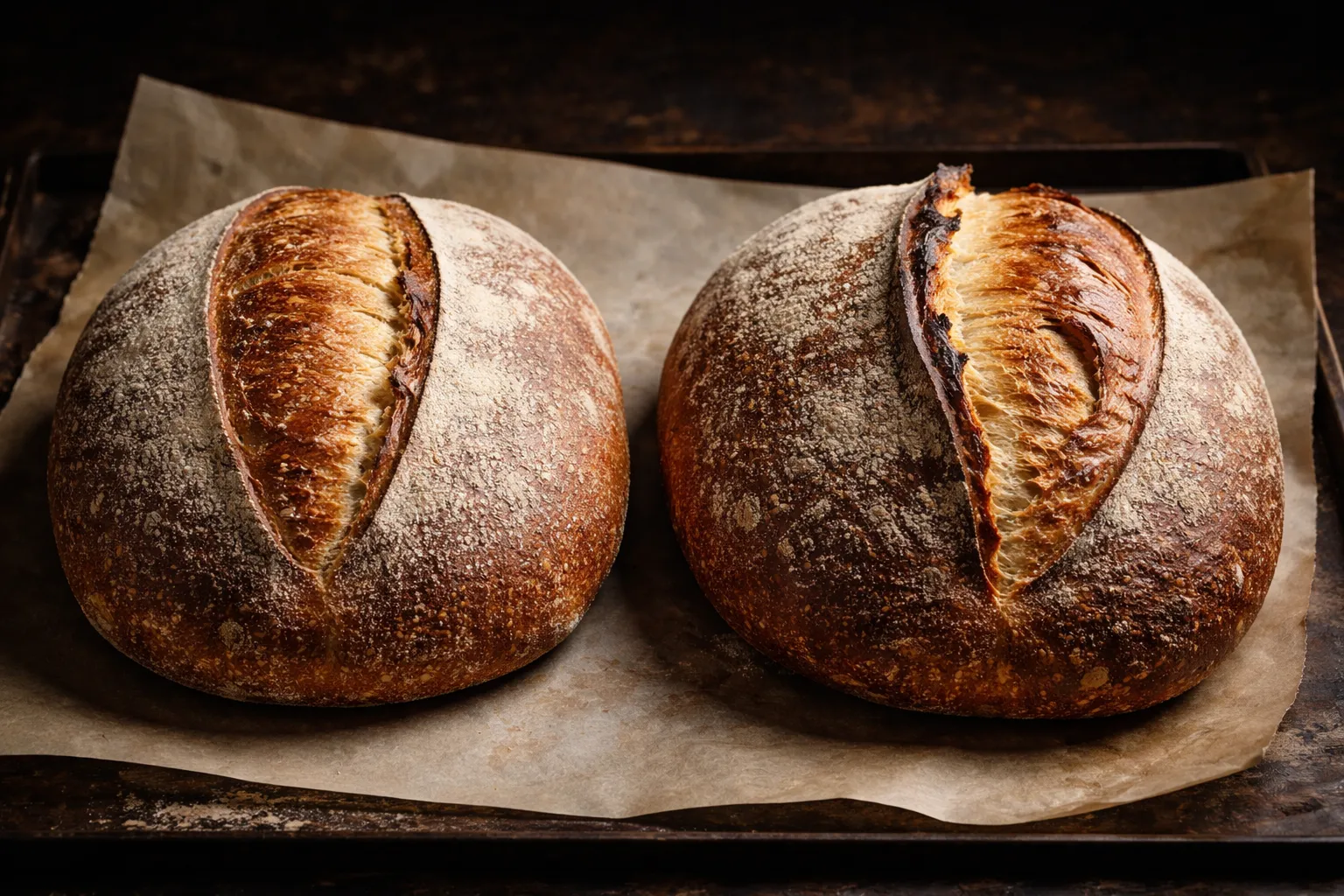
Pull up the photo on my phone right now and you’ll see the evidence yourself: a smooth, rounded dome split down one side, like the dough simply gave up instead of opening. Zero ear. Not even a whisper of one. That single picture is proof of what happens when scoring and steam both go wrong at the same time — and it’s the exact loaf that sent me hunting “sourdough ear won’t open” at some ungodly hour, still in my pajamas, coffee in hand, quietly reconsidering my life choices. If that sounds familiar, you’ve landed exactly where you need to be.
That flat, earless dome was attempt number fourteen in my personal quest for a proper ear. Fourteen. I’d worked through every tutorial video I could find, dug through forum threads for clues, and even taped a printed scoring diagram to my cabinet like I was running some kind of artisan bread command center. Still nothing. But stay with me, because this story does turn around, and I’m going to walk you through exactly how.
What’s Actually Stopping Your Sourdough Ear From Opening (It’s Not a Skill Issue)
Here’s something that’ll save you a lot of pointless frustration: a flat, earless loaf is almost never the result of a single mistake. Most of the time it’s two or three small issues piling up at once. The good news is that each one is fixable once you know what to look for. The frustrating part is that most tutorials skip the diagnosis entirely and jump straight to technique, which is a bit like a doctor handing you medicine before asking where it hurts.
So let’s actually work through the diagnosis together, starting with the two most common troublemakers: your scoring and your steam.
Scoring Trouble: Blade Angle, Cutting Speed, and Nerve
When I finally got a baker friend on a video call to watch me score a loaf, she said one thing that stung in the most useful way: “You’re hesitating.” She was right. I was pressing down too slowly, dragging the blade, and cutting almost straight down into the dough. Every one of those habits was working against me.
The Angle Makes or Breaks It
For that ear to bloom open the way you want, the blade needs to enter the dough at a shallow, nearly flat angle — somewhere between 30 and 45 degrees off the surface. Cut too vertically, and the slash just pinches shut during baking instead of peeling back and lifting. Picture slicing a sheet of paper at an angle rather than stabbing straight into it: you’re carving a flap, not poking a slit.
Commit to the Cut
A slow, timid score drags and tears the surface. What you want instead is one clean, decisive pass from one end of the loaf to the other. If you’re a naturally careful, nervous baker, this is the part that feels most backwards. But dough responds to confidence. Take a breath, then commit to the motion.
Check Whether Your Blade Has Gone Dull
This was my humbling discovery on loaf number fourteen. I’d been scoring with the same blade for six bakes straight. Six. A dull blade drags, tears, and deflates your dough instead of gliding through it cleanly. Swap your blade out regularly, and make sure you’re actually using a proper bread lame built for this purpose, not a stand-in.
The Bread Lame That Actually Cuts Deep Enough for an Ear
A blade that’s lost its edge, or a scoring tool that doesn’t sit right in your hand, will either drag through your dough or barely graze the surface — and neither outcome gets you an ear. The depth and angle of your cut is what decides whether that lip peels open or stays stubbornly sealed.
What worked for me
- The edge stays sharp enough to slice a clean 30-45 degree angle without hesitation — I noticed the difference on my very first bake, with the ear opening up within minutes of oven spring instead of sitting flat.
- The handle gives you real grip and control, so you can score with speed and conviction instead of nervously dragging the blade like you’re afraid of tearing the dough.
- It’s built solidly enough that it doesn’t feel like a cheap gadget — the weight and balance make it feel like a genuine tool, which sounds trivial until you’re standing there at 6am holding a flimsy lame you can’t trust.
Where it falls short
- If you’re baking multiple loaves a week, the edge dulls faster than you’d like — after roughly 15-20 bakes I could feel the score starting to drag, which meant it was time to replace or sharpen the blade.
- It costs more than the cheap plastic lames, so if you’re still in the “maybe sourdough isn’t for me” phase, it can feel like a bigger investment than you’re ready to make.
I almost returned it after my second bake because I was convinced I was still scoring too shallow—until I realized the ear was actually opening and I’d just never seen one before. SAINT GERMAIN Premium Hand Crafted Bread Lame
Frequently Asked Questions
What angle should I score my sourdough at for a good ear?
Your blade needs to enter the dough at a shallow, nearly flat angle—somewhere between 30 and 45 degrees off the surface. Cutting too vertically causes the slash to pinch shut during baking instead of peeling back and lifting. Think of carving a flap rather than poking a slit.
How often should I replace my bread lame blade?
After roughly 15-20 bakes, you’ll feel the score starting to drag, which means it’s time to replace or sharpen the blade. A dull blade drags and tears the dough instead of gliding through cleanly, preventing your ear from opening properly.
Why is my sourdough scoring timid and dragging the dough?
A slow, hesitant score drags and tears the surface instead of creating a clean cut. What you need is one clean, decisive pass from one end of the loaf to the other. Dough responds to confidence—take a breath and commit to the motion.
Can a dull blade prevent my sourdough ear from opening?
Yes. A dull blade drags, tears, and deflates your dough instead of gliding through it cleanly. This prevents the lip from peeling open properly. A sharp blade that cuts at the right angle makes the difference between an ear opening within minutes of oven spring or sitting flat.
About This Article

Written by Sam Whitaker. Sam Whitaker has been baking sourdough for over a decade, including three years baking commercially, and now works out of a home kitchen in the Pacific Northwest. Sam's eleven-year-old starter, Harold, is the foundation for every recipe and troubleshooting guide on Sourdough Rising — real bread tested over and over until it works. More about this site.
Scope and limits. Sam is a home baker with no formal culinary training. Follow current food safety guidance for storage and handling, particularly with enriched or filled doughs.
Verify this against a primary source
Specifics change, and your situation may differ from the one described here. These are the authorities worth checking directly:
- USDA FoodData Central — flour and ingredient composition data
- FoodSafety.gov — safe handling and storage