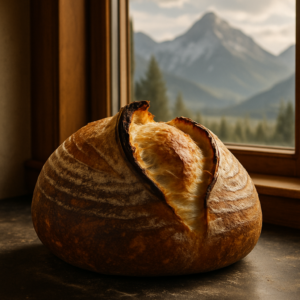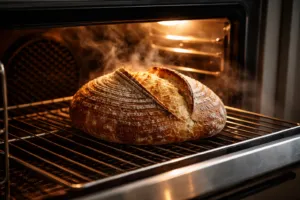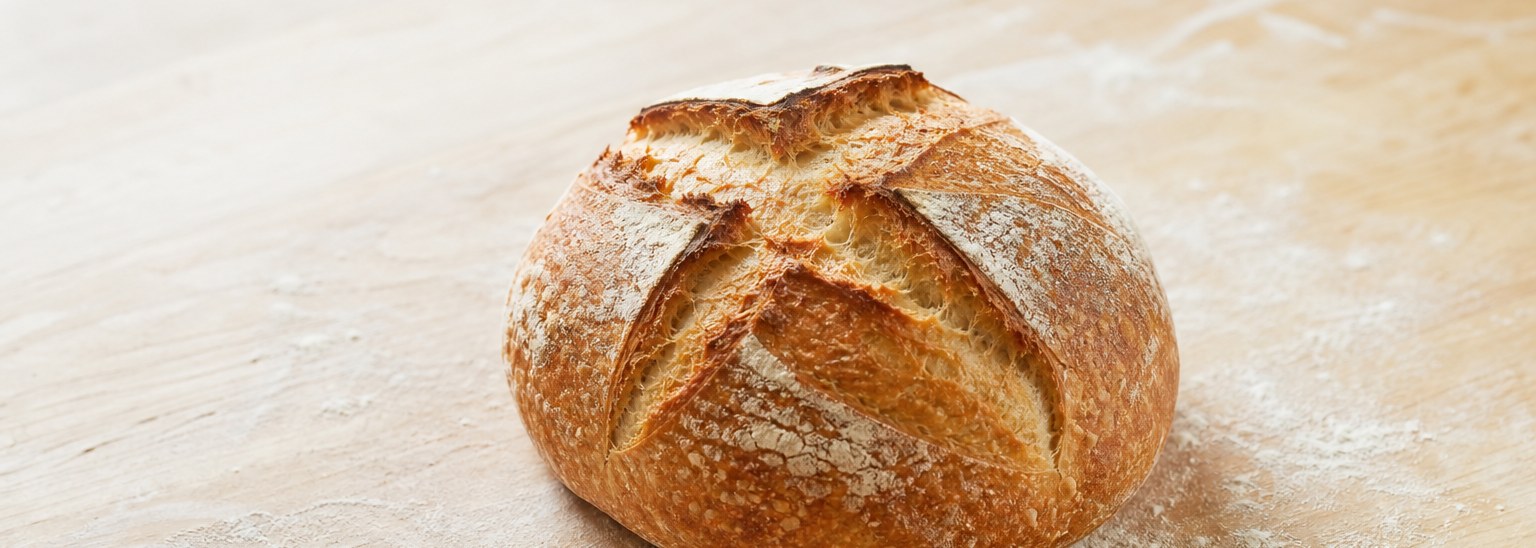

Nearly every home baker assumes that if the crust shatters correctly and the crumb opens up nice and lacy, the taste will simply take care of itself — that a loaf which looks incredible must also taste incredible. I believed exactly that, right up until one Sunday afternoon when I sliced into a round I was certain was my finest work: blistered golden crust, a proud ear, a beautifully open crumb. I had done everything the method called for. I cut a piece for my husband and watched his face closely as he chewed… and got nothing back. Just a polite nod and an “it’s good” delivered in that tone people use when they really mean “it’s fine.” I took a bite myself and felt my stomach drop. The bread wasn’t sour. It wasn’t layered or complex. It bore no resemblance to the tangy, deeply flavored loaves I’d been picturing for months. It was just… bread. Harmless, edible, entirely forgettable bread. Four hours of hands-on work and a 14-hour overnight proof, and I nearly cried right over my banneton.
If any of that sounds familiar, you’re in excellent company. Flavor might genuinely be the hardest variable to nail down in sourdough baking, and it took me a long stretch of trial, a fair amount of wasted flour, and some serious digging before I finally understood where things were going sideways. What follows are the six changes that took my baking from flat and unremarkable to complex, tangy, and full of character. Let’s get into it.
| Acid Type | Flavor Profile | Influenced By |
|---|---|---|
| Lactic acid | Soft, rounded, yogurt-like tang | Temperature, hydration, fermentation length, flour choice |
| Acetic acid | Sharper, more assertive sourness | Temperature, hydration, fermentation length, flour choice |
The Real Reason Your Loaf Tastes Flat Instead of Sour
Before we start fixing things, let’s pause on the science for a moment. Sourdough’s flavor comes down almost entirely to two acid families produced by the bacterial life in your starter: lactic acid and acetic acid. Lactic acid delivers that soft, rounded, almost yogurt-like tang, while acetic acid brings the sharper, more assertive sourness you’d recognize in a classic San Francisco-style loaf. Which one dominates depends on temperature, hydration, how long you ferment, and even the flour you’re using to feed your starter. My loaves were tasting flat because, without meaning to, I’d created conditions that kept both acids from ever fully developing. The good news is that every single one of those variables is something you can actually adjust.
How a Little Rye Flour Jump-Started My Sourdough’s Flavor
For months I baked with nothing but all-purpose and bread flour, producing loaves that were technically flawless and tasted like almost nothing. Eventually it dawned on me that I wasn’t actually giving my starter anything worth fermenting. The moment I worked in even a modest percentage of rye flour, the whole fermentation behaved differently, and the flavor deepened in a way that simply stretching out my bulk ferment never managed to achieve.
Where rye earns its keep
- Working in just 10–15% rye builds noticeably richer, earthier flavor without forcing you to stretch out your fermentation schedule
- Dark rye in particular tilts the finish toward tangier territory — that quiet, subtle sourness that has people asking what you changed
- The Bob’s Red Mill organic version blends in cleanly with no strange texture; it just lets your starter’s existing potential come through
Where rye gets tricky
- Rye soaks up more water than wheat flour does, so your dough turns noticeably stickier and wetter unless you rework your hydration — a lesson I learned the messy way on my very first attempt
- It also runs more expensive per ounce than standard bread flour, and since it usually comes in single-bag sizes, you’ll be restocking more often while you experiment with different percentages
I was skeptical that something so simple would actually fix the blandness problem—part of me thought I needed fancy equipment or mysterious techniques instead. But Bob’s Red Mill Organic Dark Rye Flour, 20oz (single pack) proved that sometimes the answer is just better ingredients for your starter to work with.
Frequently Asked Questions
Why does my sourdough taste bland even though it looks perfect?
Bland flavor usually means both lactic and acetic acid — the flavor compounds your starter produces — haven’t fully developed. Temperature, hydration, fermentation length, and flour choice all affect which acids dominate. Without the right conditions, you get technically perfect bread that tastes flat.
How much rye flour should I add to sourdough?
Working in 10–15% rye flour builds noticeably richer, earthier flavor without stretching your fermentation schedule. Dark rye in particular tilts the finish toward tangier territory. Sam mixed 15% into her standard recipe and got the complex flavor her starter wasn’t delivering alone.
Does adding rye flour change how I should mix my dough?
Yes. Rye soaks up more water than wheat flour, so your dough turns noticeably stickier and wetter unless you rework your hydration. Sam learned this the messy way on her first attempt with rye and had to adjust her recipe accordingly.
What’s the difference between lactic acid and acetic acid in sourdough?
Lactic acid delivers soft, rounded, almost yogurt-like tang, while acetic acid brings sharper, more assertive sourness like San Francisco-style loaves. Which one dominates depends on temperature, hydration, fermentation length, and the flour you use to feed your starter.
About This Article

Written by Sam Whitaker. Sam Whitaker has been baking sourdough for over a decade, including three years baking commercially, and now works out of a home kitchen in the Pacific Northwest. Sam's eleven-year-old starter, Harold, is the foundation for every recipe and troubleshooting guide on Sourdough Rising — real bread tested over and over until it works. More about this site.
Scope and limits. Sam is a home baker with no formal culinary training. Follow current food safety guidance for storage and handling, particularly with enriched or filled doughs.
Verify this against a primary source
Specifics change, and your situation may differ from the one described here. These are the authorities worth checking directly:
- USDA FoodData Central — flour and ingredient composition data
- FoodSafety.gov — safe handling and storage