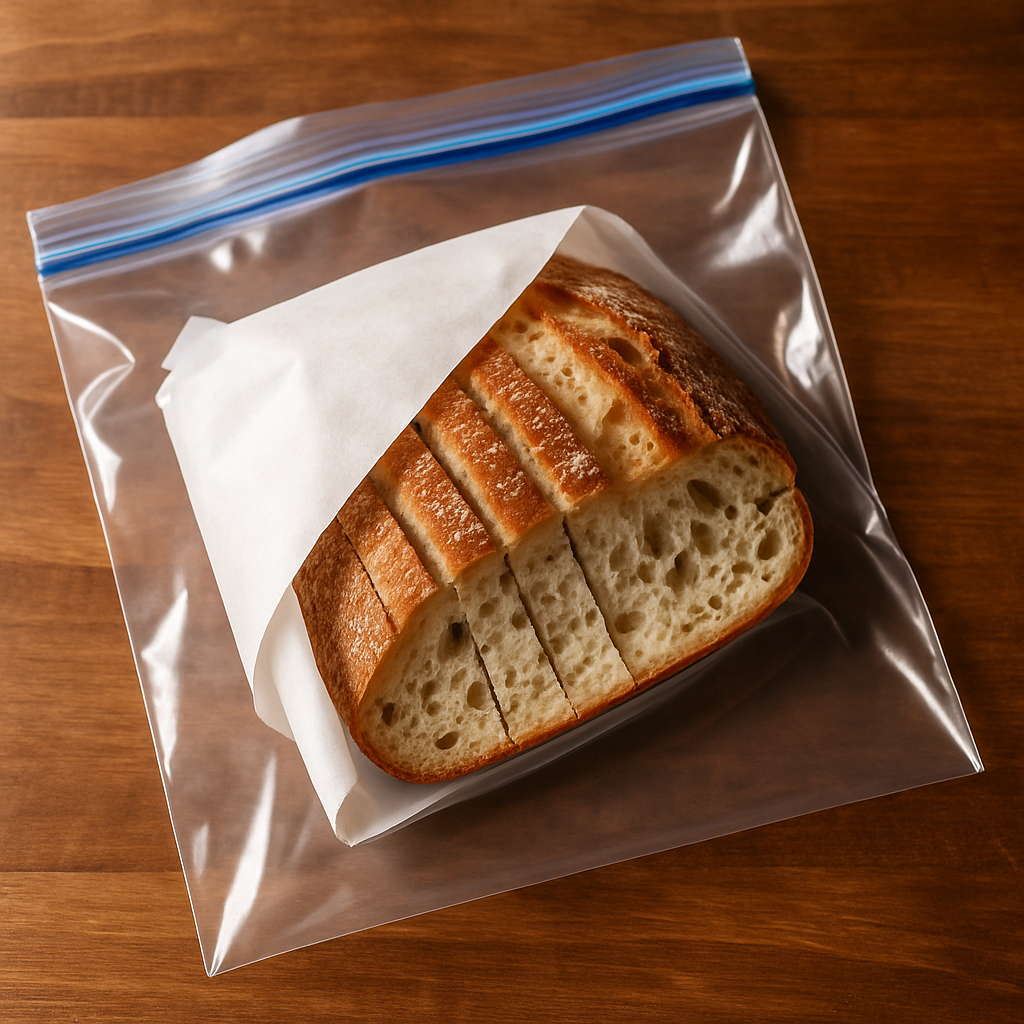
Freezer-burned sourdough with a crust like cardboard is almost always a wrapping problem, not a freezing problem. Fix the wrapping and the bread comes back nearly as good as day one.
When to Freeze for Best Results
Freeze bread the same day you bake it, once it’s fully cooled — at least 2 hours after coming out of the oven. Freezing warm bread traps steam inside the wrapping, which turns into ice crystals that damage the crumb structure during thaw.
| Method | Crumb Result | Crust Result |
|---|---|---|
| Room temperature thaw (2-3 hrs) + 350°F oven refresh (10-15 min) | Preserved | Restored |
| Microwave thaw | Gummy | Rubbery |
| Room temperature thaw of sliced bread | Soggy | Not mentioned |
The Two-Layer Wrapping Method
Wrap the cooled loaf first in a layer of parchment or wax paper, then in a layer of foil or a freezer bag with the air pressed out. The inner layer protects the crust from direct contact with plastic (which traps moisture against it), and the outer layer blocks freezer odors and prevents freezer burn.
For sliced bread, I separate slices with parchment squares before bagging so I can pull out just what I need without thawing the whole loaf.
Storage Temperature and Time
A standard freezer at 0°F keeps sourdough in good condition for up to 3 months. Beyond that, texture starts to degrade even with good wrapping. I label loaves with the freeze date so nothing sits forgotten for six months.
The Correct Way to Thaw
Never microwave frozen sourdough — it turns the crumb gummy and the crust rubbery. Instead, let the wrapped loaf thaw at room temperature for 2-3 hours, then unwrap and refresh it in a 350°F oven for 10-15 minutes to bring the crust back to life.
For sliced bread, toast straight from frozen — no thawing needed, and you avoid the sogginess that comes from thawing pre-sliced bread at room temperature.
What I’ve Learned From Years of Testing
The single biggest mistake I see is skipping the parchment layer and going straight to foil or plastic against the crust. That direct contact is what causes the soggy, leathery texture people associate with “freezer bread.” The extra 30 seconds of wrapping makes all the difference.
Freezing Discard-Based Bakes Too
This same two-layer method works for discard pancakes, waffles, and crackers, not just full loaves. I stack pancakes with parchment between each one before bagging, so I can pull out a single serving at a time from the freezer without thawing the whole batch. Crackers freeze less well — the texture softens on thaw — so I only freeze crackers I plan to re-crisp in the oven rather than eat straight from frozen.
How Freezing Affects Flavor
A well-wrapped loaf loses almost none of its sourness or complexity in the freezer, since the fermentation flavor compounds are stable at freezing temperatures. What does fade slightly is aroma — fresh-baked bread has volatile aromatic compounds that diminish over weeks in storage. The oven refresh step brings a surprising amount of that aroma back, which is part of why I never skip it.
Freezing Unbaked Dough Instead
You can also freeze shaped, unbaked dough after its final shape, before the cold retard. Wrap it the same two-layer way and freeze immediately. To bake, move it straight to the fridge frozen the night before, let it finish its retard and come up slightly in temperature over 18-24 hours, then bake as normal. This works well if you like baking fresh but hate the timing commitment of a same-day mix.
A Quick Freezer Inventory System
Once I started freezing regularly, I began keeping a small whiteboard on the freezer door listing what’s in there and when it went in. It sounds excessive for bread, but it’s the only thing that’s stopped me from losing track of a loaf in the back of the freezer for four months.
Making Freezing Part of Your Routine
I bake two loaves at a time now specifically so I can freeze one immediately. It’s turned sourdough from an occasional weekend project into something I actually have on hand during the week, without the bread ever tasting like it spent a month in the freezer.
Frequently Asked Questions
When should I freeze sourdough bread after baking?
Freeze bread the same day you bake it, once it’s fully cooled — at least 2 hours after coming out of the oven. Freezing warm bread traps steam inside the wrapping, which turns into ice crystals that damage the crumb structure during thaw.
What’s the best way to wrap sourdough for freezing?
Wrap the cooled loaf first in a layer of parchment or wax paper, then in a layer of foil or a freezer bag with the air pressed out. The inner layer protects the crust from direct contact with plastic, and the outer layer blocks freezer odors and prevents freezer burn.
How long can sourdough stay frozen at 0°F?
A standard freezer at 0°F keeps sourdough in good condition for up to 3 months. Beyond that, texture starts to degrade even with good wrapping.
How do I thaw frozen sourdough without ruining it?
Let the wrapped loaf thaw at room temperature for 2-3 hours, then unwrap and refresh it in a 350°F oven for 10-15 minutes to bring the crust back to life. Never microwave frozen sourdough — it turns the crumb gummy and the crust rubbery.
About This Article

Written by Sam Whitaker. Sam Whitaker has been baking sourdough for over a decade, including three years baking commercially, and now works out of a home kitchen in the Pacific Northwest. Sam's eleven-year-old starter, Harold, is the foundation for every recipe and troubleshooting guide on Sourdough Rising — real bread tested over and over until it works. More about this site.
Scope and limits. Sam is a home baker with no formal culinary training. Follow current food safety guidance for storage and handling, particularly with enriched or filled doughs.
Verify this against a primary source
Specifics change, and your situation may differ from the one described here. These are the authorities worth checking directly:
- USDA FoodData Central — flour and ingredient composition data
- FoodSafety.gov — safe handling and storage