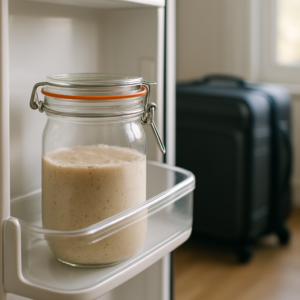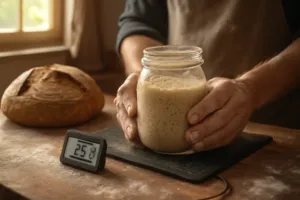

Why does your starter suddenly smell like acetone, and does that mean it’s dead? No — that sharp, nail-polish-remover scent is almost always fixable, not fatal, and I learned that lesson while hovering over Harold’s jar, one hand fanning the fumes away from my face, the other frantically typing “my sourdough starter smells like acetone” into Google. My husband wandered in, sniffed once, and asked, “Did you open a salon in here?” I nearly dumped the whole jar in the trash right then and there.
I didn’t toss it, thank goodness, because what I uncovered over the following days reshaped how I think about starter health entirely. If your jar currently reeks of acetone, nail polish, sharp cheese, or something like a neglected dorm fridge, keep reading — this ends well.
| Cause of Off-Smell | Smell Description | Solution |
|---|---|---|
| Skipped feedings | Acetone / nail polish | Resume regular feeding schedule |
| Kitchen too hot (>78°F) | Acetone / nail polish | Feed twice daily; relocate to cooler spot |
| White flour only | Acetone / nail polish | Mix in whole grain flour at feeding |
| Feeding ratio too small | Acetone / nail polish | Adjust to 1:1:1 or 1:2:2 by weight |
| Bacterial imbalance | Parmesan / cheese funk | Proper feeding and care; consider rye flour |
What’s Actually Happening When Your Starter Smells Like Acetone, Cheese, or Nail Polish
Let me break down the science in normal-person terms, because once I understood the mechanics behind that jar, the panic turned into troubleshooting.
A sourdough starter is essentially a tiny, living colony of wild yeast and lactic acid bacteria coexisting in one jar. When that colony is fed properly and in balance, the aroma reads as pleasantly sour, faintly yeasty, occasionally fruity. But let the bacteria outpace the yeast, or let the whole culture go without food for too long, and the fermentation chemistry changes course. Rather than the gentle lactic acid that gives sourdough its familiar tang, the jar starts churning out acetic acid along with other byproducts — including ethyl acetate, the exact compound behind that sharp, solvent-like odor. Ethyl acetate really is an ingredient in nail polish remover, so your nose isn’t lying to you, and your starter hasn’t turned into some kind of science experiment gone wrong.
The parmesan-like funk works the same way. Some bacterial strains generate butyric acid mid-fermentation — the very compound that gives parmesan its bite and, less charmingly, shows up in the smell of vomit. Unsettling, sure. But rarely a real problem. It usually just signals that your starter is underfed, stressed, or sitting in conditions that are nudging its microbial balance off course.
Why Your Starter Smells Off: The Usual Suspects
Once Harold went haywire, I ran through a real checklist. Here’s exactly what turned up, and what deserves your attention first.
You’ve Skipped a Feeding (or Several)
This was exactly my situation — I’d left Harold sitting on the counter during a heat wave and simply lost track of the days. In warm conditions, a starter can burn through its available food in as little as four to six hours, then spend the next eighteen hours or so marinating in its own acidic byproducts. The longer that stretch goes unfed, the more acetic acid accumulates, and the stronger that acetone edge becomes. It’s a lot like forgetting a pot of coffee on a hot burner — it starts out great and slowly turns into something you’d rather not smell.
Your Kitchen Runs Too Hot
Heat accelerates fermentation in a big way. Once your kitchen climbs past 78 degrees Fahrenheit, your starter likely needs two feedings a day rather than one. I relocated mine to a cooler spot in the kitchen one summer, and the change in smell was almost immediate.
Your Flour Isn’t Feeding the Culture Enough
Heavily refined white flour carries far fewer minerals and natural sugars than whole grain varieties. A starter running exclusively on white flour for an extended stretch can start to falter simply from lack of nutrition. Mixing in even a modest percentage of whole grain flour at feeding time gives the microbial population something more substantial to work with.
Your Feeding Ratio Needs Adjusting
Feed a big blob of starter with only a small amount of fresh flour and water, and that food supply disappears fast. The usual solution is to discard more before each feeding so the ratio of new flour to existing starter is more generous — think 1:1:1, or even 1:2:2 by weight.
How Rye Flour Turned My Acetone Disaster Into a Starter Upgrade
That solvent-like smell usually points to a hungry, stressed starter running purely on white flour with no other metabolic options. Introducing rye flour into the feeding rotation hands your culture a completely different food source, and the aroma shifts from alarming to purposeful — occasionally even enjoyable.
Where Rye Delivers
- King Arthur’s organic medium rye ferments quicker and produces a deeper, almost beer-like aroma in place of that harsh acetone edge — within two feedings, my starter went from worrying to genuinely appealing.
- The natural enzymes in rye help settle down a struggling culture — I’ve watched sluggish, off-smelling starters rebound just from swapping one weekly feeding for a 50/50 rye blend.
- It’s certified organic and easy to find, so there’s no chasing down some obscure specialty mill just to solve a smell problem in your jar.
Where Rye Falls Short
- Rye soaks up more water than all-purpose flour, so skipping a hydration adjustment when you switch will leave your starter thick and sluggish — which can temporarily make the odor even worse.
- It’s no cure for a starter that’s genuinely neglected or contaminated — if your jar smells like actual mold, or a vinegar reek that just won’t quit, rye flour is a temporary patch, not the fix you need.
I almost gave up on my acetone starter the first time I fed it rye without adjusting water, and it looked worse before it looked better — but two more feedings in, the transformation was real. King Arthur Organic Medium Rye Flour became the tool that actually got me curious instead of queasy.
Frequently Asked Questions
Is my sourdough starter dead if it smells like acetone?
No. That sharp, nail-polish-remover scent is almost always fixable, not fatal. The smell comes from ethyl acetate, a byproduct when bacteria outpace yeast or your starter goes too long without food. Once you identify the cause and adjust feeding, the aroma returns to pleasantly sour and yeasty.
Why does my starter smell like parmesan cheese?
Some bacterial strains generate butyric acid during fermentation—the same compound in parmesan. This funky smell usually signals your starter is underfed, stressed, or sitting in conditions that’ve thrown its microbial balance off course. It rarely indicates a real problem and typically resolves with proper feeding and care.
How often should I feed my starter when it’s hot outside?
Once your kitchen climbs past 78 degrees Fahrenheit, your starter likely needs two feedings a day rather than one. In warm conditions, a starter can burn through its available food in as little as four to six hours, then spend hours marinating in acidic byproducts.
Does rye flour really fix acetone-smelling starter?
Rye flour can help. King Arthur Organic Medium Rye ferments quicker and produces a deeper, beer-like aroma instead of harsh acetone. Within two feedings, an acetone-smelling starter can shift noticeably. However, rye won’t fix genuinely neglected or contaminated starters—discard any jar showing actual mold.
About This Article

Written by Sam Whitaker. Sam Whitaker has been baking sourdough for over a decade, including three years baking commercially, and now works out of a home kitchen in the Pacific Northwest. Sam's eleven-year-old starter, Harold, is the foundation for every recipe and troubleshooting guide on Sourdough Rising — real bread tested over and over until it works. More about this site.
Scope and limits. Sam is a home baker with no formal culinary training. Follow current food safety guidance for storage and handling, particularly with enriched or filled doughs.
Verify this against a primary source
Specifics change, and your situation may differ from the one described here. These are the authorities worth checking directly:
- USDA FoodData Central — flour and ingredient composition data
- FoodSafety.gov — safe handling and storage