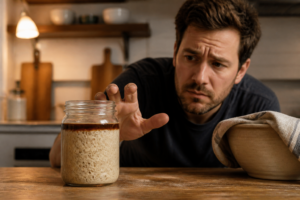
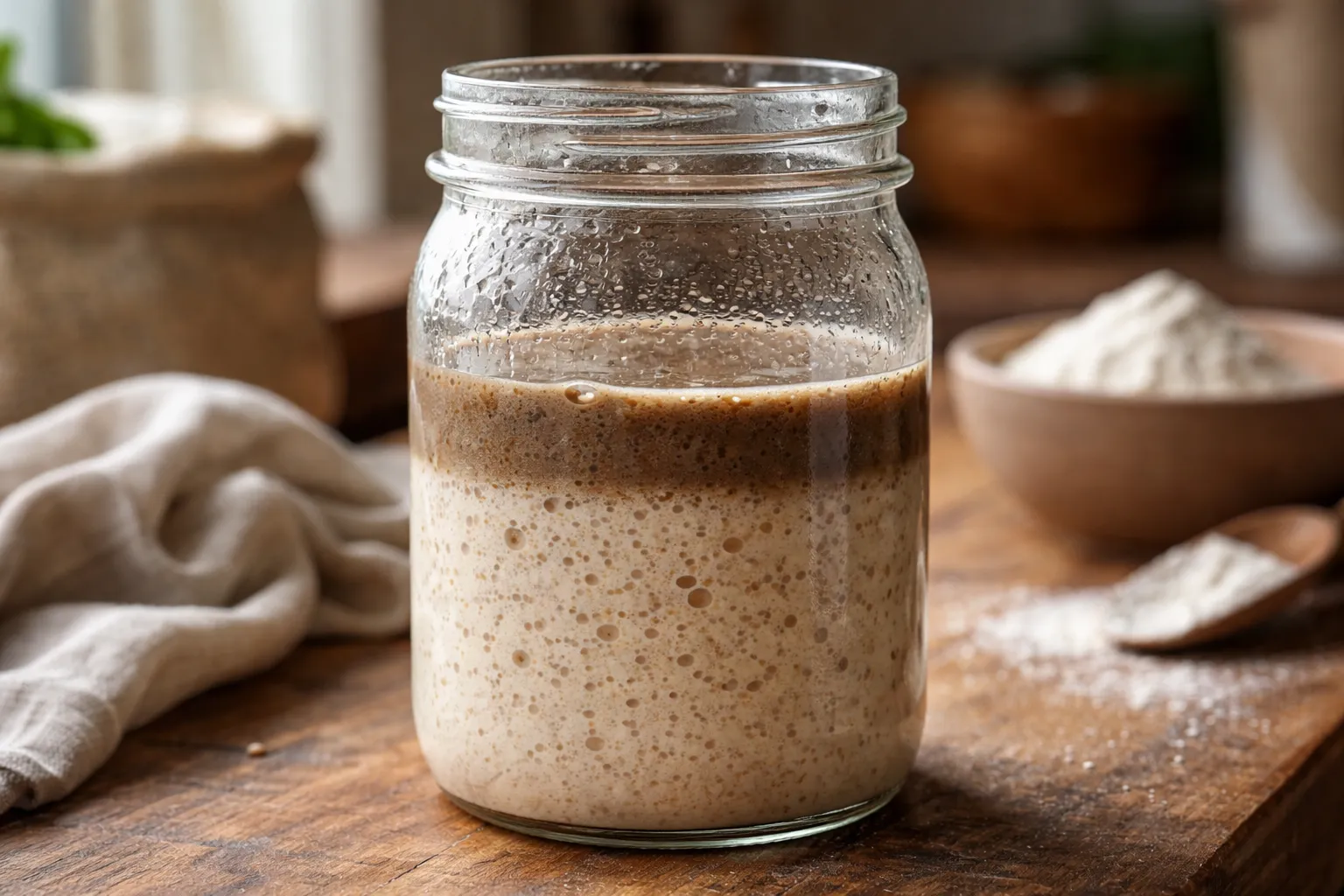
The lid barely cracked open before that sharp, boozy tang hit me — sitting right on top of my starter was a thin layer of grayish liquid I hadn’t seen before, pooled like something had gone wrong overnight. This was a starter I’d been babying for three months, and my brain immediately jumped to worst-case scenarios: had I accidentally fermented it into something dangerous? Was this the beginning of the end? I stood there in my pajamas, jar in hand, convinced I’d ruined months of work. What I was actually looking at was hooch, and the question that mattered wasn’t “what is this stuff” — it was whether I needed to panic. Turns out, no. Below is everything I wish someone had explained to me before that jar-lifting moment of dread.
Sourdough Hooch: A No-Nonsense FAQ
Is hooch something I should be concerned about?
Generally, no — as long as what you’re seeing is that typical gray, dark gray, or brownish liquid carrying a sour, alcohol-tinged smell. It’s simply your starter signaling that it’s alive and running low on food. The real red flag is pink or orange coloring showing up in the liquid or the starter underneath it, which points to bacterial contamination you don’t want to feed through — that scenario calls for tossing it and beginning fresh.
What causes the separation and liquid buildup to begin with?
Think of your starter as a living community of wild yeast and lactic acid bacteria. Once the available flour gets consumed, the yeast keeps chugging along and releases ethanol as a leftover product — that’s your hooch, and it settles on top since it’s lighter than the rest of the mixture. It tends to appear when feedings are spaced further apart than your starter needs, the kitchen’s warmer than usual and speeds fermentation along, your starter-to-flour ratio is small enough to burn through food quickly, or — the classic culprit — you simply lost track of time. Guilty as charged, most weeks.
Should that liquid get dumped out or mixed back in?
You’ve got options here. Draining it off before your next feeding softens the sour edge it can leave behind. Folding it back in is perfectly safe too, and actually deepens the tang — plenty of bakers prefer it that way. These days I mix mine in every single time; I’ve come to like the extra sourness it lends to my finished loaves.
What’s the next step once I’ve handled the liquid?
Time for a solid feeding — something like a 1:2:2 or 1:3:3 ratio (one part starter to two or three parts flour and three parts water by weight, matching quantities for each) suits a starter that’s built up hooch and is clearly hungry. Set it somewhere warm, 70 to 78°F, and expect bubbling activity with roughly a doubling in size somewhere between four and eight hours.
Does seeing hooch mean my culture has gone weak?
Not at all — it actually shows the opposite, that your microbial population is lively enough to have burned through its entire food source. A starter sitting there with zero fermentation activity is a bigger concern than one that’s produced hooch. That liquid is your starter’s way of saying it’s alive and ready to eat, not a symptom of failure.
At what point does frequent hooch become an actual concern?
Seeing it fairly often — weekly, even, if you’re feeding on a relaxed schedule — is nothing unusual and doesn’t need to trigger worry by itself. The thing to actually watch isn’t frequency, it’s character: liquid turning pink or orange, or a smell shifting from tangy-boozy to genuinely rotten — those are the signals worth acting on, not the mere presence of hooch.
The Jar That Took the Guesswork Out of Watching My Starter
The first time you spot hooch, what you really need is a vessel that shows you exactly what’s going on inside — plus a way to make sense of it. Any old jar will technically do the job, but one built specifically for tracking starter activity turns that nervous guesswork into something you can actually measure and rely on.
Where it earns its keep
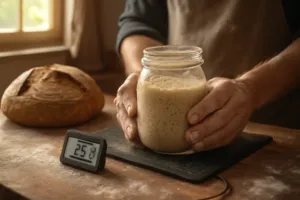
- That sliding date band gives you a real way to track your starter’s rise-and-fall timeline, which is the honest measure of whether hooch means your feeding schedule needs tightening up.
- The built-in thermometer strip earned its keep fast — I discovered a good chunk of my hooch worry came down to a chilly kitchen slowing my starter’s activity, not it dying on me.
- That silicone scraper lets you scrape the jar clean without wasting a scrap of starter, and the breathable cloth lid beats a sealed cap for everyday upkeep.
Where it falls short
- At 24oz, it runs smaller than a standard quart jar, so scaling up to bigger batches might mean you outgrow it sooner than expected.
- That thermometer strip only gives you a rough read — fine for general awareness, but not precise enough once you’re troubleshooting more finicky, temperature-dependent issues.
I almost returned this jar after week two because I thought the extra bells and whistles were overkill, but once I actually started using the band to track feeding schedules, it became the thing that made hooch stop feeling like a mystery. Sourdough Starter Jar with Date Marked Feeding Band, Thermometer, Silicone Scraper, and Cloth Cover
Frequently Asked Questions
Is hooch in my sourdough starter dangerous to eat?
Generally, no — gray, dark gray, or brownish liquid with a sour, alcohol-tinged smell is normal and safe. The real red flag is pink or orange coloring in the liquid or starter underneath, which signals bacterial contamination you should discard and start fresh from.
Should I stir hooch back into my starter or drain it?
Both options are safe. Draining it softens the sour edge, while mixing it back in deepens the tang. Sam mixes his in every time and prefers the extra sourness it brings to finished loaves.
What causes hooch to form on top of my starter?
Hooch forms when your starter consumes available flour and yeast continues fermenting, releasing ethanol as a byproduct. It appears when feedings space further apart than needed, your kitchen runs warmer, your starter-to-flour ratio is small, or you lose track of time.
How should I feed my starter after seeing hooch?
Use a 1:2:2 or 1:3:3 ratio by weight, then set it somewhere warm between 70 to 78°F. Expect bubbling activity with roughly a doubling in size somewhere between four and eight hours.
About This Article

Written by Sam Whitaker. Sam Whitaker has been baking sourdough for over a decade, including three years baking commercially, and now works out of a home kitchen in the Pacific Northwest. Sam's eleven-year-old starter, Harold, is the foundation for every recipe and troubleshooting guide on Sourdough Rising — real bread tested over and over until it works. More about this site.
Scope and limits. Sam is a home baker with no formal culinary training. Follow current food safety guidance for storage and handling, particularly with enriched or filled doughs.
Verify this against a primary source
Specifics change, and your situation may differ from the one described here. These are the authorities worth checking directly:
- USDA FoodData Central — flour and ingredient composition data
- FoodSafety.gov — safe handling and storage