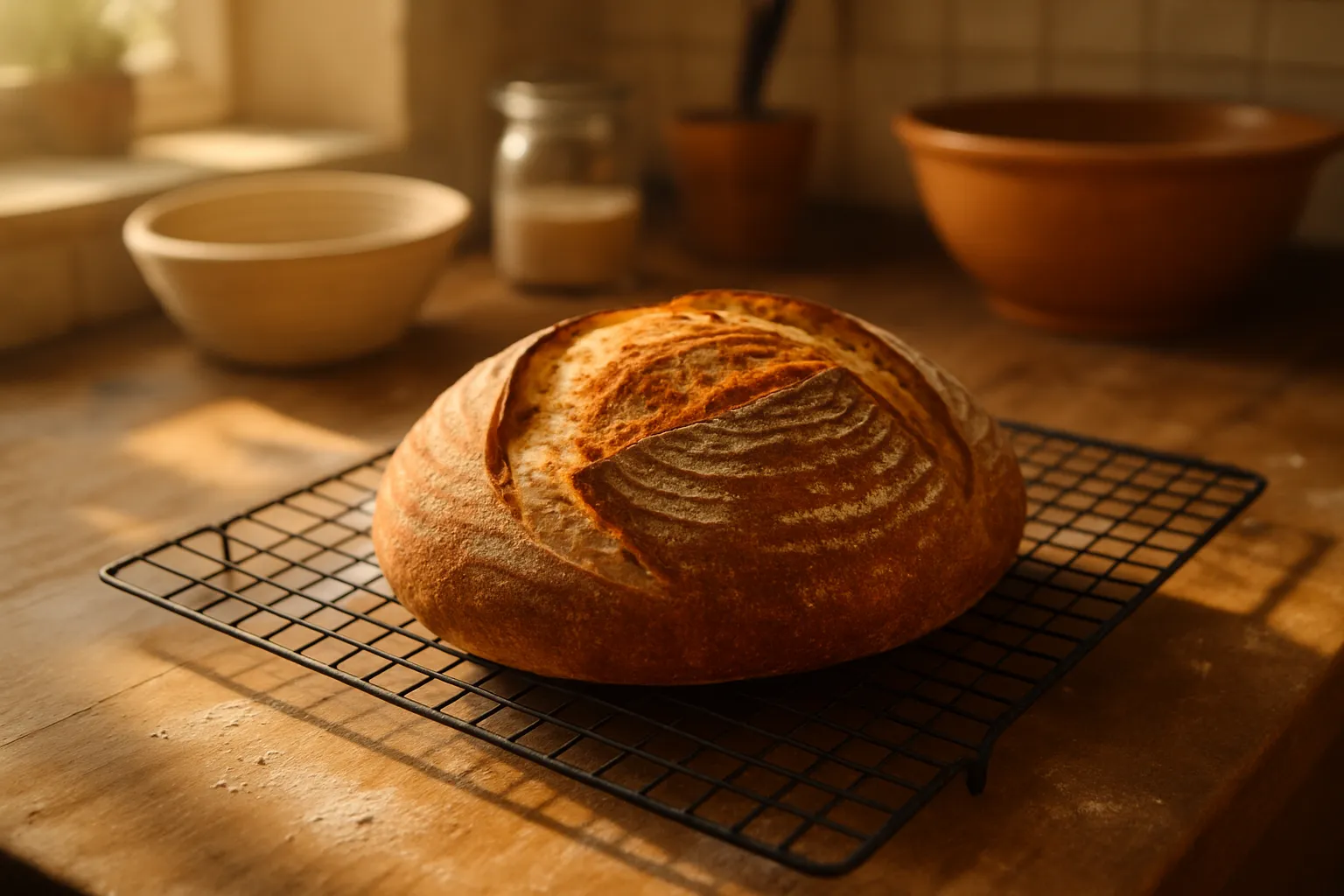
Nearly every home baker I know treats sourdough like a probiotic you can slice — the working theory being that all those live cultures bubbling away in your starter survive the oven and march straight into your gut. That assumption falls apart under any real scrutiny, and figuring out why turned into one of the more worthwhile research rabbit holes of my baking life. My own curiosity wasn’t academic at first — years of bloating and sluggish digestion had become something I’d quietly written off as just how my body worked. A few weeks into eating loaves I’d baked myself, something shifted. Digging into the actual sourdough gut health microbiome research is what changed my thinking, and what I found genuinely surprised me: the same slow fermentation responsible for that incredible tang is also doing serious work on your digestive system — just not in the way most people assume.
Why Real Sourdough Isn’t Just “Bread With a Sour Kick”
Here’s something worth sitting with: bread is not one uniform category, and sourdough earns its name from a process, not a flavor. Genuine sourdough comes from a long, unhurried fermentation carried out by wild yeast and lactic acid bacteria (LAB) — organisms you grow and maintain yourself in a living starter. That fermentation step is the whole story. It’s why sourdough carries a complexity of flavor that commercial-yeast bread can’t replicate, and it’s exactly why your digestive system reacts to it so differently.
Commercial loaves are built for speed. The dough gets mixed, given a quick rise courtesy of commercial yeast, and baked — the whole process often wrapped up in under two hours. There’s simply no window for fermentation to accomplish anything meaningful. Sourdough works on an entirely different clock, fermenting anywhere from 6 to 24 hours, sometimes longer once you factor in a cold retard. Across that stretch, the wild yeast and bacteria are steadily reshaping the flour in ways that carry real consequences for your health.
The Real Science Linking Sourdough Fermentation to Your Microbiome
Let’s break down what’s actually going on during fermentation — once this clicks, you won’t want to rush a bake again.
Probiotics: What’s Actually Alive in Your Dough
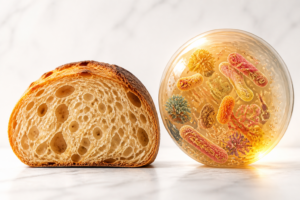
A sourdough starter is packed with lactic acid bacteria strains, Lactobacillus among them — the same family found in yogurt, kimchi, and other fermented foods known for supporting gut health. As fermentation progresses, these bacteria multiply and churn out lactic and acetic acids. The oven’s heat does kill off most of the live bacteria by the time your loaf is finished, but research points to the metabolic byproducts they leave behind — certain peptides and organic acids among them — as still doing work to support a healthy gut environment. Pair your sourdough with other fermented foods regularly, and you’re actively building a more diverse microbiome.
Prebiotics: Fuel for the Bacteria Already Living in You
This is the part that really got me hooked. Fermentation breaks the flour’s complex carbohydrates down into shorter-chain molecules, and those molecules function as prebiotics — essentially a food source for the beneficial bacteria that already call your gut home. A properly fermented loaf made with whole grain or high-extraction flour is legitimately rich in these prebiotic compounds. You’re not just eating a slice of bread at that point; you’re actively feeding your microbiome.
Reducing Phytic Acid for Better Mineral Uptake
Whole grains come loaded with phytic acid, which latches onto minerals like iron, zinc, and magnesium and blocks your body from absorbing them well. A long fermentation cuts phytic acid levels dramatically — research has documented reductions as high as 90% in well-fermented sourdough, though 60–70% is the more common range in practice. The upshot is that the minerals in your loaf become far easier for your body to actually use. Your gut stops fighting against antinutrients and starts getting the nutrition it’s supposed to.
A Gentler Effect on Blood Sugar
Fermentation also reshapes the starch itself in a way that slows how quickly glucose enters your bloodstream. Study after study has found that sourdough produces a noticeably smaller glycemic spike than bread made from the same flour with commercial yeast. From a gut-health standpoint, steadier blood sugar translates to less inflammation — and a digestive system that simply runs calmer.
Baking Choices That Get You the Most Gut Benefit
Not every loaf that comes out of your oven delivers equal benefits. Here’s the approach I stick to bake after bake to squeeze the most gut-supportive results out of the process.
- Reach for whole grain or high-extraction flour. The more of the original grain that stays intact, the more prebiotic fiber and minerals end up in your finished loaf. I mix bread flour with whole wheat or whole spelt in almost everything I bake.
- Slow the fermentation down. Shoot for a bulk fermentation of at least 6–8 hours at room temperature, or shape the dough and let it retard overnight in the fridge. That extra time is what allows the LAB to do their best work.
- Keep your starter genuinely active. A vigorous starter fuels a vigorous fermentation. Feed it consistently with quality flour and filtered water, and pay attention to how it smells and behaves.
- Leave out the extras. Authentic sourdough is nothing more than flour, water, salt, and starter. A grocery-shelf loaf with a long ingredient list — regardless of whether “sourdough” is printed on the bag — won’t hand you the same benefits.
- Give it a full cooldown before you cut into it. I’ll admit it’s the toughest instruction to follow. But slicing a hot loaf disrupts the starch structure and affects both texture and how easily it digests.
The Cookbook That Finally Explained Why My Starter Was Doing More Than Just Rising Bread
I’d already spent months baking sourdough before I understood what my dough was actually doing — and, more importantly, what it would go on to do inside my body once I ate it. Lacking any real framework tying the fermentation science to gut health outcomes, I was essentially guessing, hoping my long overnight bulk ferments were accomplishing something beyond making my kitchen smell fantastic.
What works
- Lays out precisely how extended fermentation times break down gluten and generate those beneficial organic acids — so a 16-hour bulk stops looking like overkill and starts looking like the actual point.
- Ties specific baking decisions — hydration, temperature, timing — directly to how prebiotics and probiotics develop, so you’re building bread with purpose instead of just following steps.
- Offers recipes built around gut-healing fermentation principles from the ground up, rather than “healthy-ish sourdough recipes” — the construction behind them is genuinely different.
What doesn’t
- Don’t expect a troubleshooting manual for everyday baking hiccups — if your dough keeps spreading or your crust won’t open up, you’ll need a different resource for those fixes.
- Some of the health claims, while backed by legitimate science, will still leave you doing extra reading if you want to explain them confidently to a skeptical relative over dinner.
I nearly wrote it off as another wellness-adjacent title until I actually ran the fermentation protocols on my own starter and noticed a real, measurable difference in how I felt after eating the bread. If you actually want to understand the link between how you bake and how your body reacts, The Gut-Healing Sourdough Cookbook fills in the piece that was missing.
Frequently Asked Questions
Do live bacteria in sourdough survive baking?
Most live bacteria are killed by oven heat, but research shows their metabolic byproducts—certain peptides and organic acids—remain and still support a healthy gut environment. The real benefit comes from what the fermentation process accomplishes, not from live cultures reaching your digestive system.
How much phytic acid does sourdough fermentation remove?
A long fermentation cuts phytic acid levels dramatically, with research documenting reductions as high as 90% in well-fermented sourdough, though 60–70% is the more common range in practice. This makes minerals like iron, zinc, and magnesium far easier for your body to absorb.
What’s the minimum bulk fermentation time for gut health?
Shoot for a bulk fermentation of at least 6–8 hours at room temperature, or shape the dough and let it retard overnight in the fridge. That extra time allows the lactic acid bacteria to do their best work reshaping the flour and developing prebiotic compounds.
What ingredients should real sourdough contain?
Authentic sourdough contains nothing more than flour, water, salt, and starter. A grocery-shelf loaf with a long ingredient list won’t deliver the same gut-health benefits, regardless of whether “sourdough” is printed on the bag.
About This Article

Written by Sam Whitaker. Sam Whitaker has been baking sourdough for over a decade, including three years baking commercially, and now works out of a home kitchen in the Pacific Northwest. Sam's eleven-year-old starter, Harold, is the foundation for every recipe and troubleshooting guide on Sourdough Rising — real bread tested over and over until it works. More about this site.
Scope and limits. Sam is a home baker with no formal culinary training. Follow current food safety guidance for storage and handling, particularly with enriched or filled doughs.
Verify this against a primary source
Specifics change, and your situation may differ from the one described here. These are the authorities worth checking directly:
- USDA FoodData Central — flour and ingredient composition data
- FoodSafety.gov — safe handling and storage