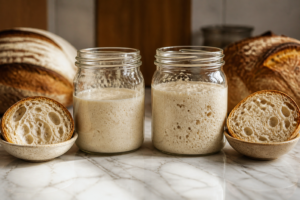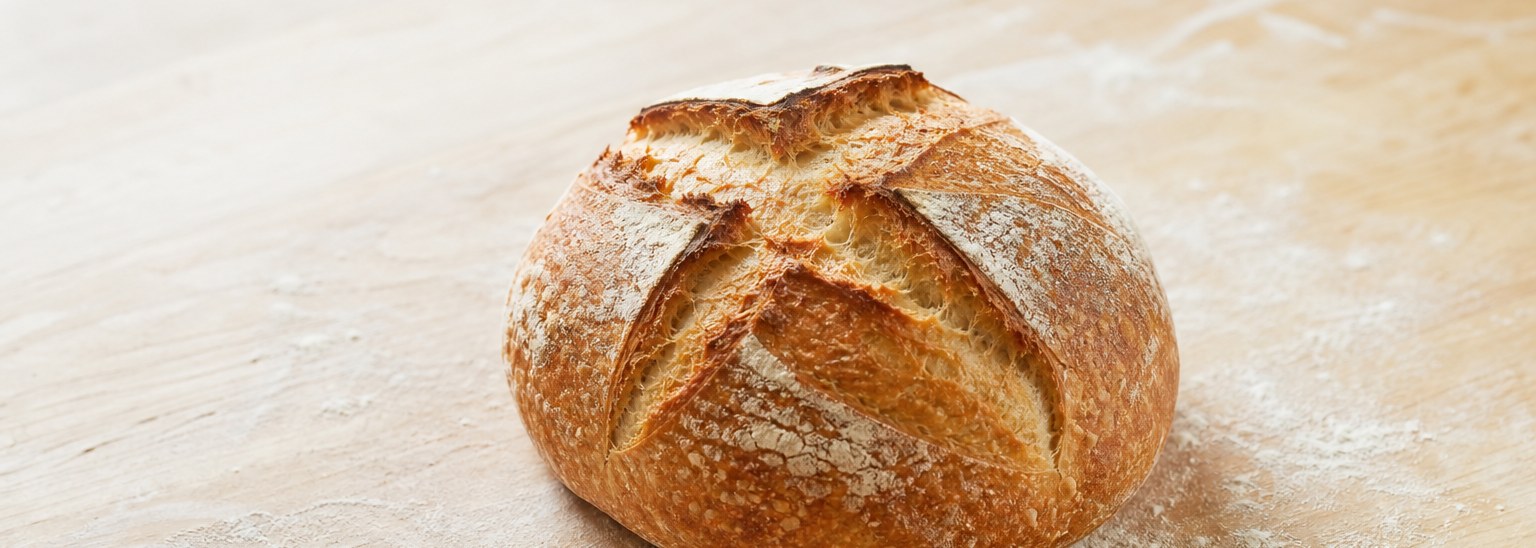
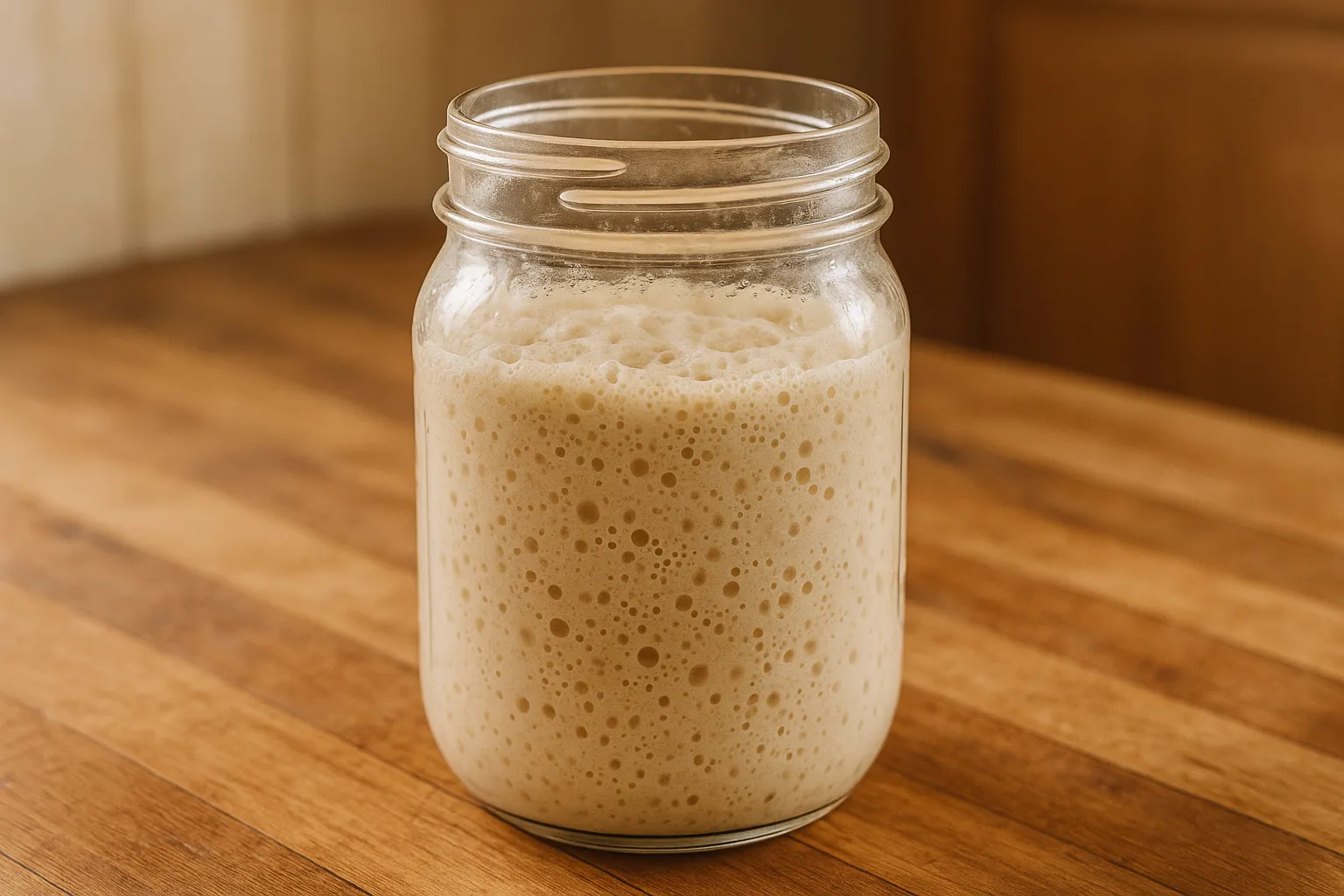
Picture the cross-section of a loaf split open on my cutting board — that lace-like pattern of irregular holes, the slightly glossy sheen along the crumb walls, the way the top crust caramelized into deep amber rather than pale beige. That single photo is proof of an entire invisible workforce. A sourdough starter looks like nothing more than flour and water sitting in a jar, but it’s actually a bubbling, living colony of wild yeasts and beneficial bacteria doing quiet, relentless chemistry. These organisms collaborate in a way that turns humble pantry staples into bread with real tang, real digestibility, and real nutritional upside. Once you grasp what’s actually happening inside that jar, the whole craft of sourdough starts making a lot more sense.
. The Science of Sourdough: A Cu…
The Living Engine Inside Every Starter
A sourdough starter is really just a captured colony of microorganisms pulled straight from your surroundings. You build it by combining flour and water and letting it sit long enough for fermentation to take hold. Wild yeast and bacteria already riding along on the flour and drifting through the air move in and set up shop in that paste. Feed it consistently with fresh flour and water over several days, and what emerges is a stable, vigorous culture. That culture then does the job commercial baker’s yeast would otherwise handle — it’s your leavening, sourced entirely from nature rather than a packet.
What’s remarkable is how location-specific this whole process is. No two starters are truly identical, because each one reflects the microbial fingerprint of the place it was raised. That’s why a starter cultivated in San Francisco carries microbes genuinely different from one raised somewhere in Europe, and it’s part of why sourdough tastes noticeably different depending on where in the world it was baked. Your job as the baker isn’t to control these organisms so much as look after them — keeping up with regular feedings so the colony stays active and ready to do its leavening work whenever you need it.
Two Microbes, One Cooperative Deal
What makes sourdough fermentation work so well comes down to a partnership between two microbial groups: wild yeast and lactic acid bacteria, often shortened to LAB. Rather than fighting for the same resources, these two groups have settled into a cooperative arrangement where each one’s activity actually benefits the other. That cooperation is the real source of everything distinctive about sourdough — the rise, the tang, the structure, all of it.
Leavening is mostly the yeast’s job. It feeds on the sugars present in the flour and, in the process, releases carbon dioxide. That gas gets caught inside the dough’s gluten structure, and that’s what causes rising. The lactic acid bacteria are consuming sugar too, but instead of gas, their output is lactic and acetic acid. Those acids are exactly what gives sourdough its signature tang. On top of the flavor contribution, the acidity these bacteria generate also acts as a defense mechanism, keeping unwanted spoilage organisms out and making the whole culture remarkably tough and self-protecting. The Kitchn: How to Make Sourdo…
What Wild Yeast Actually Does
wild yeasts are what drive the rise in sourdough. Where commercial yeast relies on a single cultivated strain of Saccharomyces cerevisiae, a starter is home to a whole mix of different wild yeast species living together. These strains have adapted to survive the low pH of a sourdough environment, and as a trade-off, they move at a noticeably slower pace than store-bought yeast. That sluggishness isn’t a downside — it’s exactly what gives the dough time to build deeper, more layered flavor.
When these yeasts break down carbohydrates, the byproducts are CO2 and ethanol. The CO2 is what gives you that open, irregular crumb bakers chase after. The ethanol, meanwhile, lends the finished loaf its faint fruity, floral background notes. This unhurried, natural rise is essentially the defining trait of traditional bread-making. King Arthur Baking: Sourdough …
Why Lactic Acid Bacteria Matter So Much
If yeast handles the rise, lactic acid bacteria handle the flavor — and they do so from a position of overwhelming numbers, outnumbering yeast cells by roughly 100 to 1 in most cultures. These bacteria drive the fermentation reactions that generate the organic acids sourdough is known for. Lactic acid brings a soft, yogurt-like tang, while acetic acid delivers something sharper and more vinegar-forward.
Which acid dominates depends heavily on hydration level and temperature. Ferment your dough somewhere warmer, and the LAB populations that favor lactic acid production tend to take over. Let it ferment cooler and longer, and acetic acid production climbs instead. In practice, this means you can nudge your bread’s flavor in either direction just by tweaking temperature and timing.
Why Fermented Bread Might Do More for Your Body
Sourdough isn’t only about flavor — its fermentation process brings along some real potential health perks too. These are the kinds of benefits that make it stand apart from bread leavened with plain commercial yeast.
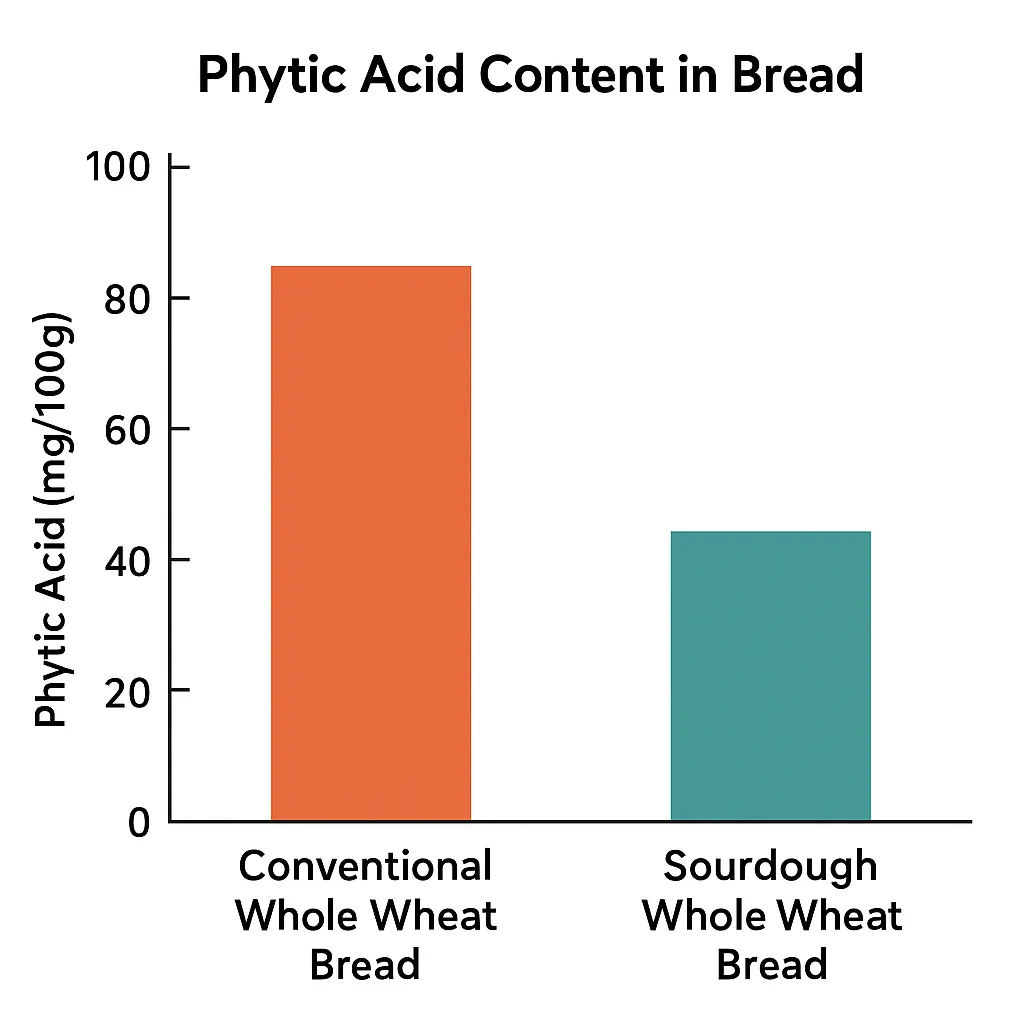
One benefit is easier digestion. Because fermentation happens slowly over an extended period, gluten proteins get broken down into simpler, more digestible fragments. People dealing with non-celiac gluten sensitivity sometimes find sourdough easier on their systems as a result. On top of that, fermentation lowers the level of phytic acid in the bread. That matters because phytic acid has a tendency to latch onto minerals and block the body from absorbing them. Source
. Sourdough Bread: A Culinary Tr…
There’s also the glycemic index angle — sourdough bread generally scores lower than most other breads on this measure. The organic acids created during fermentation slow the rate at which your body breaks down and absorbs starches, which translates into a gentler, more gradual blood sugar rise after you eat it. For anyone trying to keep energy levels stable or manage blood sugar, that’s a meaningful advantage. And fermentation doesn’t stop there — it also generates prebiotic compounds that feed beneficial gut bacteria, adding a digestive-health bonus on top of everything else.
Pulling it all together, Sourdough Bread: A Global Culinary Journ… really comes down to microorganisms working as a team. The relationship between wild yeast and bacteria doesn’t just produce bread with a richer, more complex flavor — it also delivers genuine, measurable health advantages. The more you understand about what’s happening chemically inside that starter, the more this ancient, rewarding craft starts to reveal itself.
Stop Guessing Your Starter’s Ripeness — Test the pH Instead
For years I fed my starter on a fixed schedule, assuming that “doubled in size” was all the confirmation I needed before baking with it. Then a flat loaf or gummy crumb would show up, and I’d blame my technique instead of admitting the starter was probably under-ripe or already past its peak. Measuring your culture’s pH tells you exactly where those microbes are in their cycle — something no timer or visual check can really give you.
What works
- You can pinpoint the exact moment your starter drops into the acidic zone (roughly pH 3.5–4.5) where fermentation activity peaks, which takes the guesswork out of both feeding schedules and bulk fermentation timing.
- Test strips are affordable enough to use several times on a single bake day, letting you track exactly how your particular starter reacts to your kitchen’s temperature — genuinely useful if you relocate, the seasons shift, or you tweak your feeding ratio.
- Strip testing is how I figured out why one of my starters had gone sluggish: it was sitting at pH 3.8, meaning it had overfermented, instead of landing in the ideal 4.0–4.2 range — once I adjusted the feeding schedule, it bounced right back.
What doesn’t
- The color bands on these strips are honestly tough to read under dim lighting or when your eyes are tired by the end of the day — I’ve resorted to holding them up against a window or my phone’s flashlight more often than I’d like to admit.
- A low pH result won’t explain *why* your starter overfermented in the first place — was it left too long between feedings, or was the kitchen too warm? — so you still need your own judgment and experience to track down the actual cause.
I almost ditched these after my first batch got inconsistent results, but then I realized I wasn’t waiting long enough for the color to fully develop on the strip. Now they’re one of my most-grabbed tools when something feels off. Grab a pack of Sourdough pH Test Strips.
Sourdough pH Test Strips
I test mine multiple times per bake day now—caught my overfermented starter at pH 3.8 and fixed it.
Check Price on Amazon →This post contains affiliate links. As an Amazon Associate, I earn from qualifying purchases at no extra cost to you.
About This Article

Written by Sam Whitaker. Sam Whitaker has been baking sourdough for over a decade from a home kitchen in the Pacific Northwest. Sam's four-year-old starter, Harold, is the foundation for every recipe and troubleshooting guide on Sourdough Rising — no commercial ovens or professional training, just real bread tested over and over until it works. More about this site.
Scope and limits. Sam is a home baker with no formal culinary training. Follow current food safety guidance for storage and handling, particularly with enriched or filled doughs.
Verify this against a primary source
Specifics change, and your situation may differ from the one described here. These are the authorities worth checking directly:
- USDA FoodData Central — flour and ingredient composition data
- FoodSafety.gov — safe handling and storage