My sister-in-law once held up her phone with a photo of a squashed, wide loaf and asked me point-blank: “Why does this look like a pancake when I followed every step?” Nine times out of ten, that question traces back to one culprit — the proofing basket, or banneton, wasn’t matched to the dough inside it. These baskets aren’t optional extras; they’re what gives your loaf its shape through that final rise before baking. Get the dimensions wrong and everything else you did right gets undone — go too big and the loaf spreads thin and wide, go too small and the dough climbs the sides and loses its structure entirely. Below you’ll find the sizing reference I wish someone had handed me back when I started — and if you want the full breakdown on materials, round versus oval, and upkeep, I’ve laid all of that out in my full guide to choosing a banneton by size and material.
| Basket Size | Shape | Dough Weight Range | Best For |
|---|---|---|---|
| 8-inch (20cm) | Round | 500-700 grams | Smaller loaves, one or two people |
| 9-inch (23cm) | Round | 700-900 grams | Standard sourdough recipes |
| 10-inch (25cm) | Round | 900-1200 grams | Larger loaves, feeding a crowd |
| 9×5-inch (23x13cm) | Oval | 700-900 grams | Batard-shaped loaves |
| 10×6-inch (25x15cm) | Oval | 900-1200 grams | Larger batards |
Why Getting the Size Right Actually Matters
There’s a give-and-take between dough and basket that you have to respect. A basket sized correctly acts like a gentle wall, nudging the dough to climb rather than sprawl. That upward push is exactly what produces a tall loaf with the wide-open, dramatic crumb bakers love to call “oven spring.”
Go with too large a basket and the dough spreads sideways, leaving you with a flatter loaf and denser crumb. Go too small and you’ll watch the dough climb over the rim, warping the shape and sometimes deflating the whole thing the moment you flip it into your baking vessel. The sweet spot is a basket where the dough climbs to roughly 75-80% of the basket’s height by the end of proofing — high enough to show real growth, with enough headroom left that it doesn’t spill over.
Standard Sizes You’ll Run Into
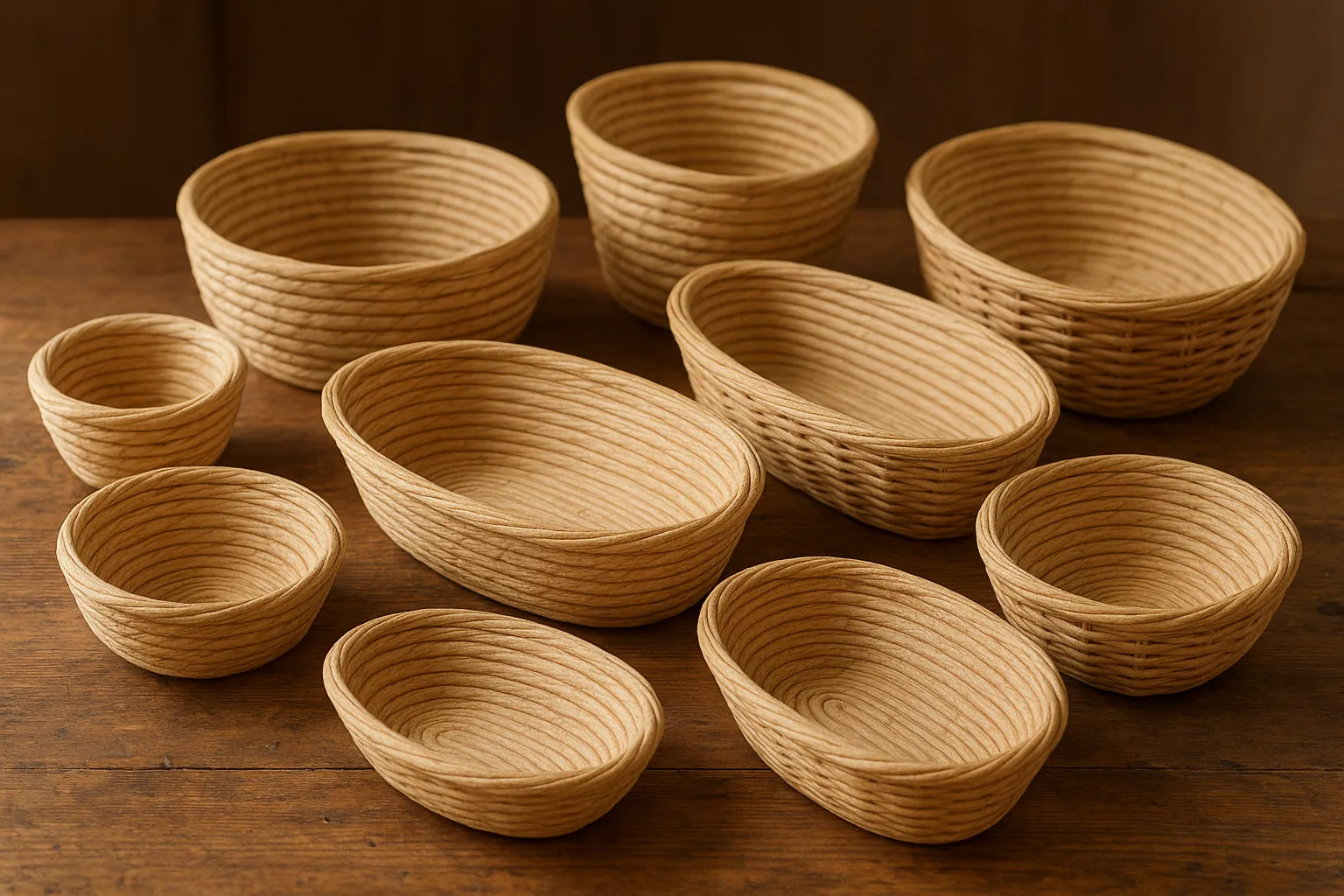
Baskets ship in a handful of standard sizes, each built around particular loaf weights and shapes. Knowing these numbers ahead of time means you can match your recipe’s dough weight to the right basket before you ever start mixing.
Round Basket Sizes
8-inch (20cm) Round: Suited to smaller loaves in the 500-700 gram range. Works well if you’re baking for one or two people, or if you like testing out new flavor combinations in smaller batches without wasting a full loaf’s worth of ingredients.
9-inch (23cm) Round: The workhorse size — handles loaves from 700-900 grams and fits the majority of standard sourdough recipes. Most home bakers land on this one first, and for good reason.
10-inch (25cm) Round: Built for bigger loaves, 900-1200 grams. This is the one to reach for when you’re feeding a crowd or want a showstopper loaf on the table.
Oval Basket Sizes
9×5-inch (23x13cm) Oval: Designed for batard-shaped loaves in the 700-900 gram range. That oval silhouette gives you a longer, more elegant loaf — and one that slices more evenly for sandwiches.
10×6-inch (25x15cm) Oval: Handles the bigger batards, 900-1200 grams. Bakers with more experience often gravitate toward this shape because the ratio of crust to crumb tends to come out better.
Factors That Should Drive Your Choice
A handful of variables determine which basket size makes sense for you:
- Dough weight from your recipe: Look at your recipe’s total dough weight — most will state it outright, but if not, just total up your ingredients yourself. Aim for a basket that your dough fills to about 75-80% of capacity.
- The shape you’re after: Round baskets turn out boules, oval baskets turn out batards. Think about which one you’d rather slice and serve.
- How many mouths you’re feeding: Bigger households do better with larger baskets, while smaller ones might stick to the 8-9 inch range to cut down on waste.
- What your oven can hold: Double-check that whatever basket you pick will actually fit your Dutch oven or baking vessel — measure your equipment before you buy anything.
Basic Care Notes to Keep in Mind
- Post-bake routine: Let the basket dry out completely before you put it away. A damp basket stored too soon is basically an invitation for mold.
- How to clean it: Knock loose any stray flour or dough bits with a dry brush. Skip the water — soaking the cane can warp it or invite mold.
- Breaking in a new basket: Give a brand-new basket a light coating of rice flour before its first proof.
If you’re not sure where to start, grab a 9-inch round — it’s the size that plays nicely with the widest range of standard recipes. For the deeper dive into materials, round-versus-oval decisions, and full care instructions, check out my complete banneton buying guide.
The Basket That Finally Kept My Dough From Going Flat
Month after month I’d shape a boule with beautiful tension, only to watch it relax into a wide, flat puddle by the end of proofing — turns out the basket I was using was simply oversized for the dough I was putting in it. Match the banneton size to your dough, and you get the difference between a loaf that stands tall and one that looks half-deflated before it even touches the Dutch oven.
What’s worked for me
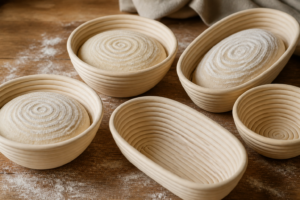
- That spiral ridge pattern in the flour actually catches the dough as it proofs — my shaped boule held its tension instead of sliding around the way it used to in my old smooth-sided basket.
- Even when I skip rice flour and reach for all-purpose instead, the dough still drops cleanly onto my peel — no sticking, no near-disaster mid-transfer like I’ve had before.
- This size is built around a 500-600g dough ball, so if you’re baking from standard recipes, there’s no second-guessing whether the dough will spill over or swim in too much empty space.
Where it falls short
- You have to wash it and let it dry fully between bakes, or mold will move in — I found this out the hard way after leaving it damp overnight and having to throw the whole thing out.
- If your usual loaves run bigger (700g and up), you’re stuck either scaling your dough down or springing for a second, larger basket.
I had one moment of doubt when the dough seemed to be rising faster than expected and I worried the basket would be too tight, but it turned out to be exactly right for oven spring. If you’ve been fighting flat loaves, grab a Sourdough Banneton Proofing Basket.
Frequently Asked Questions
What size banneton do I need for my dough weight?
Match your dough weight to basket capacity so it fills to roughly 75-80% of height by end of proofing. A 9-inch round handles 700-900 grams and fits most standard recipes. An 8-inch round suits 500-700 grams, while a 10-inch round works for 900-1200 grams. Oval baskets follow the same weight ranges in their corresponding sizes.
Can I use a banneton without cleaning it between bakes?
No. You must let the basket dry out completely before storing it. A damp basket stored too soon invites mold. Clean it by knocking loose any stray flour or dough bits with a dry brush and skip soaking, which can warp the cane or promote mold growth.
Why is my sourdough loaf coming out flat and wide?
Your proofing basket is likely oversized for your dough. Too large a basket lets dough spread sideways instead of climbing upward, producing a flatter loaf with denser crumb. Match the basket size to your dough weight so the shaped dough gets gentle pressure to rise up rather than out.
Should I use rice flour or all-purpose flour in a new banneton?
Give a brand-new basket a light coating of rice flour before its first proof. However, all-purpose flour works as a substitute if needed and the dough can still release cleanly depending on the basket’s ridge pattern.
About This Article

Written by Sam Whitaker. Sam Whitaker has been baking sourdough for over a decade, including three years baking commercially, and now works out of a home kitchen in the Pacific Northwest. Sam's eleven-year-old starter, Harold, is the foundation for every recipe and troubleshooting guide on Sourdough Rising — real bread tested over and over until it works. More about this site.
Scope and limits. Sam is a home baker with no formal culinary training. Follow current food safety guidance for storage and handling, particularly with enriched or filled doughs.
Verify this against a primary source
Specifics change, and your situation may differ from the one described here. These are the authorities worth checking directly:
- USDA FoodData Central — flour and ingredient composition data
- FoodSafety.gov — safe handling and storage