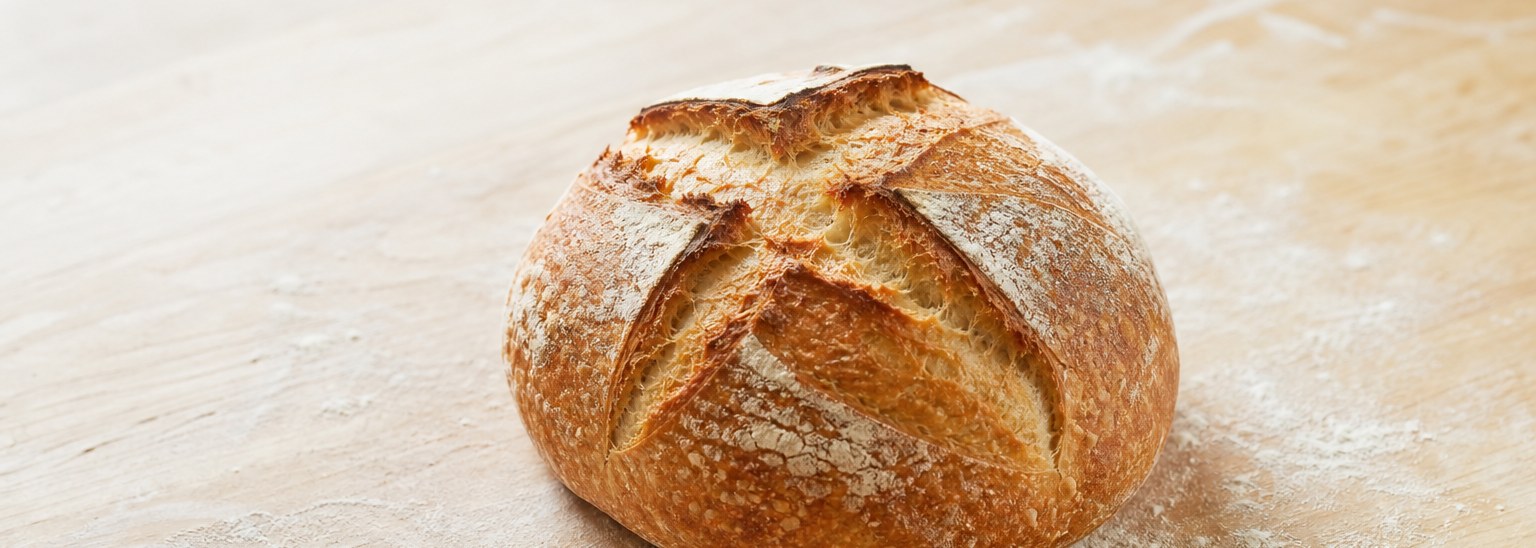
Nine years back, on a flat gray Tuesday morning, I hauled a sourdough boule out of the oven and watched it sink into something closer to a hockey puck than a proper loaf.
The dough itself wasn’t to blame. Fermentation had gone exactly as planned, and the shaping held up fine. The real culprit was sitting right in front of me, cooling on the rack: a Dutch oven that simply couldn’t hold heat or trap steam the way it needed to, and it had already burned through three hours of my morning and close to two cups of flour. Standing there at that early hour, staring at the flattened loaf, it hit me that I’d been baking in the wrong vessel this whole time.
That failure pushed me into action. Eleven years into home baking, plus a few of those years running weekend bread batches out of my kitchen for neighbors, I finally decided to stop guessing. I set out to methodically compare Dutch ovens for sourdough and pin down which one earned a permanent place on my shelf.
| Dutch Oven | Enamel Coating | Heat Distribution | Steam Seal | Baking Result |
|---|---|---|---|---|
| Secondhand Lodge Cast Iron | None (bare, pre-seasoned) | Spread impressively well | Lid never sealed tightly enough | Bread barely rose |
| Big-Box Enameled Pot | Thin enamel layer | Uneven heating | Lid bowed under high heat | Browned unevenly, barely rose |
| AIVIKI 5QT Enameled | Holds up at high heat, no chipping | Even distribution, no hot spots | Lid rests tightly, seals steam | Strong, reliable bake |
| CAROTE 5QT Enameled Cast Iron | Enameled | Reliable | Effective | Strong, reliable bake |
| Lodge Essential 6QT Enameled | Enameled | Reliable | Effective | Strong, reliable bake |
Why Choosing the Right Dutch Oven for Sourdough Isn’t a Small Decision
Early in my sourdough journey, I brushed off the whole Dutch oven conversation. It’s just a pot, I figured. I was completely off base.
A good Dutch oven pulls double duty for sourdough: it locks in steam during the opening stretch of baking, which is exactly what produces that dramatic rise and shattering crust bakers chase. On top of that, it holds heat evenly across the pot, so your loaf browns consistently instead of scorching underneath while the top stays anemic.
Not all Dutch ovens pull this off, though. Some heat unevenly across the surface. Some develop rust once the enamel wears away. Some lids don’t clamp down tightly enough to actually seal in steam. And a few weigh so much that lifting them out of a 450-degree oven feels like a small workout.
That flattened loaf from years ago? Turns out my old pot had a hairline crack running through the enamel that I’d shrugged off for months. Heat was leaking out constantly, and the lid had warped just enough to let steam slip past it. I was up against basic physics and didn’t even realize it.
My Kitchen Test: Five Dutch Ovens, One Head-to-Head Bake-Off
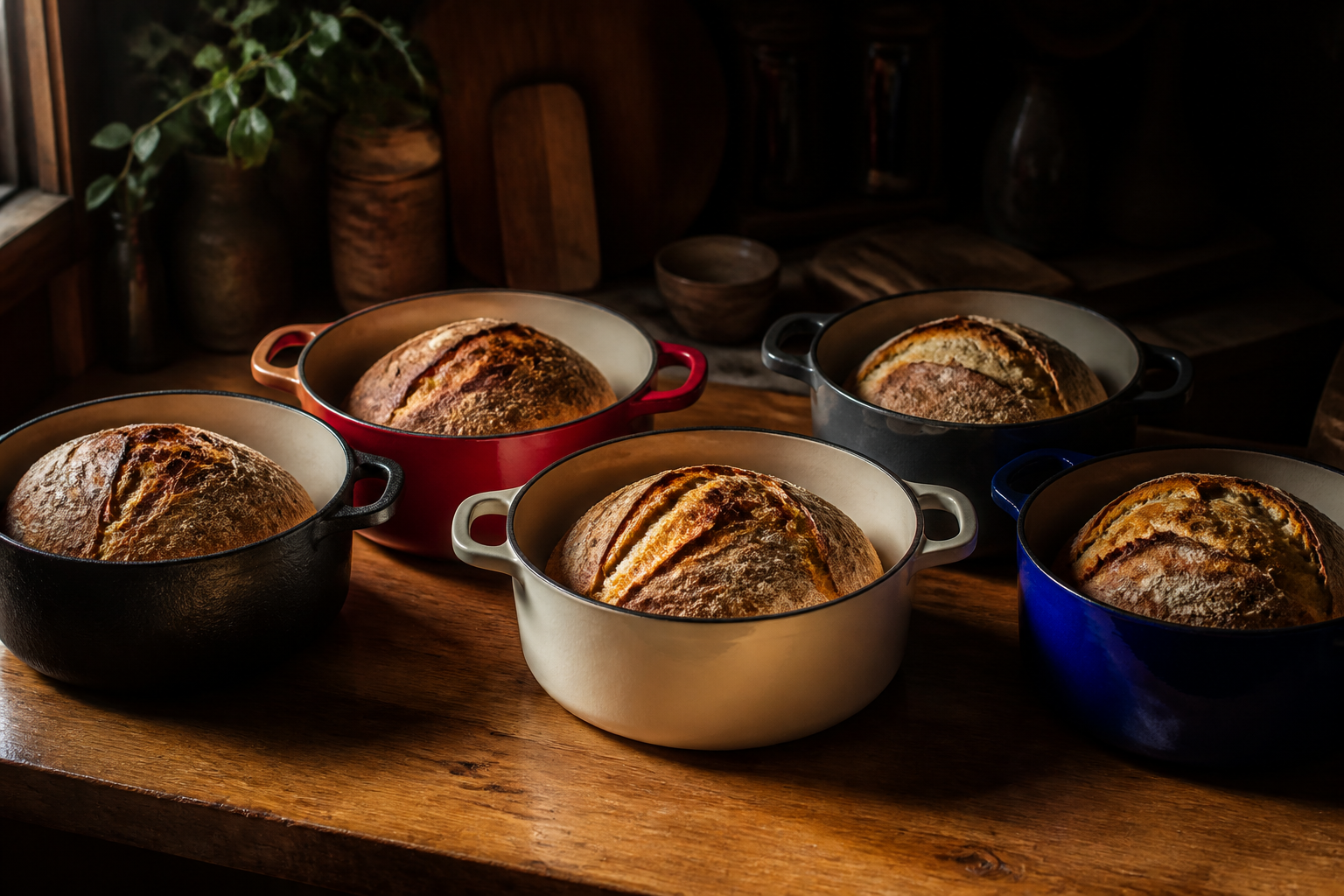
I set up a real side-by-side test. The same sourdough recipe got baked five separate times in five different Dutch ovens, with every other variable locked down: identical starter, identical flour, matching fermentation windows, and the same oven setting (450°F, 20 minutes with the lid on, then 30 minutes uncovered).
Here’s the lineup I put through the paces:
- A secondhand Lodge cast iron Dutch oven picked up at a thrift shop (bare cast iron, no enamel, pre-seasoned)
- An inexpensive enameled pot from a big-box retailer (the same one that let me down originally)
- The AIVIKI 5QT Enameled Dutch Oven
- The CAROTE 5QT Enameled Cast Iron Dutch Oven
- The 6-quart Lodge Essential Enamel Cast Iron Dutch Oven
I paid close attention to crust color, how much the loaf rose, the crumb once sliced, and how each loaf held up after cooling. Handling, heat consistency, and lid fit all got noted along the way too.
The part that caught me off guard? The pot that came out on top wasn’t the pricier one, and it wasn’t the one that looked best in a product photo. It won because it combined dependable performance with solid, honest build quality.
The Secondhand Lodge: Full of Character, Short on Reliability
There’s real charm in this pot — you can feel the years on it. But going without an enamel coating means constant seasoning upkeep. Heat spread across it impressively well, yet the lid never quite sealed tightly enough to hold steam at its best, and I stayed nervous about rust anytime I didn’t dry it right away. Anyone newer to sourdough will find this more trouble than it’s worth.
The Bargain Big-Box Pot: One and Done
This is the pot that originally sank my loaf. The enamel layer was thin, the lid bowed under high heat, and the handles made it a genuine hassle to move safely. The resulting bread browned unevenly and barely rose in the oven. Lesson learned the hard way: this isn’t the piece of gear to skimp on.
The Ones Worth Buying
The AIVIKI, the CAROTE, and the Lodge Essential all turned in strong, reliable bakes. Each brought something different to the table, and picking a single “winner” among them didn’t feel accurate. So instead, I’m pointing you toward all three — the right pick just depends on what you need.
The Pot That Finally Held Its Heat Long Enough to Actually Steam
A Dutch oven that can’t hold steady heat or seal in steam will wreck your bake no matter how flawless your dough turned out. What I needed was a pot that preheated predictably, kept that temperature through the whole bake, and genuinely trapped the steam responsible for crust and rise.
Where it excels
- Distributes heat evenly with no hot spots that would otherwise char one side of the loaf while leaving the other undercooked.
- The enamel holds up bake after bake at high heat without chipping or flaking, and it seems to season slightly over time, which only helps the steam seal.
- The lid rests tightly enough that you can count on that steam seal through the first 20 minutes, with no wondering whether the crust will actually set up right.
Where it falls short
- The handle heats up more than you’d expect during preheating, so skipping the oven mitt will cost you — I found that out firsthand.
- At 5 quarts, it’s a tight fit for any dough heavier than 900g, so if you’re baking bigger loaves, the 6-quart Lodge is the better call.
I had one morning where the lid wouldn’t seat quite right and I almost convinced myself to swap it out, but it turned out I just hadn’t preheated the top long enough—a problem, not a defect. If you want reliable steam and heat retention without the anxiety, grab the AIVIKI 5QT Enameled Dutch Oven.
Frequently Asked Questions
What size Dutch oven works best for sourdough?
The AIVIKI 5QT Enameled Dutch Oven delivers reliable results for most home bakers. However, if you’re baking loaves heavier than 900g, the 6-quart Lodge Essential is the better choice since the 5-quart is a tight fit for larger doughs.
Why does Dutch oven quality matter for sourdough?
A good Dutch oven locks in steam during the opening stretch of baking, which produces the dramatic rise and shattering crust sourdough needs. It also holds heat evenly so your loaf browns consistently instead of scorching underneath while the top stays pale.
How long should I bake sourdough in a Dutch oven?
Sam’s testing used 20 minutes with the lid on, then 30 minutes uncovered at 450°F. This timing trapped steam effectively during the crucial opening phase while allowing the crust to develop fully once the lid came off.
Can you use a bare cast iron Dutch oven for sourdough?
A bare cast iron Dutch oven like the secondhand Lodge requires constant seasoning upkeep and the lid often doesn’t seal tightly enough to hold steam effectively. Enameled options are more reliable and require far less maintenance for consistent sourdough results.
About This Article

Written by Sam Whitaker. Sam Whitaker has been baking sourdough for over a decade, including three years baking commercially, and now works out of a home kitchen in the Pacific Northwest. Sam's eleven-year-old starter, Harold, is the foundation for every recipe and troubleshooting guide on Sourdough Rising — real bread tested over and over until it works. More about this site.
Scope and limits. Sam is a home baker with no formal culinary training. Follow current food safety guidance for storage and handling, particularly with enriched or filled doughs.
Verify this against a primary source
Specifics change, and your situation may differ from the one described here. These are the authorities worth checking directly:
- USDA FoodData Central — flour and ingredient composition data
- FoodSafety.gov — safe handling and storage