“Why do you have six different jars for the same starter?” My sister asked me that over Thanksgiving a couple years back, watching me dig through my cabinet like I was searching for a specific wrench in a toolbox. The honest answer traces back to a Tuesday morning when my sourdough starter container ended up in pieces all over my kitchen floor.
Six in the morning, half-awake, I reached into the cabinet above my stove for what I assumed was a solid glass jar. What actually came down was a thin-walled mason jar, and it hit the tile hard enough to burst, flinging two years’ worth of lively, bubbling starter—now studded with glass fragments—across the floor. I just stood there in my pajamas staring at the wreckage, running through everything I’d lost: the flour, the hours, and a starter I’d been feeding since before my daughter could walk. Frustrating as that morning was, it kicked off eleven years of me figuring out what actually makes a sourdough starter container worth trusting.
Ten-plus years into home baking now, including a stretch where I ran multiple starters at once to supply a small run of loaves for neighbors and friends, I’ve cycled through nearly every kind of vessel out there. This post is my rundown of what actually holds up—because that shattered jar taught me the hard way that containers are absolutely not interchangeable.
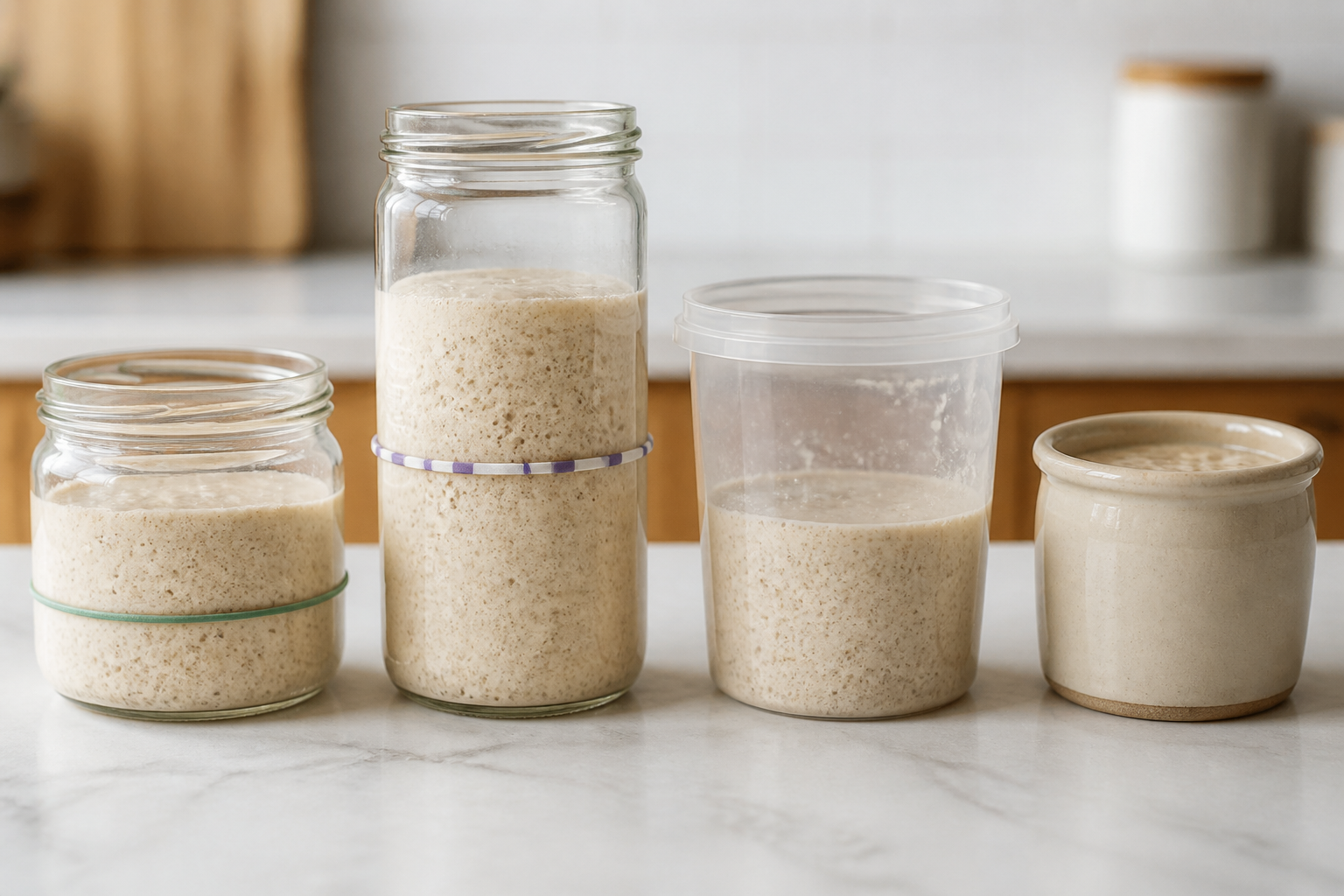
| Container Type | Pros | Cons |
|---|---|---|
| Thin-walled mason jar | Basic, accessible | Bursts easily, lid doesn’t seal tight, condensation pools |
| Mason jar with cloth cover | Prevents spills | Contamination risk, constant anxiety about unwanted debris |
| Ceramic crock | Aesthetic appeal | Can’t track fermentation, narrow opening makes feeding messy |
| Dedicated starter jar (thick glass, fitted lid) | Thick glass survives drops, printed measurement lines, loose-fitting lid releases gas automatically, clear for watching fermentation | Two-jar set when one is often enough, gets heavy when full |
The Lesson That Kitchen Mess Taught Me
Once the flour dust settled from what I now half-jokingly call the 2013 Starter Massacre, I didn’t just grab a replacement jar and move on. I got fixated on figuring out exactly why that one had failed me. It was an ordinary wide-mouth mason jar—the kind I’d been using without giving it a second thought. The glass walls were thin, the lid never sealed tight enough to stop condensation from pooling in my warm kitchen, and looking back, I’d been treating the whole thing like an afterthought instead of what it really was: a home for a living culture that needed real care and protection.
That’s the moment it hit me that I’d never actually stopped to think about what a starter container is supposed to accomplish. Holding liquid isn’t the whole job. A container that’s actually doing its job needs to:
- Handle repeated temperature swings without weakening
- Leave enough headroom for growth during feedings so nothing spills over
- Let built-up gas escape while keeping unwanted stuff out
- Stay clear enough that I can actually watch fermentation happen
- Hold up structurally through years of everyday handling
Armed with that checklist, I started testing containers on purpose instead of just grabbing whatever was closest.
My Eleven-Year Hunt for the Right Starter Vessel
Early Days: A Lot of Guessing
Starting over from nothing after the disaster, I went back to basic quart mason jars, draping coffee filters over the top and securing them with rubber bands. It got the job done, technically, but I was constantly anxious about contamination sneaking in. A year later I moved up to mason jars fitted with cloth covers—an improvement, though mold was still living rent-free in the back of my mind.
Next up was my ceramic crock era. I picked out a gorgeous, rustic-looking crock that fit my kitchen aesthetic perfectly. Looks-wise, great. Function-wise, a headache. I couldn’t track what my starter was actually doing in there, and the narrow opening turned every feeding into a sticky mess. Six months in, I gave up on it entirely.
Scaling Up: Figuring Out What Really Holds Up
When my weekend baking volume ramped up around 2017, my whole approach to containers had to shift. I was juggling three or four starters simultaneously at that point, and I needed gear that was consistent, sturdy, and easy to scale—another failed jar or contaminated batch simply wasn’t an option anymore.
That’s around when I stumbled onto jars actually built for starter-keeping, and it changed everything for me. These weren’t mason jars pressed into service for a job they weren’t designed for. They came with wide openings for easy feeding, printed bands for tracking growth, real ventilation built in, and glass thick enough to shrug off temperature stress.
Throughout that heavier weekend-baking stretch, I ran container after container through the wringer, because inconsistent tools meant inconsistent bread. Whichever starter lived in the right vessel fermented on a more reliable schedule. Temperature swings evened out. Contamination scares dropped off. And honestly, the daily routine just felt more controlled and purposeful.
The Turning Point
Roughly five years back, I made the switch to dedicated starter jars featuring built-in temperature strips and ventilated lids designed for the job. That single change wiped out nearly every recurring problem I’d had with keeping starters alive. A quick glance told me the temperature, the lids handled gas exchange on their own without me draping cloth over anything, and the wide mouths made feeding almost automatic.
Beyond the practical stuff, my starters simply behaved better. Fermentation timing got easier to predict. Contamination-related losses basically stopped. And there was a mental shift too—housing my starter properly made me treat it like the living thing it is, rather than some forgotten dough sitting in a jar.
The Jar Built to Survive a Fall From the Cabinet
After living through that shattered-jar nightmare, I went looking for something that could handle both the heft of a fully fed, active starter and the occasional clumsy drop. A flimsy mason jar was permanently off the table—I needed a container that could take a hit.
Where it delivers
- Thick glass walls mean condensation doesn’t fog up the surface, so you can actually check on your starter’s activity without wiping the jar down first thing every morning.
- The printed measurement lines along the side genuinely come in handy when you’re adjusting feeding ratios up or down—no more eyeballing it or reaching for a separate measuring cup.
- The loose-fitting lids that come with it release gas on their own, so you don’t have to remember to crack the lid or “burp” the jar—something I always forgot anyway.
Where it falls short
- You get two jars in the set, but most home bakers really only need one active container running at once—unless you’re keeping a backup starter, in which case, more shelf space gets eaten up.
- Once it’s full, the glass gets heavy, so if you’re storing it up high the way I do, grabbing it down one-handed while still half asleep is a bit of a gamble.
I did drop this jar once from waist height onto concrete, and my heart nearly stopped—but it survived with just a small chip on the rim. 2 Pack Premium Pro Sourdough Starter Jar Kit
Frequently Asked Questions
What container does Sam use for Harold now?
Sam uses thick glass jars with fitted lids and printed measurement lines that eliminate daily jar wiping and burping. After eleven years trying containers, Sam stopped replacing jars once switching to dedicated starter jars featuring built-in temperature strips and ventilated lids designed for the job.
Why did Sam need multiple starter containers?
When Sam’s weekend baking volume ramped up around 2017, juggling three or four starters simultaneously required consistent, sturdy, easy-to-scale gear. Inconsistent tools meant inconsistent bread, so whichever starter lived in the right vessel fermented on a more reliable schedule with fewer contamination scares.
What makes a good sourdough starter container?
A good container must handle repeated temperature swings without weakening, leave enough headroom for growth during feedings, let built-up gas escape while keeping unwanted stuff out, stay clear enough to watch fermentation, and hold up structurally through years of everyday handling.
What happened to Sam’s starter in 2013?
A thin-walled mason jar fell from the cabinet above Sam’s stove and burst on tile, flinging starter studded with glass fragments across the kitchen floor. The jar had thin glass walls, a lid that never sealed tight, and condensation pooling from the warm kitchen.
About This Article

Written by Sam Whitaker. Sam Whitaker has been baking sourdough for over a decade, including three years baking commercially, and now works out of a home kitchen in the Pacific Northwest. Sam's eleven-year-old starter, Harold, is the foundation for every recipe and troubleshooting guide on Sourdough Rising — real bread tested over and over until it works. More about this site.
Scope and limits. Sam is a home baker with no formal culinary training. Follow current food safety guidance for storage and handling, particularly with enriched or filled doughs.
Verify this against a primary source
Specifics change, and your situation may differ from the one described here. These are the authorities worth checking directly:
- USDA FoodData Central — flour and ingredient composition data
- FoodSafety.gov — safe handling and storage