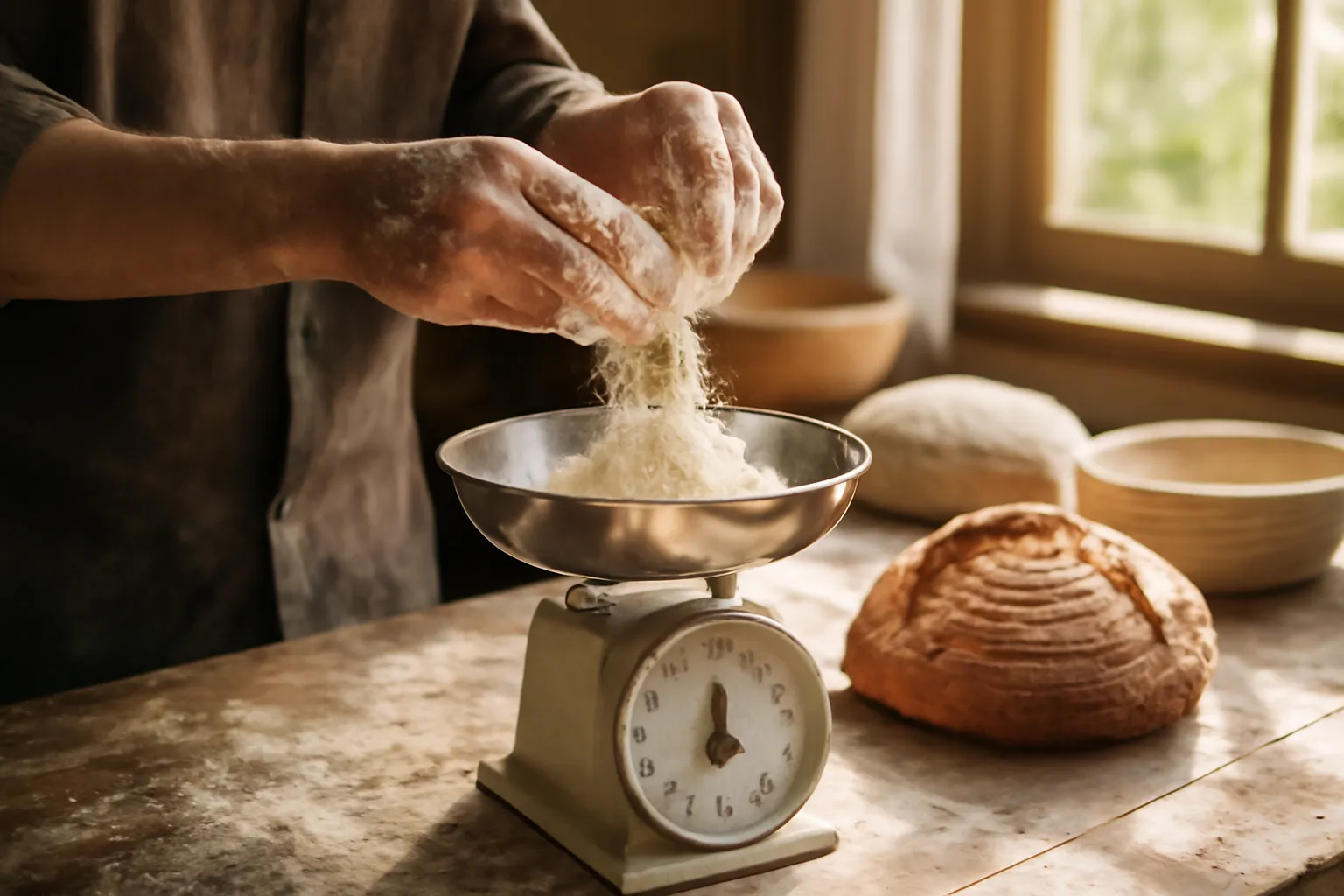
Half the baking blogs out there will tell you a “generous cup” of flour is close enough for sourdough, while the other half insist you need a scale reading to a tenth of a gram or your hydration numbers are fiction. Both are exaggerating, but the cup-and-spoon camp is the one doing actual damage — two years ago, my own loaves were proof. I was scooping flour by feel, eyeballing everything, and getting a completely different loaf every single time despite following the same recipe card. Then a baker in my local bread group said the line that finally got through to me: “If you’re not weighing your ingredients, you’re not really following a recipe.” I’d already built the full argument for weighing over scooping elsewhere — why cups and spoons let sourdough down is its own rabbit hole — so I’m not going back over that ground here. This post is narrower: one scale, and what two straight years of using it every day actually taught me.
Why This One Won Out Over Everything Else I Considered
I wasn’t hunting for the rock-bottom cheapest option on Amazon, but I also had zero interest in something built for a lab. What I wanted was a scale that could live permanently on my counter, shrug off daily flour dust and the occasional starter overflow, and give me gram-level readings without a manual sitting nearby. The Etekcity Food Kitchen Scale landed right in that sweet spot — reasonably priced, a stainless steel platform, and buttons simple enough to use half-asleep. Two years on, that’s still exactly why I’d hand over my money for it again.
After Two Years of Daily Use, Here’s What Never Faltered
This thing gets touched at least once daily in my kitchen, and on busy days — a starter feed plus an actual bake — it’s more like three or four times. Add that up and I’m somewhere past 700 uses since purchase, and this is what’s still performing exactly like it did the first week:
- Readings still land accurately at the 1-gram level, something I verify periodically (details further down) — no drifting, no dead spots on the platform.
- Tare resets happen instantly — press the button and it’s back to zero with no delay, which counts for a lot when you’re adding one ingredient right after another.
- The stainless bowl still sits flat and stable on the platform, even after two years of being placed down, lifted off, and occasionally bumped an inch onto the countertop.
- Not a single button has stuck or gone dead, despite dried bits of dough finding their way into the seams more than once.
The Signs of Wear After Two Years of Use
No scale survives nearly two years of near-constant use without a few dings. Here’s what’s actually started to annoy me now that I’ve put in that much time with it:
- It drains the battery fast if you forget to power it down — I’ve left it on through the night more than once and woken up to a dead scale.
- The platform runs small, so balancing a bigger mixing bowl on it can feel a little shaky and off-center.
- It struggles with really heavy loads, so if you’re planning to mix a huge dough batch right on the scale, break it into stages or grab a separate bowl instead.
- The LCD screen isn’t as bright as it used to be — still perfectly legible, but noticeably dimmer than it was in that first month.
My Routine for Confirming It’s Still Reading True
A cheaper scale I owned before this one developed a glitchy sensor that quietly drifted mid-bake, and I only realized it after ruining a batch of dough I’d thought was sitting at 75% hydration — it wasn’t even close. That mistake left me too wary to just trust a scale blindly, so now I spot-check this one every few months instead of assuming it’s fine forever.
You don’t need a dedicated calibration weight to do this — a U.S. nickel weighs exactly 5.00 grams, so grab a handful (ten of them gets you to 50 grams) and see what the scale reports. On a scale claiming 1-gram precision, anything more than a gram or two off a known 50-gram total means it’s time to recalibrate or replace it outright. Mine has stayed within a single gram of that benchmark for two full years, and that consistency is honestly the main reason I still bake by weight without second-guessing every reading.
It Earns Its Keep Well Beyond Flour
What I didn’t see coming when I bought this scale was how much it would transform my starter routine. Switching from feeding by sight to feeding by weight took my starter from unpredictable to ready on schedule, day after day. If you want the full details on ratios and timing for counter versus fridge feeding, I’ve broken all of that down in my sourdough starter feeding schedule guide — but none of that schedule works reliably without a scale like this one turning it into actual grams instead of guesswork.
So Did It Actually Pay For Itself?
Whatever a decent scale costs, it gets clawed back fast in the flour you stop wasting and the loaves you no longer toss in the bin. If you’re already spending on quality bread flour and putting real hours into fermentation, you’re deep into the cost of this hobby either way — the scale is just what protects that investment from being wrecked by a sloppy measurement. Two years later, mine has more than paid for itself, purely in the flour I would have otherwise wasted on guesswork.
Grab the Etekcity Food Kitchen Scale, Digital Grams and Ounces for Weight Loss, Baking, Cooking, Keto and Meal Prep, LCD Display, Medium, 304 Stainless Steel if you want a scale that’s still doing its job two years and hundreds of bakes later.
Frequently Asked Questions
How accurate is the Etekcity scale for sourdough baking?
The Etekcity Food Kitchen Scale reads accurately at the 1-gram level. After two years of daily use with over 700 uses, Sam’s scale has stayed within a single gram of a known 50-gram benchmark (verified using U.S. nickels), with no drifting or dead spots on the platform.
Can you use a regular kitchen scale for starter feedings?
Yes. Sam switched from feeding Harold by sight to feeding by weight, which transformed the starter routine from unpredictable to ready on schedule. The Etekcity scale measures starter down to 1 gram, keeping ratios consistent for daily feedings.
Does the Etekcity scale hold up to daily sourdough baking?
The scale performs well with daily use. After two years of at least one daily use (often three or four times on bake days), the tare button resets instantly, the platform remains stable, and no buttons have stuck. The LCD screen is dimmer than new but still legible.
What are the Etekcity scale’s limitations for sourdough?
The platform runs small, so balancing a larger mixing bowl can feel shaky. It struggles with really heavy loads, so mixing a huge dough batch requires breaking it into stages or using a separate bowl. The battery drains quickly if left powered on overnight.
About This Article

Written by Sam Whitaker. Sam Whitaker has been baking sourdough for over a decade, including three years baking commercially, and now works out of a home kitchen in the Pacific Northwest. Sam's eleven-year-old starter, Harold, is the foundation for every recipe and troubleshooting guide on Sourdough Rising — real bread tested over and over until it works. More about this site.
Scope and limits. Sam is a home baker with no formal culinary training. Follow current food safety guidance for storage and handling, particularly with enriched or filled doughs.
Verify this against a primary source
Specifics change, and your situation may differ from the one described here. These are the authorities worth checking directly:
- USDA FoodData Central — flour and ingredient composition data
- FoodSafety.gov — safe handling and storage