I Tested the CRUSTLOVE Lame Set Against My Old Single-Blade: Night and Day

This post contains affiliate links. As an Amazon Associate, I earn from qualifying purchases at no extra cost to you.

My sourdough loaves were stuck in a rut. Every weekend I’d pull a boule out of the Dutch oven, and every weekend the ear was either nonexistent or completely blown out on the wrong side. My old single-blade lame — the kind that’s basically a stick with one razor glued to the end — had served me well enough for beginner loaves. But I’d hit a wall. After stumbling across an honest CRUSTLOVE bread lame set review in a Facebook baking group, I started wondering whether my tool was actually holding me back. Spoiler: it was.

The frustration had been building for months. I’d watch scoring videos on YouTube, copy the angle exactly, and still end up with loaves that looked more like they’d been attacked than artfully scored. Friends kept asking what I was doing differently. The answer, embarrassingly, was nothing. Same flour, same hydration, same cold retard. Just a mediocre score every single time.

Something had to change. So I went down a rabbit hole comparing lames, reading forums, and watching side-by-side comparisons. That research eventually landed me on the CRUSTLOVE 2pcs Set Bread Lame with 5 Blades. Here’s exactly what happened when I put it to the test.

Why I Chose the CRUSTLOVE Set Over Other Options

The single biggest thing that caught my eye was the dual-tool format. Most lames sell you one handle and call it a day. This set includes both a straight scoring knife and a curved scoring knife, which immediately felt more versatile. I’d been struggling with decorative scoring on batards especially, and the curved blade is practically designed for that kind of work.

Beyond the two-handle setup, the five included replacement blades sealed the deal. Blade sharpness matters more than most beginners realize. A dull blade drags across the dough instead of gliding, and it deflates your loaf before it even hits the oven. Having extras on hand meant I could swap in a fresh blade without waiting for a restock.

Price was also a factor, honestly. I wasn’t ready to spend serious money on a lame when I wasn’t even sure my technique was the problem. The CRUSTLOVE 2pcs Set Bread Lame with 5 Blades landed at a price point that felt like a reasonable experiment rather than a commitment. If it didn’t work, I hadn’t wasted a fortune finding out.

First Impressions: Unboxing and Build Quality

The package arrived in a small, tidy box. Everything was neatly organized — both lame handles, the five blades, and a protective cover for the blade on each tool. That cover detail stood out immediately. My old lame had no protection whatsoever, and I’d nicked myself more than once digging through a drawer to find it.

Holding each handle for the first time, I noticed the grip felt solid. Neither tool felt flimsy or plasticky in the way some cheaper baking gadgets do. The handles have a slight texture to them, which matters when your hands are covered in flour. Weight-wise, they’re light enough to maneuver quickly but substantial enough to feel purposeful.

Installing the first blade took about thirty seconds. The design is intuitive — no fussing with tiny screws or ambiguous slots. One thing I appreciated: the blades fit snugly without any wobble once locked in. Wobble is actually a hidden scoring killer, because any lateral movement while cutting throws off your angle. Right away, this felt tighter and more controlled than my old setup.

My only small note at unboxing: the protective covers are a tight fit. Getting them back on after use takes a second to line up. It’s a minor thing, but worth mentioning if you’re the type to rush between oven loads.

My Testing Protocol: Six Weeks of Bakes

I committed to using the CRUSTLOVE set exclusively for six weeks across a variety of doughs. That included my standard 75% hydration country loaf, a higher-hydration 80% whole wheat blend, and a couple of enriched doughs just to see how the blades handled stickier situations. In total, I scored somewhere around eighteen to twenty loaves during that stretch.

For each bake, I noted which handle I used, the blade angle, and how the ear developed. I kept my usual baking routine constant — same Dutch oven, same preheat temp at 500°F, same baking schedule. The only real variable was the lame itself.

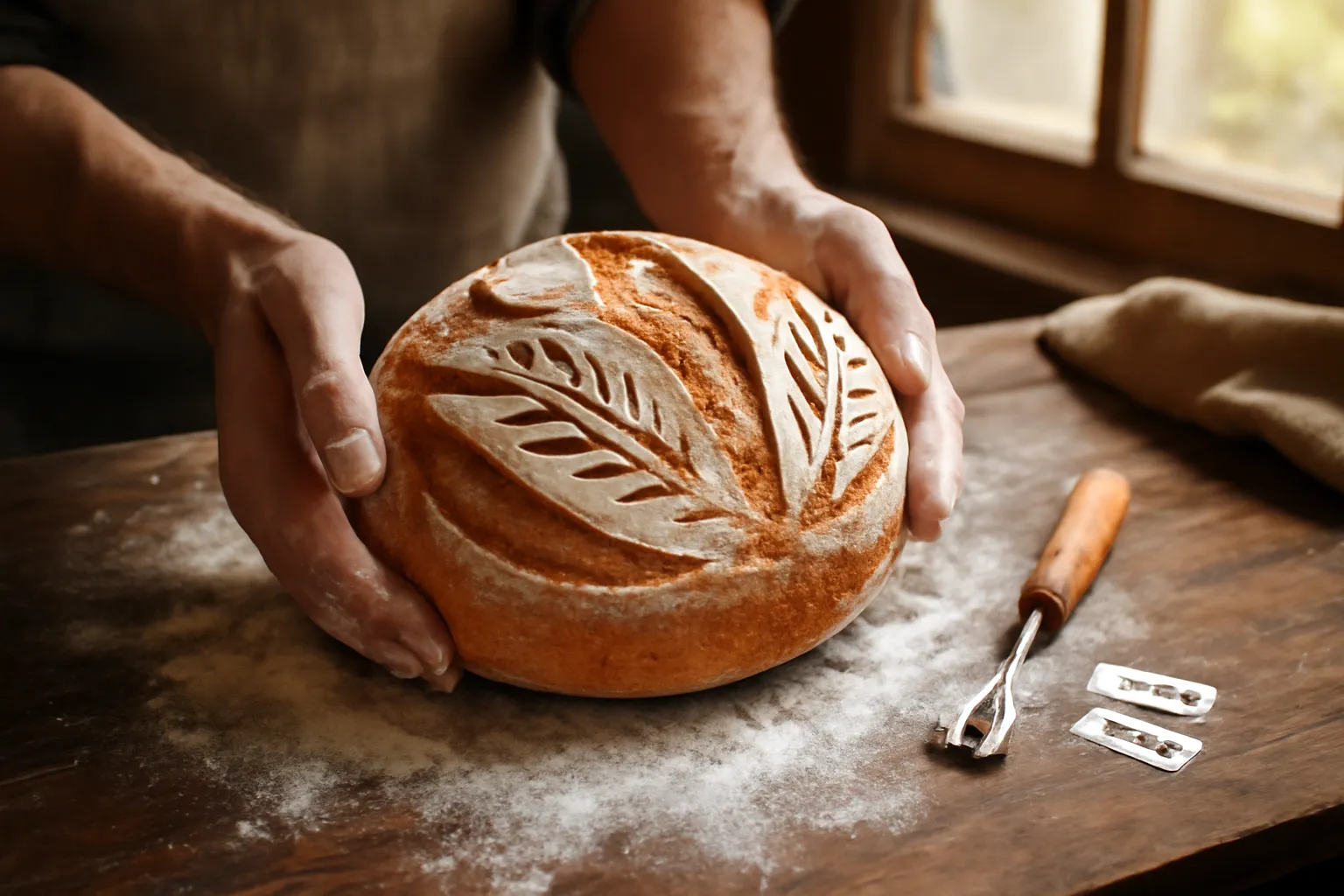
I used the straight lame primarily for my classic single-ear scores on boules. The curved lame got more action on batards and on any decorative wheat stalk or leaf patterns I attempted. I also swapped in a fresh blade at the halfway point to see whether sharpness made a measurable difference. It did, but I’ll get to that shortly.

What Actually Changed: Honest Results With a Timeline

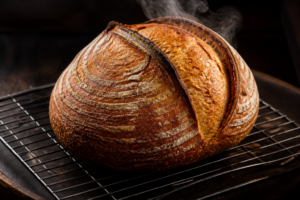
The first bake was immediately better. Not dramatically, but noticeably. The blade glided through the dough rather than dragging. My single-ear score on that first boule opened cleanly and rose with a proper ear for the first time in weeks. I stood in front of the oven watching it through the glass like an absolute nerd. It felt like proof that my old blade had been duller than I’d admitted to myself.

By bake three, I was genuinely gaining confidence with the curved lame. Scoring batards had always intimidated me because the longer cut needs to arc naturally. The curved blade makes that arc almost automatic. My cuts were more consistent, and the ears were forming symmetrically rather than peeling off to one side.

Around week three, I’ll be honest — I had a moment of doubt. Two consecutive loaves came out with underwhelming ears despite feeling like the scores were right. I almost chalked it up to the lame. Then I checked my dough temperature and realized both batches had been slightly over-proofed. The tool wasn’t the problem. Over-proofed dough just doesn’t spring the same way, regardless of what you score it with. That was a useful reminder that a better lame helps, but it can’t fix fermentation errors.

After resetting my proofing schedule, the results came back strong. By week five I was attempting decorative scoring — simple leaf patterns and a few wheat stalks — with much more control than I’d had before. The precision of both blades made those shallow decorative cuts feel manageable rather than terrifying.

Specific Improvements I Noticed

  • Consistent ear formation on boules from bake one onward
  • Cleaner, more symmetrical cuts on batards using the curved blade
  • Better control on decorative patterns with shallow scoring
  • No more accidental blade drag deflating the dough surface
  • Fresh blade swap at week three noticeably improved glide again

The two-handle system also changed how I thought about scoring. Having a dedicated curved tool meant I stopped trying to force one blade to do everything. That single mental shift improved my approach as much as the tools themselves did.

The Downsides: What Didn’t Impress Me

No tool is perfect, and I want to be straight with you here. A few things gave me pause over the six weeks.

First, five blades sounds generous — and it is — but blades are consumable items. Once you’re baking regularly and swapping blades every eight to ten bakes to maintain sharpness, five blades goes faster than you’d expect. Standard double-edge razor blades are compatible and easy to source cheaply, so this isn’t a dealbreaker. It’s just worth knowing upfront that you’ll want to have extras on hand beyond what’s included.

Second, the blade covers I mentioned earlier. They do the job of protecting both the blade and your fingers, but reattaching them with doughy hands is slightly awkward. A magnetic or snap closure would be a genuine improvement in a future version.

Third, if you bake exclusively simple single-score boules and have no interest in decorative scoring or batards, the two-handle setup might feel like more than you need. The straight lame alone would handle that use case. You’d essentially be paying for versatility you’re not using.

Finally, the handles are plastic rather than wood or metal. They’re sturdy plastic — nothing rattles or feels cheap — but if you prefer a more premium tactile feel to your baking tools, that’s worth factoring in.

Final Verdict: CRUSTLOVE Bread Lame Set Review Summary

After six weeks and close to twenty loaves, my conclusion is straightforward. The CRUSTLOVE 2pcs Set Bread Lame with 5 Blades – Sourdough Scoring Tool Set with Straight & Curved Scoring Knife is a meaningful upgrade over a basic single-blade setup. The dual-tool system is genuinely useful, not just a marketing angle. Having both a straight and curved blade available changed how I approach scoring, and the results on my loaves improved in ways I can see and photograph.

This set is a strong choice for bakers who are past the absolute beginner stage and want more control and variety in their scoring. If you’re regularly baking boules and batards, experimenting with decorative cuts, or just tired of dragging a dull blade across cold dough and hoping for the best — this is a sensible, affordable upgrade.

Buy It If:

  • You bake multiple loaf shapes and want dedicated tools for each
  • You’re ready to move beyond basic single-ear scoring
  • You’ve been frustrated by inconsistent ears and suspect your blade is part of the problem
  • You want a set that includes spare blades right out of the box

Skip It If:

  • You only bake one loaf shape and only use a single straight score
  • You strongly prefer wood or metal handles over plastic
  • You’re still in the early stages of learning fermentation and proofing — nail those first

What About the Alternative?

If you want to compare before committing, the DRAXZOR 3-Pack Bread Lame is worth a look. It includes three handles, ten replacement blades, and a scoring patterns booklet — which is a nice touch for bakers who want visual guidance on decorative designs. The larger blade supply is a genuine advantage if you bake at high volume. That said, all three handles are straight, so you don’t get the curved-blade versatility that stood out to me in the CRUSTLOVE set. Depending on your baking style, that trade-off might work perfectly in your favor — or it might matter quite a bit.

Either way, upgrading from a basic single lame is worth it. My loaves look better, and — more importantly — I understand why they look better now. That’s the kind of tool a good lame should be.