“Why is your dough always stuck to that dish towel?” A friend from my old bread-swap group asked me that after watching me wrestle a loaf out of a mixing bowl for the third time in a row. Good question. For months my loaves had been coming out flat, tacky, and oddly lopsided, even though my starter was clearly active and my scoring had gotten sharper with practice. Something was breaking down during that final proof stage. Eventually I traced it back to the fact that I’d been cold-retarding my dough in an ordinary mixing bowl lined with a floured tea towel, and that setup simply wasn’t doing the job. Tracking down the best banneton proofing basket sourdough bakers actually rely on turned into a small side quest of mine.
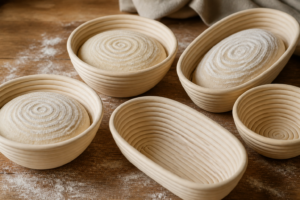
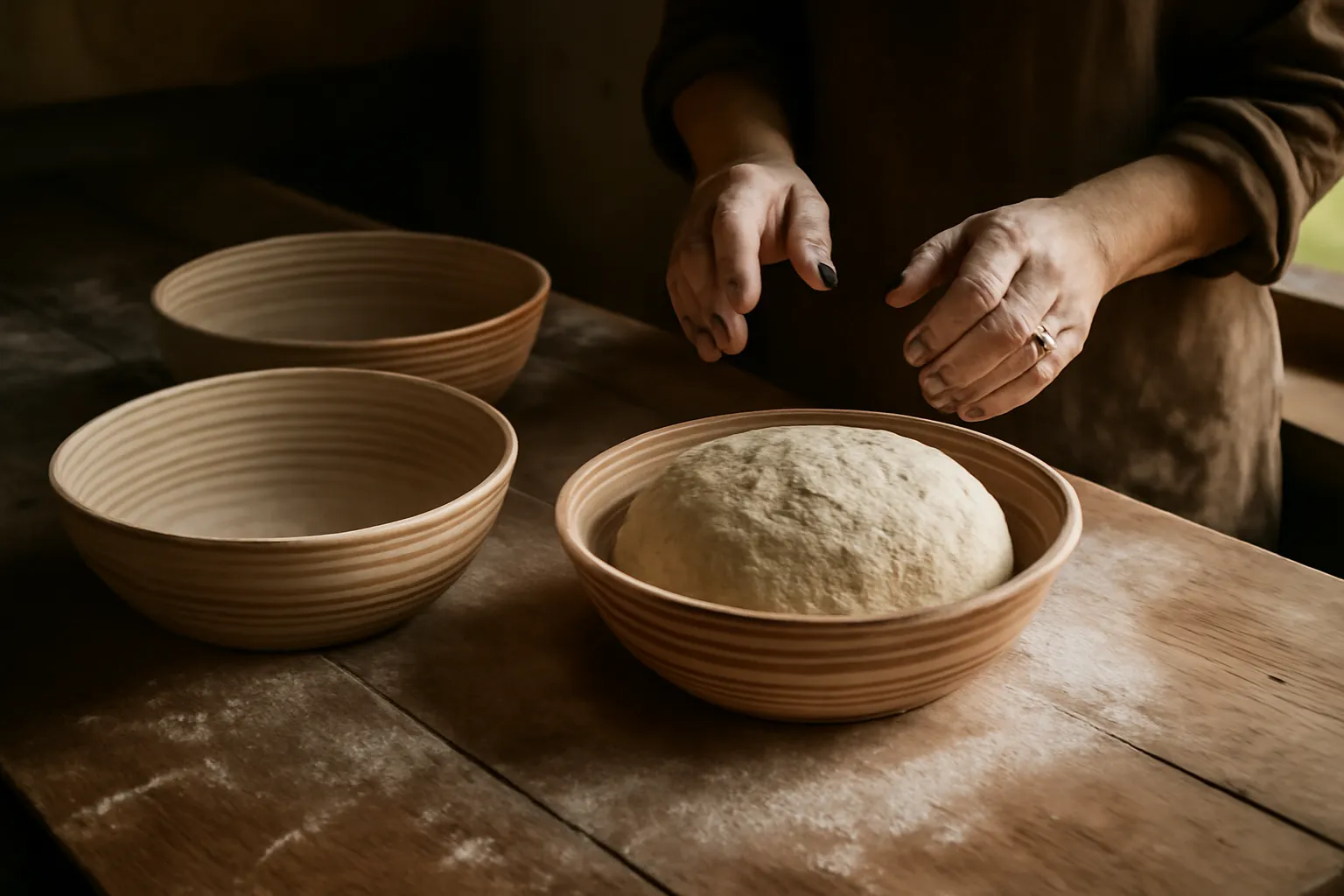
A regular bowl just doesn’t pull moisture away from the dough the way it needs to. Mine kept sticking, tearing when I flipped it out, and shedding the surface tension I’d worked hard to build during shaping. Those neat spiral rings you notice on well-shaped artisan boules? Nowhere to be found on mine. What I actually needed was a purpose-built proofing basket — a banneton — one sturdy enough to keep its form through a full overnight stint in the fridge.
So over a two-month stretch, I bought three separate bannetons and put each one through repeated bakes. A couple held up well. One let me down fast. And one has become the basket I automatically grab every single time I bake now. Here’s the full breakdown of what happened.
| Setup | Moisture Control | Shape Retention | Dough Release |
|---|---|---|---|
| Mixing bowl + tea towel | Doesn’t pull moisture away | Sides slump outward; flat result | Dough sticks and tears |
| Saint Germain banneton | Pulls moisture effectively | Tightly coiled rattan keeps form | Releases cleanly at 75–80% hydration |
| Saint Germain (room temp) | Effective | Shape holds cold proof only | Sticking can occur if timing slips |
The Basket That Solved My Flat, Spreading Loaf Problem
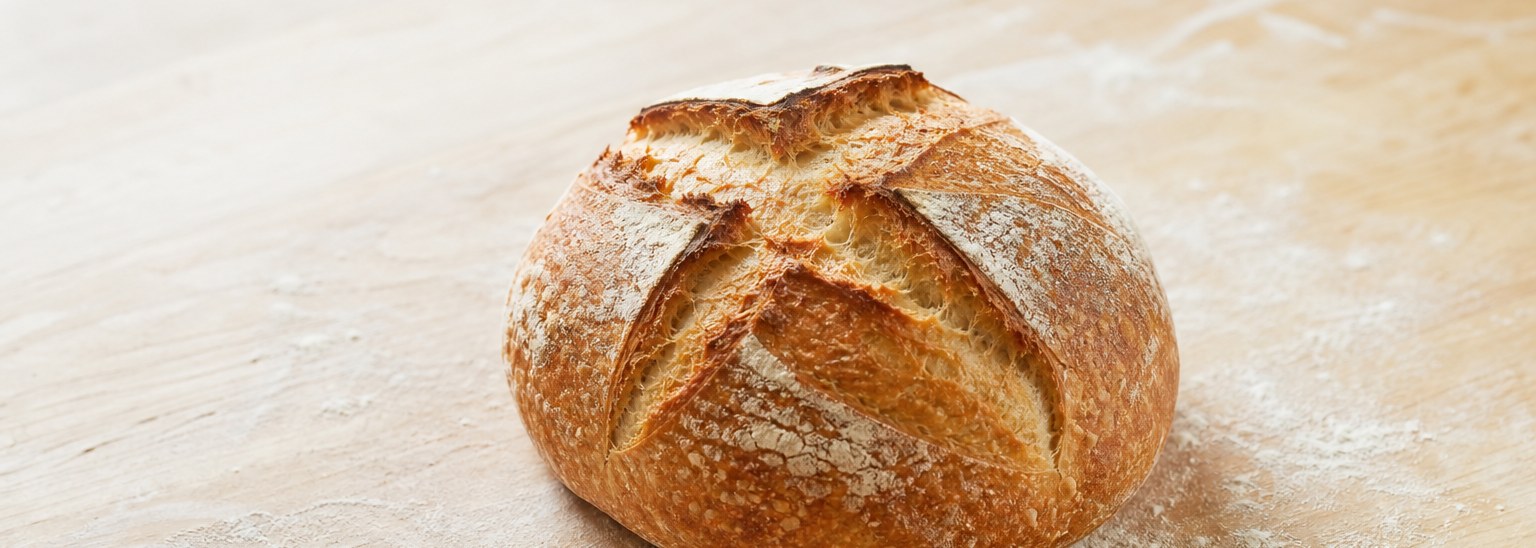
A mixing bowl lined with a towel simply lacks the structure to support dough through a long, cold proof — it lets the sides slump outward rather than encouraging the loaf to climb upward. A well-made banneton, on the other hand, locks in the shape you spent all that time building through shaping, and that’s the real difference between a tall, well-defined boule and a sad, flat disc.
The upsides
- The tightly coiled rattan gives real structural support, keeping the dough from sagging or going flat over a full overnight proof — my loaves finally kept their form instead of oozing out into a shapeless mass.
- The liner it ships with arrives pre-dusted and is thick enough that dough releases cleanly, even at wetter hydrations around 75–80%.
- Its dimensions line up perfectly with a 750g–900g dough ball, so I no longer had to guess whether the proof had actually finished — I could just read the visual signs and trust them.
The drawbacks
- During the first handful of uses, the rattan can flake loose fibers into your dough if you skip a thorough rinse beforehand — a minor hassle that means picking stray bits out of your finished loaf.
- It really shines for cold proofing specifically — at room temperature, sticking can still happen if your timing slips, and it won’t rescue you from an over-proofed dough.
I was skeptical the first time I unmolded a cold loaf onto my peel and it held its shape perfectly — part of me expected it to flatten anyway, muscle memory from years of flat loaves. Saint Germain Bakery Premium Round Bread Banneton Basket with Liner is the one I kept coming back to.
Frequently Asked Questions
Why did my dough stick to the bowl and tea towel?
A regular bowl lined with a towel doesn’t pull moisture away from dough the way it needs to. A purpose-built banneton proofing basket has the structure to support dough through a long cold proof, preventing the sides from slumping outward and the dough from sticking and tearing when you flip it out.
What size dough ball fits the Saint Germain banneton?
The Saint Germain Bakery Premium Round Bread Banneton Basket dimensions line up perfectly with a 750g–900g dough ball. This sizing lets you read visual signs to trust when the proof has finished, rather than guessing whether your loaf is ready.
Does the banneton work at room temperature?
The Saint Germain banneton really shines for cold proofing specifically. At room temperature, sticking can still happen if your timing slips, and it won’t rescue you from an over-proofed dough, so cold-retarding is where this basket excels.
Will rattan fibers get into my bread?
During the first handful of uses, the rattan can flake loose fibers into your dough if you skip a thorough rinse beforehand. A minor hassle, it means picking stray bits out of your finished loaf, but regular rinsing prevents this issue.
About This Article

Written by Sam Whitaker. Sam Whitaker has been baking sourdough for over a decade, including three years baking commercially, and now works out of a home kitchen in the Pacific Northwest. Sam's eleven-year-old starter, Harold, is the foundation for every recipe and troubleshooting guide on Sourdough Rising — real bread tested over and over until it works. More about this site.
Scope and limits. Sam is a home baker with no formal culinary training. Follow current food safety guidance for storage and handling, particularly with enriched or filled doughs.
Verify this against a primary source
Specifics change, and your situation may differ from the one described here. These are the authorities worth checking directly:
- USDA FoodData Central — flour and ingredient composition data
- FoodSafety.gov — safe handling and storage