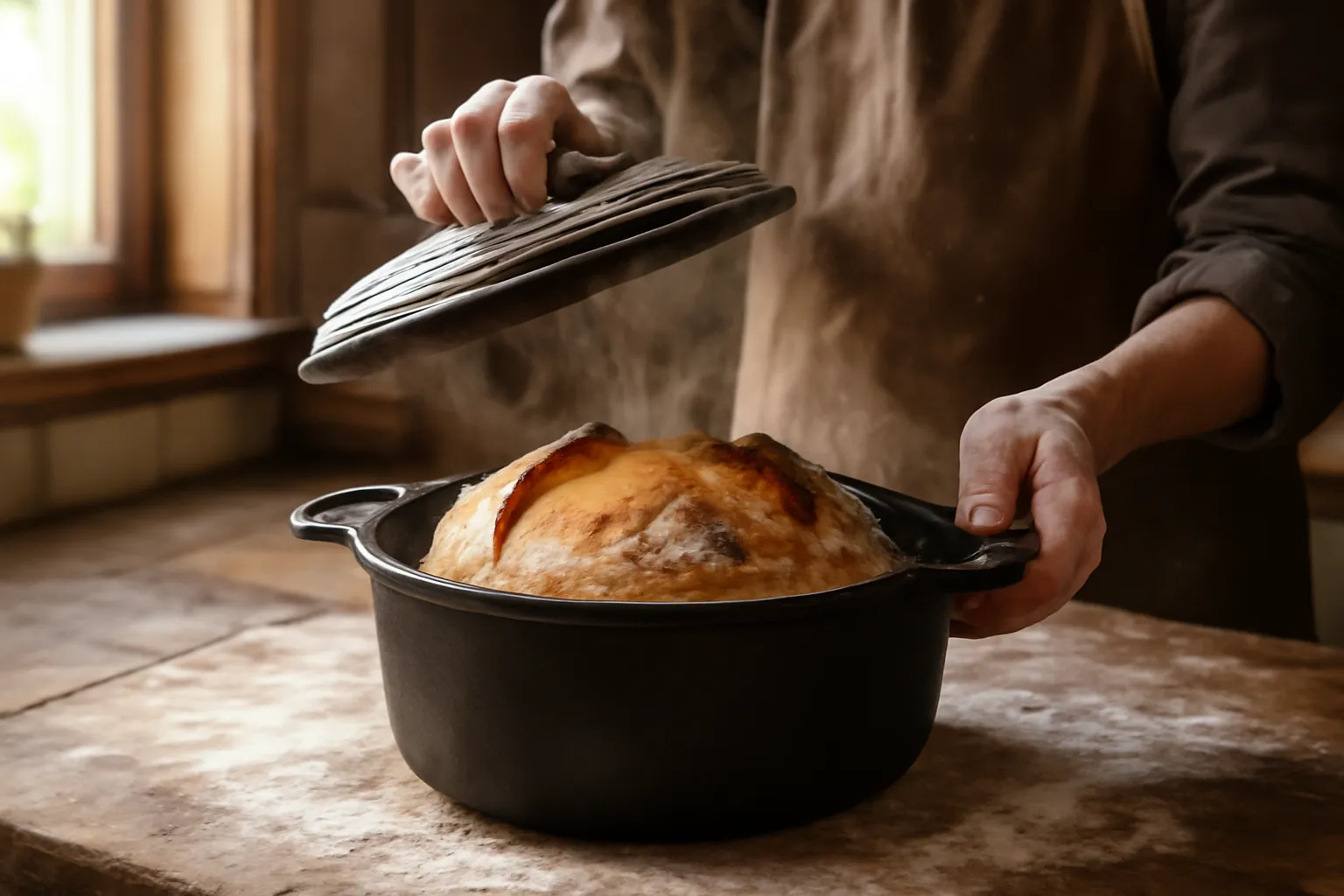
Score the loaf, slide it under the roasting pan lid, wait for that first hiss of steam — and for two solid years, that’s as far as my crust ever got: decent, edible, but never the glassy, shattering crackle I kept spotting in other bakers’ photos. My blade goes in, the dough spreads sideways instead of jumping upward, and there’s the same tell I’d been brushing off for months. I’d read enough about steam retention and thermal mass to know exactly where the fault lived — not in my hands, but in my hardware. That realization sent me into a late-night rabbit hole of forum threads and YouTube reviews, and it’s how I finally pulled the trigger on a pot I’d been circling for months.
The problem I kept hitting had a very recognizable shape. Almost no oven spring to speak of. Loaves sprawling outward instead of climbing. A gummy, dense band running straight through the center of the crumb. And a crust that softened into leather within a couple hours of cooling. What I actually needed was a sealed environment capable of holding steam captive through those crucial first 20 minutes. A Dutch oven was the obvious fix on paper — the real question was picking the right one.
Six months and about 40 loaves later — spanning a full winter into summer, across a range of hydration levels and flour blends — here’s the complete rundown of what I’ve picked up, including the surprises.
The Pot That Finally Gave My Loaves a Real Ear
I’d spent years reading that steam and steady heat make or break sourdough crust, and my roasting-pan setup proved the theory right by failing on both fronts — the seal leaked, warmth escaped constantly, and my loaves came out pale and soft instead of that crackling shatter I was after. I needed a vessel that could actually trap steam and hold temperature without fail, which meant it was finally time for real cast iron.
Where it delivers
- The seal genuinely holds — steam stays locked in for the first 20 minutes of the bake, exactly the window that decides most of your oven spring and crust formation.
- Heat retention beats my old rig by a wide margin; the cast iron doesn’t drop temperature when you crack the lid to score, so the bake never loses its momentum halfway through.
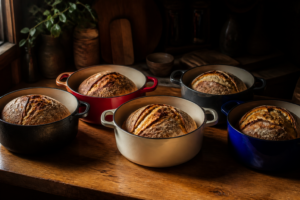
- At 5 quarts, there’s enough clearance for a 750–850g dough to sit away from the walls entirely, which lets air circulate and gives you even browning all around.
Where it falls short
- It’s a genuine load to handle — maneuvering it in and out of a hot oven takes some getting used to if you’re new to cast iron, and I’ve had a few near-fumbles even wearing thick mitts.
- Since it’s pre-seasoned cast iron, upkeep is non-negotiable; skip drying it fully after washing and rust spots will show up inside — I got careless once and had to strip mine down and re-season it from scratch.
I’ll admit my first few bakes felt like a gamble—I was so focused on the weight and the setup that I second-guessed whether the investment was worth it—but once I saw the ears developing and felt how the crust crackled when I tapped the loaf, the doubt evaporated. Lodge Cast Iron Double Dutch Oven 5 Quart – Pre-Seasoned 2-in-1 Cast Iron Cookware – Pot & Skillet Combo – Even Heat Retention – Oven-Safe, Versatile Pot
Frequently Asked Questions
How long does steam stay trapped in a Dutch oven during baking?
Steam stays locked in for the first 20 minutes of the bake, which is the critical window that decides most of your oven spring and crust formation. This consistent steam retention is what transforms your crust from soft and pale to that crackling shatter you’re after.
What size dough works in a 5-quart Dutch oven?
A 750–850g dough sits comfortably in a 5-quart Dutch oven with enough clearance to stay away from the walls entirely. This spacing lets air circulate around the loaf and gives you even browning all around the crust.
How do I prevent rust on pre-seasoned cast iron?
You must dry your pre-seasoned Dutch oven fully after washing. Skipping this step will cause rust spots to show up inside the pot. If rust does develop, you’ll need to strip it down and re-season it from scratch.
Does a Dutch oven improve oven spring and crust?
Yes. After six months of weekly baking with a Lodge 5-quart Double Dutch Oven, the seal and heat retention noticeably improved oven spring and crust quality. The consistent steam and heat mean loaves develop ears and crackle instead of spreading and softening.
About This Article

Written by Sam Whitaker. Sam Whitaker has been baking sourdough for over a decade, including three years baking commercially, and now works out of a home kitchen in the Pacific Northwest. Sam's eleven-year-old starter, Harold, is the foundation for every recipe and troubleshooting guide on Sourdough Rising — real bread tested over and over until it works. More about this site.
Scope and limits. Sam is a home baker with no formal culinary training. Follow current food safety guidance for storage and handling, particularly with enriched or filled doughs.
Verify this against a primary source
Specifics change, and your situation may differ from the one described here. These are the authorities worth checking directly:
- USDA FoodData Central — flour and ingredient composition data
- FoodSafety.gov — safe handling and storage