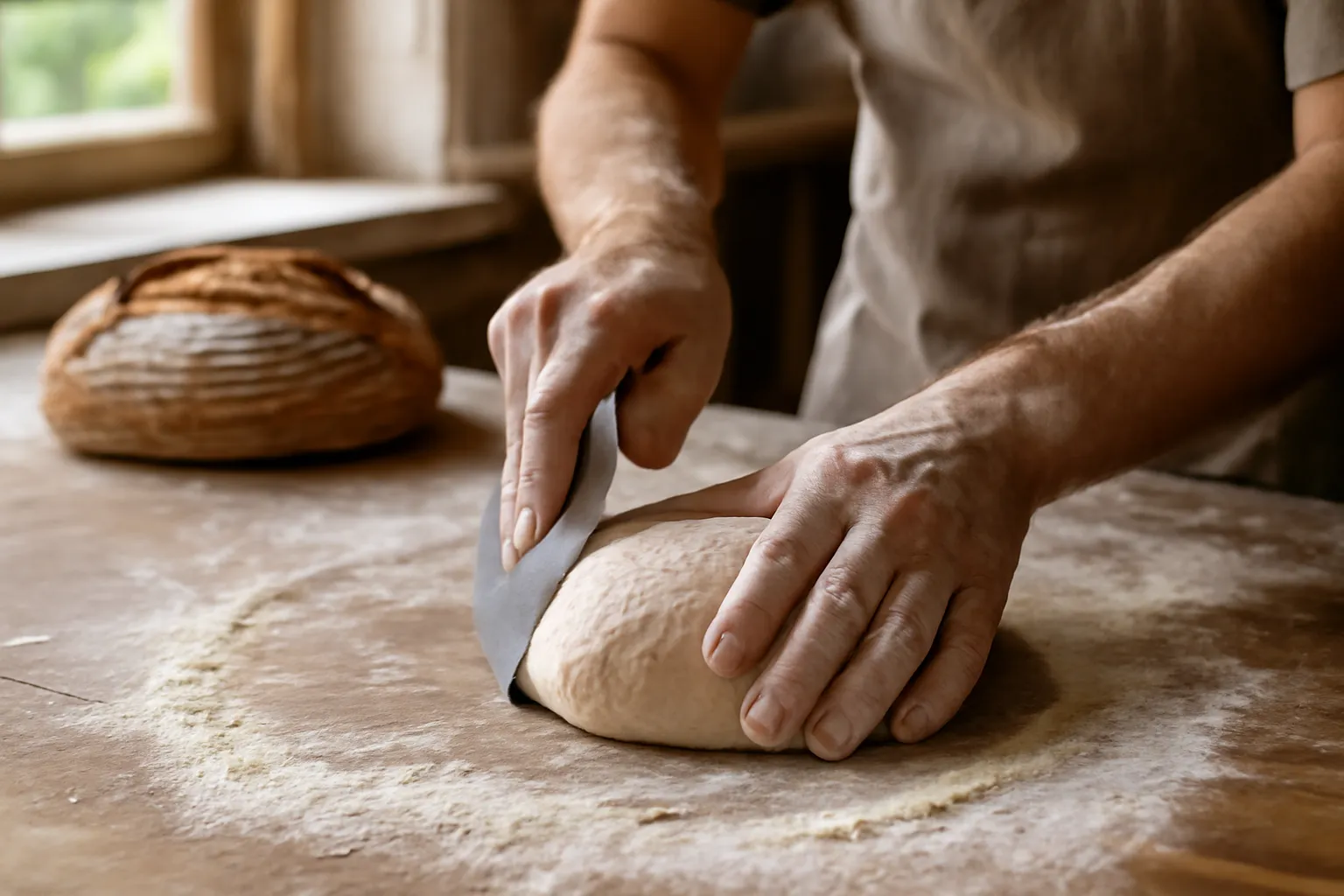
How This Bench Scraper Ended My Sticking-Dough Battle
“Why do you keep buying the same cheap scraper?” My husband asked me this the third time he spotted another dollar-bin plastic scraper in my grocery bag. Truth was, I hadn’t yet owned up to the real issue—it was never my hands failing at the bench, it was a tool with no grip and a blade too dull to slice cleanly through wet dough. Once I switched to a stainless steel scraper with genuine heft and a proper edge, dividing dough and working my bench through bulk fermentation turned into an entirely different experience. What felt like a minor gear swap ended up getting tested and validated across 500 loaves.
What Pushed Me to Upgrade in the First Place
Once sourdough becomes a routine rather than a hobby, the bench scraper turns into one of the pieces of gear you touch constantly. Mine was in my hand several times per session—folding dough during bulk fermentation, lifting and dividing at pre-shape, and wrangling sticky edges during final shape. The plastic scraper I’d been using, the cheap kind you can grab for a buck at any restaurant supply shop, kept bending under the warmth of my palms and the steady pressure of active, hydrated dough. Its edge had gone soft and rounded, so rather than cutting cleanly through the dough’s surface tension, it tore through it and smeared sticky bits across my counter.
I started compensating with weird hand angles and extra force, which knocked my whole rhythm off and left me second-guessing whether my shaping technique was actually the problem or if I was simply fighting bad equipment. That’s the point where I decided to spend money on something built to hold up.
Where It Delivers
- The stainless edge holds its sharpness through hundreds of cuts and folds without bending out of shape, meaning you’re actually slicing through dough instead of ripping it and leaving a sticky mess behind. Five hundred loaves in, I still haven’t sharpened or swapped it out.
- Its weight gives you actual leverage when sliding under a wet, heavy dough mass at pre-shape—no more sliding around on wooden boards or forcing awkward wrist angles to compensate. That same heft also keeps your pressure even when you’re splitting dough into matching portions.
- The rubber-coated handle stays secure even when your hands are soaked and covered in flour, so you’re not stopping every few seconds to re-grip. That matters a lot when you’re cranking through a high-volume baking session.
- Stainless steel won’t soak up moisture or harbor bacteria the way wood can, and it goes straight in the dishwasher, so upkeep is about as low-effort as it gets. A quick rinse under hot water between uses is all mine needs.
- The thickness and angle of the blade are dialed in enough that you can throw in deliberate scoring marks on shaped dough without the blade sliding off course, which has noticeably sharpened up my scoring game.
Where It Falls Short
- Priced around $13-15, it’s a real step up from the dollar-store version, and plenty of bakers won’t feel the value until they’ve already worn out two or three cheap scrapers. But run the numbers: if a plastic scraper barely survives 50 loaves and you’re replacing it several times a year, the OXO earns back its cost fast.
- The edge can snag on some wooden boards if your angle isn’t right, and it takes a bake or two to dial that in. Aim for a shallow angle against the board rather than coming at it straight on. Once that habit sets in, you stop thinking about it.
- A few bakers have mentioned the sharp edge chipping when used hard against unforgiving surfaces like granite or marble countertops. I bake on wood boards and have never run into this, but it’s something to keep in mind if your setup is different.
Putting It to the Test Again at Loaf 200
Somewhere around loaf 200, I caught myself wondering if I’d just talked myself into loving this thing—until I grabbed a friend’s old plastic scraper and instantly remembered exactly why I’d retired mine. Three folds in, I was back to fighting the same rounded edge and clumsy slipping I thought I’d left behind. It took roughly 15 minutes back with the OXO before I fully appreciated why the upgrade mattered in the first place. The difference was sharp enough that I ruled out placebo entirely.
Across the remaining 300 loaves, I started noticing exactly where the scraper earned its keep: keeping my bench clean and dry between folds, lifting shaped dough into the banneton without knocking the air out of it, and above all, keeping my dividing weights consistent loaf after loaf. Small edges like these add up once you’re counting bakes in the hundreds.
Bottom Line
If you’re baking sourdough regularly—even just once or twice a week—this is worth the investment. The OXO Good Grips Stainless Steel Multi-Purpose Scraper & Chopper isn’t fancy or complicated, but it does one job extremely well for years. That’s the kind of tool that actually changes your baking practice.
Sam tested the OXO Good Grips Bench Scraper across 500 loaves of sourdough. The scraper’s stainless steel edge still cuts cleanly and the grip holds firm even with wet, floury hands after this extensive testing. Stainless steel holds its sharpness through hundreds of cuts without bending, so you slice through dough instead of tearing it. The plastic scrapers Sam used bent under warmth and pressure, developing a dull, rounded edge that smeared sticky bits across the counter. The OXO Good Grips Stainless Steel Multi-Purpose Scraper & Chopper is priced around $13-15. While this is a step up from dollar-store versions, the cost pays for itself quickly if you’d otherwise replace cheap scrapers several times a year. After 500 loaves, Sam hasn’t sharpened or swapped out the stainless steel edge. The blade holds its sharpness through hundreds of cuts and folds without bending out of shape, requiring only a quick rinse under hot water between uses.Frequently Asked Questions
How many loaves did Sam test the OXO bench scraper on?
Why does Sam prefer stainless steel over plastic scrapers?
What is the price of the OXO Good Grips bench scraper?
Does the OXO bench scraper need sharpening after heavy use?
About This Article

Written by Sam Whitaker. Sam Whitaker has been baking sourdough for over a decade, including three years baking commercially, and now works out of a home kitchen in the Pacific Northwest. Sam's eleven-year-old starter, Harold, is the foundation for every recipe and troubleshooting guide on Sourdough Rising — real bread tested over and over until it works. More about this site.
Scope and limits. Sam is a home baker with no formal culinary training. Follow current food safety guidance for storage and handling, particularly with enriched or filled doughs.
Verify this against a primary source
Specifics change, and your situation may differ from the one described here. These are the authorities worth checking directly:
- USDA FoodData Central — flour and ingredient composition data
- FoodSafety.gov — safe handling and storage