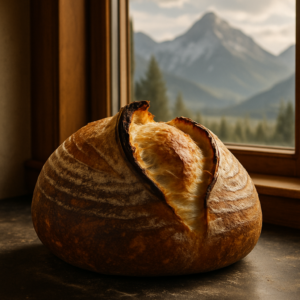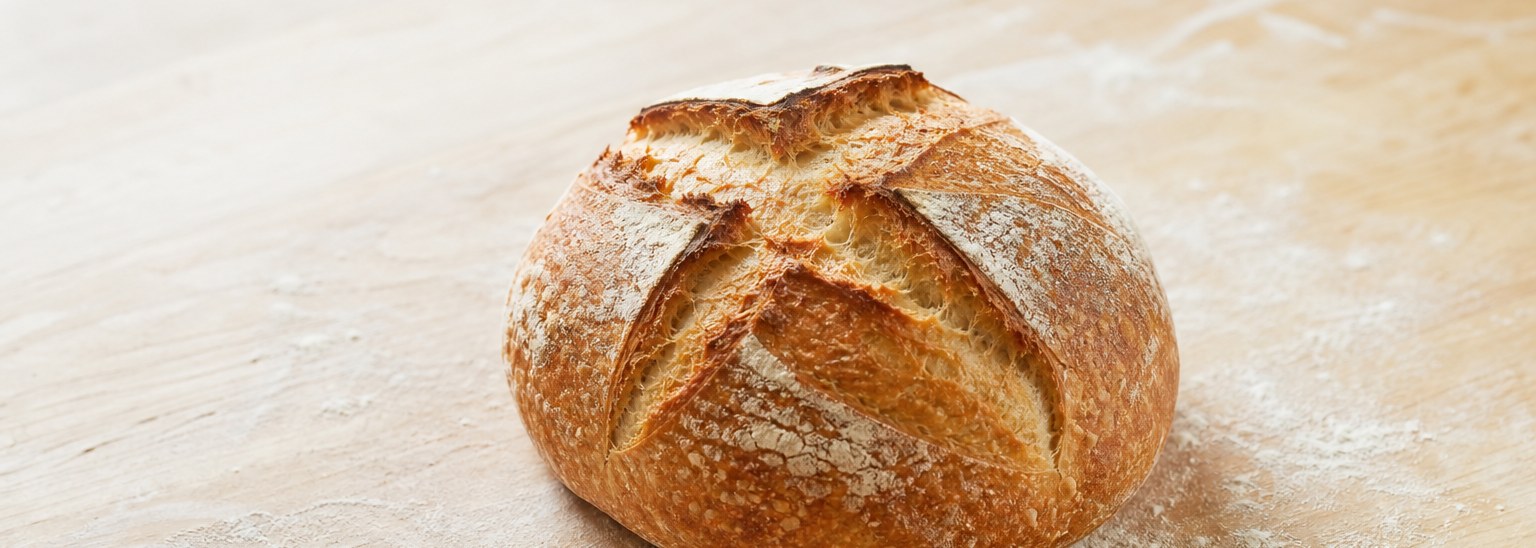
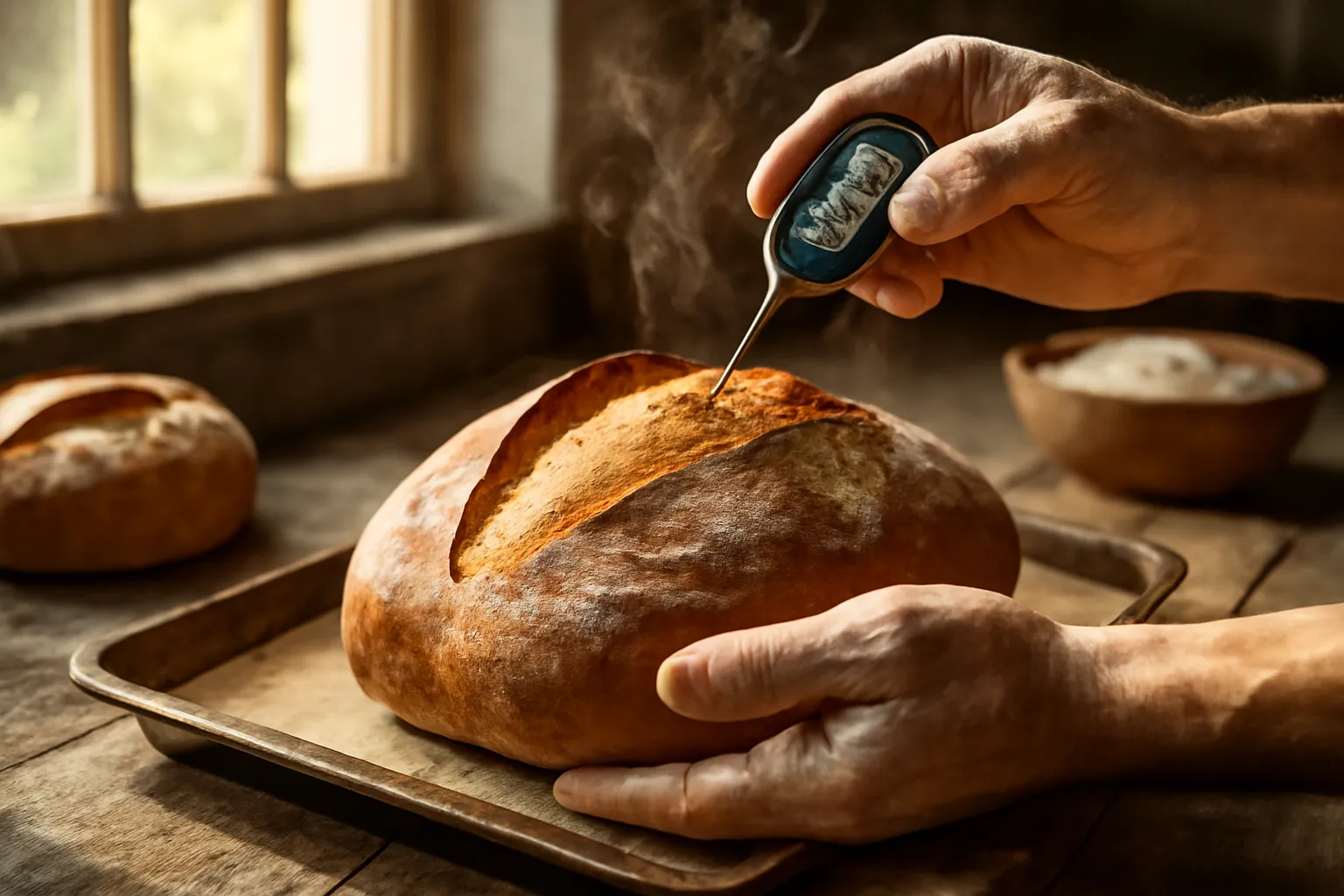
Recipe cards will tell you to bake until golden and thump-test the bottom, but they skip the part that actually matters: what’s really going on inside that crumb. For years I ran on nothing but that knuckle-rap-and-listen routine, crossing my fingers that a hollow sound meant the loaf was ready. Some loaves turned out fine. Plenty of others didn’t — I’d cut into a stunning-looking crust only to find a wet, underbaked center staring back at me. The weekend I ruined two batards back to back was the tipping point. I finally gave in and bought a real instant read thermometer for sourdough bread. At first it felt like I was skipping a step “real” bakers wouldn’t need. These days it’s the single tool I’d grab first if the rest of my kit vanished overnight.
Guessing at doneness fails because sourdough’s crust is thick enough to mask whatever’s happening underneath it. A loaf can turn deep amber and thump hollow and still hide a gummy, underdone middle. The core temperature is the one signal that doesn’t lie. A fully baked sourdough loaf lands somewhere in the 205°F to 210°F range at its center. Skip the thermometer and you’re essentially rolling dice inside a scorching-hot oven.
How This Thermometer Solved My Underbaked-Middle Struggle
The knock-and-listen method feels reassuring right up until you slice open a loaf that sounded flawless but turns out dense and raw in the center. A digital instant-read probe cuts through that uncertainty completely — sourdough reaches true doneness once its internal temp hits 205–210°F, no matter how deep the crust color looks.
Where it earns its keep
- Gives a core-temp reading in roughly 2–3 seconds flat, which means the oven door stays open only briefly — no heat dump during those crucial closing minutes of the bake.
- Pinpoints exactly when a loaf tips from underdone into fully baked — I track this every time now, and the gap between 202°F (crumb still faintly gummy) and 208°F (open, set texture) shows up in loaf after loaf.
- The probe itself is slim enough that it doesn’t leave an obvious puncture mark, and the screen’s big enough that I can read it without hunting for my glasses first — my eyes aren’t what they used to be.
Where it falls short
- The reading needs a beat to settle, so pulling the probe out too quickly gives you inconsistent numbers between checks — hold it in place for a full 2 seconds before trusting the display.
- It’s one more gadget you have to keep charged, stored, and top of mind — I once left mine sitting inside a loaf pan and didn’t realize until I was already mixing the next day’s dough.
I was skeptical that a number could replace instinct, but after my third consecutive loaf baked to exactly the right doneness, I stopped second-guessing the thermometer. Pick up the Lonicera Digital Cooking Thermometer for Bread Baking if you’re tired of slicing into surprises.
Frequently Asked Questions
What internal temperature should sourdough reach when fully baked?
A fully baked sourdough loaf reaches somewhere in the 205°F to 210°F range at its center. The gap between 202°F, where the crumb is still faintly gummy, and 208°F, where the texture opens and sets, shows up consistently from loaf to loaf.
Why does the thump test fail for sourdough doneness?
Sourdough’s thick crust masks what’s happening underneath, so a loaf can turn deep amber and thump hollow while still hiding a gummy, underdone middle. The core temperature is the signal that doesn’t lie about true doneness.
How long does an instant-read thermometer take to register?
A digital instant-read probe gives a core-temperature reading in roughly 2–3 seconds flat. However, you should hold it in place for a full 2 seconds before trusting the display, since pulling it out too quickly gives inconsistent numbers between checks.
Can a thermometer probe leave a visible mark in sourdough?
The probe is slim enough that it doesn’t leave an obvious puncture mark when inserted to check the loaf’s internal temperature during the final stages of baking.
About This Article

Written by Sam Whitaker. Sam Whitaker has been baking sourdough for over a decade, including three years baking commercially, and now works out of a home kitchen in the Pacific Northwest. Sam's eleven-year-old starter, Harold, is the foundation for every recipe and troubleshooting guide on Sourdough Rising — real bread tested over and over until it works. More about this site.
Scope and limits. Sam is a home baker with no formal culinary training. Follow current food safety guidance for storage and handling, particularly with enriched or filled doughs.
Verify this against a primary source
Specifics change, and your situation may differ from the one described here. These are the authorities worth checking directly:
- USDA FoodData Central — flour and ingredient composition data
- FoodSafety.gov — safe handling and storage