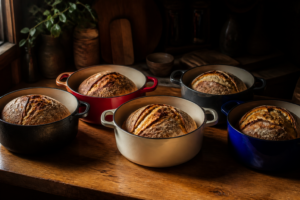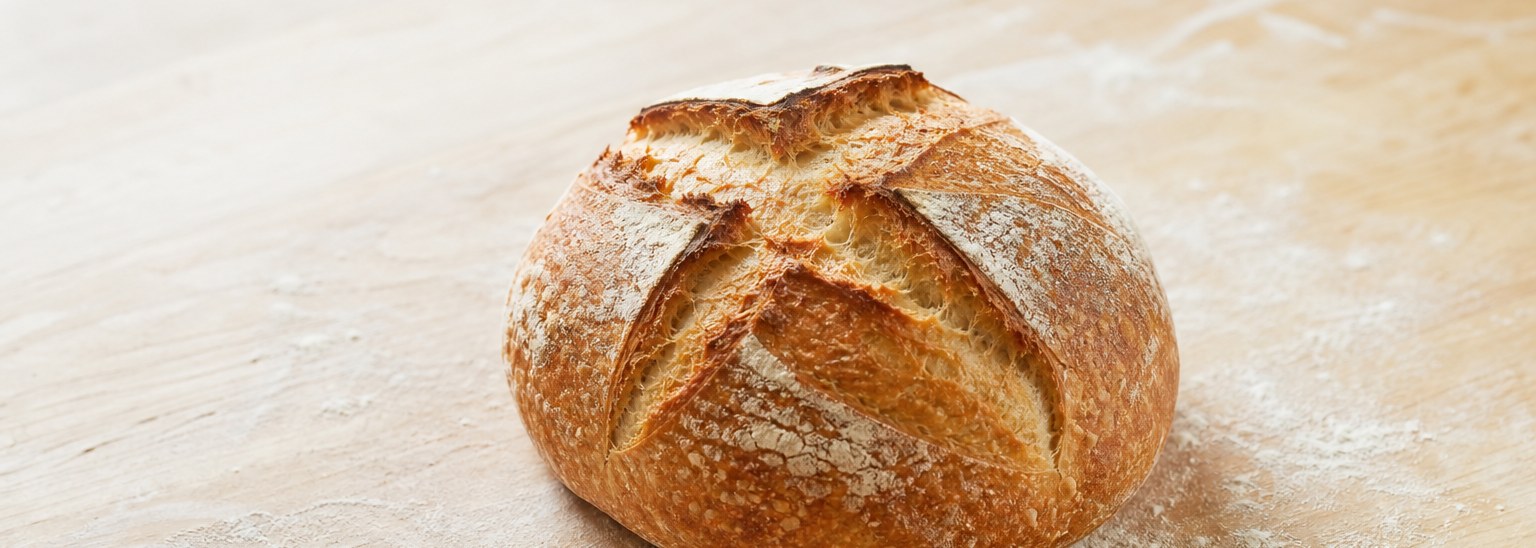
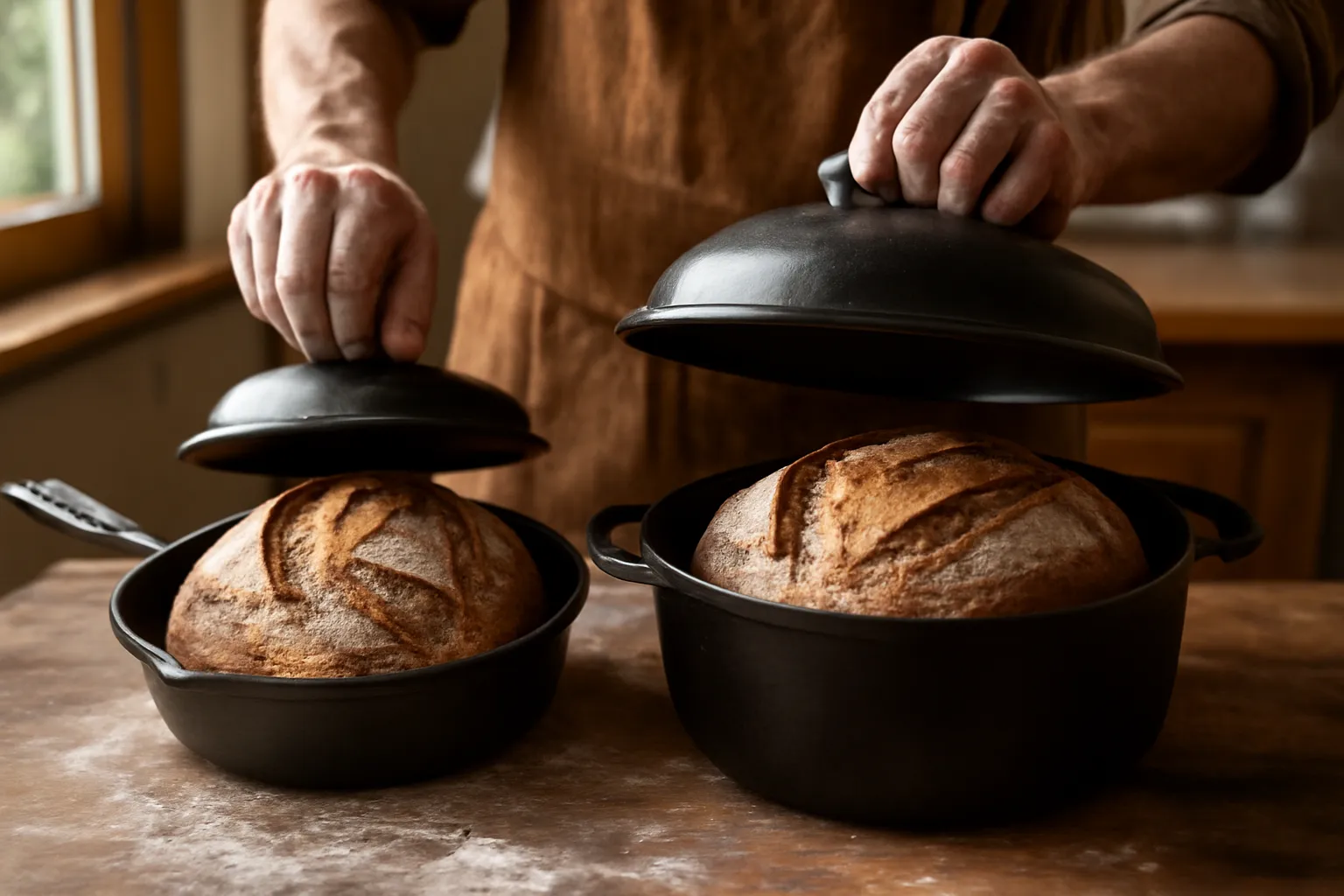
Here’s the myth I bought into for years: any enameled Dutch oven performs about the same as any other when it comes to coaxing out a wide-open sourdough crumb. My own hand-me-down proved that wrong. For months it gave me loaves with a decent ear and a decent crust — nothing broken, exactly, but nowhere near the dramatic open crumb shots flooding my feed, all of which people credited to a different baking vessel entirely. That itch is what dragged me into a full Lodge combo cooker sourdough comparison, and I’ll say it plainly: the experiment turned me into a convert. What follows is 30 straight days of baking both vessels side by side, so you can skip the trial and error I put myself through.
Steam was the thing that wore me down fastest. Crack the lid on that Dutch oven even a little to check on the bake, and the moisture I’d worked to trap would rush out almost instantly. Loading was its own separate headache — that heavy lid meant I’d shape my dough, let it proof, and then more or less drop it in from a height that felt riskier than it should. I flattened more than one nicely proofed boule doing exactly that. Something clearly had to give.
So I started paying attention to how other home bakers were handling the load-in step. The ones getting consistent, reliable results seemed to lean on a combo cooker setup, where a shallow skillet acts as the base and a deeper pot drops down over it as the lid. That flipped arrangement looked like it could solve my scoring and loading problems in one shot. So I committed to testing it properly, head-to-head against my regular pot, for a full 30 days.
| Attribute | Lodge Combo Cooker | Regular Dutch Oven |
|---|---|---|
| Steam control during bake | Tilt skillet lid open slightly without losing all steam | Lifting lid lets moisture escape unevenly |
| Crust consistency | Thick, well-shattered crust on every bake | Flat, inconsistent crusts |
| Checking progress mid-bake | Can watch oven spring and crust color | Guessing blind |
| Preheat time | 45 minutes or more | Shorter than combo cooker |
| Capacity for full-size boule | 3.2 quarts, snug fit | Not specified |
| Ear height | Taller ear than previous setup | Not specified |
| Handling difficulty | Requires both hands and steady nerves mid-bake | Not specified |
| Loading dough | Not specified | High-risk drop from height |
How the Combo Cooker Finally Gave Me Real Steam Control
That old hand-me-down pot kept frustrating me on the steam front — lifting the lid to check crust color let moisture escape unevenly, and I kept ending up with flat, inconsistent crusts bake after bake. Switching to the Lodge combo cooker changed that outright; its detachable skillet lid finally gave me actual say over when steam vents and how much escapes during the bake.
Where it delivers
- Because the skillet doubles as the lid, I can tilt it open just a sliver to check oven spring and crust color without dumping all the steam out at once — I went from guessing blind to actually watching what happens in the final minutes.
- Cast iron clings to heat so stubbornly that even after I’ve cracked that skillet lid open, the bottom of the loaf keeps getting hit with intense, direct heat, which means a thick, well-shattered crust on every single bake.
- At 3.2 quarts, the capacity runs snug for a full-size boule, so the dough has nowhere to expand but upward — which unintentionally gave me a taller ear than my previous setup ever managed.
Where it falls short
- This pot has real heft, so hauling it out mid-bake just to shift that skillet lid takes both hands and steady nerves — wrestling with oven mitts while your loaf is at peak spring is genuinely stressful.
- Preheating cast iron takes a while — figure 45 minutes or more before it’s truly hot — which means your oven runs longer than usual and your kitchen turns into a sauna on warm days.
I’ll admit I second-guessed this after the first bake when I over-tilted that skillet lid and lost steam faster than expected, but by day five I had the motion down to muscle memory. If you’re frustrated with unpredictable crusts and want real control over your bake environment, grab the Lodge Cast Iron Combo Cooker – PFAS-Free 2-in-1 3.2 Quart Deep Pot and 10.25 Inch Skillet Set.
Frequently Asked Questions
How long does a Lodge combo cooker take to preheat?
Figure 45 minutes or more before cast iron is truly hot. This is longer than a regular Dutch oven, which means your oven runs longer than usual and your kitchen can turn into a sauna on warm days.
Can you check bread during baking with a combo cooker?
Yes. The skillet lid lets you tilt it open just a sliver to check oven spring and crust color without dumping all the steam out at once. Cast iron clings to heat so stubbornly that the bottom of the loaf keeps getting hit with intense, direct heat even after you’ve cracked the lid open.
What size boule fits in a Lodge combo cooker?
At 3.2 quarts, the capacity runs snug for a full-size boule. The dough has nowhere to expand but upward, which can give you a taller ear than previous setups managed.
Is a combo cooker harder to handle than a Dutch oven?
The combo cooker has real heft, so hauling it out mid-bake just to shift that skillet lid takes both hands and steady nerves. Wrestling with oven mitts while your loaf is at peak spring is genuinely stressful, though the motion becomes muscle memory by day five.
About This Article

Written by Sam Whitaker. Sam Whitaker has been baking sourdough for over a decade, including three years baking commercially, and now works out of a home kitchen in the Pacific Northwest. Sam's eleven-year-old starter, Harold, is the foundation for every recipe and troubleshooting guide on Sourdough Rising — real bread tested over and over until it works. More about this site.
Scope and limits. Sam is a home baker with no formal culinary training. Follow current food safety guidance for storage and handling, particularly with enriched or filled doughs.
Verify this against a primary source
Specifics change, and your situation may differ from the one described here. These are the authorities worth checking directly:
- USDA FoodData Central — flour and ingredient composition data
- FoodSafety.gov — safe handling and storage