Warning: the jar you’re feeding your starter in right now might be quietly sabotaging every loaf you bake. Container choice sounds like a minor detail, but it directly affects how easily you feed the culture, how well you can read its activity, and whether it actually ferments the way it’s supposed to. Get it wrong and you’re fighting your equipment instead of baking bread.
| Container Attribute | Glass | Plastic |
|---|---|---|
| Smell retention | Won’t hold odors | Permanently locks in sour tang |
| Discoloration | Won’t discolor | Discolors after months of daily feeds |
| Visibility of activity | See bubbling, rising, collapsing in real time | Much tougher to eyeball activity |
Skip Plastic, Stick With Glass
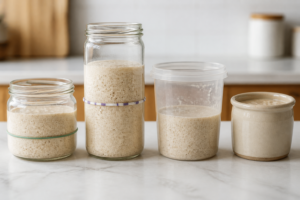
Glass wins here, no contest. It won’t hold onto smells or discolor the way plastic does after months of daily feeds, and it lets you watch the bubbling, rising, and collapsing happen in real time without popping the lid to check. Plastic will get you through a pinch, but it tends to permanently lock in that sour tang and makes eyeballing your starter’s activity much tougher.
Getting the Size and Mouth Width Right
For most people baking at home, a wide-mouth jar somewhere between 24 and 32 ounces hits the sweet spot—roomy enough to handle a solid feeding ratio without your starter overflowing mid-rise, and open enough at the top that a spatula actually fits for scraping the sides clean. A narrow-mouth jar might save you a sliver of counter space, but it turns feeding and cleanup into a genuine hassle, and that tradeoff isn’t worth it.
Keep the Lid Loose, Never Sealed Tight
Fermentation means your starter is constantly pushing out CO2, so a fully airtight seal is a bad idea—pressure can build up and, on rare occasions, blow a lid off or even crack the jar itself. Your options: rest the lid loosely on top, use one with a small built-in vent, or just secure a coffee filter with a rubber band. Plenty of starter jars sold specifically for this job come with a vented silicone lid, which is a nice convenience but nothing you truly need.
Extras Worth Considering
- Printed measurement lines on the jar: Lets you see exactly how far your starter has climbed since its last feed, no guesswork required.
- A rubber band wrapped around the jar: The zero-cost, low-tech way to do the same thing.
- A warming mat made for this purpose: Only worth buying if your kitchen tends to run chilly—most starters do just fine at ordinary room temperature.
So Which One Should You Grab?
I’ve broken down the exact jars and kits I’ve relied on over the years in a separate, dedicated review—check out the vessels I’ve personally used across 11 years of baking if you want specific recommendations.
Nail the material and the size, and your starter jar turns into one of those things you never have to think about again—which, honestly, is the whole goal.
Frequently Asked Questions
Should I keep my sourdough starter in plastic or glass?
Glass wins. Plastic permanently locks in sour smells and discoloration after months of daily feeds, making it harder to watch your starter’s activity. Glass lets you see bubbling, rising, and collapsing in real time without opening the lid constantly.
What size jar works best for a home sourdough starter?
A wide-mouth jar between 24 and 32 ounces hits the sweet spot for most home bakers. It’s roomy enough to handle a solid feeding ratio without overflow during rise, and wide enough that a spatula fits for scraping the sides clean.
Can I seal my sourdough starter jar tightly?
No. A fully airtight seal is a bad idea because fermentation constantly pushes out CO2, which can build pressure and crack the jar or blow the lid off. Use a loose-fitting lid, a vented lid, or secure a coffee filter with a rubber band instead.
Do I need a warming mat for my sourdough starter?
Only if your kitchen runs chilly. Most starters do just fine at ordinary room temperature, so a warming mat is only worth buying if temperature is genuinely a problem in your space.
About This Article

Written by Sam Whitaker. Sam Whitaker has been baking sourdough for over a decade, including three years baking commercially, and now works out of a home kitchen in the Pacific Northwest. Sam's eleven-year-old starter, Harold, is the foundation for every recipe and troubleshooting guide on Sourdough Rising — real bread tested over and over until it works. More about this site.
Scope and limits. Sam is a home baker with no formal culinary training. Follow current food safety guidance for storage and handling, particularly with enriched or filled doughs.
Verify this against a primary source
Specifics change, and your situation may differ from the one described here. These are the authorities worth checking directly:
- USDA FoodData Central — flour and ingredient composition data
- FoodSafety.gov — safe handling and storage