The two-slot waffle maker I used to own had a permanent home on the counter just left of my stove, cord looped awkwardly around the coffee maker because I never bothered running it anywhere else. That spot is where I made the batch that nearly ended my reputation as the person in the family who “actually bakes.” It was a Sunday, my in-laws were all still in pajamas around the table, coffee was going, and I’d made a big deal about whipping up waffles from scratch. What landed on their plates looked like a waffle the way a deflated pool float looks like something you’d actually float on. Pale through the center, scorched at the edges, and about as sturdy as damp cardboard. My father-in-law, ever the diplomat, worked through three of them without saying a word. That was the exact morning I fell down the rabbit hole of sourdough discard waffles — and it rearranged everything I thought I knew about breakfast.
Where My Old Waffle Formula Kept Letting Me Down (And How Discard Turned It Around)
For a long stretch, my go-to was a plain from-scratch batter — flour, baking powder, eggs, milk, butter, a spoon of sugar. Nothing wrong with it on paper. Yet the outcome swung wildly every single time I made it. Some Sundays it turned out beautifully. Other Sundays it gave me the cardboard disaster. I never could pin down what I was doing differently between one attempt and the next.
Once I started maintaining a sourdough starter, I ran into the same problem every new starter owner eventually hits: way too much discard piling up. There was a jar shoved in the back of my fridge multiplying faster than I could use it, and tossing spoonfuls of it always came with a small pang of guilt. So I began testing it in other things — pancakes first, then crackers, then muffins — and eventually, waffles.
What almost no one mentions about folding discard into waffle batter is that it’s not merely a tidy way to avoid waste — it genuinely upgrades the batter itself, in a few concrete ways. The acidity built up in the starter softens the gluten structure, giving you an interior that’s noticeably more tender. The byproducts of fermentation also help drive browning, so the color comes out deep and even from edge to edge instead of scorched at the rim and pale in the middle. And then there’s the taste. That faint tang layered underneath everything makes the whole waffle read as more complex — closer to the kind of thing you’d happily hand over twelve bucks for at a weekend brunch spot.
The Iron That Actually Solved My Even-Heat Problem (And Gave Me Real Crispy Edges)
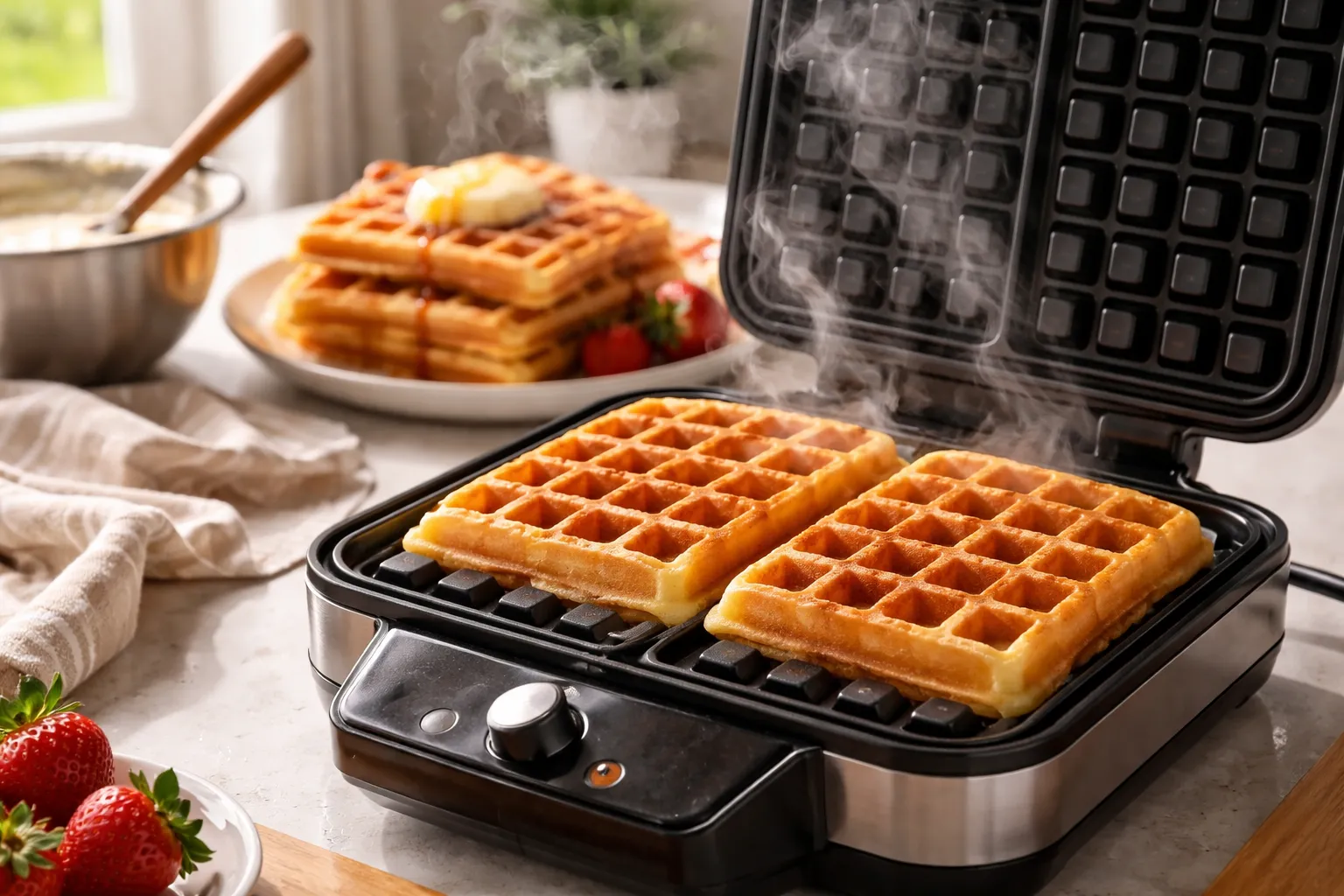
The old machine I relied on had hot zones that would blacken the outer edges while the middle stayed soft and undercooked — and I didn’t clock that the appliance itself was the culprit until I finally swapped it out. A rotating Belgian-style iron spreads heat across both plates far more evenly, which means I’m no longer crossing my fingers or apologizing to guests for a soggy center.
What it gets right
- Because the rotating action flips the batter partway through cooking on its own, both sides brown at the same pace — no more standing guard or guessing when to turn it.
- Once dialed in, the heat holds steady batch after batch; I can now churn out six waffles in a row without sacrificing the first couple as guinea pigs.
- Sourdough discard batter runs thinner than a standard waffle mix, and this iron cooks it through cleanly without leaving that dense, gummy center I used to get stuck with.
Where it falls short
- It takes up noticeably more real estate than a basic waffle maker — mine now permanently occupies counter space instead of tucking away in a cabinet, a compromise I’ve since made my peace with.
- The rotating hinge is one more moving part that can eventually stick or wear down; mine needed a gentle wipe-down with a damp cloth after several months of weekly use.
I had one Sunday morning where the rotation seemed stuck halfway through a batch and I nearly threw in the towel, but it turned out to just be batter seepage—a quick reset fixed it. Since then, it’s been reliable. If you’re tired of uneven waffles, the bella Fits-Anywhere Flip-n-Store Non-Toxic Belgian Waffle Maker, Plum is worth the counter space.
Ingredients
- 200g sourdough discard
- 150g all-purpose flour
- 240g milk
- 2 large eggs, separated
- 50g melted butter
- 20g sugar
- 5g baking powder
- 3g baking soda
- Pinch of salt
Step by Step
- Mix the base. Whisk together the discard, milk, egg yolks, melted butter, and sugar until smooth. Sprinkle the flour, baking powder, baking soda, and salt over the top and fold gently.
- Whip the egg whites. In a separate bowl, whip the egg whites to soft peaks, then fold them gently into the batter – this is what gives sourdough discard waffles their light, crisp texture instead of a dense one.
- Cook. Preheat your waffle iron and cook according to its instructions, typically 4-5 minutes, until golden and crisp.
The acidity in the starter softens gluten, creating a more tender interior. Fermentation byproducts help drive browning for deep, even color. That faint tang layered underneath makes the whole waffle more complex—closer to what you’d pay twelve bucks for at a weekend brunch spot. Preheat your waffle iron and cook according to its instructions, typically 4-5 minutes, until golden and crisp. A rotating Belgian-style iron cooks both sides evenly because the rotating action flips the batter partway through, so no more standing guard guessing when to turn it. Sam uses a BELLA Classic Rotating Belgian Waffle Maker. The rotating action flips the batter partway through cooking on its own, so both sides brown at the same pace. It cooks sourdough discard batter through cleanly without leaving a dense, gummy center. Whipping egg whites to soft peaks and folding them gently into the batter gives sourdough discard waffles their light, crisp texture instead of a dense one. This step is what creates the lighter result you’re looking for in your final waffle.Frequently Asked Questions
Why do sourdough discard waffles taste better than regular waffles?
How long do sourdough discard waffles take to cook?
What waffle maker does Sam recommend for sourdough discard?
Can you make sourdough discard waffles thicker or fluffier?
About This Article

Written by Sam Whitaker. Sam Whitaker has been baking sourdough for over a decade, including three years baking commercially, and now works out of a home kitchen in the Pacific Northwest. Sam's eleven-year-old starter, Harold, is the foundation for every recipe and troubleshooting guide on Sourdough Rising — real bread tested over and over until it works. More about this site.
Scope and limits. Sam is a home baker with no formal culinary training. Follow current food safety guidance for storage and handling, particularly with enriched or filled doughs.
Verify this against a primary source
Specifics change, and your situation may differ from the one described here. These are the authorities worth checking directly:
- USDA FoodData Central — flour and ingredient composition data
- FoodSafety.gov — safe handling and storage