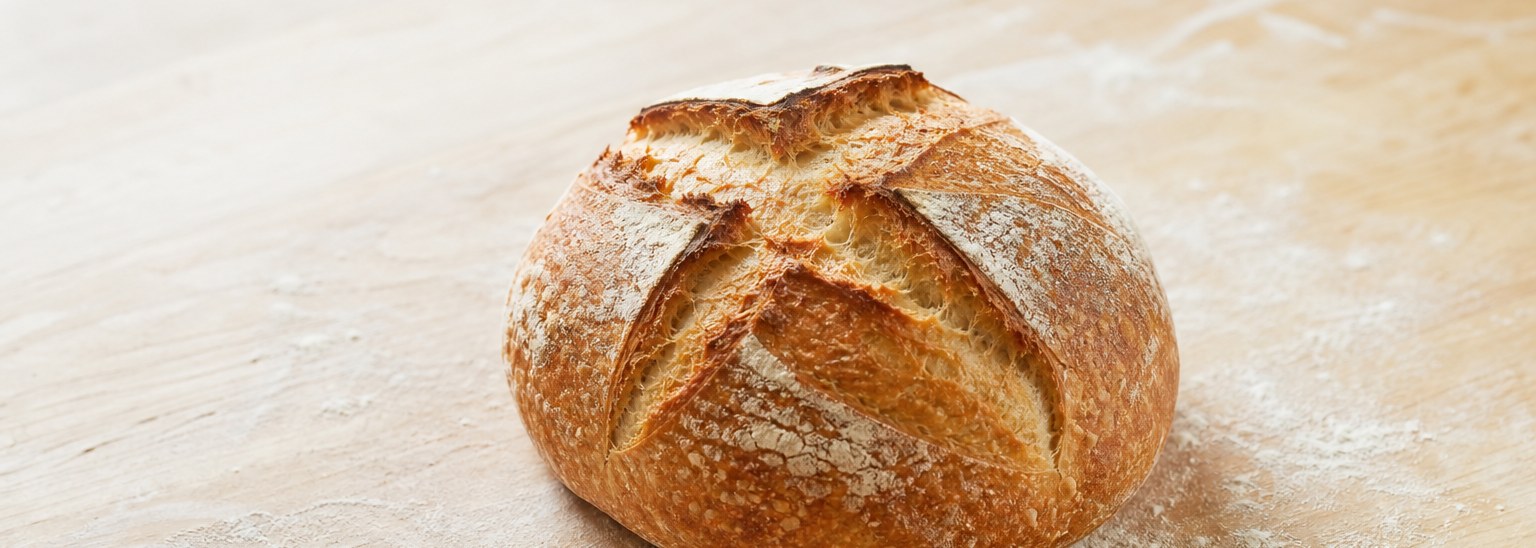
Picture the photo I could pull up on my phone right now: a marble slab smeared with pale streaks of dough, flour dust hanging in the air like it had just snowed indoors, and a look on my face somewhere between panic and defeat. That image is proof of exactly one thing—my three-day sourdough project had welded itself to the counter. Not “a little tacky.” Fused. Like the marble and the dough had signed some kind of permanent contract the instant they touched.
Panic makes you do dumb things, so naturally I reached for whatever was closest. A butter knife. Not a joke, not an exaggeration—a serrated butter knife straight out of my silverware drawer, pressed into emergency dough-rescue duty.
Eleven years into this obsession now, that memory makes me laugh. But in the moment, hunched over what basically amounted to dough-flavored cement, it hit me that I’d been skipping past one of the most basic—and, it turns out, genuinely game-changing—pieces of equipment a baker owns. For way too long I grabbed whatever scraper or knife happened to be within arm’s reach, no real thought behind it, until I finally sat down and actually researched the best dough scrapers and bench knives for sourdough work. That research reshaped how every single bake day of mine flows.
| Scraper Type | Material | Best For | Key Feature |
|---|---|---|---|
| Stainless Steel Bench Knife | Stainless steel | Lifting dough, splitting pieces, freeing stuck dough, clearing debris | Rigid, sharp-edged, flat blade |
| Flexible Bowl Scraper | Plastic | Bulk fermentation, stretch-and-fold, lamination | Curves to fit bowl shape, soft edges |
| Pro Dough Pastry Scraper | Stainless steel with mirror polish | General bench work, portioning dough | Measuring scale etched on blade |
| Bench Scraper with Measurement Marks | Stainless steel | Dividing dough evenly | Ergonomic grip, measurement marks |
| Vovoly Multipurpose Bench Scraper | Stainless steel | Wet, clingy doughs | Extra heft and rigidity |
Why Your Scraper Choice Isn’t Just a Small Detail
Confession time: early on, I assumed a scraper was a scraper. Plastic, metal, wood, whatever—same function, same result. That assumption was completely off base.
Here’s the reality with sourdough: this dough is a living, moody thing, and it’s stubbornly sticky on top of that. Add in the fact that during an active bulk ferment you’re handling it over and over—laminating, folding, pre-shaping, final shaping, then transferring the whole thing into a Dutch oven—and you start to see the pattern. Counting it out, I land on roughly 20 separate times I pick up a scraper or bench knife across one bake day.
Twenty touches is a lot of chances to either move smoothly or wrestle with equipment that’s working against you.
The right tool doesn’t just save time—it genuinely changes how the dough responds to your hands. A rigid, sharp stainless bench knife slides beneath the dough cleanly instead of dragging it. A pliable bowl scraper hugs curved surfaces so nothing sticky escapes. And a properly angled edge means you’re not tearing gluten strands or introducing weak spots that’ll show up later in your crumb.
I found all this out the hard way, obviously. The butter-knife disaster only happened because the correct tool wasn’t sitting where I needed it. So I made the investment. No regrets since.
Stainless Steel Bench Knives: The Tool That Does the Heavy Lifting
If your budget only stretches to one piece of gear, let it be a stainless steel bench knife. Everything else in a sourdough kitchen orbits around this one.
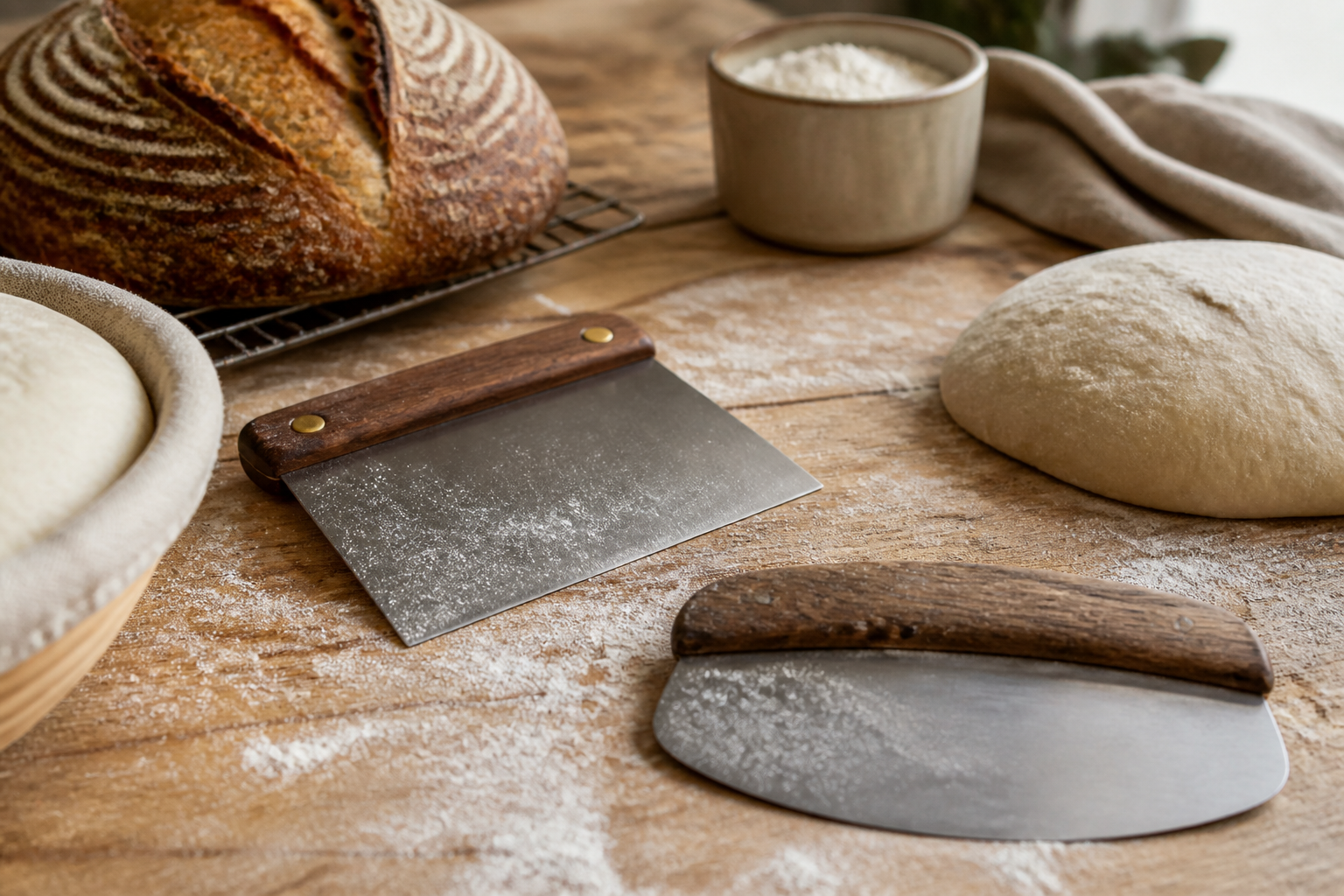
A solid stainless bench scraper is stiff, sharp-edged, and built with a flat blade that hands you both control and force. Here’s what mine gets used for regularly:
- Lifting sections of dough out of a mixing bowl or off the counter
- Splitting dough into individual pieces during pre-shaping
- Freeing dough that’s welded itself to my work surface, without tearing it
- Clearing crusty flour and dough debris off my counter between shaping stages
- Squaring up clean edges on my dough during pre-shape
My go-to recommendation is the Pro Dough Pastry Scraper/Cutter/Chopper Stainless Steel Mirror Polished with Measuring Scale. I know the name is a mouthful, but this tool is genuinely exceptional. The mirror polish finish means it’s corrosion-resistant, and the measuring scale on the blade is surprisingly useful when you’re portioning dough. It glides like a dream.
Worth a look too is the Bench Scraper Kitchen with Measurement Marks for Even Portions, Stainless Steel Build, Ergonomic Grip. That handle stays comfortable even deep into a long bake session, and having measurement marks built right onto the blade means splitting dough evenly takes zero guesswork.
On the heavier end, there’s the Vovoly Multipurpose Bench Scraper. It was originally built with griddle cleanup in mind, but that extra heft and rigidity make it a surprisingly good match for really wet, clingy doughs. If you like a scraper that feels solid and substantial rather than featherweight, this is the one to grab.
Flexible Plastic Bowl Scrapers: Quietly Doing the Most Work
This is the spot where a lot of newer bakers get it wrong: plastic bowl scrapers aren’t a backup tool you grab when nothing else is around. They earn their own spot in the drawer.
These flexible scrapers curve to fit the shape of your mixing bowl, and because the edges are soft, they won’t scratch up a beloved stoneware or ceramic bowl the way a metal one might. But their real value shows up during bulk fermentation.
During stretch-and-fold or lamination work, a flexible bowl scraper means you can work the dough section by section without your hands constantly diving into the bowl. The dough stays contained, you move through each part methodically, and the scraper bends with you instead of fighting your movements.
My advice: keep at least a pair on hand. The SURDOCA Dough Scraper 3-Pack in Green and White gives you a couple of color options, which turns out to be genuinely useful for keeping tools organized. I’ve got one color dedicated to dough handling and another reserved for flour tasks, so nothing cross-contaminates.
There’s also the SURDOCA Dough Scraper 3-Pack in Pure White, a good fit if you’d rather keep your kitchen tools looking clean and minimal. Both sets hold up well over time and don’t cost much, so owning multiples isn’t overkill—it’s just practical.
The One Scraper That Actually Freed My Dough Without Ripping It
When your dough is bonded to the counter and your hand is inches from grabbing a butter knife out of pure desperation, what you actually need is a blade that’s sharp, flat, and rigid enough to release the dough cleanly instead of folding it into a mess. A real bench scraper versus whatever random utensil is in your drawer is the difference between saving a bulk ferment and spending twenty frustrating minutes peeling dough shreds off marble.
Where it shines
- The mirror-finished stainless blade is slim enough to slip under even a heavily hydrated dough without smashing it flat, and the edge is sharp enough that it’s genuinely cutting the dough free rather than just dragging across it.
- A measuring scale etched right into the blade lets you divide dough by weight without pulling out a separate kitchen scale, which keeps your bench from turning into a cluttered mess of tools mid-lamination or pre-shape.
- The handle has enough real weight and balance that you can push down and forward with pressure instead of twisting your wrist at an odd angle—which matters a lot when sticky dough demands leverage over brute force.
Where it falls short
- For this price, you’re getting one scraper, not a set—so if you misplace it or want a spare for your backup kit, that means a second purchase.
- Those measurement markings are printed rather than etched into the metal, so after a year of regular use and dishwasher trips, they fade to the point you’re back to eyeballing your portions.
I was skeptical that the measuring scale would actually be useful and not just marketing fluff, but I’ve genuinely used it dozens of times to divide dough into equal portions for rolls. Pro Dough Pastry Scraper/Cutter/Chopper Stainless Steel Mirror Polished with Measuring Scale
Frequently Asked Questions
How many times do you use a scraper during one sourdough bake?
I use a scraper or bench knife roughly 20 separate times across one bake day. That includes laminating, folding, pre-shaping, final shaping, and transferring dough into a Dutch oven, plus various other handling tasks throughout bulk fermentation.
What’s the best stainless steel bench knife for sourdough?
The Pro Dough Pastry Scraper/Cutter/Chopper Stainless Steel Mirror Polished with Measuring Scale is my go-to recommendation. The mirror polish finish is corrosion-resistant, the measuring scale helps portion dough, and the blade glides smoothly under even heavily hydrated dough without smashing it flat.
Should I use plastic bowl scrapers for sourdough dough?
Yes, flexible plastic bowl scrapers deserve their own spot in your drawer. They curve to fit mixing bowl shapes, won’t scratch stoneware, and let you work dough section by section during stretch-and-fold or lamination without constantly diving your hands into the bowl. Keep at least a pair on hand.
Why does scraper choice matter for sourdough baking?
The right scraper changes how dough responds to your hands. A rigid stainless blade slides cleanly beneath sticky dough instead of dragging it, while a pliable bowl scraper hugs curved surfaces. Proper angling prevents tearing gluten strands and introducing weak spots that show up later in your crumb.
About This Article

Written by Sam Whitaker. Sam Whitaker has been baking sourdough for over a decade, including three years baking commercially, and now works out of a home kitchen in the Pacific Northwest. Sam's eleven-year-old starter, Harold, is the foundation for every recipe and troubleshooting guide on Sourdough Rising — real bread tested over and over until it works. More about this site.
Scope and limits. Sam is a home baker with no formal culinary training. Follow current food safety guidance for storage and handling, particularly with enriched or filled doughs.
Verify this against a primary source
Specifics change, and your situation may differ from the one described here. These are the authorities worth checking directly:
- USDA FoodData Central — flour and ingredient composition data
- FoodSafety.gov — safe handling and storage