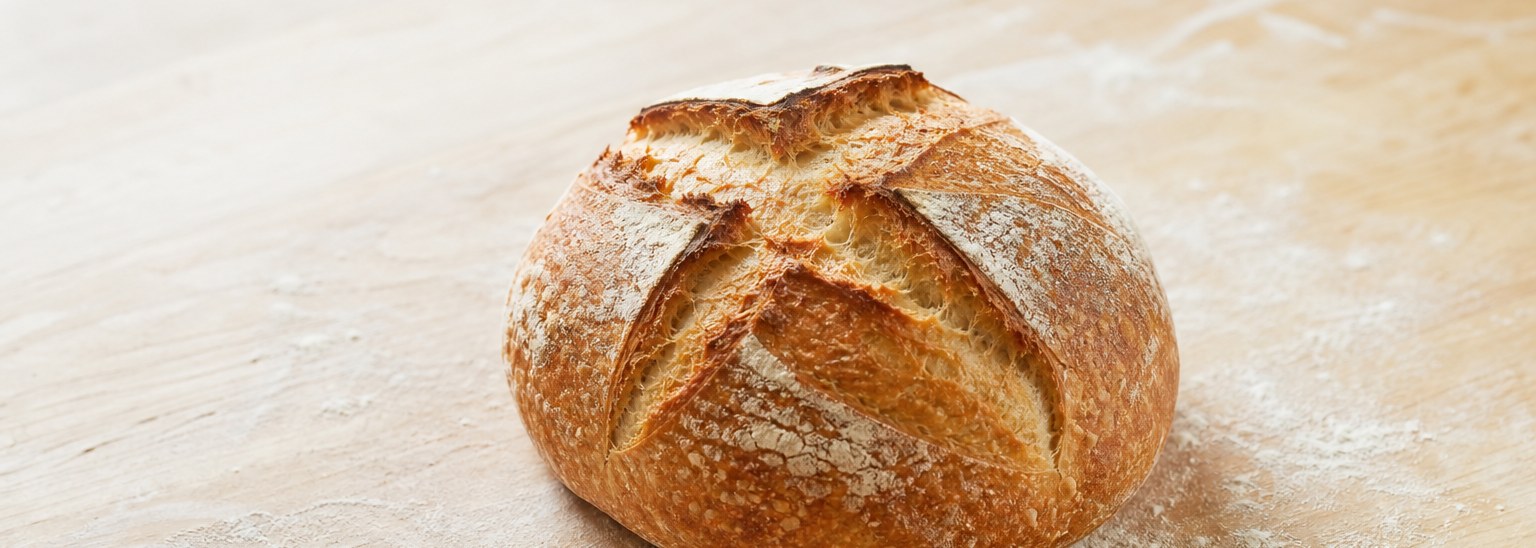
A stretch of ninety-degree afternoons had turned my kitchen into a furnace last summer, and it was during that swelter that I finally understood what my equipment had been quietly telling me for years. A loaf came out of that oven looking flawless — deep golden crust, a proud ear, all the visual cues of success — yet the crumb underneath was tight and gummy. Eleven years into this craft, I had no excuse. I’d committed the classic blunder: borrowing my neighbor’s ceramic Dutch oven for that day’s bake, too proud to admit the thing simply couldn’t hold heat the way my dependable combo cooker always had. That was the moment it clicked — I’d stopped appreciating my own tools, and hunting down the best combo cooker for sourdough has nothing to do with owning fancy gear and everything to do with grasping why specific tools change your loaf’s outcome.
Rewind a bit. That ceramic mishap unfolded on a Tuesday, roughly five years into my sourdough obsession. I’d invited a handful of people over for a baking workshop, eager to demonstrate what real oven spring should look like. Instead, I nearly panicked when my neighbor’s gorgeous — but woefully unsuited — Dutch oven refused to hold the temperature my dough demanded. The finished loaf told the whole embarrassing story: flat, barely any ear to speak of, and that unmistakable gummy texture that signals not enough steam and not enough heat.
| Vessel Type | Heat Retention | Steam Consistency | Lid Removal Timing |
|---|---|---|---|
| Cast Iron Combo Cooker | Holds heat evenly over time | Consistent circulation, no cold spots | After 20–25 minutes |
| Ceramic Dutch Oven | Does not hold heat the same way | Inconsistent, leads to gummy patches | Not specified in article |
What a Combo Cooker Actually Does for Your Sourdough
Here’s the lesson that humiliating morning drilled into me: Dutch ovens are not interchangeable. A genuinely good combo cooker for sourdough isn’t merely a vessel — it’s a precision instrument handling three jobs at once. It locks in steam, keeps the heat rock-steady, and shifts from a sealed chamber to an open one at precisely the right moment.
Sourdough dough essentially needs to live in two different worlds during baking. For those first 20 to 25 minutes, it craves fierce, humid heat — that’s the window where oven spring occurs, where your loaf hits its peak rise before the crust locks into place. Achieving that calls for a lidded vessel that reflects heat straight back at the dough while trapping the moisture it’s releasing. Once that critical stretch passes, the lid needs to come off so the crust can color up and crackle properly.
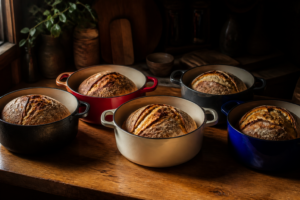
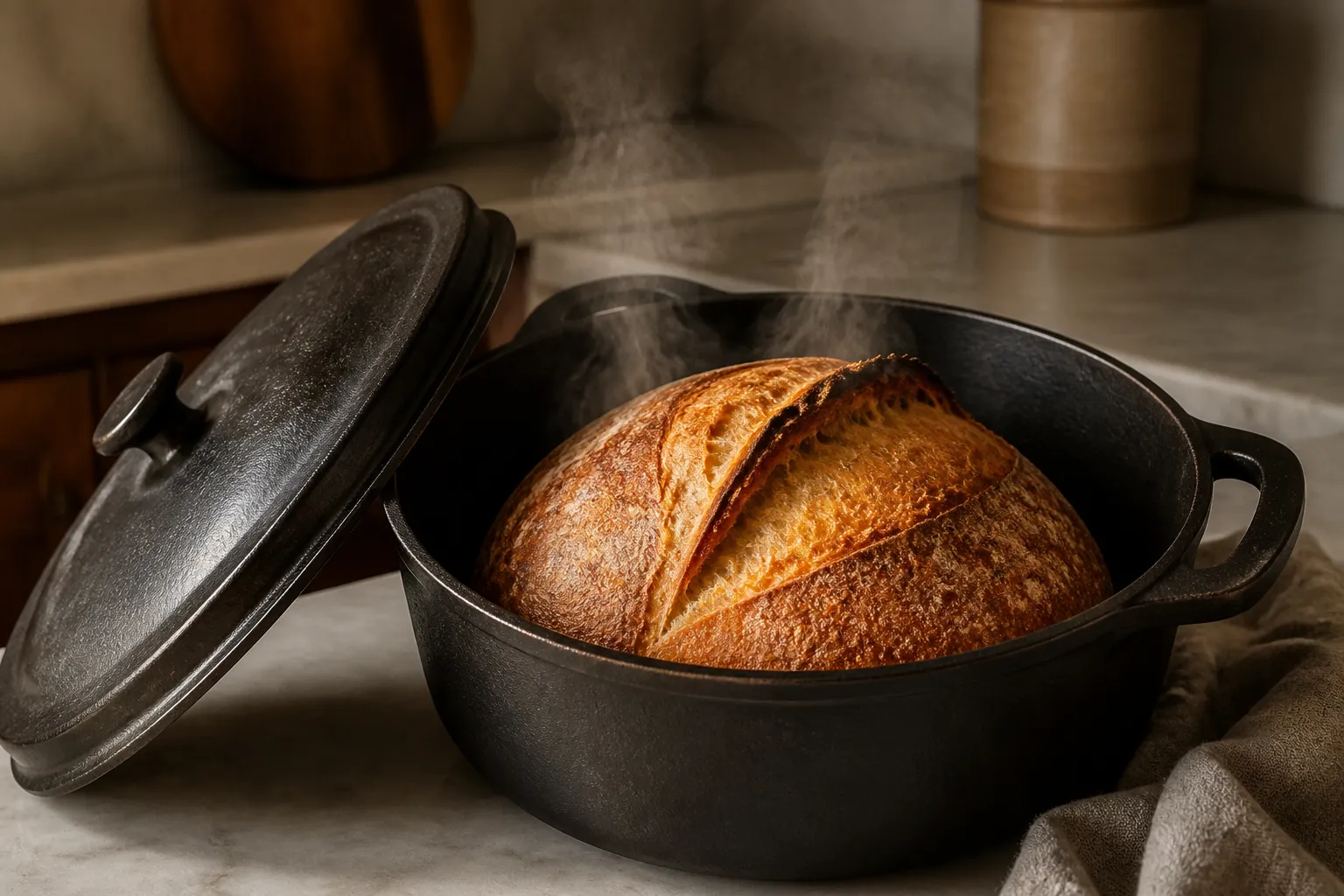
A combo cooker — sometimes labeled a combo baker — handles this with almost embarrassingly simple design: two cast iron pieces, a deep pot paired with a skillet that sits on top like a cap. You start with the skillet acting as your lid, then invert everything, nesting the pot inside so the bread finishes exposed. There’s no wrestling with anything, no lugging around a heavy ceramic lid. Just cast iron doing exactly what it’s built for.
Finding a Combo Cooker That Actually Holds Its Heat
Swap a borrowed Dutch oven for a cast iron combo cooker built specifically with sourdough in mind, and the gap isn’t small — it shows up directly in your crumb and your rise. The skillet base and deep pot function as a team, trapping and radiating heat uniformly, so your dough gets that intense steam bath it needs during those make-or-break opening minutes.
Where It Delivers
- The skillet portion heats up quicker than a standard Dutch oven, so you aren’t sacrificing oven spring while the vessel plays catch-up.
- Because cast iron retains heat evenly over time, steam keeps circulating consistently through the whole bake — no cold spots that leave you with gummy patches in the crumb.
- Since the seasoning is PFAS-free, you don’t have to worry about any coating leaching into your bread, and that seasoning only improves as it wears in and rebuilds through regular use.
Where It Falls Short
- Cast iron carries real weight — if your oven mitts are thin or your grip isn’t what it used to be, sliding the loaf in and out can feel legitimately dangerous.
- That seasoning isn’t a one-and-done coating; it’s a living surface that needs periodic oiling and strictly hand-washing — no dishwasher allowed — which does add an extra chore to your process.
I almost returned mine after the first bake because I didn’t realize I needed to let it preheat for a full 45 minutes instead of 20—but once I adjusted my timing, the difference was undeniable. If you’re tired of guessing why your oven spring isn’t working, grab a Lodge Cast Iron Combo Cooker – PFAS-Free 2-in-1 3.2 Quart Deep Pot and 10.25 Inch Skillet Set.
Frequently Asked Questions
Why did my sourdough crumb turn out gummy and tight?
A ceramic Dutch oven may not hold heat the way a cast iron combo cooker does. Without consistent, intense heat during those first 20 to 25 minutes of baking, your dough doesn’t get the fierce, humid environment it needs for proper oven spring, leaving you with gummy patches in the crumb and insufficient rise.
How long should I preheat a cast iron combo cooker?
Preheat for a full 45 minutes. Sam initially tried preheating for just 20 minutes and didn’t see results, but once he adjusted to 45 minutes, the difference in oven spring became undeniable and his sourdough baking improved dramatically.
When do I remove the lid during sourdough baking?
Remove the lid after the first 20 to 25 minutes of baking. During this critical opening window, the lidded vessel traps steam and heat for oven spring. Once that stretch passes, the lid comes off so the crust can color up and crackle properly.
Can I put my cast iron combo cooker in the dishwasher?
No, hand-wash only. Cast iron seasoning is a living surface that needs periodic oiling and strictly hand-washing—no dishwasher allowed. This does add an extra chore, but the seasoning only improves as it wears in and rebuilds through regular use.
About This Article

Written by Sam Whitaker. Sam Whitaker has been baking sourdough for over a decade, including three years baking commercially, and now works out of a home kitchen in the Pacific Northwest. Sam's eleven-year-old starter, Harold, is the foundation for every recipe and troubleshooting guide on Sourdough Rising — real bread tested over and over until it works. More about this site.
Scope and limits. Sam is a home baker with no formal culinary training. Follow current food safety guidance for storage and handling, particularly with enriched or filled doughs.
Verify this against a primary source
Specifics change, and your situation may differ from the one described here. These are the authorities worth checking directly:
- USDA FoodData Central — flour and ingredient composition data
- FoodSafety.gov — safe handling and storage