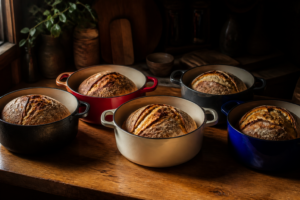
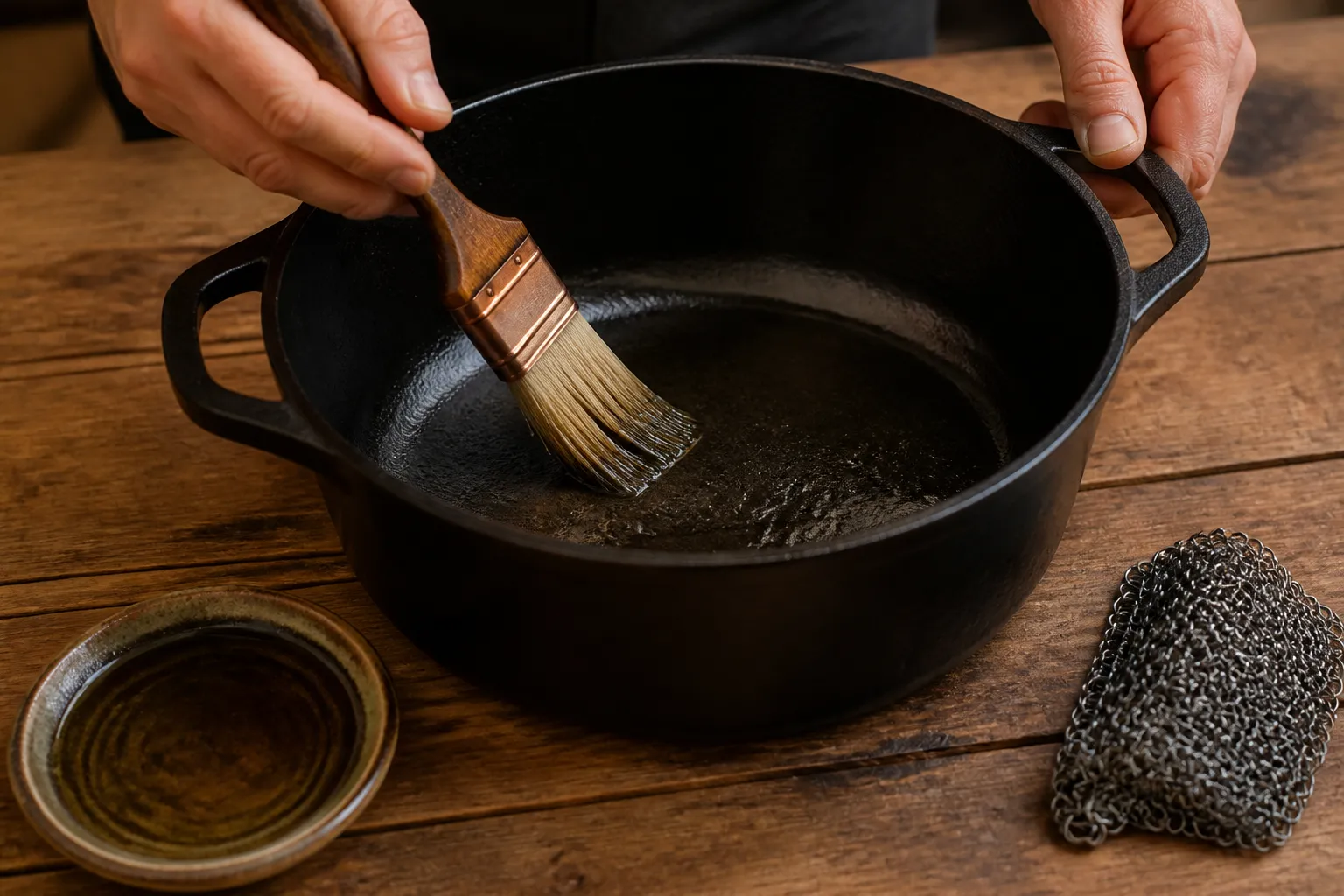
Half the sourdough advice floating around says a quick rinse and air-dry is all a Dutch oven ever needs; the other half insists you must re-oil it like a cast iron skillet after every single bake. The air-dry camp is dead wrong, and I found that out the hard way the morning I pulled my prized Dutch oven from the oven and found rust creeping across the bottom like some uninvited starter culture. Rust. On the one tool in my kitchen I trusted most. I stood there with my hands actually shaking, realizing that eleven years of sourdough baking hadn’t taught me a single thing about the cast iron care products sourdough bakers genuinely need.
That pot had already turned out hundreds of loaves by then. Hundreds. The crusts came out golden, the ears split clean, the score marks opened exactly the way I wanted. And how did I repay it? By letting a rust patch the size of a dime creep in, all because I’d gotten careless with my cleanup routine after one particularly ambitious baking weekend.
Looking back on it now, that slip-up turned out to be a gift in disguise. It pushed me to finally get serious about the products and habits that keep cast iron in top condition, and that’s exactly what I want to walk you through here.
| Cleaning Method | Seasoning Impact | Best For |
|---|---|---|
| Steel wool or wire brushes | Damages seasoning layer | Not recommended |
| Plain dish soap alone | No protection provided | Not sufficient |
| Purgreat Cast Iron Scrubber (interlocking metal rings) | Preserves seasoning; darkens finish over time | Removing stuck dough and crust |
| Quick rinse and air-dry | Leaves cast iron vulnerable to rust | Insufficient maintenance |
The Wake-Up Call in My Own Kitchen
The rust showed up on a Saturday in March, right after I’d talked myself into baking six loaves in a single stretch. I was testing out a new hydration percentage, pushing my fermentation windows longer, and generally chasing every sourdough idea I had. All that enthusiasm, though, came with a cost — I got sloppy.
The night before, I’d given the Dutch oven a fast rinse — too fast — and left it on the counter to dry on its own instead of toweling it off right away. I’d cut that same corner a hundred times before with zero issues, but that night, something about the kitchen’s humidity or temperature worked against me. By morning, that one small rust spot had me completely spiraling.
My first reaction was pure panic. My second was to open a search engine like my entire baking career depended on it. That’s when it hit me: I’d had my whole approach to cast iron maintenance backwards. I was scrubbing with plain dish soap because I’d read somewhere it was “fine in small doses,” I never re-seasoned between bakes, and dedicated cast iron care products hadn’t even entered my mind. I was basically improvising the whole thing, and improvising, it turns out, is a solid way to end up with rust.
Why Sourdough Baking Asks More of Your Cast Iron
Here’s the thing I figured out: cast iron used for bread baking needs a maintenance plan that’s completely different from cookware that just sits on a burner. Your Dutch oven isn’t merely heating on a stovetop — it’s absorbing intense, dry oven heat, jumping from room temperature to 500°F. On top of that, it’s coming into contact with wet dough, steam, and flour. That combination calls for a care approach all its own.
The first thing I realized I needed was the right cleaning tool — not steel wool that would tear straight through the seasoning, but something gentler that could still break loose dough stuck to the surface. After that came a dependable seasoning product to rebuild and protect that layer. And finally, I needed a routine simple enough that I’d actually stick with it.
Over the months that followed, I tried a handful of different products, read through everything I could get my hands on, and picked the brains of other committed home bakers about what worked for them. What came out of all that testing is now as much a fixture in my baking process as feeding my starter each morning.
The Cleaning Tool That Stopped Me From Wearing Down My Seasoning
After that rust scare, I recognized I’d been way too heavy-handed with my Dutch oven — wire brushes, steel wool, all of it. What I actually needed was something that could clear stuck-on dough without scraping away years of built-up seasoning in the process.
Where It Earns Its Keep
- Those interlocking metal rings work loose stubborn dried flour and crust fragments without scratching into the seasoning underneath — I’ve checked my pot’s finish after dozens of bakes to be sure of that.
- It rests comfortably in one hand during post-bake cleanup, so you’re not struggling with something too bulky or awkward while your oven mitts are still half on.
- It handles the flat base — exactly where my rust trouble started — just as well as the curved sides, so you get even coverage without reaching for a second tool.
Where It Falls Short
- Leave your Dutch oven sitting for more than a couple hours after baking, and the dough hardens to the point this scrubber can’t keep up on its own — you’ll still need to soak it in hot water first.
- The loop on the handle runs a little thin, and I’ve snagged it on countertop edges more than once, which has me questioning how well it’ll hold up after a couple years of regular use.
I had a moment of doubt the first time I used it, thinking a chainmail scrubber sounded too gentle to handle the baked-on crust, but after six months of regular use, my Dutch oven’s seasoning is noticeably darker and more even than it’s ever been. Grab the Purgreat Cast Iron Scrubber.
Frequently Asked Questions
What should I use to clean my Dutch oven after baking sourdough?
Use a gentle scrubber with interlocking metal rings, like the Purgreat Cast Iron Scrubber, which removes stuck-on dough and crust without scratching the seasoning layer. Avoid steel wool or wire brushes that damage the seasoning. For dough that’s been sitting more than a couple hours, soak the pot in hot water first.
Is rinsing and air-drying a Dutch oven enough for sourdough?
No. A quick rinse and air-dry alone can lead to rust, especially after baking multiple loaves in a weekend. You need to actively dry your Dutch oven with a towel immediately after cleaning, and maintain a proper seasoning routine to protect the cast iron from moisture damage and oxidation.
Why does my sourdough Dutch oven need different care than regular cookware?
Sourdough Dutch ovens experience intense, dry oven heat that jumps from room temperature to 500°F, plus contact with wet dough, steam, and flour. This combination requires a dedicated maintenance plan with proper cleaning tools and regular seasoning to protect the cast iron from rust and wear.
Can I use dish soap on my cast iron Dutch oven?
You can use plain dish soap in small doses, but it shouldn’t be your only cleaning method. Dish soap alone doesn’t provide the protection your Dutch oven needs after sourdough baking. Pair it with proper drying, gentle scrubbing tools, and a dependable seasoning product for best results.
About This Article

Written by Sam Whitaker. Sam Whitaker has been baking sourdough for over a decade, including three years baking commercially, and now works out of a home kitchen in the Pacific Northwest. Sam's eleven-year-old starter, Harold, is the foundation for every recipe and troubleshooting guide on Sourdough Rising — real bread tested over and over until it works. More about this site.
Scope and limits. Sam is a home baker with no formal culinary training. Follow current food safety guidance for storage and handling, particularly with enriched or filled doughs.
Verify this against a primary source
Specifics change, and your situation may differ from the one described here. These are the authorities worth checking directly:
- USDA FoodData Central — flour and ingredient composition data
- FoodSafety.gov — safe handling and storage