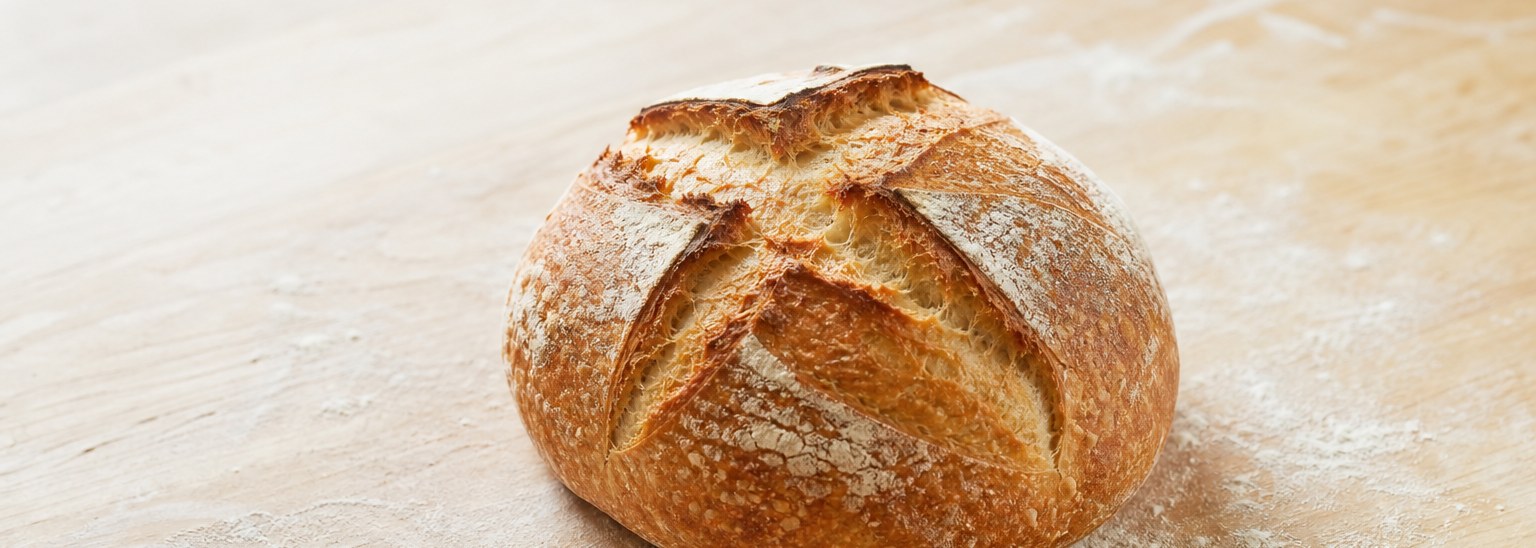
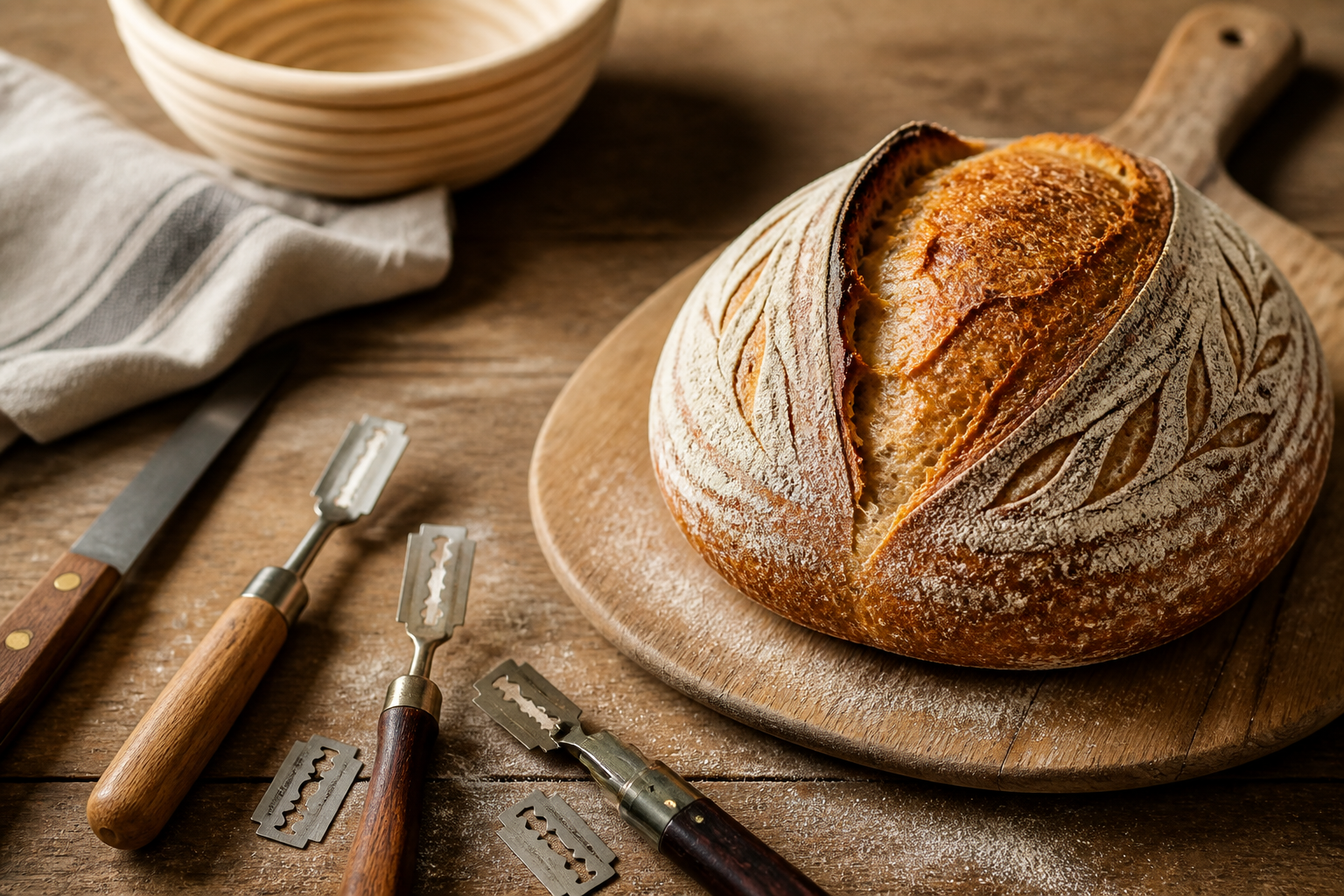
“Why does your bread look like it exploded instead of split open?” My husband asked, nodding at the loaf I’d just pulled from the oven—one I’d babied through a two-day cold proof, then ruined in the space of a single dull swipe with a paring knife that dragged and caught instead of gliding through the skin of the dough. The ear, that crisp little curl of crust that tells you a bake went the way it should, never got the chance to form. Instead I was left staring at a jagged, torn-open gash where a clean score should have been. Two days of feeding and folding and shaping, undone in one bad cut.
Right then it hit me—eleven years into this sourdough habit, and I was still sabotaging my own bakes over something so basic. I’d bought a good Dutch oven, a solid bench scraper, a decent scale, yet I’d never actually sat down and figured out the best bread scoring tools for the job. That gap in my gear was quietly ruining loaves.
If getting that signature bakery-style ear on your loaves actually matters to you, you first need to understand what scoring is doing and, just as important, which tools actually deliver. I spent the last several months running dozens of scoring tools through their paces, picking up some rough lessons about blade sharpness, handle shape, and how not to slice open your own hand in the process. Here’s the full rundown, along with the setup that finally changed how my bakes turned out.
| Scoring Tool | Blade Type | Cut Quality | Best For |
|---|---|---|---|
| Bread Lame | Razor blade | Glides smoothly; clean, precise cuts | Consistent ears; controlled, repeatable scoring |
| Serrated Bread Knife | Coarse teeth | Compresses dough; teeth too coarse | Pinch-hit option if truly sharp |
| Plain Knife | Smooth edge | Works if razor sharp; angle control tricky | Last resort; requires constant honing |
| Loose Razor Blade | Bare razor | Sharp but nerve-racking | Not recommended; injury risk |
Why the Score Matters More Than People Assume
Before jumping into gear recommendations, it’s worth pausing on why this one motion carries so much weight. That slash you make right before the loaf hits the oven is doing three jobs at once:
- It decides where the loaf pushes outward once oven spring kicks in
- It opens fresh surface area for the crust to develop
- It gives trapped steam a controlled exit instead of a random one
A weak score wrecks every one of those jobs. Cut with a dull blade and you’re tearing the surface, not slicing it—which crushes the gluten along the edges instead of separating it cleanly. The dough rips unevenly, steam blows out wherever it wants, and the ear just never forms. I found this out the hard way, loaf after loaf coming out looking closer to a lumpy potato than an artisan sourdough round.
The gap between a proper tool and the wrong one isn’t small—it’s the line between a loaf that could pass for something out of a fancy bakery case and one that looks like a step got skipped.
Three Categories of Scoring Gear Worth Knowing
Once I started digging into the best bread scoring tools, it became clear there are basically three routes people take, each with its own tradeoffs:
Bread Lames (What I Reach For Now)
A lame is nothing more than a purpose-built handle that holds a razor blade at just the right angle. Nearly everyone who tries one ends up sticking with it, and I’ve landed firmly in that group too. Your fingers stay well clear of the cutting edge, the blade angle is set up to be comfortable and controllable, and because you’re wielding an actual razor, the edge stays sharp enough to glide through proofed dough without a fight.
The real payoff is that a sharp lame doesn’t tear anything. The cuts come out precise and repeatable, which translates directly into predictable oven spring and a clean, well-formed ear every time.
Serrated Bread Knives
A lot of home bakers reach for this option first simply because it’s already sitting in the drawer. And to be fair, if the blade is truly sharp, it can get the job done in a pinch. But serrated knives were built for sawing through a finished, baked loaf—not for slicing raw dough before it goes in. The teeth are too coarse, so even a sharp serrated edge tends to compress the dough instead of cutting it cleanly. I’ve grabbed mine when I was out of options, and while it functions, the ears never come out as sharp or defined as they do with a lame.
Plain Knives and Loose Razor Blades
Before I committed to a proper lame, I tried scoring with a bare razor blade held between my fingers—and I’ll be honest, it’s nerve-racking. One wrong move and you’re bleeding all over a ruined loaf. I wouldn’t suggest it unless you’re steady-handed and genuinely careful. A plain knife can work too, provided it’s kept razor sharp, but that means constant honing, and controlling the cutting angle is trickier than it looks.
The Tool That Finally Gave My Scores Some Control
A dull blade will let you down every single time—catching, dragging, tearing instead of slicing smoothly through a tight, well-proofed skin of dough. Swap in a real lame with a sharp edge and a grip that fits your hand, and suddenly you’re not fighting a ragged gash anymore—you’ve got a controlled, repeatable cut that actually blooms into an ear.
Where it earns its keep
- The magnetic blade mount holds the razor rock-steady at the correct angle—no more guessing at depth or fumbling the setup; you land a consistent 30-45 degree cut every single time.
- Instead of fighting the surface, the blade almost skims across the dough, letting you pull off the whole score in one smooth pass without tearing the skin or knocking the air out.
- The way the handle sits keeps your knuckles well away from the action, so there’s no white-knuckling it or accidentally nicking your own hand at 5 a.m. before you’re fully awake.
Where it falls short
- The edge wears down quicker than expected once you’re regularly scoring crusty, seed-crusted loaves—I’m swapping blades roughly every 15-20 bakes rather than the 30-plus I was hoping to squeeze out.
- Left-handed bakers may find the grip a little off—the handle clearly leans toward right-handed use, so some of that comfort benefit disappears if you’re a lefty.
I had one moment of doubt when the magnetic blade felt slightly loose on its first use, but after scoring just three loaves, I realized the tension was exactly right—sharp, responsive, and completely under control. HHZPAEK Magnetic Bread Lame
Frequently Asked Questions
What scoring tool finally gave you consistent ears?
A lame with a sharp blade and proper handle angle finally eliminated the ragged splits I’d been getting. The magnetic blade mount holds the razor at a consistent 30-45 degree cut, and the sharp edge glides through proofed dough instead of tearing it, letting the ear form predictably every time.
Can you score bread with a serrated knife instead?
A serrated knife can work in a pinch if truly sharp, but the coarse teeth compress dough rather than cutting cleanly. The ears never come out as sharp or defined as they do with a lame, making it a less reliable choice for consistent results.
How often do you replace lame blades?
I swap blades roughly every 15-20 bakes when regularly scoring crusty, seed-crusted loaves. The edge wears down quicker than expected, though I’d initially hoped to squeeze out 30-plus bakes per blade.
Why does a dull scoring blade ruin bread?
A dull blade tears the dough surface instead of slicing cleanly, which crushes gluten along the edges and lets steam escape randomly instead of through your score. This prevents the ear from forming and creates ragged, uneven splits.
About This Article

Written by Sam Whitaker. Sam Whitaker has been baking sourdough for over a decade, including three years baking commercially, and now works out of a home kitchen in the Pacific Northwest. Sam's eleven-year-old starter, Harold, is the foundation for every recipe and troubleshooting guide on Sourdough Rising — real bread tested over and over until it works. More about this site.
Scope and limits. Sam is a home baker with no formal culinary training. Follow current food safety guidance for storage and handling, particularly with enriched or filled doughs.
Verify this against a primary source
Specifics change, and your situation may differ from the one described here. These are the authorities worth checking directly:
- USDA FoodData Central — flour and ingredient composition data
- FoodSafety.gov — safe handling and storage