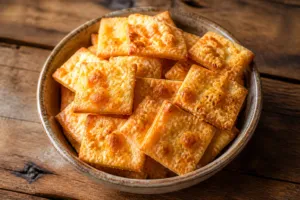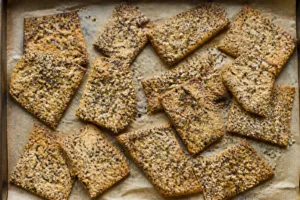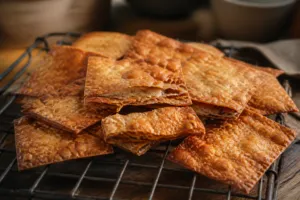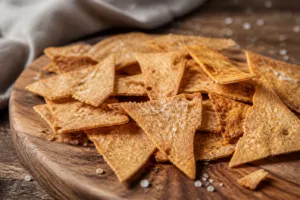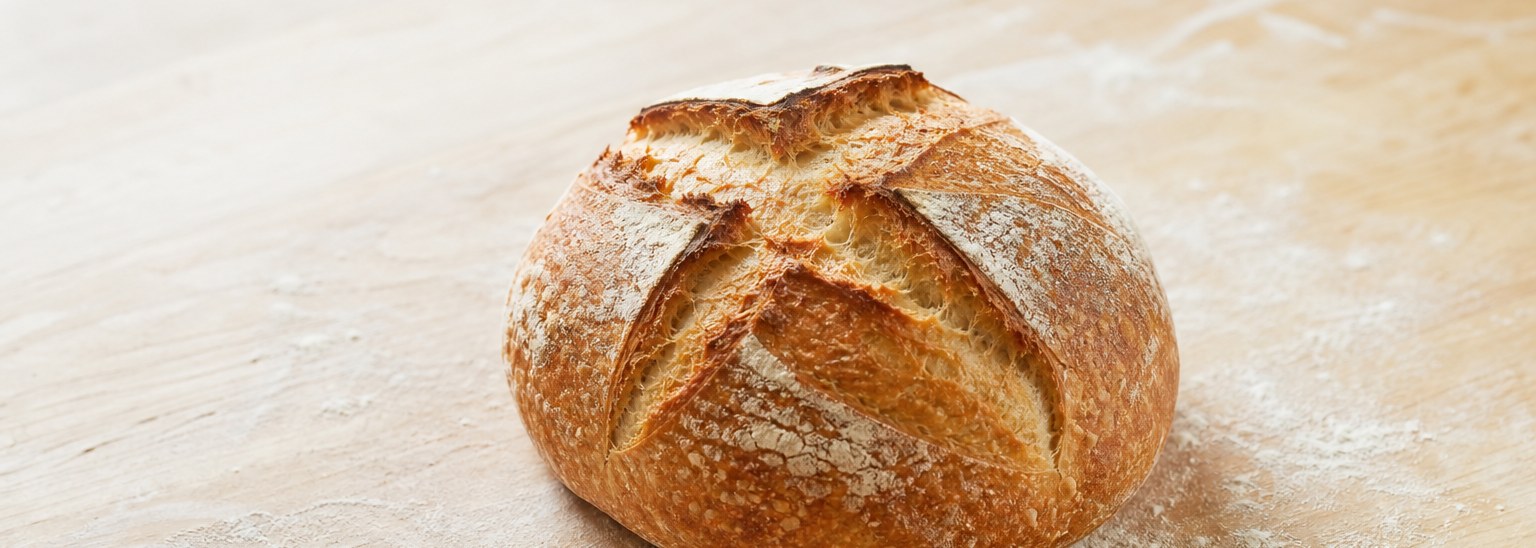
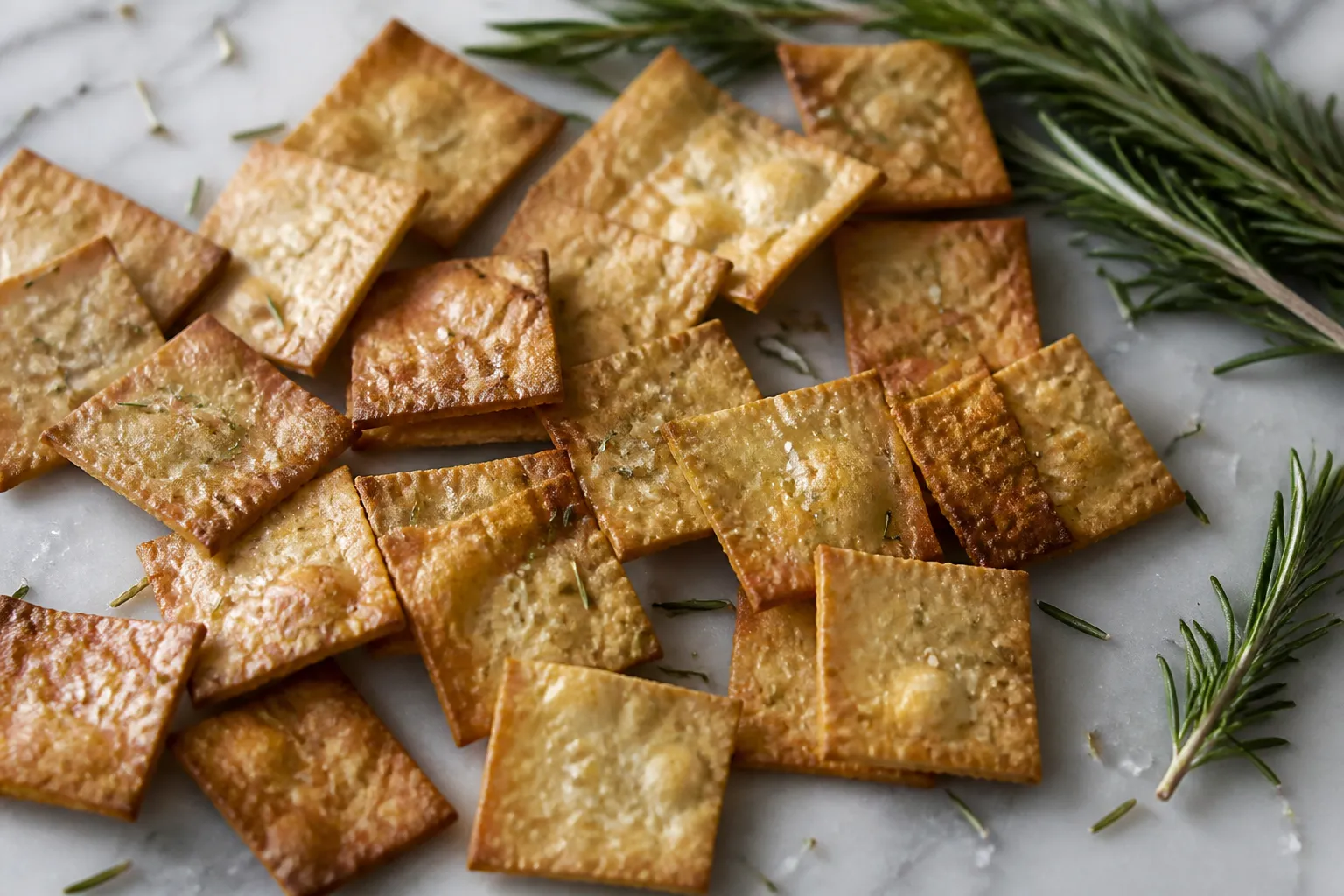
My hands are dusted with flour and flecks of rosemary as I slide this latest sheet of crackers out of the oven, the edges just turning that deep gold at 350°F. Rosemary and sea salt is the flavor I always reach for first — it’s the recipe I hand guests before anything else, because it works with nearly any palate, pairs with whatever else is on the table, and fills the kitchen with a smell that borders on unfair while it bakes. Eleven years into this hobby, including a few of those years running weekend batches for neighbors and friends out of my own kitchen, I’ve landed on seven flavor combinations I keep circling back to — and we’ll start with the one that kicked this whole thing off.
The Foundation Dough (It Doesn’t Change)
Every version you’ll read here starts from the same exact dough: 200g sourdough discard, 120g flour, 40g olive oil, 5g salt. The process stays fixed too — mix, let it rest, roll it thin, dock the surface, bake at 350°F until golden, then cool. Only the seasoning shifts between batches. Master the plain version once, and you’ve basically already learned all seven of these.
1. Rosemary and Sea Salt
The one that started it all. Finely chop 2 tablespoons of fresh rosemary — fresh, not dried, since the flavor gap between the two is massive — and fold it directly into the dough. Once it’s rolled out, brush the surface with a good olive oil and finish it generously with flaky sea salt right before baking. That flaky salt isn’t optional — those crystals deliver sharp little bursts against the piney rosemary underneath. Set this one on any cheese board next to any bottle of wine, and it’ll hold its own.
2. Black Pepper and Parmesan
Crack black pepper coarsely — go heavy-handed — and work in 60g of finely grated Parmesan alongside it. Parmesan brings its own dryness and saltiness, so ease up on how much salt you add separately. What you get is savory, peppery, and honestly hard to stop eating, and it crisps up beautifully since Parmesan holds so little moisture. This was the second batch to disappear at gatherings, right behind the seeded version.
3. Za’atar
Fold two tablespoons of za’atar — that Middle Eastern mix of thyme, sumac, sesame seeds, and salt — into the dough, brush the top with olive oil, then finish with a light dusting of more za’atar before it bakes. It comes out tangy and herbal, nothing close to what you’d find in a boxed cracker. Serve these next to hummus or labneh and they won’t last.
4. Everything Garlic Herb
For something close to garlic bread in cracker form: work in 1 teaspoon garlic powder, 1 tablespoon dried Italian herbs, and a tablespoon of grated Parmesan. Brush the top with garlic-infused olive oil right before baking. Pay attention to your oven here — garlic powder scorches quickly, so drop the temperature to 325°F and pull the tray the second they turn golden.
5. Smoked Paprika and Sea Salt
Stir a teaspoon of smoked paprika through the dough and you’ll end up with a warm, smoky, faintly sweet cracker with a striking rust color. A pinch of cayenne added alongside brings a mild, slow-building heat. These pair beautifully with a sharp cheese or a bowl of chili on the side.
6. Fennel and Cracked Pepper
Toast a tablespoon of fennel seeds lightly, crush them roughly, and mix them in along with a generous helping of cracked black pepper. The fennel adds a subtle anise note that catches you off guard in a good way — this one feels made for an antipasto spread with cured meats.
7. Cinnamon Sugar (Yes, a Sweet One)
It’s easy to forget crackers can go sweet. Skip the salt topping entirely here — instead, brush the rolled dough with melted butter and coat it generously with cinnamon sugar before baking. The tang of the sourdough against that cinnamon sugar is something else — imagine a thin, crisp churro chip. Out of every flavor on this list, my kids ask for this one the most.
Fresh Herbs vs. Dried: It Matters
With rosemary, thyme, and other woody herbs, fresh wins by a wide margin — the flavor comes across brighter and more fragrant, without the dusty quality dried versions can have. For a blend like za’atar or Italian seasoning, though, dried is the right call and far more convenient. The one constant rule: chop fresh herbs small enough that they spread evenly and don’t leave weak points where thin dough can tear.
Working Flavor Into the Dough Without Wrecking It
Dry spices and finely minced herbs get folded straight into the dough while you’re mixing. Coarser add-ins — flaky salt, extra seeds, cracked pepper — go on top of the oil-brushed surface just before the bake, and laying parchment over it with a gentle roll helps press everything in so it doesn’t shake loose. Anything that burns easily — garlic, onion, sugar — means dropping the oven to 325°F and keeping a close eye on it.
What’s Always Within Reach When I Bake These
These all come together fast with a Danish dough whisk for mixing in the herbs and spices, and a good wooden rolling pin for rolling thin and even. I bake on heavy half-sheet pans lined with parchment paper, cut with a bench scraper, and finish almost all of the savory versions with good flaky salt — it’s the detail that makes them taste professional.
If you’d rather start with a complete setup instead of gathering pieces one by one, a basic sourdough baking kit covers everything you’d need, and The Sourdough School by Vanessa Kimbell is still my favorite book for understanding how fermentation shapes flavor.
One Base Dough, Countless Cracker Possibilities
This is the part of making crackers I love most — one plain, simple dough can turn into a dozen different crackers depending entirely on what’s sitting in your spice drawer or growing in your herb bed. Get the plain recipe down first, then treat these seven as a starting point rather than a finish line. Some of my favorite flavor combinations happened simply because I opened a cabinet and tried something. Your discard officially has no excuse to go to waste again.
The Single Tool That Keeps My Cracker Dough From Falling Apart
Cracker dough fights you the whole way — it’s dense, stiff, and unforgiving, and trying to mix in seeds, salt, and herbs without the right tool leaves you with either a lumpy mess or an aching shoulder. A solid dough whisk cuts through that resistance without overworking the gluten the way a wooden spoon tends to.
What works
- Its flat, coiled design breaks apart dry pockets of flour and spreads flavoring mix-ins through the dough evenly, without creating concentrated hot spots.
- It powers through thick, stubborn cracker dough without bending or flexing the way a standard whisk does — you get real leverage and control.
- Cleanup takes no time at all, since nothing gets caught in the coils the way it does with a balloon whisk.
What doesn’t
- It’s not the tool for finishing dough that’s already come together — the flat coils won’t cream butter or smooth out lumps the way a regular whisk can.
- The handle is narrow enough that somewhere around your 20th batch, your hand will start to notice.
I nearly switched back to a wooden spoon after one batch where I underestimated how thick the dough would get, but that’s exactly when the whisk proved itself — it powered through what would have been an arm-breaking mix. You can grab a Danish dough whisk for under $20.
Frequently Asked Questions
What’s the base dough recipe for sourdough crackers?
Every cracker variety starts with the same foundation: 200g sourdough discard, 120g flour, 40g olive oil, and 5g salt. Mix, rest, roll thin, dock the surface, bake at 350°F until golden, then cool. Only the seasonings change between batches.
Should I use fresh or dried rosemary for crackers?
Fresh rosemary wins by a wide margin for woody herbs like rosemary and thyme—the flavor comes across brighter and more fragrant without the dusty quality dried versions have. Finely chop 2 tablespoons of fresh rosemary and fold it directly into the dough.
What temperature for garlic herb sourdough crackers?
Drop the oven to 325°F for the Everything Garlic Herb version and pull the tray the second they turn golden. Garlic powder scorches quickly, so watch carefully to avoid burning this batch.
Can sourdough crackers be sweet?
Yes. The Cinnamon Sugar version skips the salt topping entirely—instead, brush the rolled dough with melted butter and coat it generously with cinnamon sugar before baking. The tang of sourdough against cinnamon sugar creates something like a thin, crisp churro chip.
About This Article

Written by Sam Whitaker. Sam Whitaker has been baking sourdough for over a decade, including three years baking commercially, and now works out of a home kitchen in the Pacific Northwest. Sam's eleven-year-old starter, Harold, is the foundation for every recipe and troubleshooting guide on Sourdough Rising — real bread tested over and over until it works. More about this site.
Scope and limits. Sam is a home baker with no formal culinary training. Follow current food safety guidance for storage and handling, particularly with enriched or filled doughs.
Verify this against a primary source
Specifics change, and your situation may differ from the one described here. These are the authorities worth checking directly:
- USDA FoodData Central — flour and ingredient composition data
- FoodSafety.gov — safe handling and storage