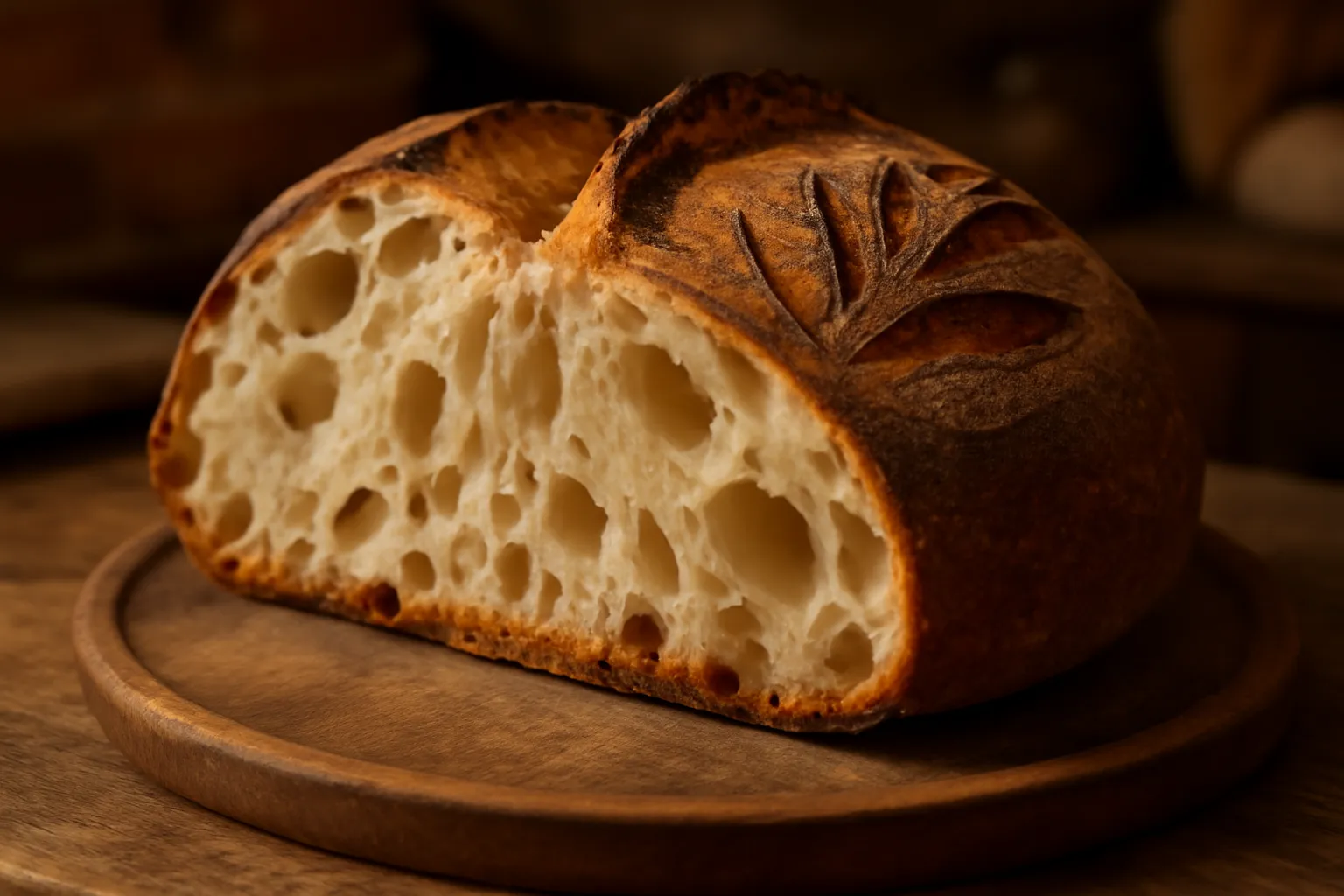
People assume an 11-year-old starter must taste dramatically different from one that’s a few months old. It doesn’t, not in the way most people expect — and that surprised me too, the first time I actually compared notes with a baker running a starter she’d only had for six weeks.
The Myth of the “Ancient” Starter
There’s a persistent idea in sourdough circles that age alone deepens flavor — that an 11-year-old culture is inherently more complex than a 3-month-old one. In my experience, that’s mostly wrong. A well-maintained young starter and a well-maintained old one taste remarkably similar, because flavor comes primarily from your feeding ratio, hydration, and fermentation temperature, not the calendar.
| Starter Age | Flavor Profile | Rise Timing | Recovery from Neglect |
|---|---|---|---|
| 11-year-old (well-maintained) | Remarkably similar to young starter | Peaks at near-identical time each feeding | Bounces back within two feedings |
| 3-month-old (well-maintained) | Remarkably similar to old starter | Less predictable week to week | Takes longer to stabilize |
| 3-week-old (properly active) | Capable of good bread | Doubles reliably within 4–6 hours | Not specified |
What Actually Changes
Acid Balance Becomes More Predictable
What age does give you is consistency. After years of the same feeding schedule, my starter’s acid balance — the ratio of lactic to acetic acid that determines whether your bread tastes mild and yogurty or sharp and vinegary — has become extremely stable. I know almost exactly how sour a loaf will taste before I bake it.
Rise Timing Gets More Reliable
My starter now peaks at a near-identical time every single feeding, assuming consistent kitchen temperature. That predictability lets me plan a bake schedule down to the hour, something that took years of the same routine to earn.
Recovery From Neglect Is Faster
An established starter bounces back from a forgotten week in the fridge faster than a young one. Mine’s been through months of neglect more than once and recovered within two feedings. A brand-new culture often needs longer to stabilize after the same treatment.
The Microbial Balance Settles
Every sourdough starter is a competing colony of wild yeast and several strains of lactic acid bacteria. In a young starter, that balance shifts constantly as different organisms compete for dominance — which is part of why new starters can taste noticeably different week to week. After years of the same feeding conditions, the colony settles into a stable equilibrium. That’s the real source of the “matured” flavor people associate with old starters — not age itself, but a microbial community that’s stopped fighting for territory.
The Honest Caveat
Age is not a shortcut. A neglected 11-year-old starter performs worse than a well-fed 2-month-old one. What matters is consistency of care, not years on the jar.
How I Maintain Mine
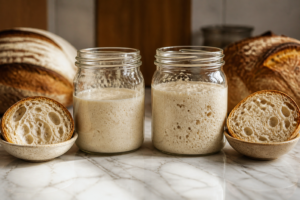
I keep it on a strict 1:5:5 feeding ratio, room temperature, twice daily during active baking weeks. For the jar itself, I use a reusable linen cover cloth instead of a lid — it stops a hard skin from forming on top between feedings, which used to throw off my rise consistency.
What Works
- Sticking to one consistent feeding ratio rather than experimenting constantly
- Using a breathable cloth cover instead of a sealed lid
- Feeding at the same time of day whenever possible
What Doesn’t
- Assuming age alone will fix inconsistent bread
- Switching feeding ratios frequently — it resets your starter’s predictability
What I’d Tell Someone Starting Today
Don’t wait for your starter to “mature” before you trust it. A properly active 3-week-old starter that doubles reliably within 4-6 hours is completely capable of great bread. What you’re actually waiting for isn’t time passing — it’s you learning to read your specific starter’s rhythm, which usually takes weeks, not years.
What I Notice Now That I Didn’t at Year One
Eleven years in, I can tell my starter’s readiness from smell alone — a specific tangy, slightly yeasty note that shows up right around peak. I couldn’t have described that smell to you in year one; it’s the kind of pattern recognition that only comes from feeding the same culture thousands of times. That’s genuinely the biggest gift of a long-running starter: not better bread, necessarily, but a baker who’s stopped needing instructions.
Passing Starter to Other Bakers
I’ve given portions of this starter to at least a dozen people over the years. What’s interesting is that within a few months, everyone’s version tastes slightly different from mine and from each other’s — local flour, local water, and each baker’s specific feeding habits reshape the microbial balance surprisingly fast. So while I call it an “11-year-old starter,” it’s more accurate to say it’s a lineage that’s been continuously alive for 11 years, adapting the whole time, not a static thing that’s simply aged in place.
Frequently Asked Questions
Does an 11-year-old sourdough starter taste better than a young one?
Not necessarily. A well-maintained young starter and a well-maintained old one taste remarkably similar, because flavor comes primarily from your feeding ratio, hydration, and fermentation temperature, not the calendar. What age gives you is consistency and predictability, not inherently better taste.
What feeding ratio does Sam use for Harold?
Sam keeps Harold on a strict 1:5:5 feeding ratio, room temperature, twice daily during active baking weeks. This consistency is one reason the starter’s behavior has become so predictable over eleven years.
How fast can a 3-week-old starter make good bread?
A properly active 3-week-old starter that doubles reliably within 4-6 hours is completely capable of great bread. You don’t need to wait for your starter to mature; what matters is that it’s active and you’re learning to read its rhythm.
Why does Sam use a cloth cover instead of a lid?
Sam uses a reusable linen cover cloth instead of a lid to stop a hard skin from forming on top between feedings, which used to throw off rise consistency. The breathable cloth lets the starter breathe without drying out completely.
For scoring, I switched to the Saint Germain Premium Hand Crafted Bread Lame a few years back — an old starter deserves a clean, confident score, not a butter knife dragging through the skin.
About This Article

Written by Sam Whitaker. Sam Whitaker has been baking sourdough for over a decade, including three years baking commercially, and now works out of a home kitchen in the Pacific Northwest. Sam's eleven-year-old starter, Harold, is the foundation for every recipe and troubleshooting guide on Sourdough Rising — real bread tested over and over until it works. More about this site.
Scope and limits. Sam is a home baker with no formal culinary training. Follow current food safety guidance for storage and handling, particularly with enriched or filled doughs.
Verify this against a primary source
Specifics change, and your situation may differ from the one described here. These are the authorities worth checking directly:
- USDA FoodData Central — flour and ingredient composition data
- FoodSafety.gov — safe handling and storage