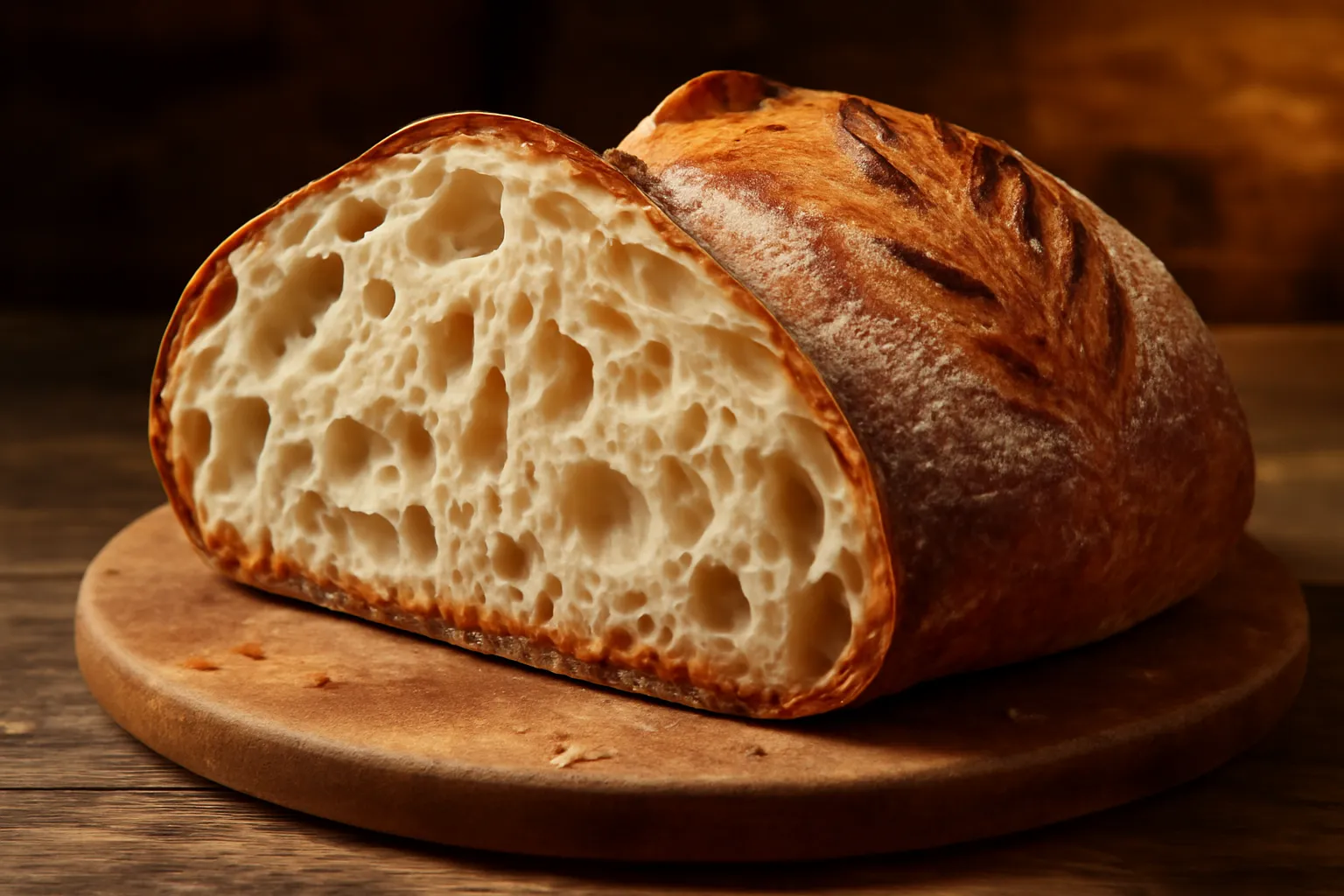
Two years. That’s how long it took me to consistently get the big, irregular, glassy-holed crumb I’d been chasing since my first loaf came out dense and tight.
Why Most Bakers Never Get There
Open crumb isn’t one trick — it’s the sum of several things done right at once: strong gluten development, adequate fermentation, careful shaping, and a hot enough oven with real steam. Miss any one of those and you get a tighter, more uniform crumb no matter how well you nailed the rest.
Start With the Flour
Protein content matters more than most beginner guides admit. A flour under 12% protein struggles to build the gluten strength needed to trap large gas pockets without collapsing. I switched to a 12.7% protein bread flour and immediately saw a difference in how the dough held structure during the final proof.
Fermentation Is Where Most Bakers Go Wrong
Under-fermented dough is tight and dense. Over-fermented dough collapses and loses structure entirely — you get big, irregular holes for the wrong reason, right before your loaf goes flat. The window for genuinely open crumb is narrower than people think: dough that’s risen 60-75% in volume with visible bubbles at the surface, not doubled and not still flat.
Shaping for Structure
Over-handling dough during shaping degasses it and destroys the very air pockets you spent hours building. I shape with the minimum number of folds needed to create surface tension — usually two or three motions, not a dozen.
The Windowpane Test I Use Before Every Bulk Ferment
Before I trust a dough to hold an open crumb, I stretch a small piece between my fingers until it’s thin enough to see light through without tearing. If it tears immediately, the gluten isn’t developed enough yet and needs another round of folds. This single check has saved me more failed open-crumb attempts than any other single technique — it tells you directly whether the structure can actually support big holes before you commit to shaping.
The Score Matters More Than You Think
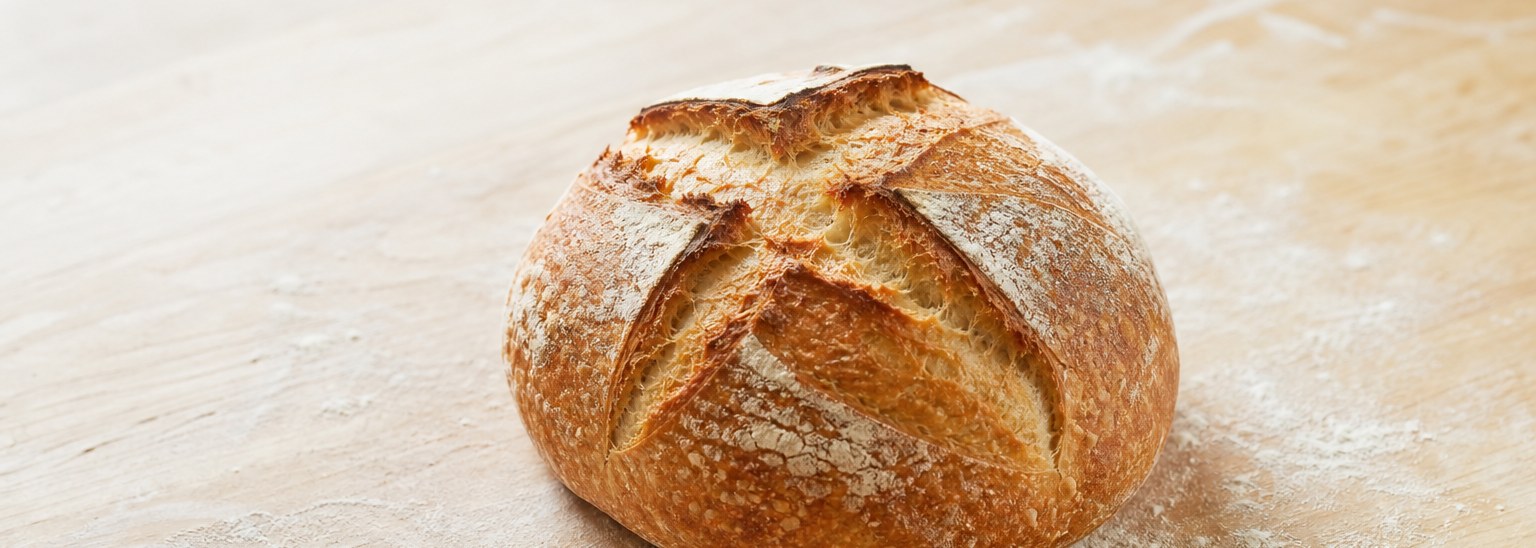
A shallow or hesitant score restricts where the dough can expand, forcing it to tear unpredictably and collapse structure near the cut. A confident, angled score at roughly 45 degrees, about half an inch deep, gives the loaf a controlled place to expand instead of fighting itself.
An Honest Caveat
Open crumb is a texture preference, not a quality marker. Plenty of excellent sourdough has a tighter, more even crumb, especially sandwich-style loaves where an open crumb actually makes the bread harder to use.
Common Reasons This Still Doesn’t Work
If you’ve addressed flour, fermentation, shaping, and scoring and still aren’t seeing the crumb you want, check your oven’s actual steam retention. A Dutch oven with a loose-fitting lid or a home oven with a leaky door seal lets steam escape early, causing the crust to set before the dough has fully expanded — which caps how open the crumb can get no matter how well everything else was done.
The Role of Hydration in All of This
I didn’t push hydration until everything else was solid, and I’d recommend the same order to anyone chasing open crumb. A dough at 75% hydration with excellent fermentation, shaping, and scoring will out-perform an 85% hydration dough with sloppy technique every time. Hydration amplifies whatever you’re already doing — it doesn’t fix a weak fundamental.
Once the basics were solid, moving from 75% to 80% hydration was what finally pushed my crumb from “pretty good” to genuinely dramatic. I’d treat that as the last lever to pull, not the first.
What I Use
The flour switch made the single biggest difference for me — I use King Arthur’s 100% organic bread flour now for anything I want an open crumb from. A good bench scraper matters just as much during shaping.
What Works
- A bread flour at 12.5%+ protein
- Stopping bulk fermentation at 60-75% rise, not full double
- Minimal handling during shaping — 2-3 confident motions, not a dozen small ones
- A deep, confident score at roughly 45 degrees
What Doesn’t
- Over-fermenting to try to force bigger holes — it collapses structure instead
- All-purpose flour for high-hydration doughs — the gluten isn’t strong enough
- Shallow, timid scoring — the loaf tears unpredictably instead of expanding cleanly
Frequently Asked Questions
What protein content should bread flour have for open crumb?
Flour under 12% protein struggles to build the gluten strength needed to trap large gas pockets without collapsing. Sam switched to a 12.7% protein bread flour and immediately saw a difference in how the dough held structure during final proof. Bread flour at 12.5%+ protein works well for open crumb.
When should I stop bulk fermentation for open crumb?
Stop bulk fermentation when dough has risen 60-75% in volume with visible bubbles at the surface, not doubled and not still flat. Under-fermented dough is tight and dense, while over-fermented dough collapses and loses structure entirely. This narrow window is where genuine open crumb happens.
How many folds should I use when shaping sourdough?
Shape with the minimum number of folds needed to create surface tension — usually two or three motions, not a dozen. Over-handling dough during shaping degasses it and destroys the air pockets you spent hours building, preventing open crumb development.
How deep should I score sourdough for open crumb?
A confident, angled score at roughly 45 degrees, about half an inch deep, gives the loaf a controlled place to expand. A shallow or hesitant score restricts where dough can expand, forcing it to tear unpredictably and collapse structure near the cut.
A good bench scraper is essential here too — not a luxury, a functional tool. I use the Amazon Basics Multi-Purpose Bench Scraper, Stainless Steel to build tension with drag motions across the counter during shaping.
About This Article

Written by Sam Whitaker. Sam Whitaker has been baking sourdough for over a decade, including three years baking commercially, and now works out of a home kitchen in the Pacific Northwest. Sam's eleven-year-old starter, Harold, is the foundation for every recipe and troubleshooting guide on Sourdough Rising — real bread tested over and over until it works. More about this site.
Scope and limits. Sam is a home baker with no formal culinary training. Follow current food safety guidance for storage and handling, particularly with enriched or filled doughs.
Verify this against a primary source
Specifics change, and your situation may differ from the one described here. These are the authorities worth checking directly:
- USDA FoodData Central — flour and ingredient composition data
- FoodSafety.gov — safe handling and storage