Fifty loaves. That’s roughly how many I ruined before I figured out that dough temperature, not room temperature, was the number I should have been tracking the whole time.
Why Temperature Controls Everything
Fermentation speed is temperature-driven. A dough sitting at 68°F ferments meaningfully slower than one at 78°F — sometimes by 2-3 hours over a full bulk fermentation. I spent my first year setting timers based on the clock instead of the dough, and got wildly inconsistent results because my kitchen temperature swung 8-10 degrees between morning and evening.
| Condition | Dough Temperature | Bulk Fermentation Impact |
|---|---|---|
| At 68°F | 68°F | Ferments meaningfully slower; 2-3 hours longer |
| At 78°F | 78°F | Ferments faster than 68°F dough |
| Target range | 75-78°F | Predictable bulk fermentation |
| Too cool | Below 75°F | Use warmer water or warmer proof spot |
| Too hot | Above 78°F | Use cooler water or cooler proof spot |
The Mistake I Kept Repeating
I’d mix dough, set a 5-hour timer for bulk fermentation, and walk away. On warm days the dough over-fermented and went slack. On cool days it under-proofed and baked dense. The clock never changed; my kitchen did — and I wasn’t accounting for it.
Dough Temperature Is the Number That Matters
Once I started checking dough temperature directly instead of guessing from room temperature, everything clicked. Target 75-78°F for a predictable bulk fermentation. If your dough comes out cooler, use warmer water in your next mix or find a slightly warmer spot to proof. If it’s running hot, cooler water and a cooler spot bring it back in line.
The Cold Proof Problem
The same logic applies to your overnight retard. A fridge set to 38°F slows fermentation dramatically, but a fridge that’s actually running at 45°F (more common than people realize) lets the dough keep moving overnight, and you wake up to an over-proofed loaf. I bought a separate fridge thermometer after this bit me twice.
Seasonal Adjustments I Now Make Automatically
Once dough temperature became the number I tracked instead of guessed, I stopped needing to relearn my process every season. In winter, I warm my mixing water to compensate for a cold kitchen — sometimes as high as 90°F for the water alone, so the finished dough still lands near 76°F. In summer, I go the other way, mixing with water straight from the fridge or even adding a few ice cubes to the mix for a stubbornly hot kitchen.
The math is simple once you’ve measured it a few times: track your room temperature, flour temperature, and starter temperature, then adjust your water temperature to land the combined dough at your target. Most bakers overcomplicate this — you really only need to solve for one variable, water, since it’s the easiest to control precisely.
The Thermometer That Fixed This
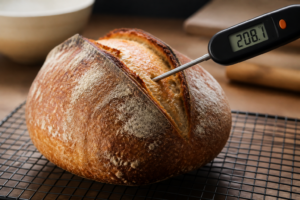
I bought a digital instant-read food thermometer and started probing my dough directly instead of guessing. It reads in under 3 seconds, which matters when you don’t want your hand in cold dough any longer than necessary.
What I Use It For
- Checking dough temp right after mixing, before bulk fermentation starts
- Spot-checking water temperature before I mix, so I can adjust and hit my target dough temp on the first try
- Verifying my fridge is actually holding the temperature I think it is
An Honest Caveat
A thermometer alone doesn’t fix bad technique. It just tells you the truth about what’s actually happening in your dough, so you can adjust water temperature and fermentation time deliberately instead of guessing.
What Changes When You Fix This
Once I started hitting a consistent 76°F dough temperature every single mix, my rise times became predictable within 20-30 minutes bake to bake. That consistency is what actually improved my bread — not a new flour, not a new technique, just knowing the real number instead of assuming.
What Works
- Checking dough temperature immediately after mixing, every single time
- Adjusting water temperature deliberately to hit a 75-78°F target
- Verifying fridge temperature with a separate thermometer, not trusting the dial
What Doesn’t
- Setting a fixed bulk fermentation timer regardless of season
- Assuming your fridge holds the temperature printed on the dial
Frequently Asked Questions
What dough temperature should I target for bulk fermentation?
Target 75-78°F for predictable bulk fermentation. If your dough comes out cooler, use warmer water in your next mix or find a slightly warmer spot to proof. If it’s running hot, cooler water and a cooler spot bring it back in line.
How much does dough temperature affect fermentation speed?
Fermentation speed is temperature-driven. A dough sitting at 68°F ferments meaningfully slower than one at 78°F — sometimes by 2-3 hours over a full bulk fermentation. This variation makes tracking dough temperature essential instead of relying on clock timers.
Why is my fridge causing over-proofed loaves overnight?
A fridge set to 38°F slows fermentation dramatically, but a fridge that’s actually running at 45°F (more common than people realize) lets the dough keep moving overnight, causing over-proofing. Buy a separate fridge thermometer to verify your fridge’s actual temperature instead of trusting the dial.
What water temperature should I use in winter baking?
In winter, warm your mixing water to compensate for a cold kitchen — sometimes as high as 90°F for the water alone, so the finished dough still lands near 76°F. Adjust water temperature deliberately to hit your target dough temperature on the first try.
For shaping and cold proofing, I also reach for the Superbaking 9″ Rattan Banneton Proofing Baskets — good linen liners matter almost as much as the thermometer once you’re managing dough temperature through a cold retard.
About This Article

Written by Sam Whitaker. Sam Whitaker has been baking sourdough for over a decade, including three years baking commercially, and now works out of a home kitchen in the Pacific Northwest. Sam's eleven-year-old starter, Harold, is the foundation for every recipe and troubleshooting guide on Sourdough Rising — real bread tested over and over until it works. More about this site.
Scope and limits. Sam is a home baker with no formal culinary training. Follow current food safety guidance for storage and handling, particularly with enriched or filled doughs.
Verify this against a primary source
Specifics change, and your situation may differ from the one described here. These are the authorities worth checking directly:
- USDA FoodData Central — flour and ingredient composition data
- FoodSafety.gov — safe handling and storage