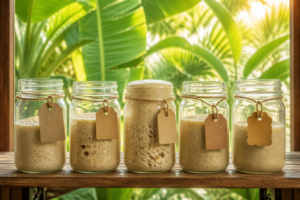
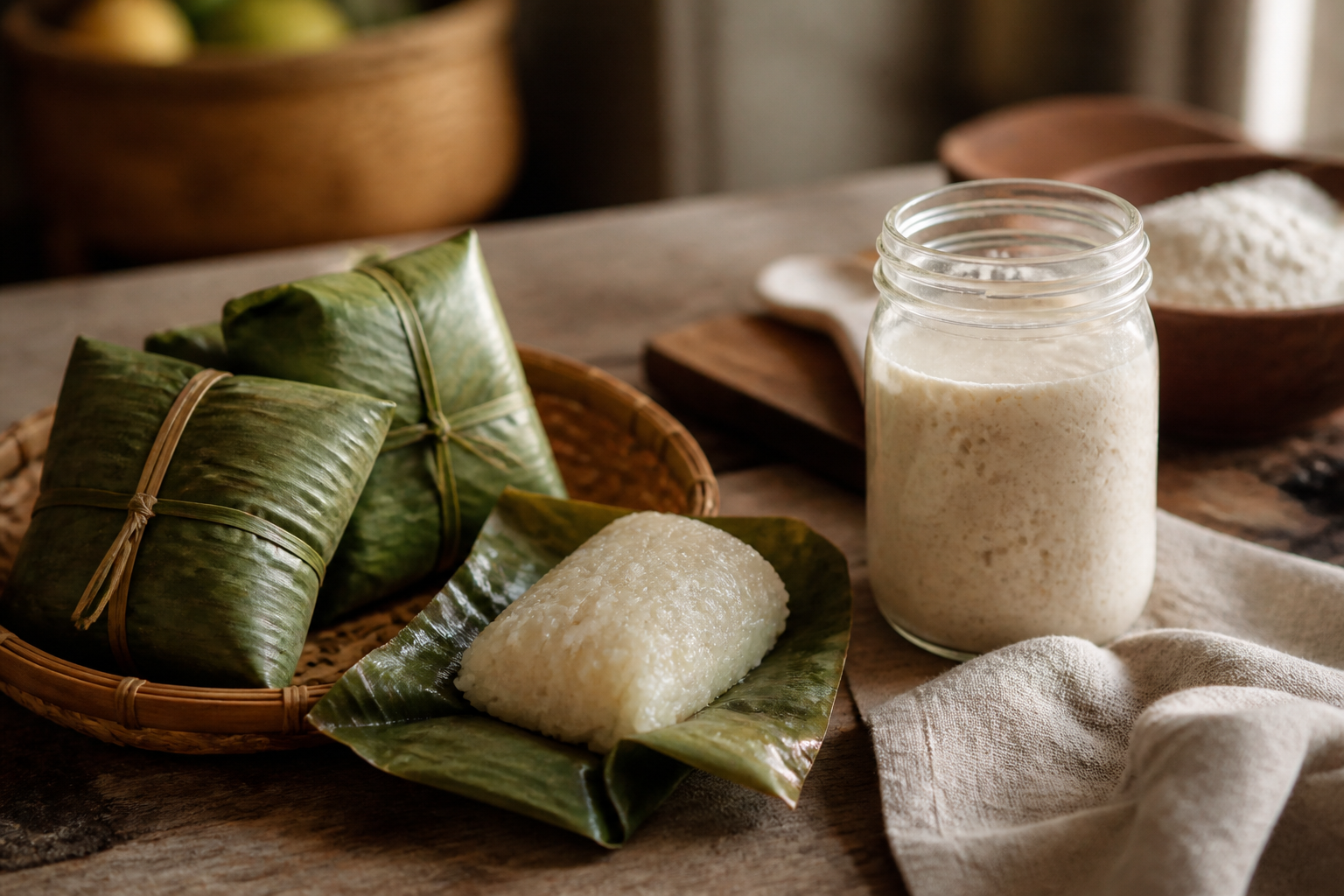
It was 11pm on a Tuesday, and I was standing in my HDB kitchen staring at a jar of what can only be described as sad, grey, completely lifeless gloop. My third attempt at a sourdough starter in as many weeks. The Singapore heat had either killed it too fast or encouraged the wrong kind of bacteria to take over, and I genuinely could not tell which. I had used up nearly a kilo of bread flour, my kitchen smelled strange, and I was this close to ordering a loaf from the bakery downstairs and calling it a day. Then my mother-in-law walked in, took one look at the jar, and said, “Aiyah, why don’t you just use tapai method lah.” That one offhand comment sent me down a rabbit hole of tapai angkak wild yeast fermentation that completely changed how I think about baking sourdough in Singapore.
| Aspect | Western Recipe | Singapore Method |
|---|---|---|
| Flour blend | All bread or all-purpose flour | 70% bread flour + 30% white rice flour |
| Hydration | Higher than 80% | Around 80% |
| Feeding interval | Every 12 to 24 hours | Every 8 hours (first two weeks) |
| Doubling time | Varies by climate | 5 to 6 hours in Singapore heat |
Frequently Asked Questions
What flour blend should I use for a sourdough starter in Singapore?
Use 70% bread flour or all-purpose flour mixed with 30% white rice flour. This blend works better with the wild yeast strains naturally suited to Singapore’s tropical climate. The rice flour component helps the yeast populations respond well, possibly because rice fermentation is so deeply embedded in the region’s microbial landscape.
How often should I feed my starter in Singapore’s heat?
Feed every 8 hours during the first two weeks if your kitchen sits above 30 degrees Celsius. This shorter feeding interval gives the yeast a fighting chance against faster-growing bacteria in the heat, helping establish the right organisms before unwanted microbes take over.
What hydration should I use when establishing a starter here?
Use hydration around 80% during the establishment phase, which is lower than most Western recipes suggest. Slightly reduced hydration slows down overall microbial activity and gives the right organisms time to establish dominance in Singapore’s warm, humid conditions.
How long does a healthy Singapore starter take to double?
A healthy starter in Singapore’s heat should double reliably within 5 to 6 hours of feeding. A starter that reaches this timeframe by day seven indicates genuinely good fermentation happening in the jar.
Why Singapore’s Climate Was Beating Me Every Single Time
Let me back up a little. If you’ve ever tried to start a sourdough starter in Singapore, you already know the specific kind of suffering I’m talking about. Our ambient temperature sits between 28 and 32 degrees Celsius pretty much year-round, and the humidity in an HDB flat, especially one without constant air-conditioning running, hovers around 70 to 80 percent. Most sourdough guides are written for kitchens in Portland or London where 22 degrees Celsius is considered a warm day. Those guides are almost useless here without serious adjustment.
The problem I kept running into was that my starter would bubble enthusiastically for a day or two, then crash completely. The wild yeast I was trying to capture was apparently losing the race to less desirable microbes that thrived in the heat. My flour was going to waste, my confidence was going with it, and I was feeding a jar twice a day that was doing absolutely nothing productive.
What Tapai and Angkak Taught Me About Wild Yeast Fermentation in Southeast Asia
Here is where my mother-in-law’s comment actually turned out to be genius. Tapai is a traditional Southeast Asian fermented food, most commonly made from glutinous rice or cassava, using a dried starter cake called ragi that contains wild yeast strains and moulds naturally suited to our tropical climate. Angkak, sometimes called red yeast rice, is another traditional fermented product from Chinese and Southeast Asian culinary culture, made by cultivating Monascus purpureus mould on rice. Both are examples of centuries-old, community-developed wild yeast fermentation happening right here in our region, specifically adapted to heat and humidity.
This is not a lab study and I want to be very clear about that. What I noticed in my own kitchen observations is that the microbes capable of thriving in Singapore’s climate are not the same strains that most sourdough recipes are calibrated for. The lesson tapai taught me is not to fight our climate but to work with it. Tapai ferments beautifully at 30 degrees. It does not need a proofing box or a temperature-controlled environment. The yeast strains doing the work evolved to love exactly the conditions I was treating as an obstacle.
Armed with that insight, I made three changes to my starter method. First, I switched to rice flour as part of my feeding blend, since in my experience the wild yeast populations here seem to respond well to it, possibly because rice fermentation is so deeply embedded in this region’s microbial landscape. Second, I dramatically shortened my feeding intervals during the initial establishment phase, feeding every 8 hours instead of every 12 to 24, to give the yeast a fighting chance against faster-growing bacteria in the heat. Third, I reduced my hydration slightly during those first two weeks to slow down overall microbial activity and give the right organisms time to establish dominance.
What You’ll Need to Try This Yourself
Before I share what happened next, let me talk about gear, because the right container actually matters more than I initially thought. I used to use whatever glass jar was sitting in my cabinet, but a proper wide-mouth jar makes feeding so much less messy and gives you a clear view of your starter’s activity.
For those just starting out, I love the INOBYO Sourdough Starter Jar Kit, a 24oz wide-mouth glass jar that comes with handy baking supply accessories perfect for beginners. If you want something with a more visual, aesthetic quality that also works beautifully, the Weck Tulip Jars 1 Liter are gorgeous and practical, with glass lids that let you do a loose cover without fully sealing the jar, which is exactly what you want during fermentation. For bakers who are a bit more serious and want to track their starter’s rise with precision, the 2 Pack Premium Pro Sourdough Starter Jar Kit comes with a marked feeding band, thermometer, scraper, and both cloth and silicone lids, which is honestly a brilliant all-in-one setup for Singapore’s variable conditions.
For the rice flour component of your feeding blend, I’ve been using Bob’s Red Mill Organic White Rice Flour, which is finely milled and consistent. If you prefer something with a cleaner label or are feeding a gluten-sensitive household, Jiva Organics Premium White Rice Flour is another excellent option that I’ve had good results with.
My Recommended Starting Blend for Singapore Kitchens
- 70% bread flour or all-purpose flour
- 30% white rice flour
- Hydration around 80% during establishment phase (lower than most Western recipes suggest)
- Feed every 8 hours during the first two weeks if your kitchen sits above 30 degrees Celsius
- Keep the jar loosely covered, not airtight, to allow gas exchange
- Place the jar away from direct afternoon sunlight, which can spike temperatures sharply in HDB flats
The Happy Resolution I Did Not Expect
I started my fourth starter attempt using this rice-flour blend method on a Saturday morning. By day three, I had proper bubbles. Not the frantic, crash-and-burn bubbles of my previous attempts, but steady, consistent, dome-building activity that told me something genuinely good was happening in that jar. By day seven, I had a starter that was doubling reliably within 5 to 6 hours of feeding, which in Singapore’s heat is actually a very healthy timeframe.
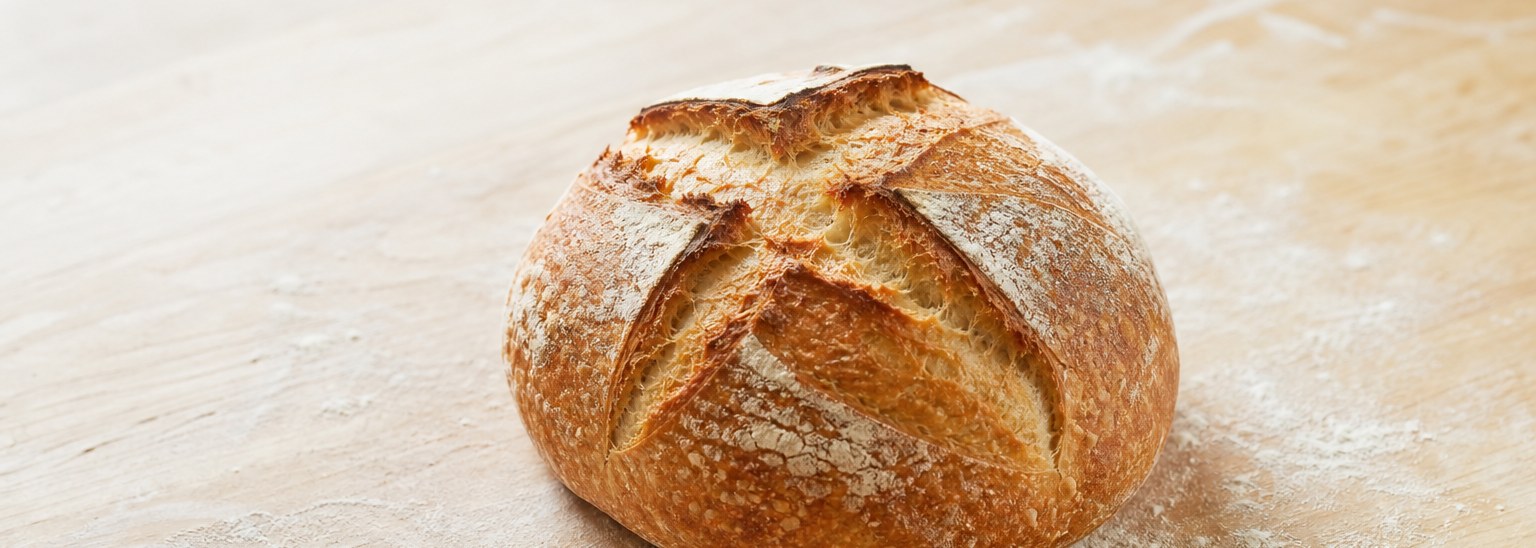
What moved me most was the smell. My previous starters had smelled sharp, almost nail-polish acetone-like, which is a sign of stressed or imbalanced fermentation. This new one smelled tangy, fruity, and faintly yoghurt-like. It smelled alive in the right way. The first loaf I baked with it had an open crumb, a proper ear, and a sour complexity that made me genuinely emotional standing at the kitchen counter at 7am on a Sunday. My husband ate three slices before his coffee was done.
None of this would have clicked for me without that late-night conversation about tapai. Understanding that our region has its own deeply rooted culture of tapai angkak wild yeast fermentation, one that has been working with these exact conditions for generations, gave me permission to stop treating Singapore’s climate as a problem to solve and start seeing it as a resource to understand. Our wild yeast is not inferior. It is just different, and beautifully adapted to where we live.
If you are sitting in your HDB kitchen right now with a jar that isn’t doing what you hoped, please don’t give up. Try the rice flour blend. Shorten your feeding intervals. Think about tapai. Your wild yeast is out there, floating around in this warm, humid, wonderfully fermentation-friendly air. You just have to give it the right conditions to come home. Drop a comment below and tell me where you are in your starter journey. I’d love to cheer you on.
About This Article

Written by Sam Whitaker. Sam Whitaker has been baking sourdough for over a decade, including three years baking commercially, and now works out of a home kitchen in the Pacific Northwest. Sam's eleven-year-old starter, Harold, is the foundation for every recipe and troubleshooting guide on Sourdough Rising — real bread tested over and over until it works. More about this site.
Scope and limits. Sam is a home baker with no formal culinary training. Follow current food safety guidance for storage and handling, particularly with enriched or filled doughs.
Verify this against a primary source
Specifics change, and your situation may differ from the one described here. These are the authorities worth checking directly:
- USDA FoodData Central — flour and ingredient composition data
- FoodSafety.gov — safe handling and storage