
What’s Actually Happening Between Rye and Sourdough
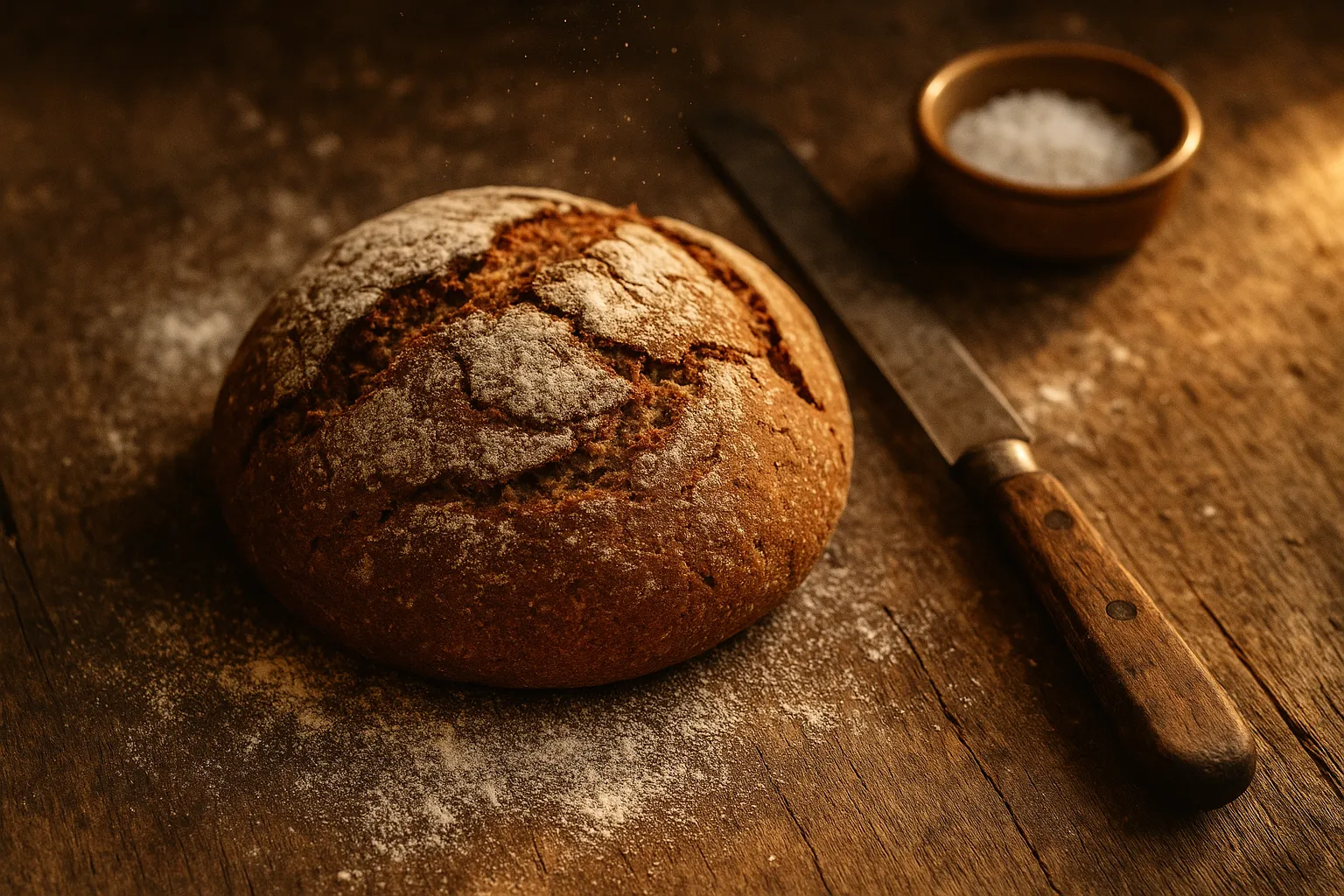
Rye doesn’t act like wheat once it hits a mixing bowl, and pretending otherwise is where a lot of German-style bakes go sideways. The proteins in rye simply won’t knit into the stretchy gluten web that wheat proteins build so easily. Try to push it through with plain commercial yeast and you’ll hit a wall pretty fast.
If you’re chasing real German bread, this distinction isn’t optional trivia — it’s the whole game. Rye is loaded with pentosans, those complex carbs that soak up far more liquid than wheat starch ever will. Plan on a rye dough pulling in anywhere from 15 to 20% more water by weight compared to its wheat counterpart, which means your ratios, your hydration math, and your fermentation clock all have to shift. Skip that adjustment and you’ll land in one of two camps: a dough so slack it puddles flat on the banneton, or one so dense it bakes up like a paperweight.
Bakers in Germany figured this out long before anyone wrote it down in a book — it got passed along through repetition, generation after generation. They leaned on sourdough cultures bred specifically around rye, because plain yeast can’t meet rye’s acid demands or match its slower fermentation curve. The wild yeast and lactic acid bacteria in a sourdough culture set up exactly the conditions rye needs — for flavor, for lift, and for that dense-but-tender crumb people associate with German loaves.
The Rye-Only Starter That Turned My Baking Around
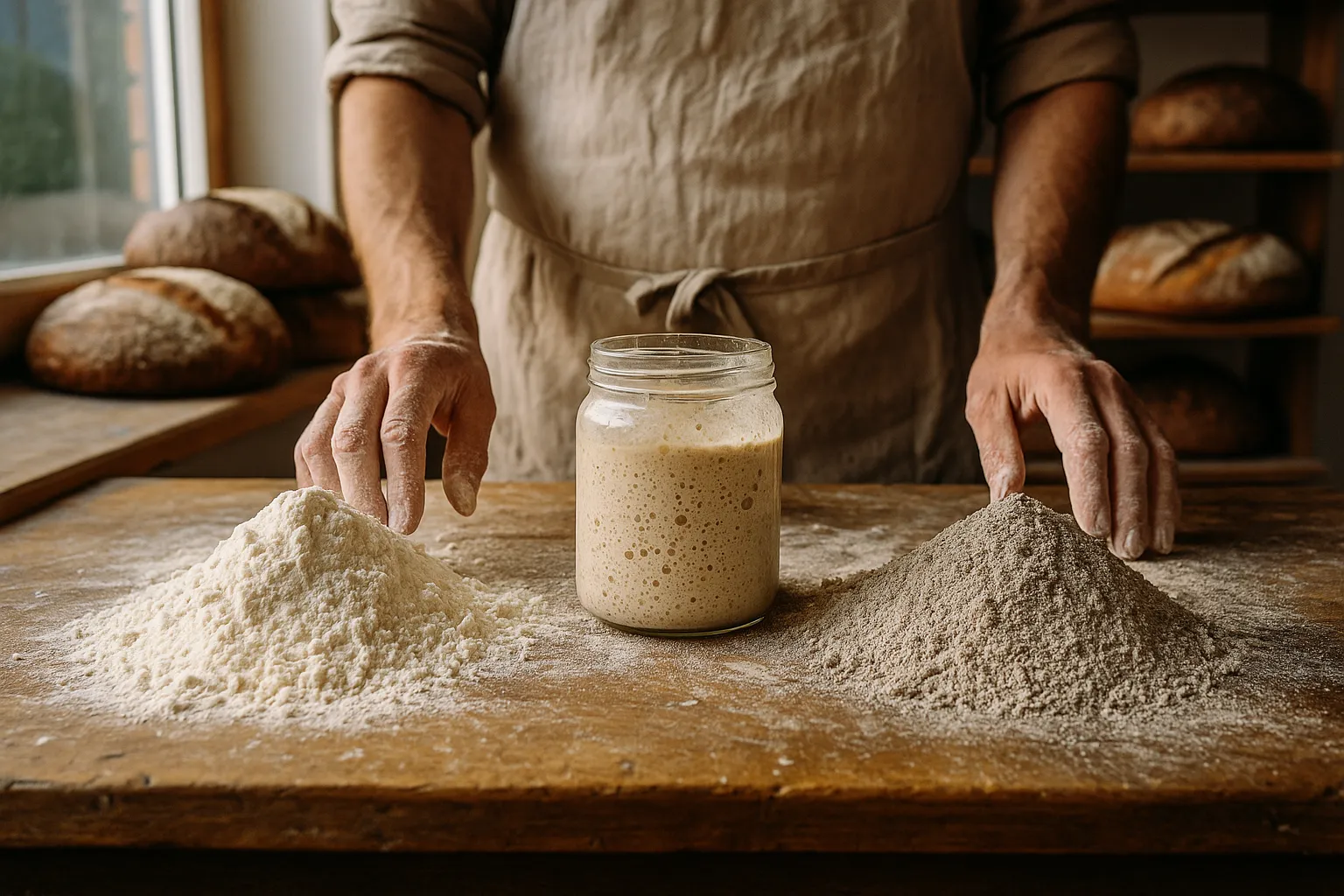
Three wheat starters died on me before it clicked that rye ferments on its own clock, not wheat’s. A culture built from the ground up on rye flour comes alive quicker and holds steady through the longer, wetter ferments rye asks for.
I’d assumed, wrongly, that every sourdough starter runs on the same internal logic. It doesn’t work that way — the microbial makeup of a wheat starter isn’t the same as what develops in a rye one. Push rye feedings onto a starter that was raised on wheat and you’re basically asking it to relearn its whole environment overnight. That adjustment period can drag on for weeks, and along the way your starter can turn sluggish, stop bubbling the way it should, or pick up flavors you don’t want. Losing three starters before I understood any of this taught me that specificity beats good intentions every time.
Starting over with a dedicated rye culture felt like admitting defeat at first, but it turned out to be exactly the fix I needed. Just days into steady rye feedings, the activity ramped up noticeably — heavier bubbling, quicker doubling, a smell I actually wanted to lean into. The change wasn’t subtle; I noticed it almost immediately.
Where it delivers
- Doubles in a dependable 4 to 6 hours at room temperature, even on days when my kitchen runs cool — I’m no longer squinting at the jar trying to guess if it’s ready
- Absorbs rye’s heavy water demand without turning into runny, listless goop — it holds its structure through repeated feedings
- Gives rye loaves noticeably better oven spring, which caught me off guard after all those flat, brick-like bakes from a strained wheat starter
Where it falls short
- Wants feeding more often than a wheat starter would if you’re not baking on a regular schedule — I found this out the hard way after leaving mine alone for two weeks
- Getting it fully active takes roughly a week of steady feedings, which drags when you’re itching to bake that first rye loaf
Once I understood the upkeep involved, it stopped being a downside and just became part of the plan. Bake rye weekly or more and the feeding schedule folds naturally into your routine. Bake it less often, though, and you’re choosing between fridge storage between bakes (which slows things down further) or just feeding more frequently than you’d like. My own solution: keep it at room temperature and bake at least twice a week — that rhythm fits my schedule and gives me the most consistent results.
After losing my third starter, I dragged my feet before trying again, half-convinced I’d just repeat the same cycle. Committing to a Complete Sourdough Starter designed specifically for rye ended up reshaping how I approach German-style baking altogether.
The difference showed up everywhere. My dough finally had the give and stretch that German rye doughs are supposed to have. My fermentation windows stopped being a guessing game. And the loaves themselves finally tasted like the real thing — deep, faintly sour, with a crumb that stayed moist for days instead of drying out. That result is what convinced me: matching the tool to the job isn’t a nice-to-have here, it’s the difference between a loaf that works and one that doesn’t.
Frequently Asked Questions
Why can’t I use a wheat sourdough starter for rye bread?
A wheat starter’s microbial makeup differs fundamentally from a rye one. Pushing rye feedings onto a wheat-based starter forces it to relearn its environment overnight, potentially causing weeks of sluggishness, reduced bubbling, and unwanted flavors. A culture built from the ground up on rye flour comes alive quicker and holds steady through rye’s longer, wetter ferments.
How much more water does rye dough need than wheat?
Rye doughs pull in anywhere from 15 to 20% more water by weight compared to wheat counterparts. This happens because rye is loaded with pentosans—complex carbs that soak up far more liquid than wheat starch. Skipping this adjustment leaves you with either a slack dough that puddles flat or one so dense it bakes like a paperweight.
How long does a rye sourdough starter take to become active?
Getting a rye starter fully active takes roughly a week of steady feedings. Once established, it doubles in a dependable 4 to 6 hours at room temperature, even on cool kitchen days. This upfront investment pays off with noticeably better oven spring and more consistent fermentation windows for German-style rye loaves.
How often do I need to feed a rye sourdough starter?
A rye starter wants feeding more often than a wheat starter if you’re not baking regularly. Sam’s solution is keeping it at room temperature and baking at least twice a week, which folds the feeding schedule naturally into the routine. Less frequent baking requires choosing between fridge storage or more frequent feedings.
About This Article

Written by Sam Whitaker. Sam Whitaker has been baking sourdough for over a decade, including three years baking commercially, and now works out of a home kitchen in the Pacific Northwest. Sam's eleven-year-old starter, Harold, is the foundation for every recipe and troubleshooting guide on Sourdough Rising — real bread tested over and over until it works. More about this site.
Scope and limits. Sam is a home baker with no formal culinary training. Follow current food safety guidance for storage and handling, particularly with enriched or filled doughs.
Verify this against a primary source
Specifics change, and your situation may differ from the one described here. These are the authorities worth checking directly:
- USDA FoodData Central — flour and ingredient composition data
- FoodSafety.gov — safe handling and storage