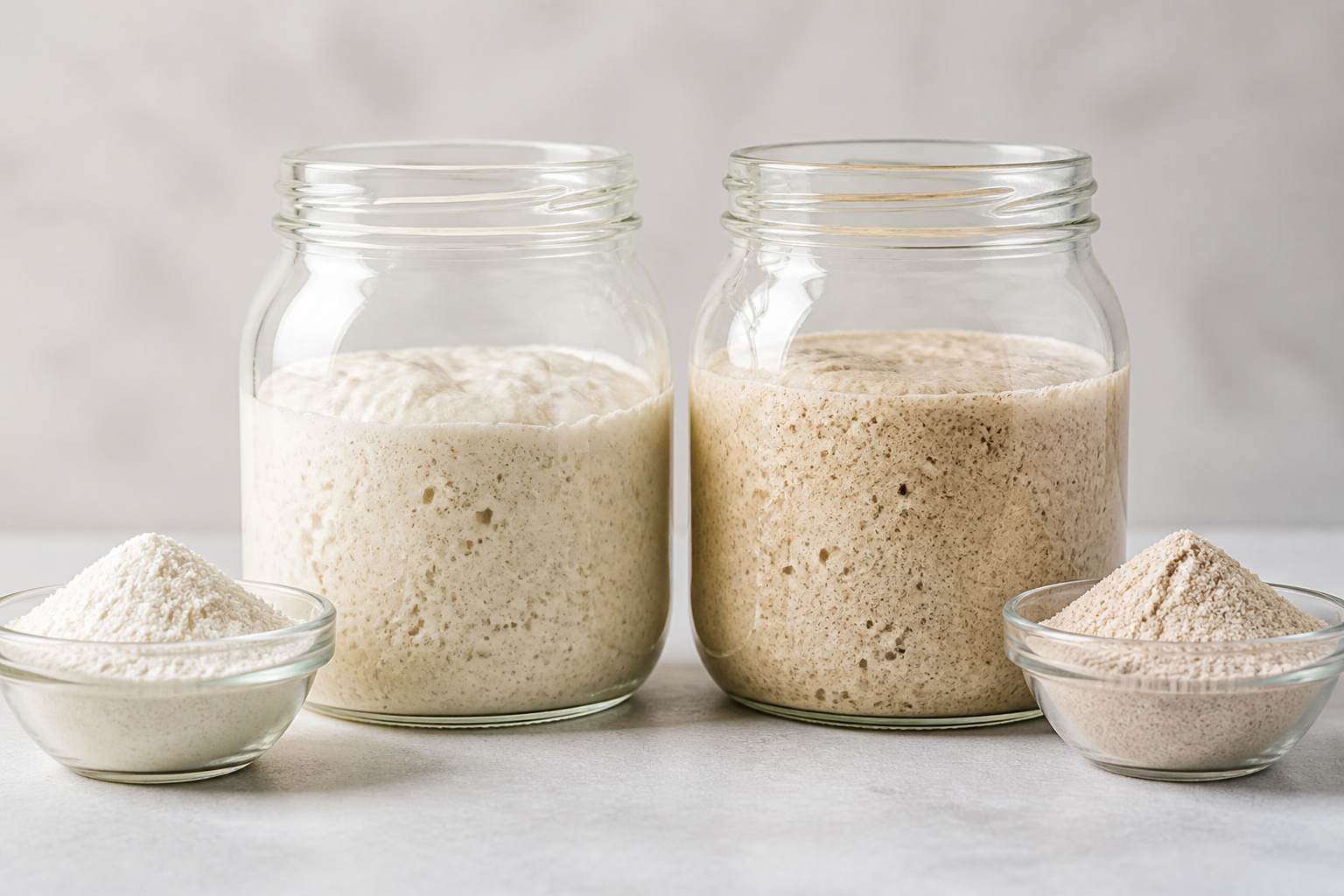
It was a Tuesday afternoon, and I was standing in my HDB kitchen, staring at two small jars like they owed me money. One had wheat flour mixed with water. The other had rice flour mixed with water. Both had been sitting on my counter for 48 hours. Both smelled like sad paste. I had confidently told my husband that I was “running a very important baking experiment” and he should not touch anything. What I did not tell him was that I had absolutely no idea what I was doing. If you have ever gone down the rabbit hole of researching rice flour vs wheat flour wild yeast starter debates online at midnight, you already know the particular brand of chaos I had invited into my life.
| Starter Type | Establishment Speed | Peak Behavior | Maintenance in Heat |
|---|---|---|---|
| Wheat Flour | Bubbles by day three, rise by day five | Peaks quickly, collapses before 24 hours | Required twice-daily feeding by week one |
| Rice Flour | Nothing dramatic days one through four, rise by day seven | Peaks later, holds peak longer | More manageable timing, no rush to catch peak |
Frequently Asked Questions
How often should I feed my starter in hot weather?
Feed more often during a heatwave. When the temperature goes above 30 degrees Celsius without aircon, your starter ferments fast. Watch it, not the clock. When it peaks and starts falling, it needs feeding rather than following a strict schedule.
What water temperature works best for starters?
Use slightly cooler water, around 26 to 28 degrees Celsius rather than 32 degrees straight from the tap. You can run tap water and let it sit for a few minutes to cool it down before mixing with flour.
Why is my rice flour starter not showing activity?
Rice flour starters are slower to establish. Do not panic in the first few days if it looks boring—the wild yeast is still there, it just takes slightly longer in a gluten-free environment. Keep feeding and going for several days before expecting visible activity.
How much starter should I maintain in tropical climates?
A 50 gram starter is plenty and easier to manage. In Singapore’s humidity, you really do not need to maintain huge quantities. Smaller amounts are more forgiving and easier to watch during feeding cycles.
Let me back up a little. I had killed my sourdough starter. Again. I know, I know. In Singapore’s heat, a starter can turn from bubbly and happy to a puddle of grey liquid sadness faster than you can say “68 percent hydration.” I had left mine out during a particularly brutal week in March when the temperature in our flat crept past 31 degrees Celsius with no aircon running in the daytime. It went from active to aggressive to… gone. And in my grief-fuelled late-night scrolling, I kept seeing people say that rice flour starters were somehow more resilient, more flavourful, more attuned to local wild yeast. I was intrigued. I was also desperate. So I decided to start two brand new starters at the same time and see what happened.
Rice Flour vs Wheat Flour Wild Yeast Starter: Setting Up My Very Unscientific Kitchen Test
I want to be upfront about something. This is not a lab test. There was no controlled environment, no precise measurements beyond what my kitchen scale could manage, and at one point my cat sat next to the jars for an hour and I have no idea what variables she introduced. What I noticed is based purely on my own experience in my own HDB kitchen, and your results may absolutely vary depending on your location, your water, and your cat situation.
Here is what I did. I used filtered tap water at room temperature, which in Singapore basically means warm water all the time. For the wheat starter, I used bread flour. For the rice flour starter, I used white rice flour. I kept both jars in the same spot on my kitchen counter, away from direct sunlight but definitely not in the aircon. Starting ratios were simple: one part flour, one part water by weight. I fed both once every 24 hours and watched what happened over ten days.
What I Noticed: Days One Through Ten
The Wheat Flour Starter
The wheat starter moved quickly. By day three it was showing bubbles, and by day five it had a genuine rise and fall cycle going. The smell progressed from flour paste to something pleasantly sour and wheaty. In my experience, wheat flour starters in Singapore’s climate tend to move fast because the warm temperatures accelerate fermentation. This is both a blessing and a problem. My wheat starter was also exhausting itself between feedings, collapsing completely before the 24-hour mark. I ended up having to feed it twice a day by the end of the first week just to keep it stable, which felt like having a very needy pet.
The Rice Flour Starter
The rice flour starter was slower. Days one through four: nothing dramatic. I started to feel a little smug about the wheat one and a little worried about the rice one. Then around day five, something shifted. The rice flour jar started developing a smell I can only describe as floral and slightly funky in the best way, like fermented rice wine but milder. By day seven it had a proper rise, and what surprised me was how much more manageable the timing felt. It seemed to peak a bit later and hold its peak longer, which in Singapore’s heat is genuinely useful. I was not rushing home from the kopitiam to catch it before it collapsed.
Now, here is where the embarrassing bit comes in. On day eight, I accidentally fed the wrong jar. I gave the rice flour starter a scoop of bread flour and the wheat starter got rice flour. I did not notice for a full 24 hours. When I figured it out, I genuinely considered throwing both away and telling no one. Instead I just kept going and watched them both sort of… adapt. And honestly? They were fine. Probably better than fine. This is what I mean when I say sourdough starters are more resilient than we think, especially once they are established. It was a mortifying accident that turned into a useful reminder.
Tips for Starting and Maintaining a Starter in Singapore’s Climate
Whether you go the rice flour route or the wheat flour route, the tropical climate is going to be the biggest factor in your journey. Here is what has worked for me after years of sourdough failures and occasional triumphs in a Singapore HDB kitchen.
- Feed more often during a heatwave. When the temperature in your flat goes above 30 degrees Celsius and you are not running aircon, your starter will ferment fast. Watch it, not the clock. When it peaks and starts falling, it needs feeding.
- Use slightly cooler water. I run tap water and let it sit for a few minutes so it is not piping hot. You want it around 26 to 28 degrees rather than 32 degrees straight from the tap.
- Try a stiffer starter if you keep missing the peak. A starter with slightly less water is more forgiving in heat. It ferments more slowly and holds its peak longer. This trick saved my rice flour starter on more than one chaotic weekday.
- For rice flour starters, expect the first few days to look boring. Do not panic. The wild yeast is still there, it just takes slightly longer to establish in a gluten-free environment. Keep going.
- Small jars, small amounts. In our humidity, you really do not need to be maintaining huge quantities. A 50 gram starter is plenty and easier to manage.
My Gear: What I Used for This Experiment
I get asked a lot about what flour I use and where I source things. Here are the products I have been working with, all available on Amazon if you cannot find them locally or want to order in bulk.
For the rice flour side of things, I tried three different options across different batches. Bob’s Red Mill Organic White Rice Flour (24 oz) is finely milled and gave me very consistent results. I also tested Jiva Organics Premium White Rice Flour (2 lb bag), which is gluten-free and non-GMO and had a slightly different texture that I found interesting. For anyone curious about using whole grain rice flour, Anthony’s Organic Brown Rice Flour (4 lb) is finely ground and works beautifully if you want a more complex flavour profile in your starter.
For the wheat flour starter and for my regular baking, I rely on King Arthur 100% Organic Bread Flour (5 lb, single pack), which is unbleached and non-GMO verified. If you bake a lot and want to stock up, the King Arthur 100% Organic Bread Flour (5 lb, pack of 2) is the better deal and honestly, if you are serious about sourdough, you will go through it faster than you expect.
So Which One Won? The Honest Answer
Honestly, after ten days of watching these two jars and accidentally cross-contaminating them on day eight like the scatter-brained baker I truly am, I do not think there is a single right answer to the rice flour vs wheat flour wild yeast starter question. What I noticed is that each has a different personality that suits different bakers and different situations.
The wheat flour starter established faster and was more vigorous, which is great if you want to get baking quickly. But in Singapore’s heat, that vigour can tip into unmanageability without careful attention. The rice flour starter was slower to get going but felt more stable once established, with a lovely floral sourness that I genuinely enjoyed. If you are someone who cannot hover over your kitchen counter all day, which is most of us, the rice flour starter’s slightly longer peak window could be a real advantage.
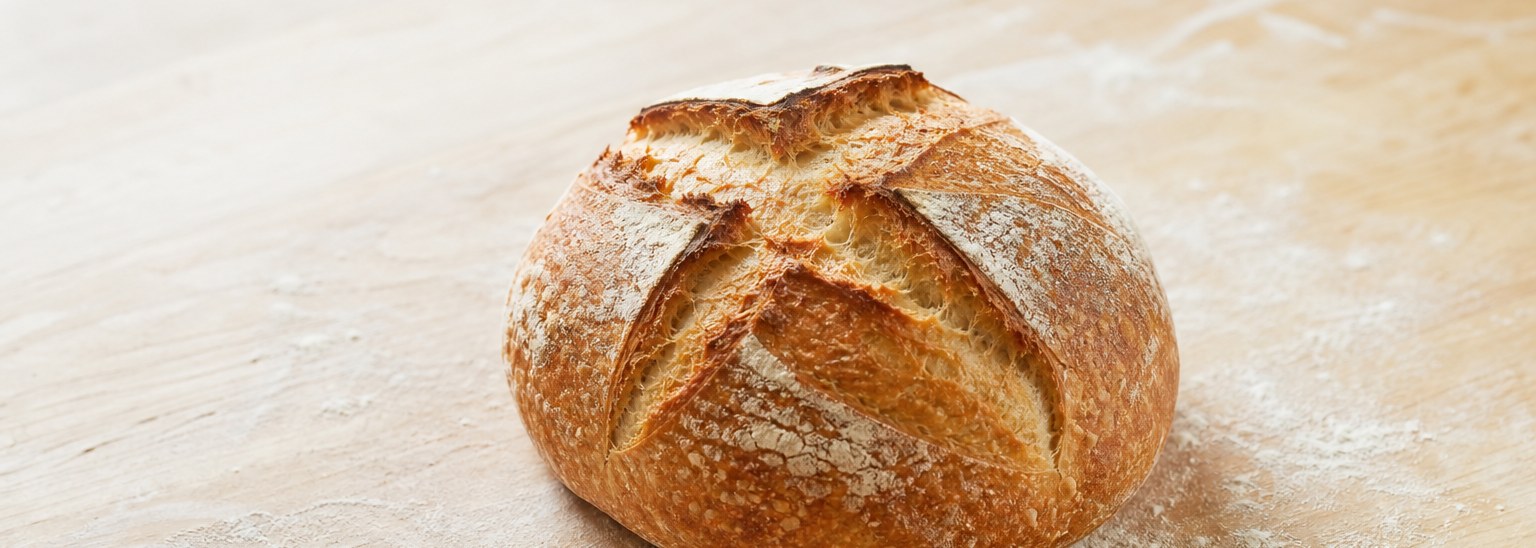
And the happy ending? My rice flour starter, the one I thought was going nowhere on day four, the one I accidentally fed wheat flour, is currently sitting on my counter and thriving. It has been going for three months now. I baked a loaf last weekend that my husband called “actually really good this time,” which in our household is the highest possible praise. I also kept the wheat starter going and I use them for different things now. Two starters, two moods, two kinds of bread. Was it the flour that made the difference? Was it the accident? Was it the cat? I genuinely do not know. But I am so glad I did not give up on either of them.
If you are thinking about trying this yourself, please do. Start both at the same time if you are curious.
About This Article

Written by Sam Whitaker. Sam Whitaker has been baking sourdough for over a decade, including three years baking commercially, and now works out of a home kitchen in the Pacific Northwest. Sam's eleven-year-old starter, Harold, is the foundation for every recipe and troubleshooting guide on Sourdough Rising — real bread tested over and over until it works. More about this site.
Scope and limits. Sam is a home baker with no formal culinary training. Follow current food safety guidance for storage and handling, particularly with enriched or filled doughs.
Verify this against a primary source
Specifics change, and your situation may differ from the one described here. These are the authorities worth checking directly:
- USDA FoodData Central — flour and ingredient composition data
- FoodSafety.gov — safe handling and storage