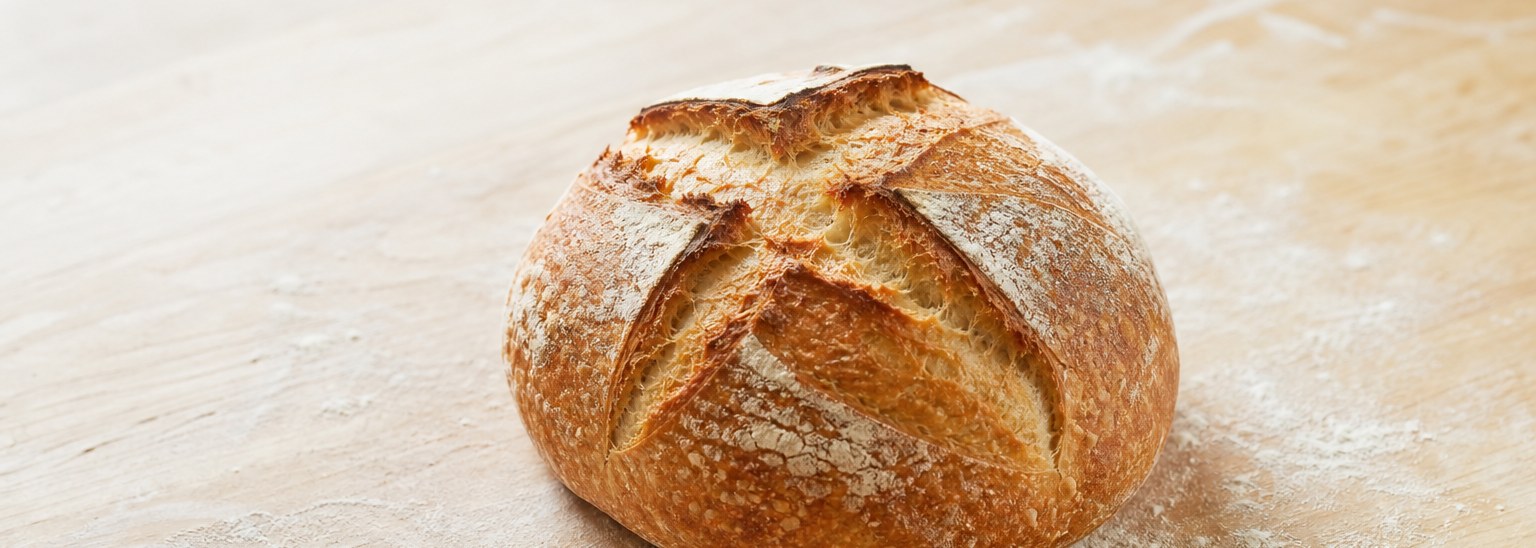
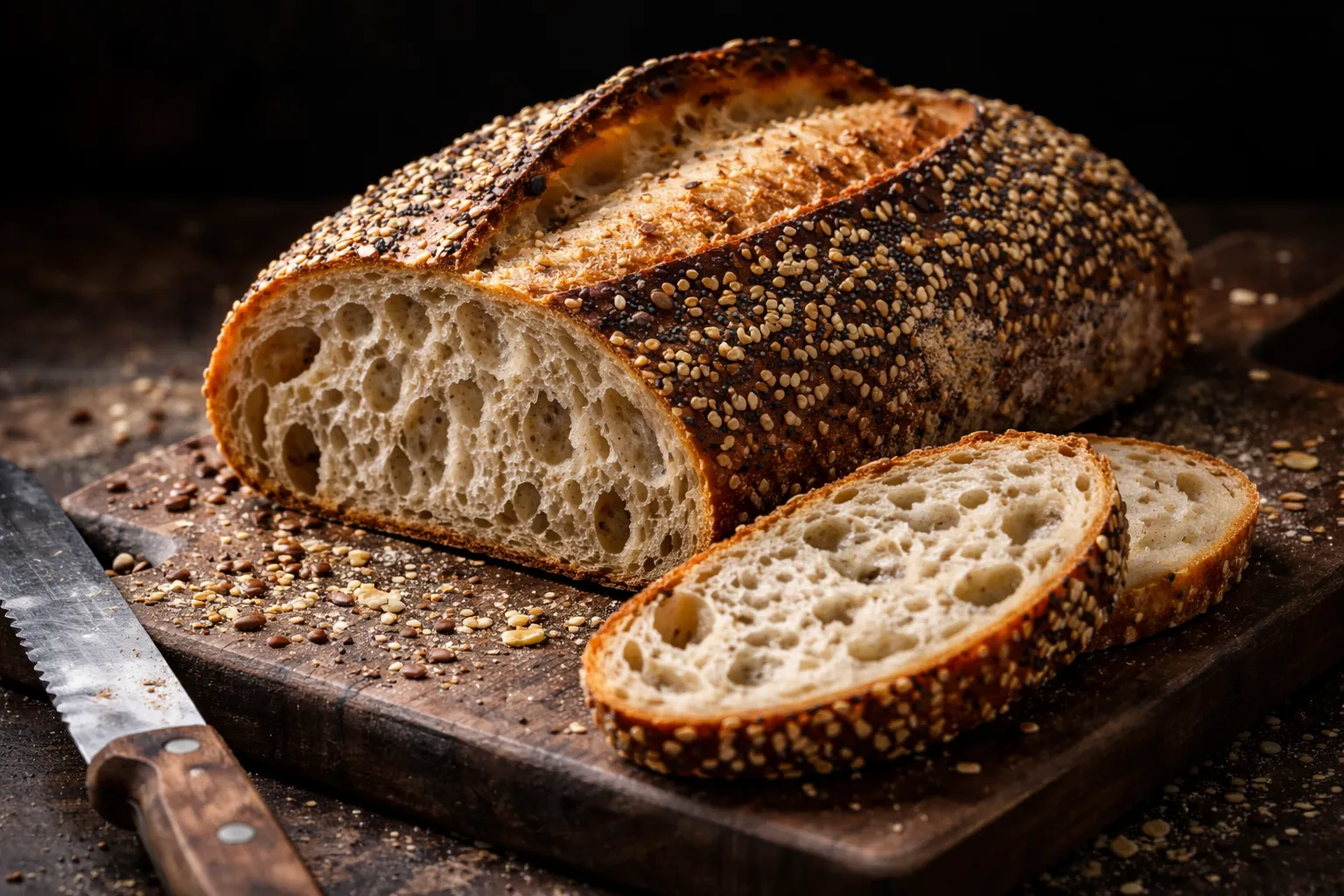
This is a seed-covered sourdough through and through — a rustic, hearty loaf where nearly every bite carries some crunch. Sunflower seeds, pumpkin seeds, flax, and sesame all get folded into the mix, pushing this well past what a standard sourdough loaf can offer. What you end up with is a rich, nutty flavor paired with a texture that’s hard to top: an airy, chewy crumb flecked with seeds, wrapped in a crust that shatters loudly with every bite.
The real magic of this loaf happens in the oven, when the seeds toast up and turn fragrant, stacking extra flavor on top of that tangy sourdough base. Slice it thick for avocado toast, or just slather on butter — either way, this bread gives you something plain sourdough simply can’t compete with. Everything you need to build, shape, and bake this loaf is laid out step by step below.
My Dutch oven is a beat-up 6-quart Lodge that’s lived on the bottom rack of my oven for years, and next to it sits an oval rattan banneton I bought back when I was still running my microbakery out of this same kitchen. That banneton is where this whole story starts — the morning I fumbled a fully proofed loaf right out of it, watched it hit the floor, scraped it back in anyway, and somehow still walked away with the best seeded sourdough batard I’ve ever pulled out of that oven. I know how that sounds. Bear with me.
The whole thing went down on a Sunday. I’d been awake since six, already two coffees deep, feeling a little too pleased with how the morning was going. The dough had spent the night proofing in the fridge and looked flat-out stunning — tight, domed, ready to go. In my head I was doing full nature-documentary commentary: “The batard emerges from its cold retard, magnificent, brimming with promise.” Then I went to tip it out onto my linen couche to score it, my grip slipped, and the loaf hit the floor with a sound I can only describe as a soggy thud of pure defeat.
I just stood there staring at it for a good five seconds. Then I scooped it up, pressed it back into the banneton, slid it back into the fridge, and went to go process my feelings elsewhere. What happened after that actually caught me off guard, and it taught me something real — about sourdough, about seeds, and about not writing off a bake just because it had a rough start to its morning.
Why This Seeded Batard Earns Every Ounce of Effort It Takes
Before I walk you through how it all turned around, here’s why I cared so much about this particular loaf. A batard sits between a baguette and a boule — oval, more elongated than a round loaf, shorter than a baguette. That shape hands you a fantastic crust-to-crumb balance, room for one dramatic score down the middle, and slices sized perfectly for the toaster. Coat the outside in seeds before the final proof, and something great happens once it hits the oven: the seeds toast against the hot dutch oven walls, the crust shatters beautifully with each bite, and the flavor lands somewhere nuttier and more layered than any plain loaf could reach.
I’d been chasing this exact loaf for months — a seed-crusted shell, a wide-open crumb, that dramatic bloom along the score. This was going to be the loaf that finally proved I’d figured it out. Instead, it was sitting on my kitchen floor.
Everything You’ll Need to Pull Off This Seeded Sourdough Batard
The Seed Blend That Actually Stayed on the Dough Instead of Sliding Off
For months I kept grabbing whatever bulk seeds were on sale, only to watch a good chunk of them slough off during shaping or vanish into the steam inside the dutch oven. Turns out the issue had nothing to do with my technique — the seeds themselves were either too tiny to grip the dough or too uneven in size to build a crust that baked evenly.
Where it delivers
- There’s real variety in size here — sunflower, pumpkin, flax, and sesame all carry different weights and shapes, so they wedge into the dough rather than rolling off the second you shape it.
- This batch is noticeably fresher than what I’ve found at local shops, so it grips a wet dough surface instead of skating around like loose marbles.
- The flavor hits right away — every seed contributes its own nuttiness, so even a basic white dough tastes layered without needing longer fermentation or extra technique.
Where it falls short
- Price-per-ounce runs higher than anything from the bulk bins, so if you’re watching your baking budget, you’ll notice it a few loaves in.
- The tiniest flax seeds still occasionally wriggle free during the first proof, especially if your banneton doesn’t have enough flour dusted in to create grip.
I nearly gave up on seeded sourdough altogether after a particularly ugly loaf where most of the seeds fell into my Dutch oven and burned — but switching to Yupik Organic Super 6 Seeds Mix was the moment that changed everything.
Ingredients
- 500g bread flour
- 375g water (75% hydration)
- 100g active sourdough starter
- 10g salt
- 50g mixed seeds (sesame, sunflower, flax, pepitas) for the dough, plus extra for coating
Step by Step
- Mix. Combine flour and water and autolyse for 30-45 minutes. Add the starter and salt and mix thoroughly.
- Bulk ferment with folds. Do 3 sets of stretch-and-folds over the first 90 minutes. During the second fold, work the 50g of mixed seeds evenly through the dough.
- Continue bulk fermentation. Let the dough ferment at room temperature for 4-5 hours, until increased by about 50%.
- Shape into a batard. Shape into an oblong batard, building surface tension along the length.
- Coat with seeds. Lightly dampen the surface, then roll the shaped loaf in a shallow dish of extra seeds to coat evenly.
- Proof. Place seam-side up in a floured oval banneton and refrigerate overnight, 8-12 hours.
- Score and bake covered. Preheat oven with a Dutch oven inside to 475F (245C). Score down the length and bake covered for 20 minutes.
- Bake uncovered. Remove the lid and bake another 20-22 minutes at 450F (230C) until deeply golden, watching the seeds don’t scorch.
- Cool completely, at least 1 hour, before slicing.
I use Yupik Organic Super 6 Seeds Mix, which contains sunflower seeds, pumpkin seeds, flax, and sesame. I add 50g of mixed seeds into the dough during the second fold, then coat the shaped loaf with extra seeds before the final proof. The variety in seed sizes helps them wedge into the dough instead of rolling off during shaping. After shaping and coating with seeds, I place the loaf seam-side up in a floured oval banneton and refrigerate overnight for 8-12 hours. The cold retard gives the dough time to develop flavor and makes it easier to score before baking. My seeded batard uses 75% hydration, which means 375g water combined with 500g bread flour. This hydration level gives you an airy, chewy crumb while keeping enough structure to shape the dough and coat it evenly with seeds.Frequently Asked Questions
What seeds do you use in your seeded sourdough batard?
How long do you proof the seeded batard in the fridge?
What hydration percentage is your seeded sourdough batard?
About This Article

Written by Sam Whitaker. Sam Whitaker has been baking sourdough for over a decade, including three years baking commercially, and now works out of a home kitchen in the Pacific Northwest. Sam's eleven-year-old starter, Harold, is the foundation for every recipe and troubleshooting guide on Sourdough Rising — real bread tested over and over until it works. More about this site.
Scope and limits. Sam is a home baker with no formal culinary training. Follow current food safety guidance for storage and handling, particularly with enriched or filled doughs.
Verify this against a primary source
Specifics change, and your situation may differ from the one described here. These are the authorities worth checking directly:
- USDA FoodData Central — flour and ingredient composition data
- FoodSafety.gov — safe handling and storage