No recipe card spells this part out, and neither does most general baking advice: your oven’s dial can flat-out lie to you, and you’ll never know it unless you check. For a long stretch of months, my sourdough loaves kept coming out of the oven pale and gummy, no matter what I changed. I cross-referenced hydration percentages against every chart I could find. I fussed over my starter like it was a houseplant that needed constant attention. I even splurged on a brand-new Dutch oven, convinced that was the missing piece. Nothing shifted until the night I finally sat down to research oven thermometer sourdough baking accuracy — and discovered my oven’s actual internal temperature was sitting a full 50 degrees Fahrenheit below what the dial claimed. That one discovery rewrote everything I thought I understood about my setup.
Looking back, it’s almost embarrassing to say out loud. I’d been cranking the dial to 500°F for that critical initial steam phase, trusting it would actually get there. In reality, my oven topped out closer to 450°F. That explains why my ear never opened up the way it should have. That explains why the crust stayed soft and the crumb stayed dense, bake after bake. My technique was never the real issue — my oven had been working against me the entire time.
So I did what any thoroughly stumped home baker eventually does — burned through an evening falling down a rabbit hole of forum threads and YouTube tutorials, then finally clicked “buy” on an oven thermometer. That cheap little gadget turned out to be the single most useful piece of gear I’ve picked up in eleven years of baking sourdough. Here’s exactly how it all unfolded.
How a Basic Oven Thermometer Exposed My Oven’s Hidden Sabotage
If your loaves keep landing pale and gummy despite an active starter and fermentation timing you’ve already dialed in, the real culprit might be hiding inside your oven’s control panel — and you won’t know it until you actually measure what’s happening in there. I spent months blaming my own process before finally accepting my oven was running a full 50 degrees colder than it claimed.
Where this tool earns its keep
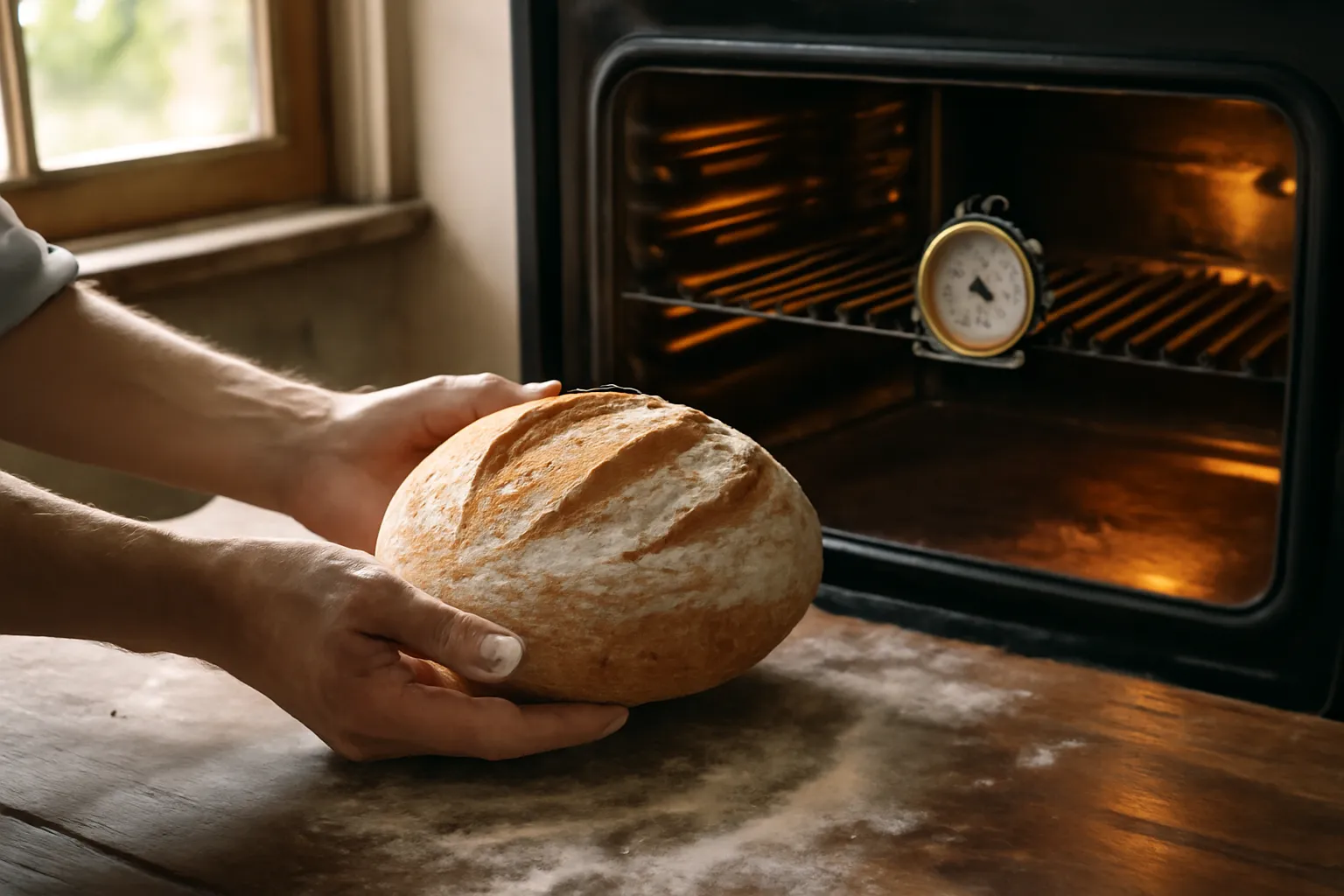
- Clips onto the oven rack right around eye level, so you can check the reading without cracking the door and letting all that built-up heat escape mid-bake.
- The stainless steel face holds up fine against the steam and heat blast of a Dutch oven bake — no fogging over, no fading, even after months of steady use.
- Gives you the unvarnished truth right away — mine showed the oven actually sitting at 400°F while I’d dialed in 450°F, which finally explained six straight months of pale, underbaked crusts.
Where it comes up short
- The hanging hook feels flimsy and can be fussy to seat on certain oven racks — I’ve had to reposition mine more than once to keep it from tipping over.
- It only reports what’s happening in that exact moment — it won’t correct uneven heat pockets or explain why one corner of your oven bakes faster than the rest.
I almost threw it out after the first bake because I didn’t trust the reading—50 degrees seemed too dramatic—but I ran the test three times and got the same result every time. That’s when everything changed. Grab the AcuRite 00620A2 Stainless Steel Oven Thermometer and find out if your oven has been lying to you too.
Frequently Asked Questions
How much was my oven temperature actually off?
Sam’s oven dial claimed 450°F, but the thermometer revealed it was actually running at 400°F—a full 50 degrees Fahrenheit cooler than the dial indicated. This discovery explained months of pale, underbaked crusts despite correct fermentation timing and an active starter.
What oven thermometer does Sam use?
Sam uses the AcuRite 00620A2 Stainless Steel Oven Thermometer, which clips onto the oven rack at eye level. The stainless steel face resists fogging and fading from steam and heat, even after months of steady use in Dutch oven baking.
Why were my sourdough loaves coming out pale and gummy?
Pale, gummy loaves can result from an oven running cooler than its dial indicates. Sam’s oven was 50 degrees Fahrenheit colder than claimed, preventing proper ear opening and crust development despite correct hydration percentages and fermentation timing.
How long has Sam been baking sourdough?
Sam has been baking sourdough for over eleven years. The oven thermometer turned out to be the single most useful piece of gear picked up during that entire time baking in a home kitchen.
About This Article

Written by Sam Whitaker. Sam Whitaker has been baking sourdough for over a decade, including three years baking commercially, and now works out of a home kitchen in the Pacific Northwest. Sam's eleven-year-old starter, Harold, is the foundation for every recipe and troubleshooting guide on Sourdough Rising — real bread tested over and over until it works. More about this site.
Scope and limits. Sam is a home baker with no formal culinary training. Follow current food safety guidance for storage and handling, particularly with enriched or filled doughs.
Verify this against a primary source
Specifics change, and your situation may differ from the one described here. These are the authorities worth checking directly:
- USDA FoodData Central — flour and ingredient composition data
- FoodSafety.gov — safe handling and storage