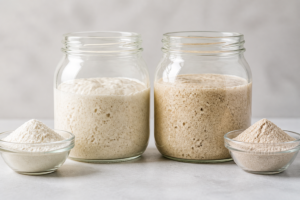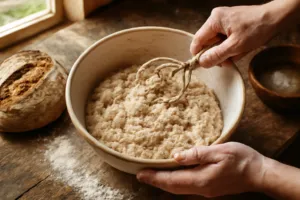
The jar smelled the same, the crumb photographed just fine, and yet two years running, I kept circling one nagging gap. My loaves came out decent-looking, smelled genuinely good, and sliced into a crumb I couldn’t really complain about — but something underneath all of it stayed thin. Forum threads and video after video kept circling back to the same pairing: fresh-milled flour paired with sourdough, described almost like a switch being flipped. I brushed it off as internet exaggeration for a long stretch. Curiosity finally got the better of my skepticism.
My starter was lively and reliable, my hydration numbers were where I wanted them, and my shaping had come a long way after months of repetition. Even so, every bake landed a shade flatter than the version living in my head. A neighbor with serious baking chops floated the idea of milling my own grain. She explained that store-bought flour — organic, high-quality, didn’t matter — sheds its volatile compounds fast once it’s been milled and bagged. Grinding it fresh, she promised, was a different world entirely.
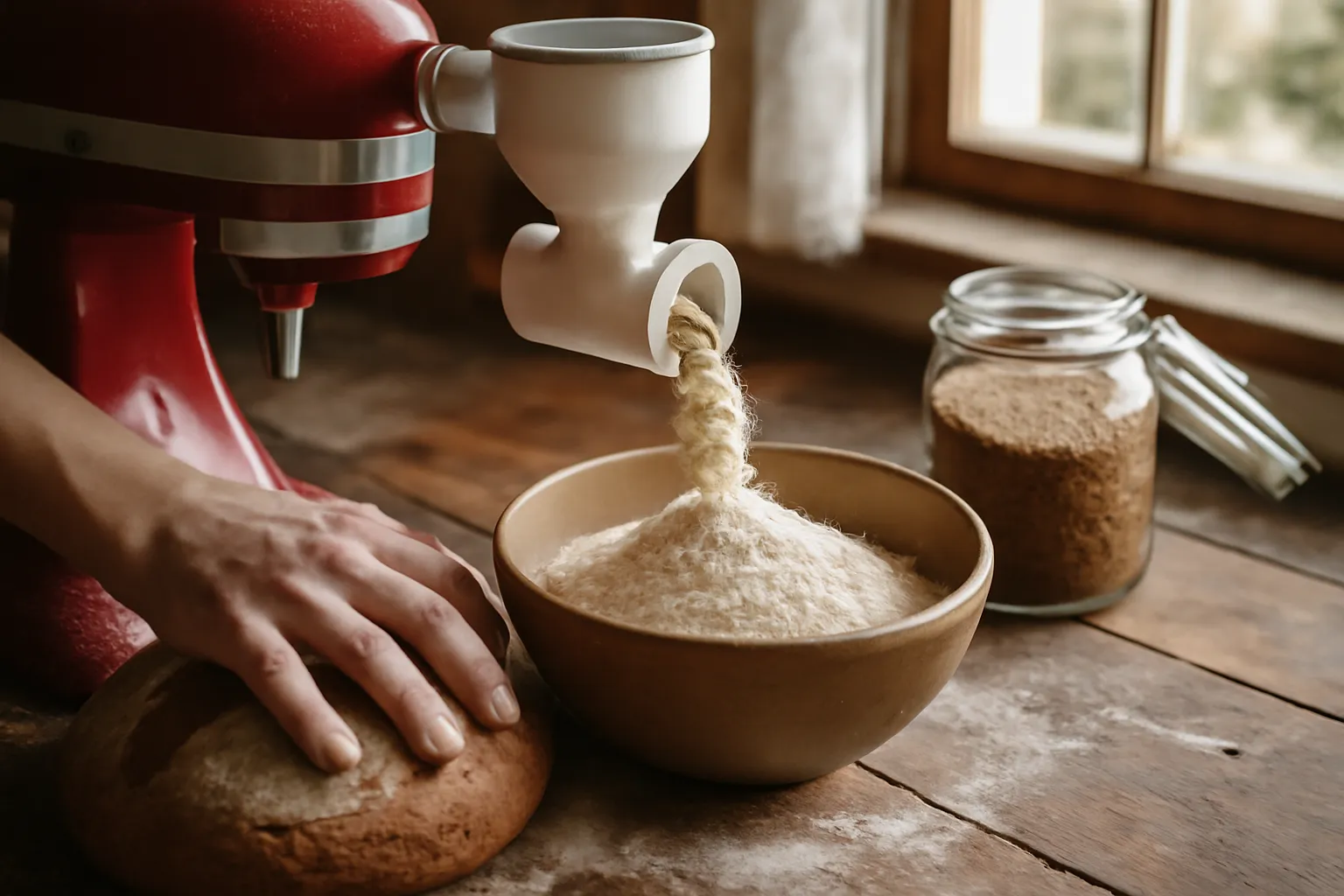
I doubted her, but I was hungry enough for a fix to give it a shot. I’d had my eye on a standalone stone mill like the Mockmill, but the cost kept stopping me short. Then it hit me — a KitchenAid stand mixer already sat on my counter, used practically every day. That single thought sent me down a rabbit hole researching grain mill attachments instead of a separate machine.
| Flour Type | Volatile Compounds | Bulk Fermentation Time | Flavor Profile |
|---|---|---|---|
| Fresh-milled | Still present | Baseline (reference) | Nutty, layered notes |
| Bagged store-bought | Shed during storage | 20–30 minutes longer | Weeks past prime |
The Milling Attachment That Finally Gave Me Flavor No Bag of Flour Ever Delivered
Flour milled minutes before mixing behaves differently than flour that’s been sitting in a bag, and I saw the difference right away in both crumb and crust. Once it sank in that bagged flour — any brand, no exceptions — was already weeks past its prime by the time it landed in my bowl, milling my own stopped being optional.
Where it earns its keep
- Fermentation sped up noticeably once I switched to fresh flour — bulk times shrank by 20 to 30 minutes, since the bran and germ are still alive and eager to work.
- The flavor jump wasn’t subtle — nutty, layered notes showed up right away, proof that what had been missing was the flour, not my technique.
- Built entirely from metal, it plows through whole grains and high-extraction flours without any plastic parts stalling out or wearing thin mid-batch.
Where it comes up short
- Since it’s built as a KitchenAid attachment, anything short of a full-size Stand Mixer won’t accept it — you’d need to look at an entirely different brand.
- Grinding whole grains throws off genuine heat, and rushing the process — which I did the first time — can warm the flour enough to throw off both hydration math and starter behavior.
I almost talked myself out of buying this because the upfront cost felt silly when bagged flour was right there at the grocery store, but that hesitation evaporated after my first loaf. If fresh-milled flour is the missing piece in your sourdough, grab the KitchenAid KGM All Metal Grain Mill Attachment.
Frequently Asked Questions
How much faster does bulk fermentation get with fresh-milled flour?
Bulk fermentation times shrink by 20 to 30 minutes when you switch to fresh-milled flour instead of bagged. The bran and germ are still alive and active in freshly ground flour, which speeds up the entire fermentation process noticeably.
Why does store-bought flour lose flavor so quickly?
Store-bought flour sheds its volatile compounds fast once it’s milled and bagged. By the time bagged flour lands in your bowl, it’s already weeks past its prime, which is why fresh-milled flour delivers flavor no bag of flour ever delivered.
Can grinding whole grains make flour too warm?
Yes. Grinding whole grains throws off genuine heat, and rushing the process can warm the flour enough to throw off both hydration math and starter behavior. Taking your time during grinding helps prevent these problems.
What grain mill works with a KitchenAid stand mixer?
The KitchenAid KGM All Metal Grain Mill Attachment fits full-size KitchenAid stand mixers. It’s built entirely from metal and plows through whole grains without plastic parts wearing thin mid-batch, making it reliable for daily sourdough baking.
About This Article

Written by Sam Whitaker. Sam Whitaker has been baking sourdough for over a decade, including three years baking commercially, and now works out of a home kitchen in the Pacific Northwest. Sam's eleven-year-old starter, Harold, is the foundation for every recipe and troubleshooting guide on Sourdough Rising — real bread tested over and over until it works. More about this site.
Scope and limits. Sam is a home baker with no formal culinary training. Follow current food safety guidance for storage and handling, particularly with enriched or filled doughs.
Verify this against a primary source
Specifics change, and your situation may differ from the one described here. These are the authorities worth checking directly:
- USDA FoodData Central — flour and ingredient composition data
- FoodSafety.gov — safe handling and storage