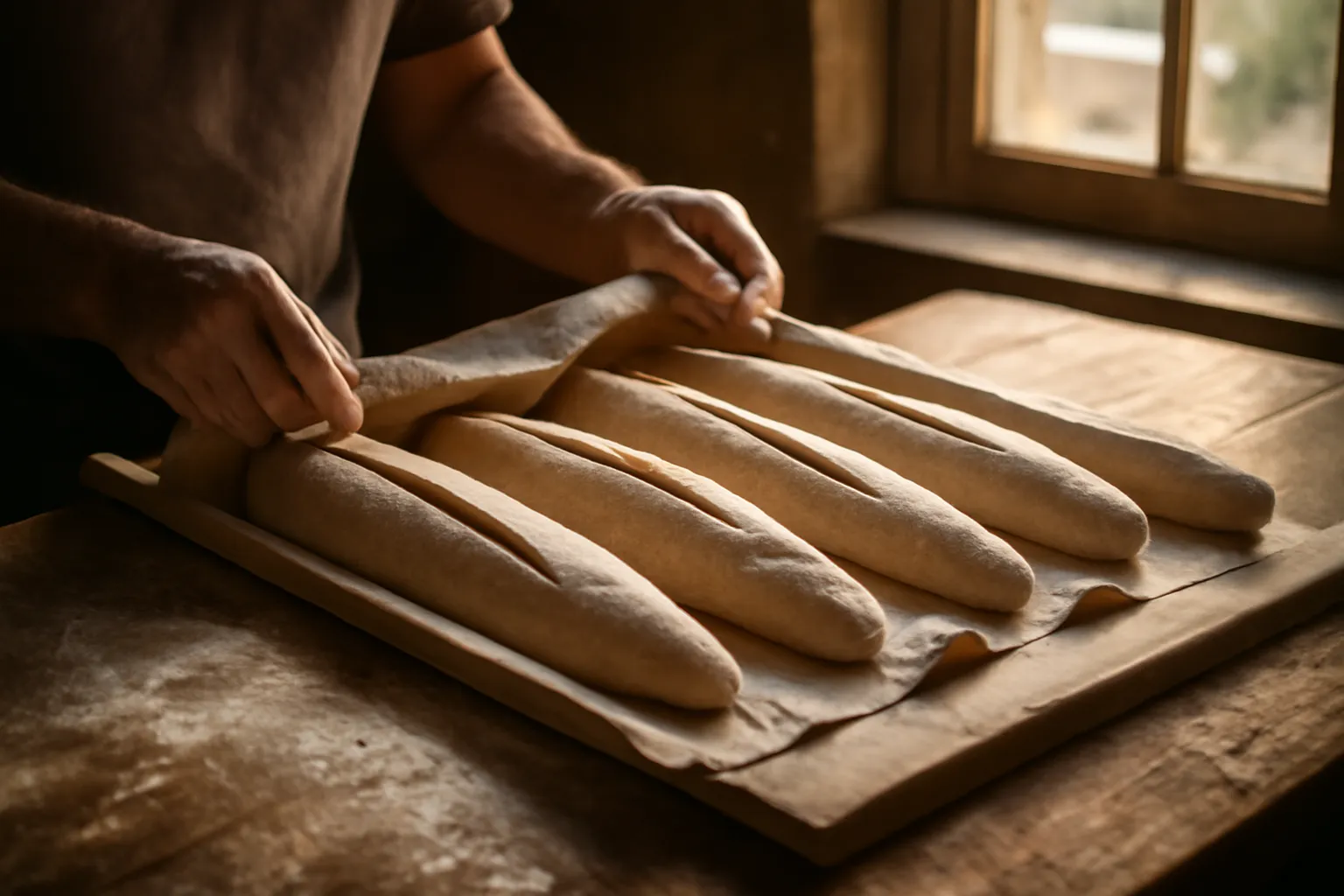
Here’s the assumption nearly every home baker makes without ever questioning it: any floured cloth will behave like a couche, so why bother buying a fancy strip of linen when a kitchen towel does the same job? I believed that too, and it cost me months of sad, half-collapsed loaves that looked more like deflated hot dog buns than baguettes. I’d nail every step on paper — the autolyse, the folds, the careful shaping — only to lay those logs on a floured tea towel and watch them slump sideways while proofing, so that by oven time the shape I’d worked for was basically gone. If you typed in linen couche sourdough baguettes review because this exact frustration sent you searching, trust me, I’ve been exactly where you are.
My shaping wasn’t really the culprit — or not the whole story, anyway. The actual weak link was what I was proofing on. Cotton towels just don’t have the backbone to keep a baguette contained through its final rise. They soak up moisture inconsistently and can’t form the firm, trough-like channels that baguette dough genuinely relies on for support. I understood all of this logically, yet I kept talking myself out of buying real couche fabric, telling myself it was an extra expense I didn’t really need.
It took wrecking one particularly good-looking batch — dough I’d started at 6am and fussed over all day — before I finally gave in. I opened Amazon and started scrolling through reviews. What I discovered there reshaped my baguette results more than any recipe adjustment ever managed to.
The Linen Fabric That Finally Kept My Baguettes From Falling Apart
A dish towel simply isn’t built for baguette proofing — the dough needs a surface with genuine structure and the right amount of grip to stop shaped logs from merging into each other or sagging outward as they rise. A real linen couche is what separates a baguette that keeps its silhouette from one that looks like it gave up halfway through the process.
Where it earns its keep
- The weave has enough grip that dough stops sliding around — your shaped loaves stay put instead of creeping toward their neighbors while proofing.
- At 39×25, there’s enough room to proof three to four baguettes at once with real breathing space between them, which translates into stronger oven spring and cleaner shaping.
- Linen naturally helps form a thin, fragile skin on the dough — the kind of paper-thin crust that shatters cleanly the way an actual baguette should, instead of tearing raggedly.
Where it comes up short
- It’s not zero-maintenance — you have to flour it thoroughly before each use and wash it now and then, or it turns tacky and stops doing its job.
- There’s a real adjustment period; I overdid the flour early on, assuming heavier coverage meant better grip, and ended up baking flour right into my crumb instead of keeping it on the crust.
I almost returned this after my first batch because I wasn’t confident in the setup, worried the dough would still spread — but once I understood the flour-to-fabric ratio, it became my most-used piece of equipment. Perenllareta XL Bakers Couche 39×25″ for French Baguette Dough Making, Linen Cotton Bread Baking Proofing Cloth and 10in Reusable Bowl Cover Set
Frequently Asked Questions
Why is a linen couche better than a kitchen towel for baguettes?
Cotton towels lack the structure to support baguette dough during proofing—they soak up moisture inconsistently and can’t form firm channels that dough relies on. A real linen couche has enough grip to keep shaped logs from sliding or sagging, and its weave helps form a thin, fragile skin that shatters cleanly instead of tearing raggedly.
How many baguettes fit on a 39×25 inch couche?
A Perenllareta XL Bakers Couche at 39×25 inches accommodates three to four baguettes at once with real breathing space between them. This spacing translates into stronger oven spring and cleaner shaping because the loaves aren’t crowded during proofing.
What’s the biggest mistake when using a new linen couche?
Overdoing flour coverage is easy at first—heavier flour doesn’t mean better grip. Too much flour gets baked right into the crumb instead of staying on the crust. Once you understand the proper flour-to-fabric ratio, the couche becomes reliable and your most-used piece of equipment.
How do you maintain a linen baking couche long-term?
You must flour it thoroughly before each use and wash it periodically, or it becomes tacky and stops gripping dough effectively. Proper maintenance keeps the couche functioning as your go-to proofing surface for shaped baguettes.
About This Article

Written by Sam Whitaker. Sam Whitaker has been baking sourdough for over a decade, including three years baking commercially, and now works out of a home kitchen in the Pacific Northwest. Sam's eleven-year-old starter, Harold, is the foundation for every recipe and troubleshooting guide on Sourdough Rising — real bread tested over and over until it works. More about this site.
Scope and limits. Sam is a home baker with no formal culinary training. Follow current food safety guidance for storage and handling, particularly with enriched or filled doughs.
Verify this against a primary source
Specifics change, and your situation may differ from the one described here. These are the authorities worth checking directly:
- USDA FoodData Central — flour and ingredient composition data
- FoodSafety.gov — safe handling and storage