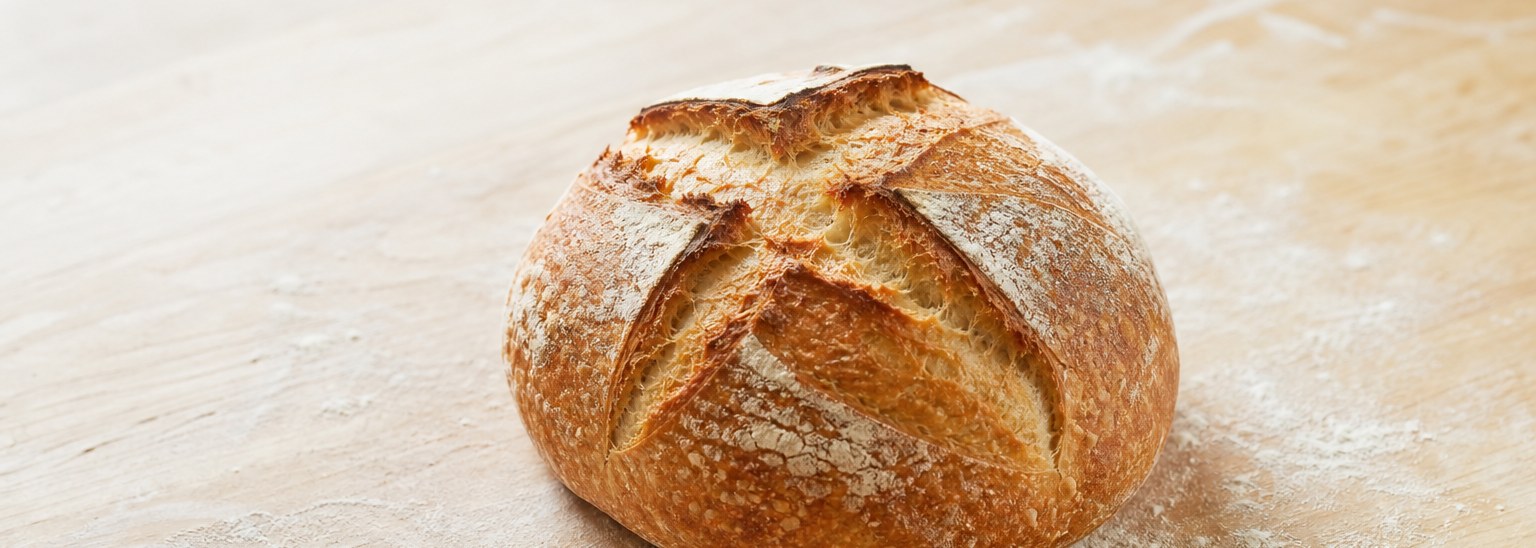
My oven mitts are still on and I’m staring down at a loaf that’s just come out flat, pale, and honestly closer to a frisbee than any boule I’d want to photograph. The crumb inside is tight and gummy, the crust barely colored at all, and I already know I did the prep right — starter fed on schedule, shaping careful, a fresh lame dragged across the top for the score. The one thing I hadn’t sorted out yet was the vessel itself. Once I finally dug into what actually makes the best dutch oven for sourdough bread, my results flipped almost overnight. If flat loaves, washed-out crusts, or crumb that refuses to open up sound familiar, I’d put money on this being the piece you’re missing too.
| Vessel Type | Heat Distribution | Steam Retention | Suitability for Sourdough |
|---|---|---|---|
| Cast iron Dutch oven | Stores and distributes heat evenly | Traps steam for ~20 minutes | Standard; delivers consistent bake |
| Foil-covered roasting pan | Not stated | Inadequate | Does not come close to cast iron |
| Ceramic clay baker | Not stated | Inadequate | Does not come close to cast iron |
| Stockpot | Not stated | Inadequate | Does not come close to cast iron |
Why Skipping the Dutch Oven Isn’t Really an Option
Nobody warns you about this part going in: your home oven, no matter how good, just can’t fake what a real bread oven does. Commercial setups use deck ovens that blast steam into the chamber during those first few make-or-break minutes. That burst of moisture keeps the crust soft enough for the dough to keep expanding, which is exactly how you get that dramatic oven spring and the crackly, blistered exterior everyone’s chasing. Skip the steam and the crust hardens too quickly, boxing the loaf in and leaving you with a squat, sad round — the frisbee scenario I know all too well.
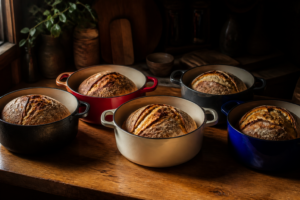
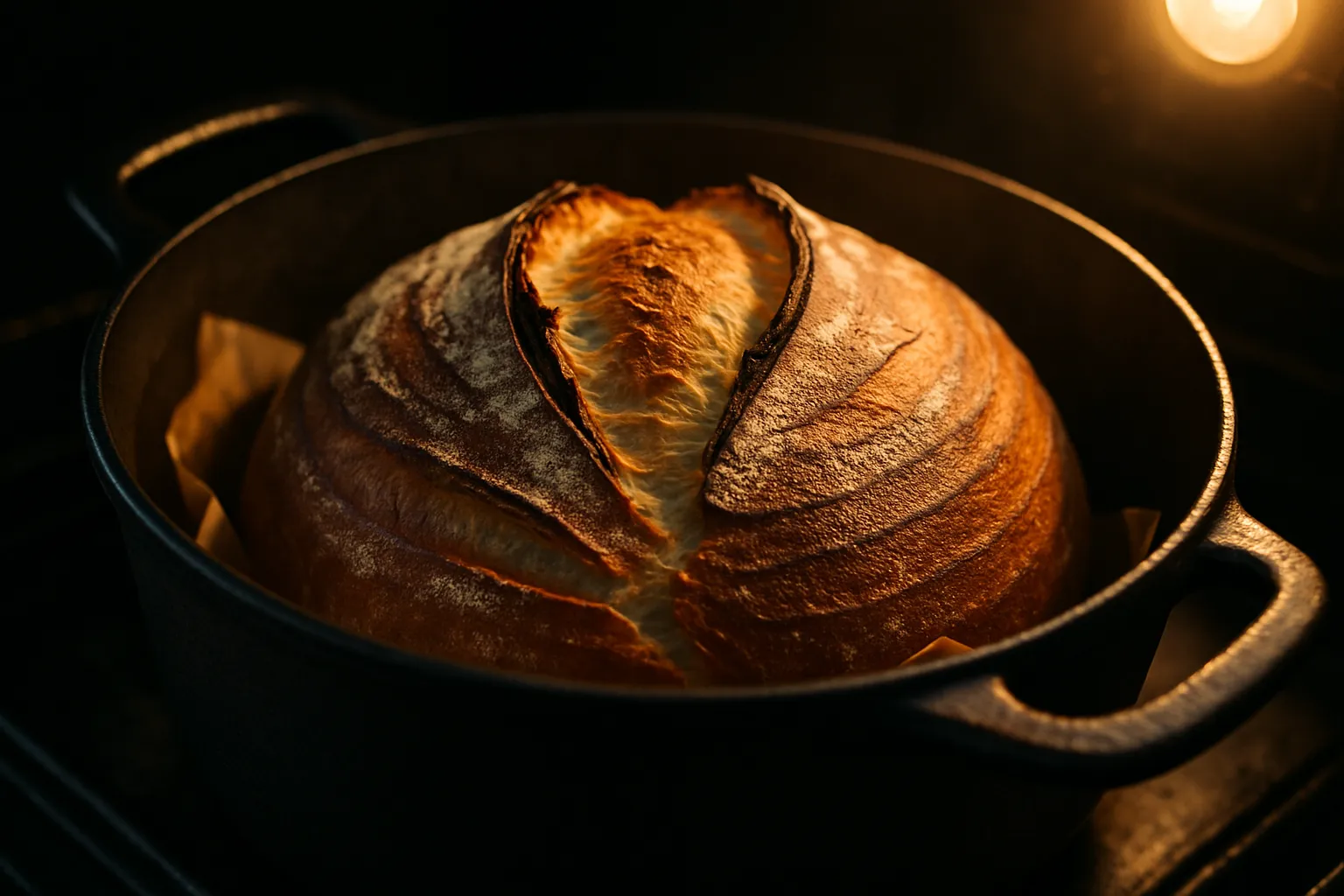
A Dutch oven fixes this problem elegantly. Drop your shaped dough into one that’s already hot, slap the lid on, and the water already sitting in the dough turns into its own private steam chamber. For roughly the first 20 minutes, that trapped moisture behaves just like a commercial deck oven would — softening the surface while the loaf pushes upward as fast as it can. Pull the lid after that window, let the dry heat take over, and watch the crust darken into that deep mahogany you’ve probably screenshotted from a hundred other sourdough photos.
Then there’s the sheer mass of the cast iron itself, which matters more than people give it credit for. It stores heat and pushes it back out evenly across the bottom of the loaf, so you avoid that gummy, undercooked base and end up with a bake that’s consistent top to bottom. I haven’t found a real substitute. I’ve tried foil-covered roasting pans, ceramic clay bakers, even a stockpot when I was desperate. None of it — not one — comes close to what a solid cast iron Dutch oven delivers for sourdough.
What Actually Matters When Picking One Out
Not every Dutch oven sitting on a shelf is built with bread in mind. Before you hand over your money, here’s what I personally check every single time:
- Size: Somewhere around 5 quarts hits the sweet spot for a typical 900g–1000g sourdough boule — enough headroom for the dough to climb without sprawling sideways. A 6-quart also does the job nicely if you prefer a bigger loaf.
- Material: Cast iron, bare or enameled, is still the standard everyone measures against. Enameled pots wipe clean easily and skip the seasoning step entirely, while bare cast iron costs less and takes an absolute beating without complaint.
- Heat tolerance: Since you’ll be preheating somewhere between 450–500°F (230–260°C), confirm the pot and the lid handle can actually take that kind of heat. Decent cast iron usually shrugs this off without issue.
- A heavy, tight-sealing lid: The lid matters just as much as the pot underneath it. A dense, snug-fitting lid holds steam where you need it. A flimsy one with gaps lets that moisture leak out and undoes everything you’re trying to accomplish.
- Shape versus loaf style: Round pots are made for boules. If batards are more your thing, hunt down an oval Dutch oven or a lidded, loaf-shaped bread pan instead.
The Pot That Finally Got Me Real Steam — and an Ear I Was Proud Of
Miss that steam window in the first critical minutes and there’s no caramelizing, no ear forming — just a pale, dense loaf that deflates before it even finishes rising. A heavy cast iron pot with a lid that actually seals shut is what separates a flat, forgettable round from a loaf that makes people stop and ask about it.
Where it earns its keep
- 5 quarts turns out to be the ideal size for a standard sourdough boule — roomy enough that the dough isn’t squeezed, tight enough that the steam still pools right where it needs to.
- The cast iron distributes heat so consistently that a deep golden crust forms within the first 20 minutes, even on days your oven’s running a touch cool.
- It arrives already seasoned, so there’s no stripping or re-seasoning ritual before your first loaf — just heat it up and start baking.
Where it falls short
- Wrangling it out of a 500°F oven takes real nerve and mitts you genuinely trust — I’ve fumbled that lid enough times that I’ve nearly sent it crashing to the floor.
- That black enamel finish shows off every smudge and speck of dust, so if you want it looking spotless on your counter, plan on wiping it down often.
I second-guessed whether cast iron was worth the maintenance hassle until I pulled my third loaf out of this dutch oven and saw the ear I’d been chasing for months. Lodge 5 Quart Cast Iron Dutch Oven
Frequently Asked Questions
Why do I need a Dutch oven for sourdough bread?
A Dutch oven traps steam from the dough during the first roughly 20 minutes of baking, keeping the crust soft enough for the loaf to expand fully. This creates oven spring and a crackly, blistered exterior. Without it, the crust hardens too quickly, boxing the loaf in and leaving you with a flat, pale result.
What size Dutch oven should I buy for sourdough?
A 5-quart Dutch oven is ideal for a standard 900g–1000g sourdough boule, offering enough headroom for the dough to climb without sprawling sideways. A 6-quart also works well if you prefer a bigger loaf.
Can I use a roasting pan or ceramic baker instead?
No. Cast iron Dutch ovens are the standard for sourdough. Foil-covered roasting pans, ceramic clay bakers, and stockpots don’t come close to what solid cast iron delivers—the material’s mass stores and distributes heat evenly, giving you a consistent bake from top to bottom.
What temperature should a Dutch oven handle for sourdough?
Your Dutch oven should handle preheating between 450–500°F. Confirm both the pot and lid handle can tolerate this heat before buying. Decent cast iron typically shrugs off these temperatures without issue.
About This Article

Written by Sam Whitaker. Sam Whitaker has been baking sourdough for over a decade, including three years baking commercially, and now works out of a home kitchen in the Pacific Northwest. Sam's eleven-year-old starter, Harold, is the foundation for every recipe and troubleshooting guide on Sourdough Rising — real bread tested over and over until it works. More about this site.
Scope and limits. Sam is a home baker with no formal culinary training. Follow current food safety guidance for storage and handling, particularly with enriched or filled doughs.
Verify this against a primary source
Specifics change, and your situation may differ from the one described here. These are the authorities worth checking directly:
- USDA FoodData Central — flour and ingredient composition data
- FoodSafety.gov — safe handling and storage