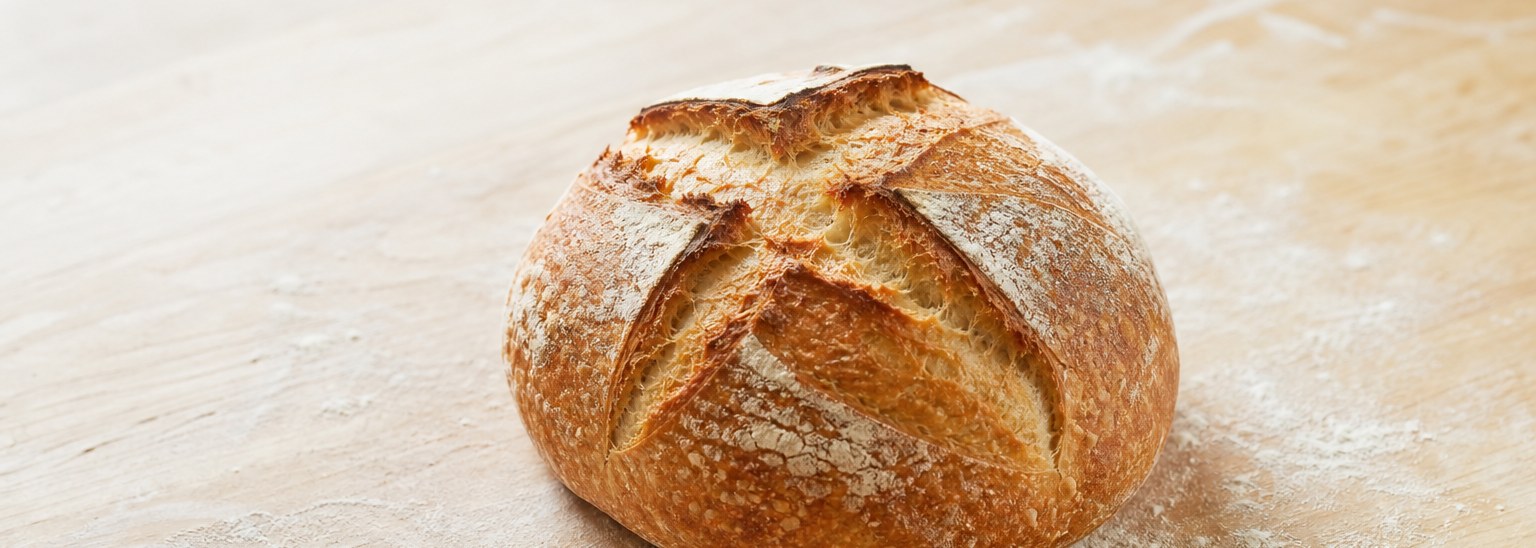
Baking sourdough every single day sounds either blissful or exhausting, depending on who you ask.
After 11 years of sourdough work—including three years running my home microbakery—I’ve discovered something that surprised me: the daily rhythm isn’t about punishment or obsession. It’s about what happens when you stop treating sourdough as a weekend hobby and start living with it as a constant.
This isn’t a post about why you should bake daily. It’s about what actually shifts when you do, the real obstacles you hit, and whether it’s even worth your time.
The Unexpected Freedom of Feeding Your Starter Every Day
Most home bakers keep their starters in the fridge. Makes sense. Less work. Feed it once a week. Forget about it for days.
However, when you’re baking daily, your starter lives on the counter. This changes everything—and I mean that literally.
A counter-fed starter at room temperature (around 72–76°F) ferments predictably. You feed it in the morning, it peaks by afternoon, you use it in your evening build. The rhythm becomes automatic. In my microbakery phase, I fed my starter at 6 a.m. every day, no exceptions.
What surprised me: once you stop trying to schedule around your starter, your starter stops surprising you. No more “oops, I fed it yesterday and forgot about it” situations. No more wondering if it’s alive or dormant. You know exactly where it is because you’re there with it every day.
That said, this only works if your kitchen temperature is stable. If your house swings 15°F between day and night, daily feeding becomes a guessing game again. Invest in a simple thermometer and know your baseline temperature. I use a basic digital probe thermometer on my counter right next to the starter jar.
The Hydration Sweet Spot You Only Find Through Repetition
Baking one or two loaves a week, you’re working with limited data. Your 75% hydration dough felt okay last time. You’re not sure. Maybe it’ll feel different next week.
Daily baking erases that uncertainty. Within two weeks, you develop a physical memory of what your ideal hydration actually is for your specific flour, your hands, your kitchen humidity, and your oven.
In my experience, most home bakers work too dry. I started at 78% hydration after my first week of daily baking and realized my dough was still fighting me. By day ten, I’d settled on 82% with my all-purpose blend. That dough opened up differently. Shaping felt natural. Oven spring improved.
The numbers matter less than the repetition. You’re calibrating your hands, not just following a recipe. After three weeks of daily bakes, your fingers know if the dough needs fifteen more minutes of autolyse or if it’s ready to fold.
Keep notes. Specifically: hydration percentage, flour blend, ambient temperature, and how the dough felt during shaping. One notebook entry per bake. After thirty days, patterns emerge that generic sourdough guides can’t teach you.
Why Your Bulk Fermentation Timeline Changes (And That’s Good)
A six-hour bulk fermentation works fine when you bake occasionally. It’s a safe middle ground.
Daily baking reveals something different: your ideal bulk time probably isn’t six hours. For me, it’s four and a half to five hours at 74°F, depending on how active my starter is that morning.
On the other hand, some days it stretches to six. If I fed my starter later than usual or the kitchen is slightly cooler, the dough moves slower. Daily repetition trains you to read visual cues—the amount of surface bubbling, the dome shape, the dough’s jigginess when you gently shake the container—rather than obsessing over a timer.
This is where daily baking gets genuinely valuable. You stop overthinking and start observing. That observation skills transfers everywhere: to scoring decisions, to oven adjustments, even to judging when your dough is overproofed versus perfectly ready.
Specifically, watch for this: when your dough shows a finger-poke test indent that springs back halfway, you’re in the window. Push a bit further and you hit overfermentation. That sweet spot is incredibly narrow, and you only find it by feeling dozens of batches.
The Oven Control You Didn’t Know You Were Missing
Every residential oven has quirks. Some have hot spots. Some bake unevenly left to right. Your oven is a character with moods, not a precise instrument.
When you bake weekly, you accommodate those quirks with one or two adjustments per session. When you bake daily, you map them. Ruthlessly.
During my microbakery years, I used a home Brod & Taylor oven (not a commercial deck, just a solid home oven). After three weeks of daily baking, I knew it held 450°F better on the bottom rack, ran about 12°F hotter on the left side, and took exactly 42 minutes for a 450°F boule with steam.
As a result, I rotated loaves halfway through baking. I preheated the bottom rack differently. I adjusted my steam method. None of this comes from theory. All of it comes from baking the same loaf repeatedly and noticing what shifts each time.
If you’re serious about daily baking, buy an oven thermometer. A real one, not a decorative dial. I use a Thermoworks Dot because it reads accurate temperatures and I can track my actual baking temps versus what the oven claims.
The Physical Reality: Is Your Body Built for This?
Here’s where honesty matters. Daily sourdough isn’t romantic when your back hurts.
Shaping, loading, rotating, unloading. That’s roughly 5–10 minutes of standing and reaching per loaf. Every day. At 365 loaves a year, that’s 30–60 hours of repetitive motion on your wrists, shoulders, and lower back.
My solution during the microbakery phase: better tools and better positioning. A shaping mat instead of my bare counter. A sturdy bread peel with a longer handle so I’m not reaching into the oven at awkward angles. Proper shoes with arch support, not bare feet on the kitchen tile.
That said, daily baking also builds strength in ways that matter. Your forearms get significantly stronger. Your ability to judge dough texture without overthinking improves. Your confidence with heat and timing becomes nearly automatic.
The key: listen to your body. If something hurts after three days of daily baking, adjust your tools or method immediately. Don’t push through. I learned this the hard way with wrist tendinitis in year two of the microbakery.
The Psychological Shift: When Baking Stops Being Effortful
Around day 21 of daily baking, something changes in your brain.
The process stops being a sequence of steps you’re executing and starts being a rhythm you’re flowing through. Feeding the starter isn’t a task. It’s what you do at 6 a.m., the same way you make coffee.
In my experience, this is when baking gets genuinely enjoyable. Not because it’s less work—it’s not—but because the work becomes almost meditative. Your hands know where to go. You’re not consulting recipes or double-checking timing.
However, this ease has a danger: complacency. Once baking feels automatic, you stop adjusting for seasonal changes. Your 82% hydration might be perfect in November and disasters-level slack in August. Daily baking means you’re always fine-tuning, not just executing.
The Practical Cost: Time, Ingredients, and Real Math
Let’s be concrete. A single loaf takes roughly 20–30 minutes of active work (mixing, folding, shaping, loading). The rest is waiting. Daily baking means 20–30 minutes every single day, not 2–3 hours on weekends.
For flour: a standard loaf needs about 500 grams of flour. That’s roughly 11 pounds per month if you’re baking daily. A 50-pound bag of quality bread flour costs $35–50 depending on your supplier. You’re looking at roughly $10–15 monthly in flour.
Water and salt are negligible. Electricity for a residential oven baking one loaf per day adds maybe $15–20 monthly.
Specifically, where daily baking costs more is in equipment. A good bench scraper. A shaping mat. An oven thermometer. A Dutch oven or banneton for each loaf you want to proof (if you’re doing back-to-back bakes). The Challenger Breadware Dutch oven I use is excellent for this—it heats evenly and holds steam consistently across daily bakes.
Most home bakers spend $150–300 upfront. After that, daily baking costs less per loaf than buying bread from a bakery. That’s the real argument for doing it.
Frequently Asked Questions
What temperature should I keep my sourdough starter at?
A counter-fed starter at room temperature around 72–76°F ferments predictably. You feed it in the morning, it peaks by afternoon, and you use it in your evening build. However, this only works if your kitchen temperature is stable. If your house swings 15°F between day and night, daily feeding becomes difficult. Use a basic digital probe thermometer next to the starter jar to know your baseline temperature.
What hydration percentage should I use for sourdough?
Daily baking helps you discover your ideal hydration through repetition rather than guessing. Most home bakers work too dry initially. After your first week of daily baking, you’ll develop physical memory of what your ideal hydration is for your specific flour, hands, and kitchen humidity. Keep notes of hydration percentage, flour blend, ambient temperature, and dough feel during shaping. After thirty days, patterns emerge that generic guides can’t teach.
How long should bulk fermentation take for sourdough?
Daily baking reveals your ideal bulk time isn’t necessarily six hours. For example, it might be four and a half to five hours at 74°F depending on starter activity, or stretch to six hours if you fed later or the kitchen is cooler. Watch visual cues—surface bubbling, dome shape, dough jigginess—rather than obsessing over a timer. When a finger-poke test indent springs back halfway, you’re in the window.
How much does daily sourdough baking cost per month?
A standard loaf needs about 500 grams of flour, roughly 11 pounds monthly. A 50-pound bag of quality bread flour costs $35–50, so flour runs $10–15 monthly. Electricity adds maybe $15–20 monthly. Water and salt are negligible. Upfront equipment costs $150–300, but after that, daily baking costs less per loaf than buying bread from a bakery.
I’ll admit I was skeptical that a single cookbook could cover both daily baking and creative discard uses without feeling scattered, but it doesn’t.
The Real Reason to Bake Sourdough Daily (And When to Skip It)
You don’t bake every day because you need 365 loaves. You bake daily because the learning curve compresses from years into weeks.
Skills that take six months of weekend baking to develop—understanding your hydration, reading your dough, knowing your oven—emerge in three weeks of daily work. That acceleration is real and measurable.
However, you don’t need to stay on that schedule forever. In my microbakery phase, I baked five days a week because it was economically necessary. Now, I bake two to three times weekly. That’s enough to maintain the skills, avoid feeding my starter constantly, and still have bread.
The sweet spot for most home bakers: try daily baking for four weeks. Push through the awkward early days. Let your body, your hands, and your intuition calibrate. After a month, you’ll know sourdough in a way that casual baking never taught you. Then scale back to whatever frequency fits your life.
That rhythm—intensive focused practice followed by maintenance—is how you actually get good at sourdough without burning out.
About This Article

Written by Sam Whitaker. Sam Whitaker has been baking sourdough for over a decade, including three years baking commercially, and now works out of a home kitchen in the Pacific Northwest. Sam's eleven-year-old starter, Harold, is the foundation for every recipe and troubleshooting guide on Sourdough Rising — real bread tested over and over until it works. More about this site.
Scope and limits. Sam is a home baker with no formal culinary training. Follow current food safety guidance for storage and handling, particularly with enriched or filled doughs.
Verify this against a primary source
Specifics change, and your situation may differ from the one described here. These are the authorities worth checking directly:
- USDA FoodData Central — flour and ingredient composition data
- FoodSafety.gov — safe handling and storage