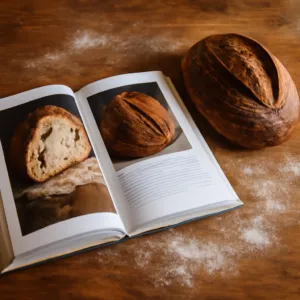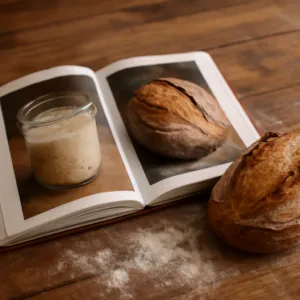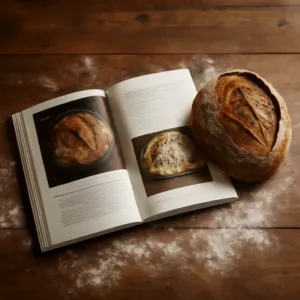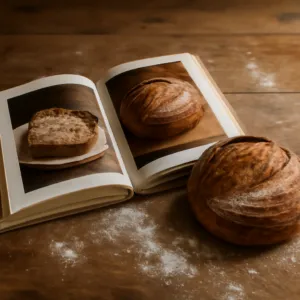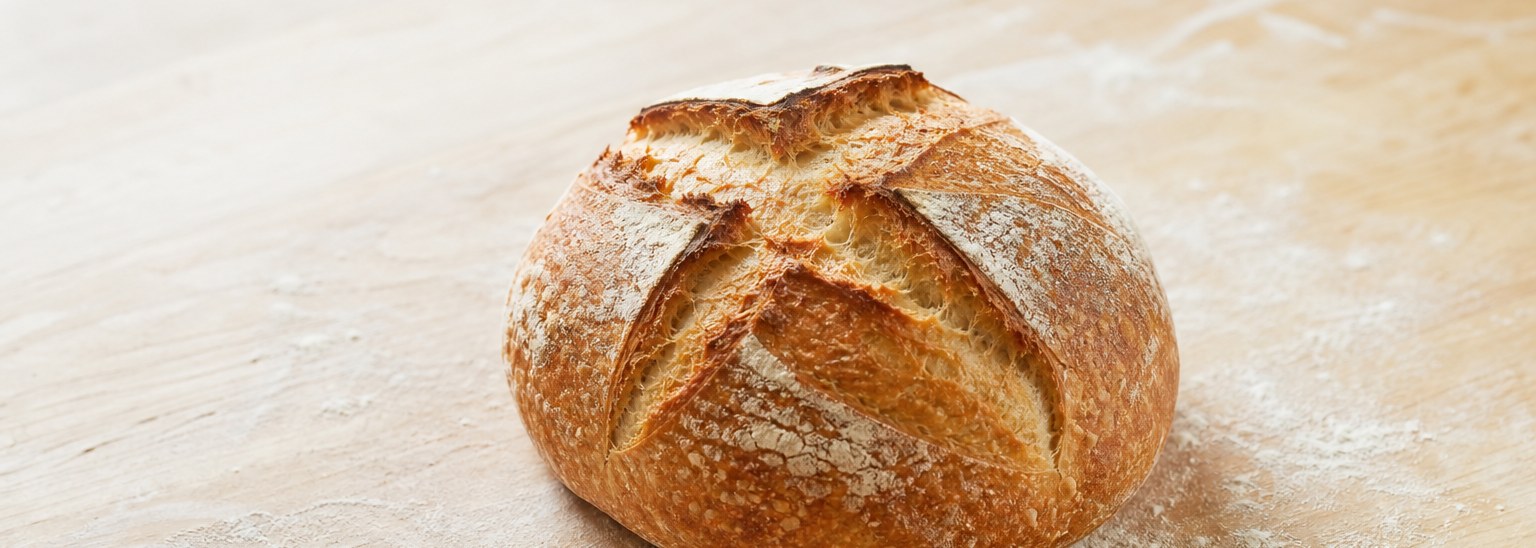
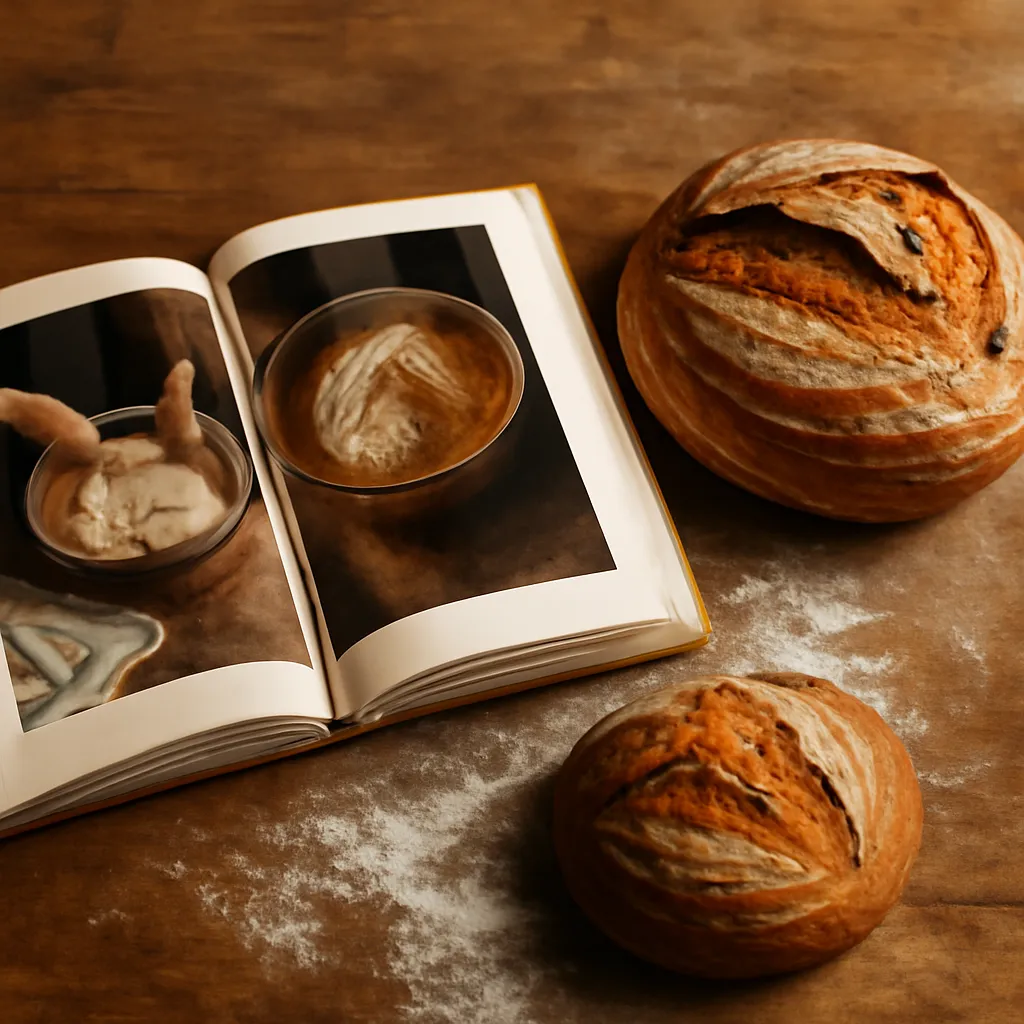
There’s a photo sitting on my counter right now: a crumb shot from a recent bake next to a flatter, tighter loaf from years back, and side by side they tell the whole story of how far eleven years behind a mixing bowl (plus three years running a small home bakery) have actually taken me. I’ve cycled through cookbooks, chased down techniques, and tested more sourdough recipes off the internet than I can count, some landing in the regular rotation, others teaching me exactly what not to repeat.
“The Bread Baker’s Apprentice, 15th Anniversary Edition: Mastering the Art of Extraordinary Bread” by Peter Reinhart landed on my radar while I was hunting for something that would actually teach me bread fundamentals from the ground up. I figured it was worth laying out my honest take here. The strongest cookbooks aren’t necessarily stacked with the fanciest techniques — they’re the ones that walk you through the basics with warmth and patience.
So I made this book a full feature on the blog. I’ve spent a good stretch working through it, baking recipe after recipe, noting what performed well and what fell flat. What follows is part book review, part recipe review, and part personal baking log, and my hope is it sparks some real conversation around sourdough and the cookbooks we all lean on.
What This Cookbook Really Delivers
Here’s the short version up front: this ranks among the most well-crafted bread baking books on the market. It has staying power — the 15th anniversary edition tacks on 3 new master recipes to the roughly 50 already in circulation — and it’s earned a loyal following. Owners of the original might not strictly need the newer printing, but the extra 3 master recipes and the sizable new sourdough (wild-yeast starter) section make a solid case for it.
One reviewer put it this way: “Simply one of the best written bread baking books out there. It’s time tested (I ordered the 15th anniversary edition) and approved by hordes of fans. The sourdough section is rather simple, but like the rest of the book it’s well written in a friendly and understanding tone (you don’t ever feel pretentiousness or ‘my way is the only way’).”
That sentiment captures why the book works so well. The tone throughout is warm and patient, the kind that makes you feel like an actual teacher is standing beside you rather than a stranger barking instructions. It’s the teaching method, more than any single recipe, that gives this book its edge. Reinhart clearly writes as both a genuine baking nerd and a natural instructor — not one or the other, but both at once — and that combination is exactly why I keep coming back to it.
Recipes I Put To The Test (With My Honest Reactions)
I’ve made my way steadily through this cookbook, and I want to lay out how each recipe actually performed for me. I’m not going to rehash Reinhart’s ingredient “secrets” here — it doesn’t sit right with me, and honestly it’s beside the point of this review. Instead I’ll weave the recipes into the discussion and tell you plainly what worked in my kitchen.
The book packs in 50-plus recipes (with 3 additional master recipes courtesy of the 15th anniversary edition) plus a full sourdough section. Every recipe carries Reinhart’s personal fingerprints, often with side notes on how to tweak things to your liking.
Bagels
The New York Classic: Reinhart’s bagel formula gets praised for good reason — it tastes authentic. Boiling the bagels before they hit the oven is the trick behind that dense, chewy interior wrapped in a crackly crust.
My Verdict: Genuinely excellent bagels. High-gluten flour is doing a lot of the heavy lifting for that chew, and the finished product tastes remarkably close to the real New York deal. The method is straightforward, and the payoff proves it.
Pro Tip: Play around with shaping and toppings — the base recipe flexes easily into all kinds of bagel styles without losing that signature texture.
Pain à l’Ancienne
The Delayed Fermentation: This one leans on a slow, delayed fermentation approach, yielding bread with layered flavor and a wide-open crumb. It’s a technique worth taking the time to learn.
My Verdict: Wildly flexible dough — I’ve turned it into baguettes and even pizza crust. It takes patience, but the payoff earns every bit of that wait, with a flavor depth you simply won’t find in a fast-rise loaf.
What I Learned: Delayed fermentation changed how I think about bread entirely. It coaxes out flavors that no quick-rise shortcut can replicate, and it reshaped my whole approach to timing dough.
Focaccia
The Italian Flatbread: Reinhart’s focaccia leans on a poolish (a pre-ferment) for its depth of flavor, and that choice sets it apart.
My Verdict: A guaranteed crowd favorite. The poolish brings real depth, and the dough takes toppings beautifully. I’ve turned it into sandwich bread more than once, and it disappears every time.
My Recommendation: Don’t you dare skip the poolish stage — it’s the whole reason this focaccia stands out, and the extra hours are worth the flavor payoff.
Ciabatta
The Italian Classic: This loaf is defined by its open, irregular crumb and rustic look — ideal for sandwiches or for soaking up olive oil and sauce.
My Verdict: It delivers on the promise — a true ciabatta with those big, uneven holes and rough-hewn crust. The instructions are easy to follow, and the results land consistently well.
Pro Tip: Getting those big holes comes down to how gently you handle the dough. Stick closely to Reinhart’s folding and final-proof instructions here.
Light Wheat Bread
The Perfect Sandwich Loaf: A blend of bread flour and whole wheat flour gives this loaf a texture that’s hearty yet still soft.
My Verdict: This is the recipe I reach for most often. It’s uncomplicated and adaptable, and everyone in my house asks for it. Beginners can jump right in, but it’s satisfying enough that experienced bakers won’t feel shortchanged either.
What I Learned: Blending flours like this taught me a lot about balancing texture and flavor. It’s now a fixture in our kitchen for everything from toast to sandwiches.
Marbled Rye Bread
The Visual Stunner: This showpiece bread swirls light and dark rye doughs together, layering in a complex flavor along the way.
My Verdict: As good to look at as it is to eat. The instructions for combining the two rye doughs are laid out clearly, and the outcome genuinely impresses. It’s the recipe I turn to when I want the bread itself to be the centerpiece.
My Recommendation: Try different pan sizes and hydration ratios to dial in the crumb and look you want — the marbled swirl is genuinely striking and adds real visual punch.
Anadama Bread
The New England Classic: This old-fashioned loaf mixes in cornmeal and molasses, landing on a hearty texture with a whisper of sweetness.
My Verdict: Distinctive and satisfying — the cornmeal-and-molasses combo creates a flavor you won’t find in a standard loaf. Great pick when you want something a little off the beaten path.
Pro Tip: The molasses lends a mellow sweetness that pairs perfectly with the cornmeal’s grit. Feel free to test out different cornmeal varieties until you find your favorite.
Cinnamon Buns and Sticky Buns
The Sweet Treat: These spiced, sugary rolls make a great breakfast or dessert option.
My Verdict: Genuinely delicious buns. The instructions are well laid out and the results come out right every time — a solid pick whenever you’re craving something indulgent.
My Recommendation: Make the sticky bun version — it takes a little extra effort, but the caramelized topping pushes these over the top.
Sourdough Bread and Variations
The Wild Yeast Guide: The 15th anniversary edition tacks on a substantial new section covering sourdough (wild-yeast starters). It’s a fairly basic treatment, but it carries the same friendly, patient tone as the rest of the book.
My Verdict: Don’t expect fireworks from the sourdough chapter, but it works fine as a refresher. I wouldn’t buy this book for that section alone, though it rounds out the collection nicely.
What I Learned: The technique section offers Reinhart’s tested, professional-grade methods, while still acknowledging — and sometimes flagging outright — that other approaches exist too. That open-mindedness adds real value to the book.
The Reason This Book Rises Above The Rest
What separates “The Bread Baker’s Apprentice” from the pack is its dedication to teaching fundamentals in a tone that’s friendly and never condescending. The writing is clear, the pacing is easy to follow, and the whole thing is aimed squarely at home bakers, with the understanding that you’re often working without pro-grade gear (not everyone owns a cloche or Dutch oven).
There’s also a generous helping of photos showing exactly what your dough or crumb should look like at each stage. Reinhart’s personal touch shows up in nearly every recipe, often through notes on how to adapt things. It reads less like a rulebook and more like advice from a mentor standing over your shoulder.
Above all, what this book teaches you outlasts any single recipe inside it. Grasping the 12 steps of baking, and how they shift depending on the bread, is what turns you from someone who follows instructions into someone who actually understands what they’re doing.
Who This Book Is Actually Right For
Just Starting Out (Little to No Baking Experience)
Perfect For: If you’ve got barely any experience but plenty of enthusiasm, this book lays down the fundamentals of solid baking in digestible, repeatable steps that apply across every recipe you’ll ever bake. That foundation is exactly what lets you stop leaning so hard on recipe cards and start adjusting on the fly based on what your dough is telling you.
My Verdict: This book genuinely reshaped how I bake. In under six months it moved me from someone who followed recipes step-by-step to someone capable of building bread from learned instinct and technique.
Bakers With Some Miles Under Their Belt
Perfect For: With a bit of experience already in your back pocket, you’ll squeeze the most value out of this book. The recipes might not knock your socks off if you’ve been at this a while, but every one of them is dependable and tasty.
My Verdict: The teaching approach is really what sells this book for me. If you’ve hit a plateau or felt fuzzy on the why behind certain techniques, this fills in those gaps well.
My Recommendation: It’ll sharpen how you combine techniques you’ve already picked up elsewhere, and deepen your grasp of recipes generally. Consider it a launching pad toward expert-level baking.
Seasoned, Highly Experienced Bakers
Perfect For: If you’ve been baking for years, don’t expect this book to blow the doors off — but it can still hand you a few tricks you hadn’t come across yet.
My Verdict: Reinhart consistently tucks in notes about how to modify recipes, which is genuinely useful. The technique section shows off tested, professional-level methods, all while acknowledging that other valid approaches exist out there too.
My Recommendation: The recipes hold up well — tasty and reliable, even if a veteran baker already has go-to formulas elsewhere. The sourdough section isn’t groundbreaking, but it’s a decent refresher to have on hand.
Wrapping It Up
This book has earned a permanent spot in my kitchen. Pairing its recipes and techniques with everything else I’ve read has helped my baking knowledge grow by leaps and bounds.
The tone throughout stays friendly and patient, like learning from someone who genuinely loves this craft. There’s no whiff of arrogance or “my method is the only method” anywhere in these pages, which makes the whole thing far more approachable.
Whether you’re brand new and chasing the basics, somewhere in the middle and hunting for the why behind the how, or a seasoned baker after a few fresh tricks, there’s something here worth your time.
The bottom line? This book teaches solid baking fundamentals in a way that’s approachable, thorough, and genuinely friendly. It’s the kind of resource that turns recipe-followers into knowledgeable bakers capable of building their own variations from what they’ve learned.
Why This Ended Up My Go-To Reference, Not Just A One-Time Read
After years of bouncing between online recipes and hitting inconsistent, frustrating results, what I needed was a book that explained the *why* behind sourdough, not just another list of steps. The Bread Baker’s Apprentice does exactly that — it connects gut instinct to actual technique, and it’s the first resource that made my past failures finally make sense.
Where it delivers
- The formulas rely on baker’s percentages and break down hydration in a way that finally stopped me from randomly splashing in water — I started actually reading how the dough behaved mid-mix instead.
- Reinhart’s troubleshooting notes tackle the real problems I’ve run into — dense crumb, flat oven spring, dough spreading out instead of up — rather than just showcasing perfect bakes.
- The starter and levain chapters gave me the courage to start over after I accidentally killed my first culture, and actually explained why timing matters instead of just repeating “feed it twice daily.”
Where it falls short
- It’s a dense, technical read — not the kind of book you flip through like an Instagram post. You have to actually sit and dig in, which can feel like a lot when all you want is a simple formula.
- A number of the recipes start from commercial yeast, so strict sourdough purists will need to adapt them rather than bake them as written.
I doubted whether a “classic” bread book could really help me improve until I actually worked through a Reinhart formula and understood why my shaping had been too aggressive all along.
Frequently Asked Questions
Does The Bread Baker’s Apprentice have a sourdough section?
Yes. The 15th Anniversary Edition includes a substantial new sourdough section covering wild-yeast starters. It’s a fairly basic treatment but carries the same friendly, patient tone as the rest of the book. Sam found it works fine as a refresher, though he wouldn’t buy the book for that section alone.
Which Bread Baker’s Apprentice recipe does Sam bake most often?
Sam reaches most often for the Light Wheat Bread recipe. It’s uncomplicated and adaptable, blending bread flour and whole wheat flour for hearty yet soft texture. Everyone in his household asks for it, and he uses it for everything from toast to sandwiches.
What does The Bread Baker’s Apprentice teach about bread fundamentals?
The book teaches the 12 steps of baking and how they shift depending on the bread type. This foundation turns recipe-followers into knowledgeable bakers capable of adjusting on the fly based on what their dough tells them, rather than just following instructions mechanically.
About This Article

Written by Sam Whitaker. Sam Whitaker has been baking sourdough for over a decade, including three years baking commercially, and now works out of a home kitchen in the Pacific Northwest. Sam's eleven-year-old starter, Harold, is the foundation for every recipe and troubleshooting guide on Sourdough Rising — real bread tested over and over until it works. More about this site.
Scope and limits. Sam is a home baker with no formal culinary training. Follow current food safety guidance for storage and handling, particularly with enriched or filled doughs.
Verify this against a primary source
Specifics change, and your situation may differ from the one described here. These are the authorities worth checking directly:
- USDA FoodData Central — flour and ingredient composition data
- FoodSafety.gov — safe handling and storage