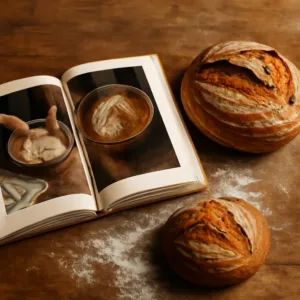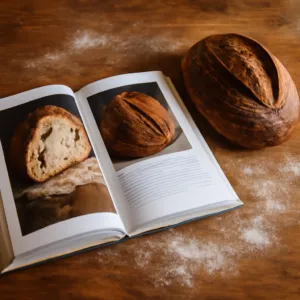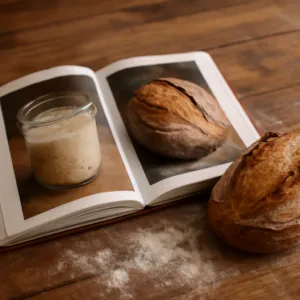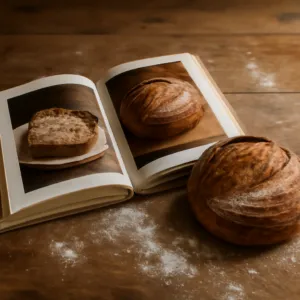
68% hydration used to intimidate me — that’s the number attached to my first real attempt at an open-crumb loaf, and it’s what pushed me past guesswork into actual technique over the years that followed. I’ve spent that time hunting through cookbooks, testing methods in my own kitchen with whatever gear I owned, and chasing both classic loaves and odd experiments along the way.
“Flour Water Salt Yeast: The Fundamentals of Artisan Bread and Pizza” by Ken Forkish landed on my radar at exactly the right moment. I’d been hunting for something that would actually explain the mechanics of artisan bread instead of just handing me another recipe, and this book fit the bill. So here’s my genuine take on it. A stacked recipe count doesn’t make a cookbook worth owning — what matters is whether it hands you a real foundation and the skill set to finally bake the loaf you’ve been chasing.
I figured this book deserved its own space on the blog, separate from my usual posts. I’ve spent real time cooking through it, running the recipes, noting what clicked and what fell flat. What follows is my unfiltered reaction. Think of it as part book review, part recipe log, part personal baking diary. My hope is it sparks some good discussion around sourdough books and methods.
What This Cookbook Actually Delivers
Here’s the bottom line up front: this is a book about fundamentals, plain and simple, and it holds up its end of the bargain. If you’ve spent hours combing recipe sites and baking forums trying to crack the code on a crackly, thick crust paired with an airy, open crumb — and kept coming up short — this is the book that closes that gap.
Here’s how one reader put it: “I had been trying to make good artisan bread on my own by scouring blogs and websites for techniques and recipes, but nothing I found yielded the thick, crunchy, crusts and light, spongy crumbs that I was seeking to produce. That is until I found this book. I decided that combing through endless articles and the blog posts of amateurs and hobbyists was not going to cut it. So, I jumped on the Kindle store and began my search for the book that would give me the skills and knowledge I needed to bake the bread I dreamed about.”
And that’s really the heart of why this book works so well. It comes from someone who trained as a professional baker, studied under some of the biggest names in the craft, and eventually launched his own bakery. Reading it feels like having that person guide you personally through each chapter, breaking down the core skills that reshape how you bake bread.
Between time spent reading this cookbook and hours logged at my own counter, I’ve landed on bread that actually matches what I set out to make. Without hesitation, I’d point anyone toward this book if they want a real starting point for baking excellent bread and pizza. I recognize this isn’t the usual format for a blog post here, and honestly I’m not entirely sure how it’ll land with readers. But that’s part of what makes cookbooks and baking fun — you jump in without knowing exactly where you’ll end up. Maybe this resonates with some of you. If it doesn’t, hopefully it’s at least a nice break from the usual sourdough content you read here.
Working Through the Recipes: My Real Impressions
I’ve been steadily cooking my way through this book, and I want to lay out how each type of recipe actually performed for me. I’m not going to rehash Forkish’s specific ingredient philosophy point-by-point — that’s not my place, and honestly it’s beside the point for this kind of review. Instead, I’ll fold my thoughts on the recipes into the discussion as I go, sharing what actually worked in my kitchen.
The book breaks down into four main categories: Straight Doughs, Doughs with Preferments, Hybrid Levain Doughs, and Pure Levain Doughs. Every recipe has its own personality and its own time demands, so check your schedule before diving into any given one.
King Arthur 100% Organic Bread Flour
The Foundation: This is the starting line for everything else in the book. Instructions here are straightforward — ingredients and process laid out plainly, no fuss.
My Verdict: I’ve worked through close to half the recipes in this section, and even with my technique still rough around the edges, most turned out looking and tasting great. These straight dough builds are an excellent entry point, and a few have become regulars in my rotation.
What I Learned: Forkish pushes you toward weighing ingredients rather than measuring by volume, though cup and spoon equivalents are included too. That flexibility makes the book a lot friendlier for home kitchens without a scale mindset already in place.
King Arthur 100% Organic Bread Flour
Leveling Up: After you’ve got the straight doughs down, this section brings preferments into the mix — a step that layers in extra flavor and complexity.
My Verdict: This is where the difficulty ticks up a notch. Explanations stay just as clear, but the payoff in flavor is noticeably bigger. Preferments bring a depth that straight doughs simply can’t reach on their own.
Pro Tip: Map out your timing beforehand. These recipes vary a lot in how long they take, so double-check your schedule lines up with what a given recipe demands.
King Arthur 100% Organic Bread Flour
The Best of Both Worlds: This section blends commercial yeast with a levain, which gets you the dependability of yeast alongside genuine sourdough flavor.
My Verdict: This might be my favorite category in the whole book. Easier to execute than pure levain recipes, yet still packed with sourdough character. The methods are approachable and the outcomes are reliably solid.
What I Learned: Forkish walks through exactly what a levain is and how to build and keep one alive. Grasping this concept is key to nailing these recipes.
King Arthur 100% Organic Bread Flour
The Ultimate Challenge: This section relies entirely on levain for rise — no shortcuts. It’s the toughest category, but also the most satisfying.
My Verdict: These demand the most patience and skill of anything in the book, but the payoff justifies it. The crackly crust and airy crumb I’d been chasing finally showed up here. Once these boules start coming out of the oven, store-bought bread stops showing up in our house.
My Recommendation: Do not skip the chapter on building and maintaining a levain. It’s foundational knowledge you need before these recipes will click.
Focaccia
The Versatile Bread: The focaccia chapter hands you recipes built for sharing and for playing around with different flavor combos.
My Verdict: Straightforward to follow, with results that punch above their weight. Great option any time you want something other than a standard loaf.
What I Learned: Shaping and folding focaccia isn’t like handling a regular loaf, and the book’s step-by-step photos make the technique easy to pick up correctly.
Pizza
The Crowd Pleaser: The pizza chapter covers sauce recipes plus a quick primer on shaping the dough itself.
My Verdict: I worked up the nerve to test one of the pizza recipes on my aunt, a self-declared foodie, and she ranked it above pizza she’d eaten in Italy. I bring these loaves to family gatherings and never carry any home. A recent bake sale batch sold out in about the time it takes to blink.
My Recommendation: Skip the sauce recipes at your own risk — they’re simple, but they make a real difference in getting genuinely great pizza out of your home oven.
What Sets This One Apart
What makes “Flour Water Salt Yeast” different is its focus on fundamentals over flash. Forkish briefly recounts his own path — leaving a Silicon Valley career, training in baking, and eventually opening his own bakery in Portland, Oregon. He studied under several well-known bakers along the way, and this book is his method of handing that knowledge forward.
The structure is tidy and logical: Straight Doughs, Doughs with Preferments, Hybrid Levain Doughs, and Pure Levain Doughs, in that order. That progression lets you build skill gradually, moving from basic to advanced without getting overwhelmed.
Photos appear throughout the book, giving you a visual checkpoint for how your dough should look at each stage. Forkish has also uploaded a handful of videos to his bakery’s site, kensartisan.com, for anyone who wants extra clarification.
Above all, the fundamentals in this book extend well past its own recipe list. Once you’ve internalized straight doughs, preferments, and levains, you’re equipped to build your own variations from scratch.
Wrapping It Up
This book has earned a permanent spot in my kitchen. Between the hours spent reading it and the hours spent baking from it, I’m now producing the kind of bread I set out to make in the first place. If you want one book to launch you into serious bread and pizza baking, without hesitation, this is it.
Does it cover absolutely everything on the subject? No. But it nails the basics, and from that base you can branch out in any direction. The fundamentals here will keep paying off long after you’ve finished the book.
If endless blog scrolling has left you without the crackly crust and open crumb you’ve been after, this book fills that gap. The layout is clean, the recipes are approachable, and the results back it all up.
If I managed it, you will too.
| Recipe Category | Difficulty | Flavor Depth | Key Feature |
|---|---|---|---|
| Straight Doughs | Entry point | Basic | Straightforward instructions |
| Doughs with Preferments | Moderate | Layered complexity | Extra flavor vs. straight doughs |
| Hybrid Levain Doughs | Moderate | Sourdough character | Commercial yeast + levain |
| Pure Levain Doughs | Most challenging | Deepest | Levain only, no shortcuts |
The Cookbook That Ended My Guesswork Phase
Ken Forkish’s *Flour Water Salt Yeast* stands out because it explains the *reasoning* behind sourdough steps, not just the steps themselves. Years of chasing scattered blog recipes had left me with wildly inconsistent bread, and what I actually needed was a real foundation — which this book supplied.
Where it shines
- Recipes are given in baker’s percentages, so you can scale a formula and actually understand the math instead of just doubling numbers blindly.
- Forkish breaks down temperature, timing, and hydration clearly enough that my starter finally became predictable instead of a black box.
- Step-by-step dough photos — including the windowpane test and final shaping stage — gave me a real benchmark instead of leaving me to guess.
Where it falls short
- Bulk fermentation windows of 4–6 hours (sometimes longer) are treated as standard, with no fast-track option built in for anyone short on patience.
- If sourdough is your main focus, the pizza dough chapters may feel like extra content you’re paying for but won’t use much.
I was skeptical at first that a cookbook could actually fix my scattered technique—I’d killed a starter, burned a loaf in a too-hot oven, and spread flat dough more times than I’d like to admit. But within a few bakes using Forkish’s method, my loaves stopped being an accident.
Frequently Asked Questions
What hydration percentage did Sam first attempt?
Sam’s first real attempt at an open-crumb loaf used 68% hydration, a number that initially intimidated him but eventually pushed him to develop actual technique over the years that followed.
How old is Harold Sam’s sourdough starter?
Harold is eleven years old. Sam has been using this starter while working through recipes in “Flour Water Salt Yeast” and baking various breads in his home kitchen.
What bulk fermentation windows does Forkish use?
According to Sam’s review, “Flour Water Salt Yeast” treats bulk fermentation windows of 4–6 hours as standard, sometimes longer. Sam notes there’s no fast-track option built in for anyone short on patience.
What flour does Sam use for baking?
Sam bakes with King Arthur 100% Organic Bread Flour. He mentions this as the flour he uses and recommends it for working through the recipes in “Flour Water Salt Yeast.”
About This Article

Written by Sam Whitaker. Sam Whitaker has been baking sourdough for over a decade, including three years baking commercially, and now works out of a home kitchen in the Pacific Northwest. Sam's eleven-year-old starter, Harold, is the foundation for every recipe and troubleshooting guide on Sourdough Rising — real bread tested over and over until it works. More about this site.
Scope and limits. Sam is a home baker with no formal culinary training. Follow current food safety guidance for storage and handling, particularly with enriched or filled doughs.
Verify this against a primary source
Specifics change, and your situation may differ from the one described here. These are the authorities worth checking directly:
- USDA FoodData Central — flour and ingredient composition data
- FoodSafety.gov — safe handling and storage