Sourdough bread does not hand your gut a dose of living probiotics — the oven wipes out nearly all of that bacterial activity before the crust even cools. I know that runs against everything the wellness corners of the internet love to repeat, and I believed it too, right up until my sister-in-law casually mentioned over coffee that her stomach troubles had “basically disappeared” since she started eating my loaves. I nearly choked mid-sip. Not from embarrassment, exactly — more from realizing that after eleven years of handing bread to people, I couldn’t actually explain the mechanism behind sourdough bread and gut health. I’d just been assuming it worked.
That one sentence sent me down a three-week research spiral, buried in more peer-reviewed papers than I’d ever admit to for someone who usually measures success in oven spring. What I found was humbling, occasionally surprising, and ultimately made me bake with sharper intention. Here’s the plain-language version — no jargon, no overselling — from someone who’s been fermenting dough far longer than she’s been reading studies about what that fermentation actually does to it.
How One Offhand Comment Sent Me Digging Through the Science
Let me back up and give you the full picture. My sister-in-law Sarah brought it up casually at Sunday dinner — a few weeks of eating my sourdough, she said, and her digestion had noticeably settled down. No dramatic health claims, no request for medical guidance, just a passing observation, the kind you’d toss out about switching laundry detergent. Still, it landed on me like a gut-punch of imposter syndrome.
Here’s the awkward part: eleven years into sourdough, including a solid few-year run cranking out six to eight loaves nearly every weekend for a rotating crowd of neighbors and friends, I knew this dough intimately. Ask me the hydration of my starter on any random Tuesday and I could tell you without hesitation. But the moment someone credited my bread with real health improvements, I realized I’d been coasting on a lazy equation — “fermented equals gut-healthy” — without ever actually confirming it held up.
So I mumbled something baker-adjacent about “the long ferment doing the work,” then spent the following three weeks chasing down everything credible I could find on sourdough bread and gut health — nutritionists, gastroenterologists, fermentation scientists, the whole spread. I wanted a real answer: had I been quietly helping people, or just riding a lucky streak?
What the Studies Actually Say About Sourdough and Digestion
Good news first — this isn’t baseless. Better news — the actual science is far more layered and far more honest than most sourdough content online lets on.
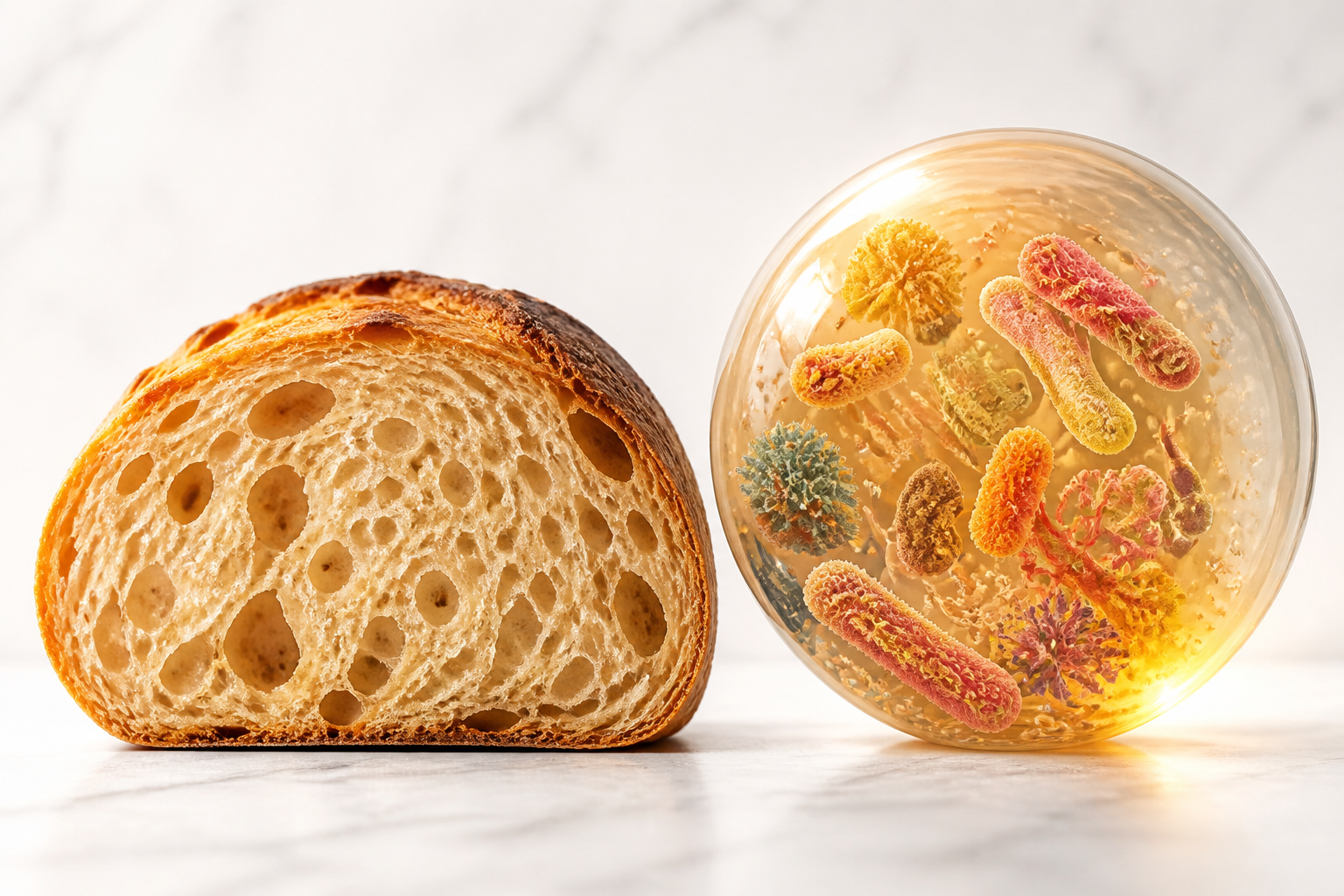
Start with what’s literally happening during fermentation. Bulk ferment your dough for twelve to eighteen hours, or longer as I frequently do, and you’re building an active colony where wild yeast and lactic acid bacteria go to work. Those organisms feed on the starches and proteins in your flour, dismantling them into simpler, easier-to-process compounds. That part isn’t theory — it’s measurable chemistry.
The research does back up one thing clearly: bread fermented long and slow digests more easily than a loaf made with commercial yeast, for three concrete reasons. One, fermentation partially dismantles the gluten structure, softening its impact on your gut. Two, it substantially cuts phytic acid — the compound in grain that otherwise blocks mineral absorption. Three, the finished loaf carries a lower glycemic index, so it won’t send your blood sugar climbing as sharply.
Here’s the part most people skip over: by the time that loaf hits your plate, it isn’t loaded with live probiotics. Baking temperatures wipe out the majority of the bacteria. So when someone feels better after switching to sourdough, the likely reason is easier digestion and absorption — not a flood of beneficial microbes surviving the oven. It’s a real distinction, and it’s worth being straight about.
There is, however, some evidence pointing toward prebiotic effects — the fermentation byproducts and shifted microbial makeup in the finished bread may help nourish the good bacteria already living in your gut. That’s “encouraging early research,” though, not “miracle cure.” Keep the two separate.
The Real Factor Behind Digestive Benefits — Straight From the Bench
After all that reading, the conclusion surprised me with how unglamorous it was: sourdough’s magic isn’t in the culture itself, it’s in the clock. Fermentation time is the variable that actually decides whether you get these benefits.
A grocery-store loaf labeled “sourdough” but proofed in an hour or two won’t deliver any of this. You need a genuinely slow ferment — eight to twelve hours minimum, longer if you can manage it. Those years of weekend baking marathons — eight, sometimes ten loaves at once for a standing crew of neighbors — taught me exactly why timing matters this much. I wasn’t just producing bread back then; I was tending a living system, and that system needed hours, not minutes, to finish its work.
In practice, that means: an overnight bulk ferment at room temperature, or a cold retard in the fridge running twelve to forty-eight hours — my go-to — gives the microbial community enough runway to actually break down what’s in the flour. Skip that runway and you’ve just made bread that rises slowly, not bread that’s genuinely fermented.
One more honest point: your flour choice shifts the outcome too. Whole grain and heritage varieties ferment differently than refined white flour, largely because they hand the bacteria more minerals to work with. That’s not a marketing angle — it’s basic chemistry.
When Digestibility Matters More Than Flavor Alone
It hit me that my sister-in-law’s remark about her gut wasn’t something I could actually back up with knowledge — meaning I’d been turning out “healthy” sourdough without grasping the fermentation science that makes it digestible in the first place. That blind spot between assumption and actual mechanism is precisely what this book fills in.
Where it delivers
- Breaks down the real mechanics of extended fermentation and exactly how it dismantles gluten and phytic acid — actual biochemistry you can put to use in your next bake, not wellness buzzwords.
- Lays out concrete fermentation timelines and temperature ranges tied to gut health, so you’re no longer eyeballing whether your bulk ferment has actually gone “long enough.”
- Written by someone who’s clearly baked, not just studied nutrition on paper — the recipes are realistic for a home kitchen, not just theoretical.
Where it falls short
- It leans heavy on the science — anyone expecting a breezy, scroll-through read will end up rereading sections just to fully absorb the fermentation details.
- It won’t tell you sourdough cures anything; the book stays honest about what the evidence actually supports, which means you’ll need to tone down some of what you tell friends.
I actually set this book aside halfway through chapter one, overwhelmed by how much I didn’t know — but going back and working through it slowly reshaped my entire understanding of fermentation timing. If you actually want to know whether your loaf is doing what you’re claiming it does, The Sourdough School: The ground-breaking guide to making gut-friendly bread is the one that will give you real answers.
Frequently Asked Questions
Does sourdough bread contain live probiotics after baking?
No. Baking temperatures wipe out the majority of the bacteria, so the finished loaf isn’t loaded with live probiotics. However, fermentation byproducts and the shifted microbial makeup in finished bread may have prebiotic effects that nourish good bacteria already in your gut.
How long should I ferment sourdough for digestibility?
You need a genuinely slow ferment — eight to twelve hours minimum, longer if you can manage it. An overnight bulk ferment at room temperature or a cold retard in the fridge running twelve to forty-eight hours gives the microbial community enough time to break down what’s in the flour.
What does long fermentation actually do to sourdough?
Long fermentation partially dismantles the gluten structure, substantially cuts phytic acid that blocks mineral absorption, and lowers the glycemic index so blood sugar won’t spike as sharply. These changes make the bread digest more easily than loaves made with commercial yeast.
Does a grocery store loaf labeled sourdough have fermentation benefits?
No, not if it’s proofed in an hour or two. A genuinely slow ferment is what delivers digestibility benefits. A grocery-store loaf labeled sourdough but made quickly won’t provide any of these advantages.
About This Article

Written by Sam Whitaker. Sam Whitaker has been baking sourdough for over a decade, including three years baking commercially, and now works out of a home kitchen in the Pacific Northwest. Sam's eleven-year-old starter, Harold, is the foundation for every recipe and troubleshooting guide on Sourdough Rising — real bread tested over and over until it works. More about this site.
Scope and limits. Sam is a home baker with no formal culinary training. Follow current food safety guidance for storage and handling, particularly with enriched or filled doughs.
Verify this against a primary source
Specifics change, and your situation may differ from the one described here. These are the authorities worth checking directly:
- USDA FoodData Central — flour and ingredient composition data
- FoodSafety.gov — safe handling and storage