
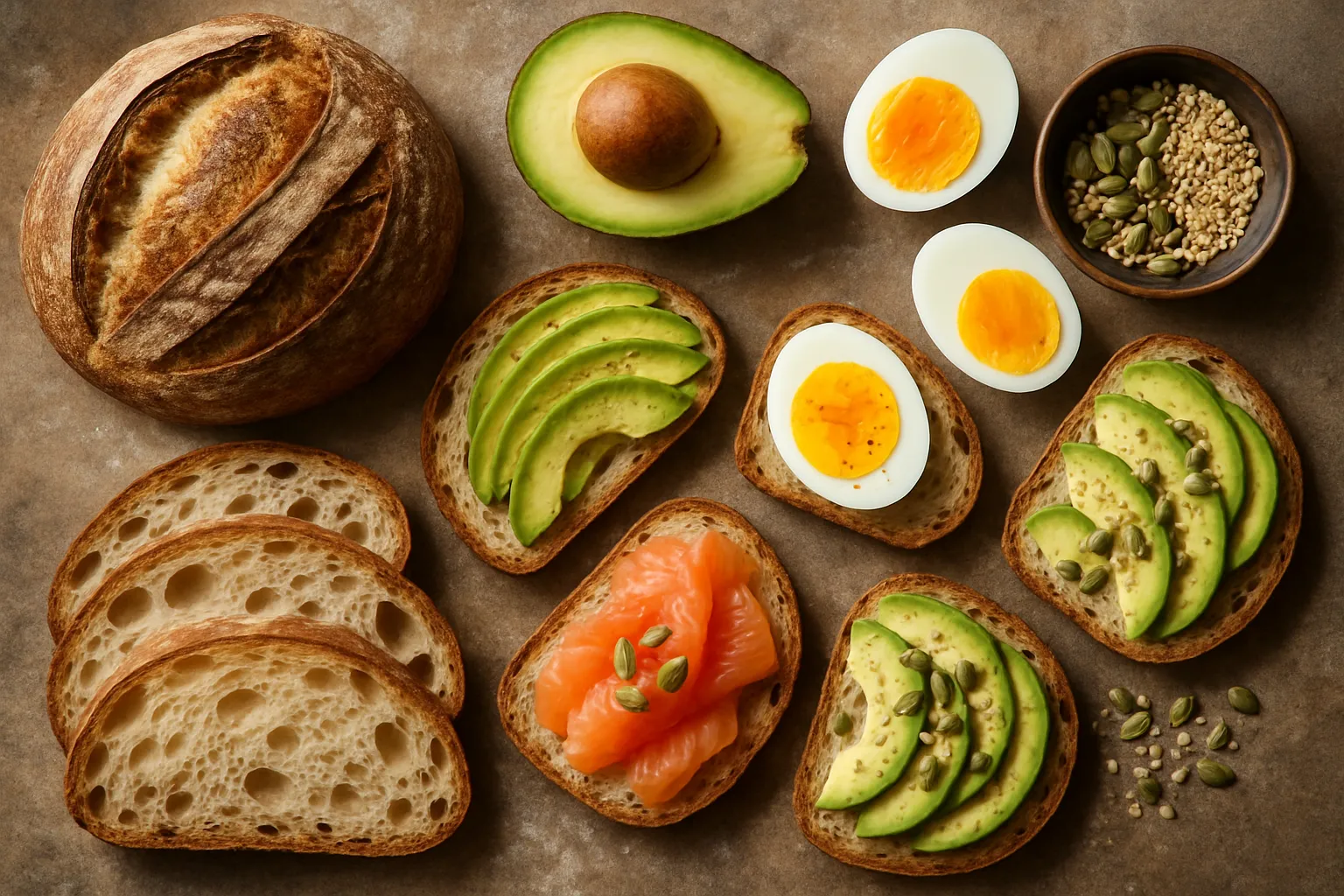
My old Rofco B40 sits on a scarred butcher-block counter under the kitchen window, and it was there, one night with flour still ground into the creases of my knuckles, that sourdough nutritional benefits vitamins minerals stopped being an abstract phrase to me. I’d been reading up on the subject and had to physically close the laptop and just sit with it for a minute. Whatever was bubbling away in my little ceramic crock wasn’t only shaping flavor — it was quietly rewriting the nutritional makeup of every loaf that came out of that oven. Nothing about how I approach baking has been quite the same since.
Sourdough’s Nutritional Payoff Runs Deeper Than Flavor
Plenty of bakers get hooked on sourdough purely for the taste — the tang, the shattering crust, that lacy open crumb. Fair enough. But the nutrition side of the equation is every bit as gripping, and it’s honestly a big part of why this craft still holds my attention after all these years. The slow work of wild yeast and lactic acid bacteria isn’t only there to build flavor. It’s a genuine biochemical shift, one that leaves your bread more nourishing than anything pulled off a factory line.
While your starter’s alive and the dough sits fermenting hour after hour, those microbes are quietly dismantling complex compounds, building new ones, and effectively pre-processing sections of the flour on your behalf. What you end up with is a loaf whose nutrients your body can actually use, a gentler effect on blood sugar, and a marked drop in the compounds that would normally block absorption.
Antinutrients — the Hidden Catch, and Sourdough’s Answer to It
This part caught me off guard back when I first started experimenting with whole grains. I made the jump to whole wheat flour assuming it was an automatic step up nutritionally, and in one sense I was correct — whole grains hold onto far more vitamins and minerals than anything refined. What I hadn’t factored in, though, was phytic acid.
Phytic acid shows up naturally in the bran of grains, and it’s an antinutrient by nature. It latches onto minerals — zinc, iron, magnesium, calcium — locking them into forms your body can’t process. So a whole grain flour can look mineral-rich on a nutrition label and still deliver a fraction of that to you if the phytic acid is left untouched.
This is exactly where sourdough proves its worth. The acidity produced by lactic acid bacteria switches on an enzyme called phytase, and phytase goes to work dismantling phytic acid — in some cases cutting it down by 50 to 90 percent, depending on how long the ferment runs and which flour you’re using. Push the ferment longer, especially with whole grains at cooler temps, and the reduction gets even more dramatic. In practical terms, that means the zinc, iron, and magnesium sitting in your whole grain sourdough loaf are actually available to your body — something a fast-rise commercial loaf simply can’t claim.
Beyond Phytic Acid: What Happens to Lectins and Gluten
Phytic acid gets most of the attention, but it’s not the only thing fermentation tackles. Lectins — proteins known to irritate the gut lining in some people — drop substantially over a long sourdough ferment as well. Meanwhile, proteases are chipping away at the gluten proteins themselves throughout the process, which explains why so many people who react poorly to regular bread do fine with a long-fermented sourdough loaf. It’s still got gluten in it, make no mistake — but structurally, it’s not the same thing at all.
Extra B Vitamins, Sharper Mineral Uptake, and a Gut That Thanks You
Sourdough fermentation doesn’t stop at clearing out the problem compounds — it actively builds up good ones too. Take B vitamins: folate, thiamine, and riboflavin all get produced or boosted along the way. Research has pointed to meaningful jumps in folate content when comparing fermented dough to unfermented dough. If you keep half an eye on your B vitamin intake, that’s a genuinely nice bonus tucked inside an ordinary-looking loaf.
Fermentation also generates short-chain fatty acids — butyrate among them — which happens to be the main fuel the cells lining your colon rely on. Keeping that lining healthy underpins your digestion, your immune system, and how well you absorb nutrients overall. On the days I’m not actively baking, or when my gut could use a little extra backup, I reach for Tesseract Medical Research ProButyrate Gut Health Supplement, which supplies butyric acid in a concentrated, targeted form. It fits neatly alongside a diet that’s already leaning on fermented foods like sourdough.
And on the days I want mineral coverage no matter what’s landed on my plate, I keep a bottle of Pure Encapsulations Trace Minerals nearby. It’s a straightforward, gluten-free, vegan multimineral formula built to support metabolism and cell function — a solid backup to the mineral-dense whole grain sourdoughs already in regular rotation in my kitchen.
Squeezing More Nutrition Out of Every Bake: Hands-On Advice
Understanding the science is one piece of the puzzle. Turning that knowledge into everyday baking habits is a different challenge entirely. Here’s what’s genuinely made a measurable difference in the nutritional quality of my loaves:
- Reach for whole grain flour as often as you can. More bran on hand means more vitamins, minerals, and fiber to begin with — and fermentation is what unlocks them.
- Let fermentation take its time. A cold retard overnight in the fridge hands phytase extra hours to break phytic acid down further. You’ll come out ahead on both nutrition and flavor.
- Give ancient grains a try. Einkorn, spelt, and rye each bring their own gluten structure and nutrient makeup compared to standard modern wheat, and all three respond wonderfully to sourdough fermentation.
- Mill your own flour when you’re able. Freshly milled flour hangs onto volatile nutrients that fade after milling. Even swapping in a portion of fresh-milled flour makes a noticeable dent.
- Don’t neglect your starter’s health. A lively, well-maintained starter carries more active lactic acid bacteria, which translates to stronger fermentation and better nutrient breakdown.
The Book That Finally Stopped Me From Guessing at Sourdough’s Nutritional Payoff
For most of my first year baking sourdough, I was sure I was doing something nutritionally smarter, but I couldn’t back that up with anything more than a vague sense that fermentation is “good for you.” This book handed me the actual mechanics I’d been missing — the real processes behind how a long, slow ferment dismantles antinutrients and frees up minerals your body can genuinely absorb.
Where it delivers
- Breaks down phytic acid reduction with actual numbers, so you finally see why that 48-hour bulk ferment is pulling more weight than you assumed
- Offers whole grain sourdough recipes built around nutrient availability, not just taste — real attention paid to the mineral bioavailability of the finished loaf
- Arms you with real knowledge for talking about sourdough nutrition, instead of parroting half-remembered forum posts
Where it falls short
- The recipe lineup leans heavily whole grain, so if you bake almost exclusively with white flour, a chunk of this material won’t map directly onto your practice
- It reads more like a textbook than a story — dense with science, but it won’t feel like a friend talking you through sourdough step by step
I nearly put it back on the shelf after a rough first chapter, but I’m glad I stuck with it — this was the first time I’d read something treating sourdough nutrition as actual biochemistry rather than wellness-blog hand-waving. Whole Grain Sourdough at Home rewards the patience it demands.
Frequently Asked Questions
How much does sourdough fermentation reduce phytic acid?
Sourdough fermentation can cut phytic acid down by 50 to 90 percent, depending on how long the ferment runs and which flour you’re using. Longer ferments at cooler temperatures produce even more dramatic reductions, which is why a cold retard overnight in the fridge helps unlock minerals like zinc, iron, and magnesium that your body can actually absorb.
Why do people with gluten sensitivity tolerate sourdough better?
During long sourdough fermentation, proteases chip away at gluten proteins throughout the process, structurally changing them. While sourdough still contains gluten, it’s not the same as regular bread. This explains why many people who react poorly to commercial bread do fine with long-fermented sourdough.
What B vitamins are produced during sourdough fermentation?
Sourdough fermentation produces or boosts folate, thiamine, and riboflavin. Research has pointed to meaningful jumps in folate content when comparing fermented dough to unfermented dough, making these nutrients a genuine bonus in every loaf.
How does cold retarding improve sourdough nutrition?
A cold retard overnight in the fridge gives phytase extra hours to break phytic acid down further. This longer fermentation at cooler temperatures produces more dramatic reductions in antinutrients, unlocking minerals your body can absorb while also improving flavor.
About This Article

Written by Sam Whitaker. Sam Whitaker has been baking sourdough for over a decade, including three years baking commercially, and now works out of a home kitchen in the Pacific Northwest. Sam's eleven-year-old starter, Harold, is the foundation for every recipe and troubleshooting guide on Sourdough Rising — real bread tested over and over until it works. More about this site.
Scope and limits. Sam is a home baker with no formal culinary training. Follow current food safety guidance for storage and handling, particularly with enriched or filled doughs.
Verify this against a primary source
Specifics change, and your situation may differ from the one described here. These are the authorities worth checking directly:
- USDA FoodData Central — flour and ingredient composition data
- FoodSafety.gov — safe handling and storage