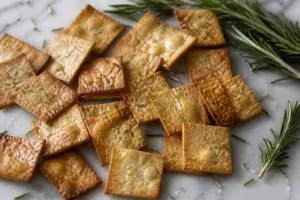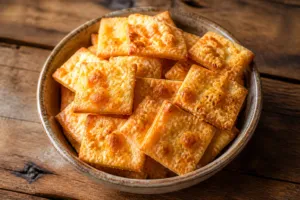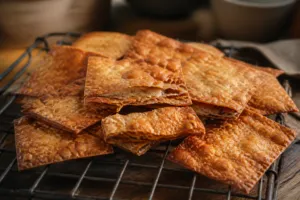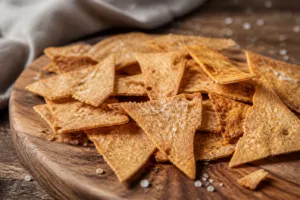
Start From the Base Recipe
Every version below starts from one identical dough: 200g sourdough discard, 120g flour, 40g olive oil, 5g salt. If you haven’t tackled the plain cracker yet, go make that one first so you know how the rolling and baking feels in your hands. Seeds don’t change the method here — they just get layered on top of it.
Seeds go two places: mixed inside the dough, where they add nutty flavor throughout, and scattered on the surface, where they add crunch and eye appeal. The crackers that impress people the most usually get both treatments.
How to Make Seeds Actually Stick
Nothing annoys me more with seeded crackers than watching topping seeds pop right off the second you snap into a finished piece. There are three fixes that solve this every time:
- Give the dough something wet to grip. Brush the rolled-out dough with olive oil, egg wash, or plain water before adding seeds. Seeds slide right off bare, dry dough — moisture is what lets them cling.
- Push them into the surface. Once seeds are scattered on, lay parchment over the top and run your rolling pin across it once, gently. That single pass presses the seeds into the dough itself instead of leaving them perched on top waiting to fall off.
- Match seed size to placement. Tiny seeds — sesame, poppy — blend seamlessly when mixed into the dough. Bigger seeds like pepitas and sunflower belong on the surface, where their crunch and appearance actually show off.
Everything-Bagel Sourdough Crackers
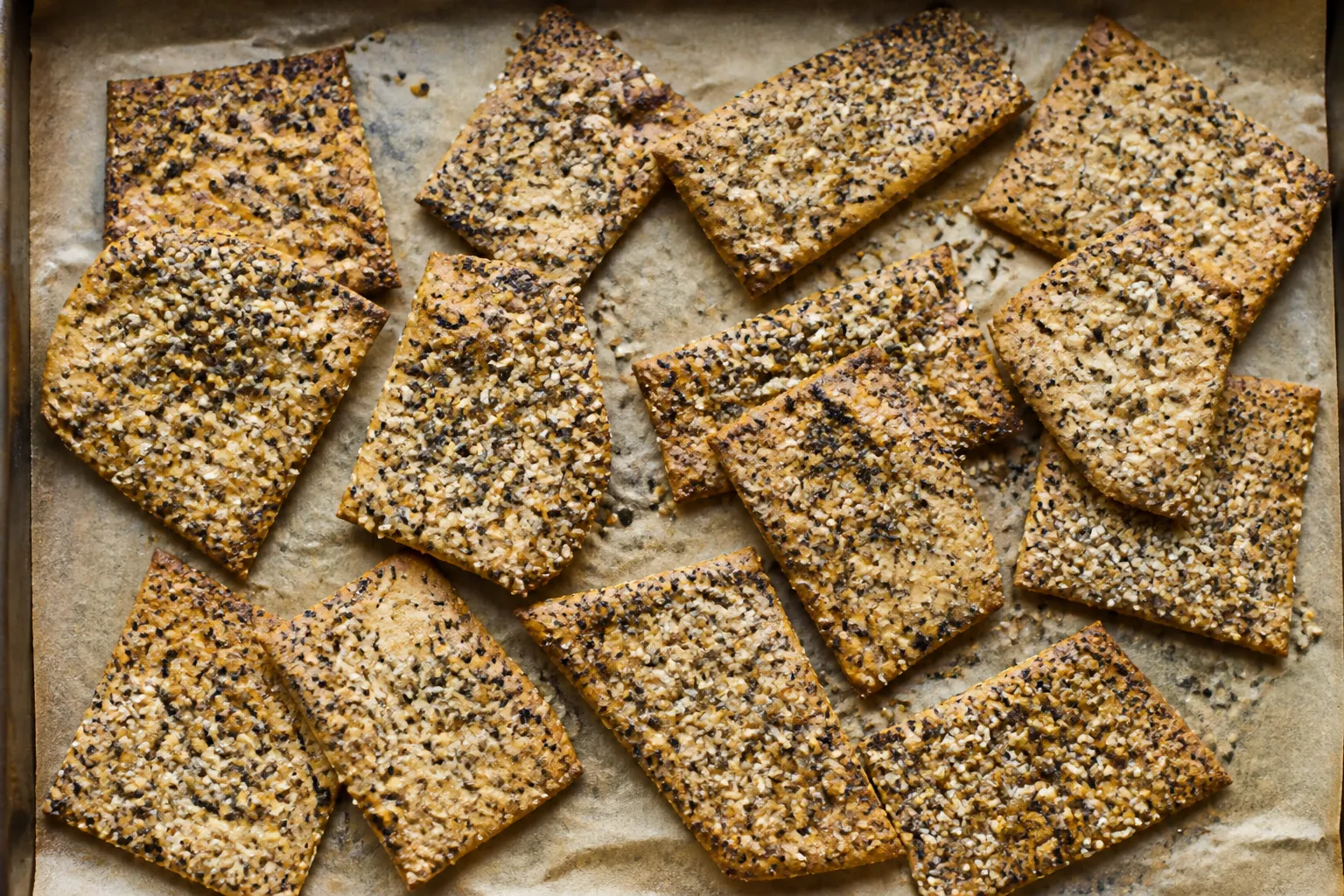
These get requested by name more than any other version I make. Build a tablespoon of everything-bagel seasoning per batch using equal parts white sesame, black sesame, dried minced garlic, dried minced onion, and flaky salt. Fold half of that blend directly into the dough, then press the remaining half onto the surface once it’s been brushed.
Here’s something I learned the hard way: the dried garlic and onion in that mix scorch faster than the dough around them. Drop the oven to 325°F for this one and keep an eye on it — burnt garlic turns sharp and bitter, and it’s enough to sink an otherwise great batch.
Toasted Sesame Crackers
If I had to pick one seed forever, it’d be sesame. To pull the most flavor out of it, toast the seeds in a dry skillet until they turn golden and fragrant before mixing them in — raw sesame works, but toasted takes this cracker somewhere completely different. Fold 30g of toasted sesame into the dough, then press extra onto the top. Adding a few drops of toasted sesame oil alongside the olive oil pushes the flavor further still, landing somewhere near an actual sesame snap.
Flax and the Cracker That Holds Itself Together
Flaxseed does quiet structural work in seeded crackers that most people don’t notice until it’s missing. Once flax hits moisture, it turns gel-like and binds everything together, which means a cracker that’s far less likely to shatter into crumbs. I toss a tablespoon of flax — whole or ground — into nearly every seeded dough I make, even batches where flax isn’t really the point. Whole seeds give you little crunchy flecks throughout; ground flax vanishes into the dough entirely and just tightens up the snap.
Multigrain Seeded Crackers
When I want something substantial enough to double as a meal, I reach for a mixed blend: 15g sesame, 15g sunflower seeds, 10g pepitas, 10g flax, and a tablespoon of rolled oats. Work most of that into the dough and press the rest onto the surface. Substituting whole wheat flour for half the all-purpose flour in the base dough deepens the nutty flavor and plays really well with this particular seed combination.
These hold up under real weight — a slab of hard cheese, a scoop of dip — without cracking apart, which is exactly why they’ve become my default for cheese boards.
A Note on Bake Temperature With Seeds
Seeds — sesame especially, along with garlic and onion — brown and burn well ahead of the dough surrounding them. That’s why I pull my usual 350°F setting down to 325°F for nearly all seeded batches, accepting that they’ll need a few extra minutes in exchange. The gentler heat gives the dough time to crisp all the way through before the seeds on top scorch. Take them out once they’re evenly golden, not darker — they’ll continue firming up as they cool.
Once You Start, You Won’t Stop
Seeds are where the plain base recipe stops being basic and starts being fun. Keep a jar of assorted seeds parked next to your flour bin, and pretty soon you’ll be experimenting on your own — a pinch of fennel one week, caraway the next, maybe nigella seeds when you’re in the mood to show off. The method stays exactly the same throughout; it’s only the seeds that change.
The Rolling Pin That Rolls Seeded Dough Thin Without Pulverizing the Seeds
Getting seeded cracker dough thin and uniform is tricky business — a lightweight pin or a marble slab will either skate uselessly across the surface or crush your seeds flat before they ever get a chance to toast. What you want is a solid wooden pin with enough heft to hold a steady, even thickness without turning your seeds into dust.
Where it earns its keep
- Its weight does the work for you, applying even pressure without forcing you to press down hard — which means your seeds come through the rolling process mostly intact.
- The leverage from the handles lets you roll the dough thin enough for real crispness, without tearing through it or leaving thick, gummy patches behind.
- Wood has more grip than cold marble or stainless steel, so the dough stays put underneath it instead of sliding around while you’re chasing an even thickness.
Where it falls short
- It needs a hand-wash and an immediate dry-off, or it’ll warp on you — not a dealbreaker, but one more chore tacked onto a long baking day.
- When the dough runs too cold or too sticky, the wood can still catch and drag a bit, so you’ll end up flouring your surface as you go.
I nearly gave up on seeded crackers one afternoon when I borrowed a friend’s flimsy silicone pin and couldn’t get the dough thin enough without mangling the seeds, but switching back to my wooden pin solved it immediately. If you’re serious about these crackers, grab a wooden rolling pin.
Frequently Asked Questions
What temperature should I bake seeded sourdough crackers at?
Bake seeded crackers at 325°F, which is 25 degrees below the temperature for plain sourdough crackers. This gentler heat gives the dough time to crisp through before seeds scorch. Seeds brown faster than dough, so the lower temperature prevents them from turning bitter and black.
How do I keep seeds from falling off finished crackers?
Three methods work every time: brush the rolled dough with olive oil, egg wash, or water before adding seeds; press seeds into the surface by laying parchment over them and running your rolling pin across it gently once; and match seed size to placement, using tiny seeds mixed in and bigger seeds on top.
What’s in Sam’s everything-bagel sourdough crackers?
Build a tablespoon of everything-bagel seasoning using equal parts white sesame, black sesame, dried minced garlic, dried minced onion, and flaky salt. Fold half into the dough and press the remaining half onto the brushed surface. Use 325°F to prevent the garlic and onion from scorching and turning bitter.
What does flaxseed do in seeded crackers?
Flaxseed turns gel-like when it hits moisture and binds everything together, creating a cracker far less likely to shatter into crumbs. A tablespoon of whole or ground flax works; whole seeds give crunchy flecks while ground flax vanishes and tightens up the snap.
About This Article

Written by Sam Whitaker. Sam Whitaker has been baking sourdough for over a decade, including three years baking commercially, and now works out of a home kitchen in the Pacific Northwest. Sam's eleven-year-old starter, Harold, is the foundation for every recipe and troubleshooting guide on Sourdough Rising — real bread tested over and over until it works. More about this site.
Scope and limits. Sam is a home baker with no formal culinary training. Follow current food safety guidance for storage and handling, particularly with enriched or filled doughs.
Verify this against a primary source
Specifics change, and your situation may differ from the one described here. These are the authorities worth checking directly:
- USDA FoodData Central — flour and ingredient composition data
- FoodSafety.gov — safe handling and storage