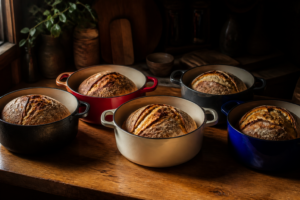
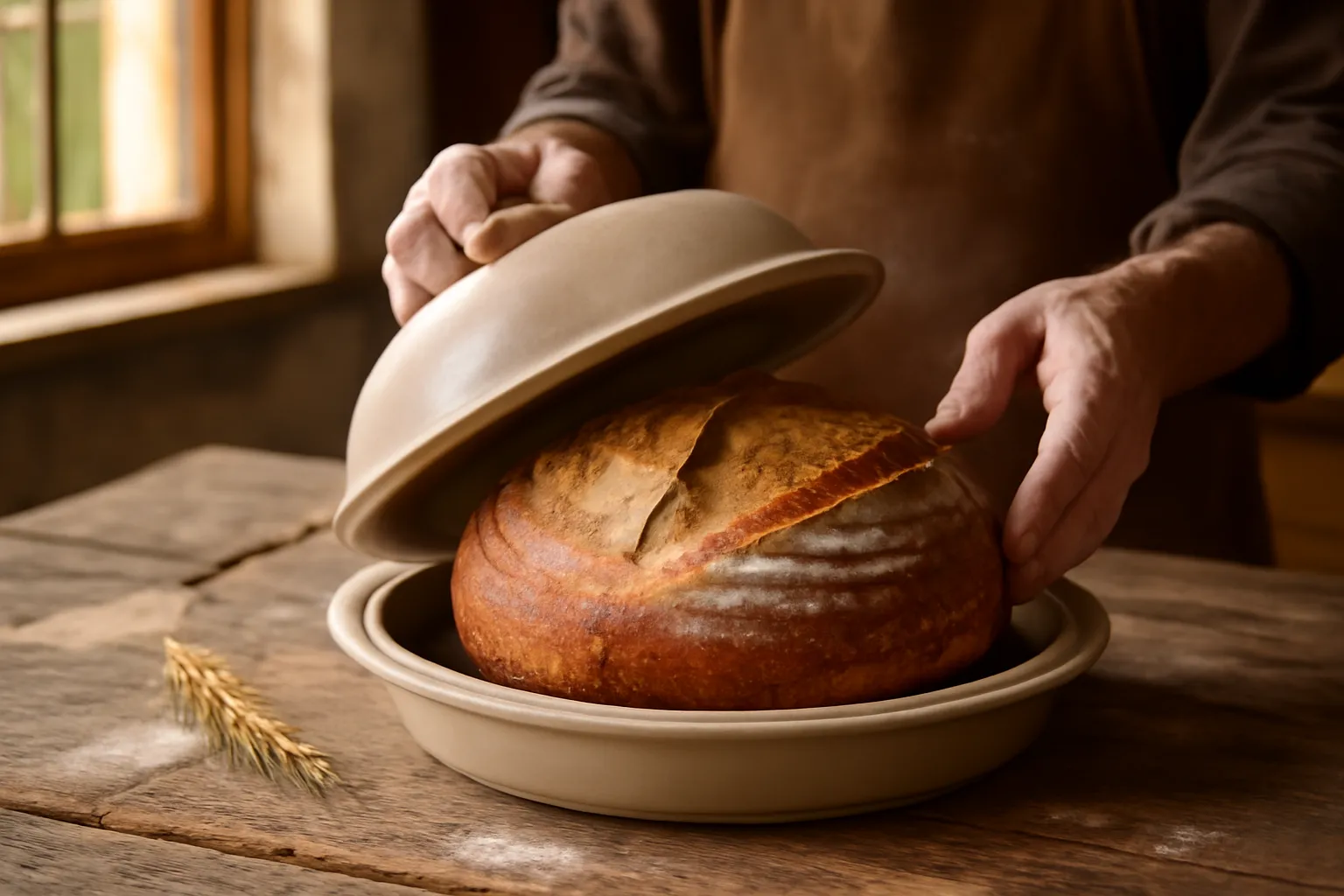
Here’s the claim I’d have laughed at three years ago: your Dutch oven isn’t actually giving you the best sourdough it could. I baked exclusively in a 5-quart cast iron pot for three straight years, and by most measures it was fine — the crust held up, the crumb opened nicely, and I had convinced myself there was nothing left to chase. Then a pattern started nagging at me: loaf after loaf was spreading outward instead of climbing. It wasn’t my dough — that was solid — and it wasn’t my timing, which was dialed in from years of practice. The oven spring itself was just erratic. Chasing down that mystery is what pushed me into this Emile Henry bread cloche sourdough review, and looking back, I only regret not testing one years earlier.
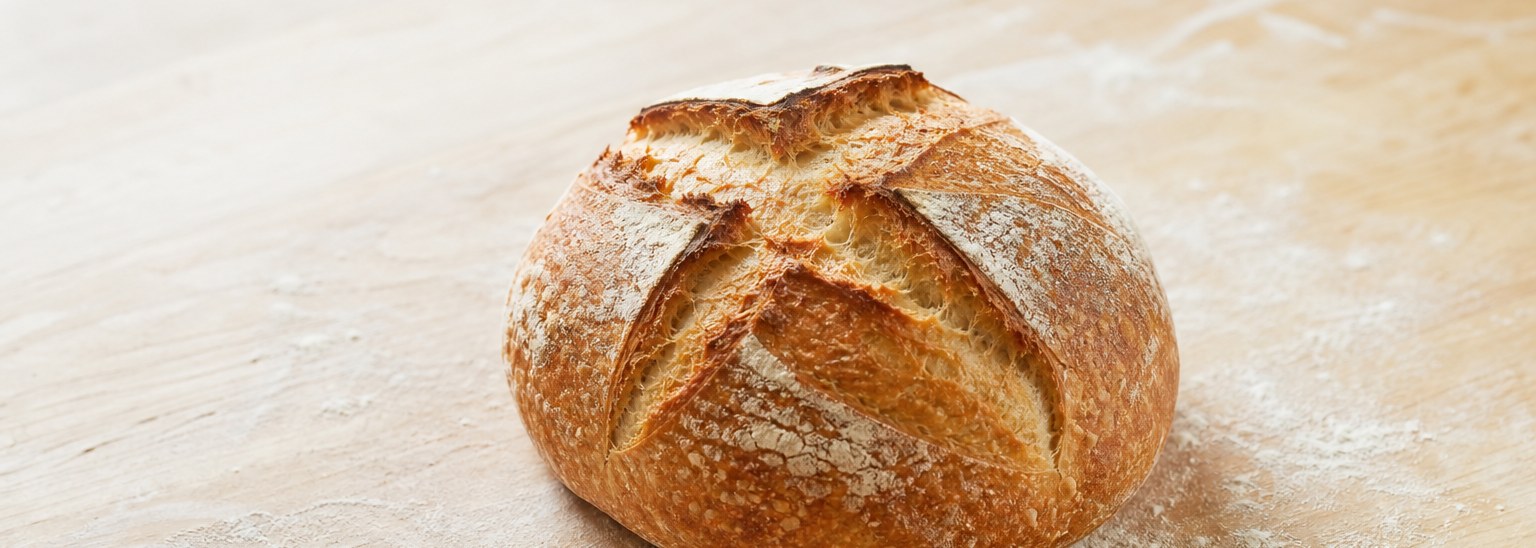
The moment that actually convinced me happened around a holiday bake. I mixed one batch of dough and split it in half — same hydration, same shaping technique, same scoring pattern — then baked one half at home in my Dutch oven and sent the other half to a friend’s place to go in her cloche. Once I lined up the photos afterward, there was no ignoring it: the height difference and the color of the crust told two completely different stories. That comparison alone sent me down a research spiral I couldn’t get out of.
I’ll admit my starting point was doubt, not enthusiasm. My Dutch oven set me back all of $40 at a secondhand shop, so dropping real money on a piece of equipment built for one job felt like an unnecessary luxury. But the deeper I read into how these vessels actually function, the clearer it became that a cloche’s shape isn’t just about looks. That domed, narrower form appears to genuinely change how steam behaves around the loaf during those first crucial minutes in the oven.
The Vessel That Finally Ended My Sideways-Spreading Loaves
My Dutch oven was doing its job on the steam-trapping front, but it did nothing to stop my dough from spreading outward instead of pushing up. Swapping to the cloche fixed that almost overnight — the taller sides and tighter footprint build a more concentrated pocket of steam, one that seems to actively push the loaf skyward rather than let it sprawl sideways.
Where It Earns Its Keep
- That tall, narrow shape really does force the dough to grow upward rather than out — I saw stronger ears and noticeably taller loaves within just my first three attempts.
- Heat and moisture seem to distribute more evenly than they ever did in my Dutch oven — no more dense, soggy-looking bottoms or one pale side sitting next to what looks like an overproofed patch.
- Washing up afterward is far less of a chore; the ceramic surface releases dough easily, unlike well-seasoned cast iron, and I’m no longer wrestling a ten-pound pot into and out of a scorching oven.
Where It Comes Up Short
- The price tag feels steep for what you’re getting — you’re looking at roughly triple what a solid Dutch oven costs — and buying in means committing to Emile Henry’s exact design, with no backup plan if it doesn’t suit your oven size or your routine.
- Ceramic doesn’t forgive carelessness. I clipped the rim against my oven rack during week two, and unlike cast iron, which just shrugs off a bump, this material doesn’t bounce back from a hit.
I second-guessed the price tag for a solid month before ordering, worried I was just chasing gear instead of fixing my technique. But Emile Henry Bread Cloche in Charcoal proved otherwise.
Frequently Asked Questions
Why does a bread cloche work better than a Dutch oven?
A cloche’s domed, narrower shape creates a more concentrated pocket of steam that pushes the loaf upward rather than letting it sprawl sideways. The taller sides and tighter footprint distribute heat and moisture more evenly than a Dutch oven, resulting in stronger ears, taller loaves, and no more dense or soggy bottoms.
How much does an Emile Henry bread cloche cost?
The Emile Henry Bread Cloche costs roughly triple what a solid Dutch oven costs. Sam’s Dutch oven set him back $40 at a secondhand shop, so the cloche represents a significantly larger investment in baking equipment.
Is ceramic bread cloche fragile compared to cast iron?
Yes. Ceramic doesn’t forgive carelessness the way cast iron does. Sam clipped the rim against his oven rack during week two, and unlike cast iron, which shrugs off bumps, ceramic doesn’t bounce back from a hit.
Did Sam see results from switching to a cloche immediately?
Yes. Sam saw stronger ears and noticeably taller loaves within his first three bake attempts with the cloche. The improvement was immediate enough to confirm the equipment change, not his technique, was the issue.
About This Article

Written by Sam Whitaker. Sam Whitaker has been baking sourdough for over a decade, including three years baking commercially, and now works out of a home kitchen in the Pacific Northwest. Sam's eleven-year-old starter, Harold, is the foundation for every recipe and troubleshooting guide on Sourdough Rising — real bread tested over and over until it works. More about this site.
Scope and limits. Sam is a home baker with no formal culinary training. Follow current food safety guidance for storage and handling, particularly with enriched or filled doughs.
Verify this against a primary source
Specifics change, and your situation may differ from the one described here. These are the authorities worth checking directly:
- USDA FoodData Central — flour and ingredient composition data
- FoodSafety.gov — safe handling and storage