Get your shaping wrong, and nothing else you did that day matters. You can nail fermentation, score a beautiful pattern across the top, and still watch the whole thing slump into a flat puddle the second it hits the oven — because for me, shaping was the one piece of this craft that simply refused to click. For an entire first year, every loaf I pulled out looked defeated before it even started baking. Flat. Spread out. Structureless. Shaping was always the culprit.
Across 11 years and a few thousand loaves — including a stretch where I was sending six to eight loaves out the door every single weekend to a regular crew of neighbors, which meant a rough shaping day wiped out an entire weekend’s worth of bread — I’ve landed on a method for shaping both rounds and ovals that I can actually count on. Consider this the guide I wish had existed before I started.
The Real Reason Shaping Isn’t Optional
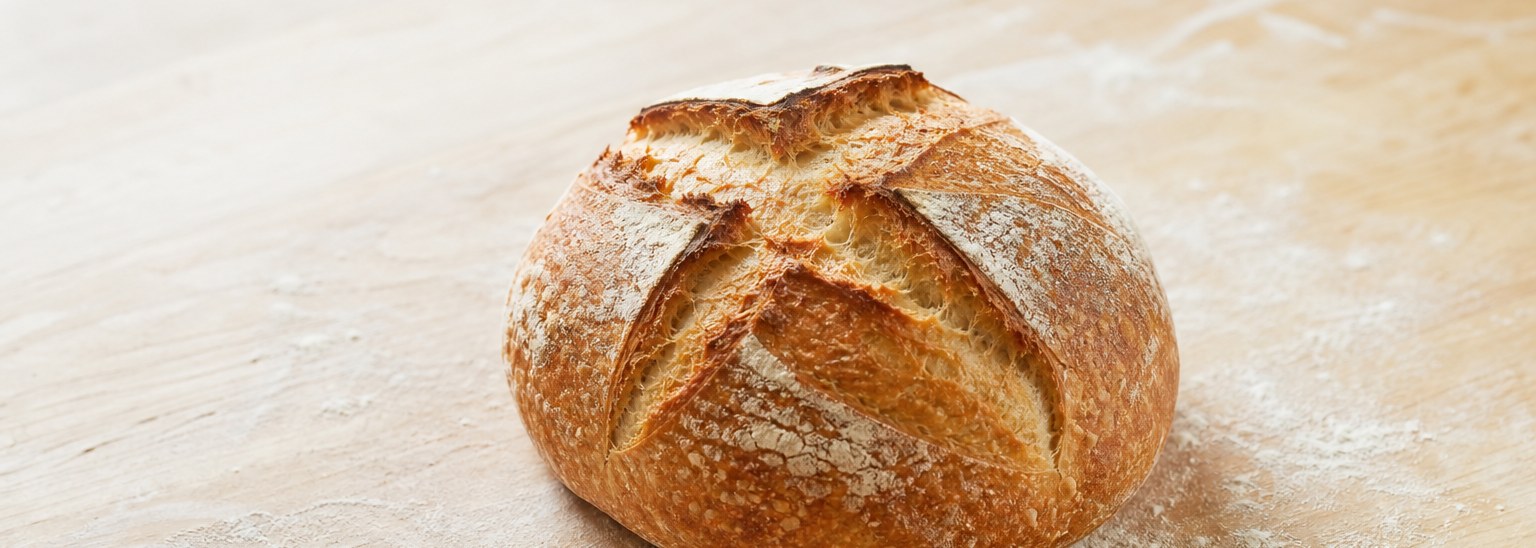
Shaping isn’t a cosmetic finishing move. Done right, it builds surface tension — a taut skin wrapped around the outside of the dough that keeps everything held together through the final proof and the opening minutes in the oven. Skip that tension and the dough spreads sideways instead of climbing upward when the heat hits it. What you end up with is a wide, flat disc rather than a proud, domed loaf.
Solid shaping also puts the gluten network you developed during bulk fermentation into working order. Think of it as the last construction phase — you’re lining everything up so that when gas expands in the oven, it has nowhere to go but up. Nearly every flat loaf I’ve ever pulled out traces back to one of two culprits: underfermented dough, or sloppy shaping. Nine times out of ten, it’s the shaping.
Pre-Shaping: The Step Nearly Every New Baker Ignores
Pre-shaping is a quick, gentle round done 15 to 25 minutes ahead of your actual final shape. I ignored this step for my whole first year, and once I finally added it in, it made the single biggest difference in my results almost overnight.
Here’s the logic behind it: fresh out of the bulk container, your dough is a loose, sticky heap. Try jumping straight into a tight final shape and the dough pushes back — it’s too slack, the gluten resists, and you either rip the surface or fail to build any real tension at all.
Pre-shaping nudges the gluten awake without shocking it. You form a loose round, let it sit, and the gluten eases up just enough that the final shape comes together smoothly. I’ve broken this exact step down in much more detail — timing, troubleshooting, all of it — in my dedicated pre-shaping guide, which is worth reading if this part still feels shaky.
And if you haven’t even settled on boule versus batard yet, my boule vs. batard comparison walks through how that decision ripples into fermentation, scoring, and crumb before you ever get to the shaping stage.
The Pre-Shape Method
- Dust your work surface with a light coat of flour, then tip the dough out onto it.
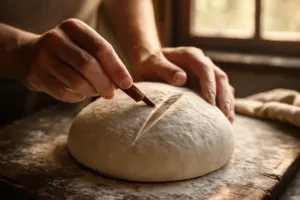
- With a bench scraper in one hand and your other hand doing the work, pull the dough toward you while tucking the far side underneath. Turn it 90 degrees and repeat that motion three or four times until it forms a rough ball.
- Don’t chase perfection here. You’re after a loose round with a bit of tension — not a tight, finished shape.
- Leave it uncovered to rest for 15 to 25 minutes. It should relax and spread a little, but not go completely flat. If it pancakes out, your dough is either overproofed or too hydrated for where your skills are right now.
Back during those big-batch weekends, I’d pre-shape 12 to 15 loaves in one go. The gap between pre-shape and final shape became my window for tidying the counter and getting bannetons ready. That waiting time isn’t wasted time — put it to use.
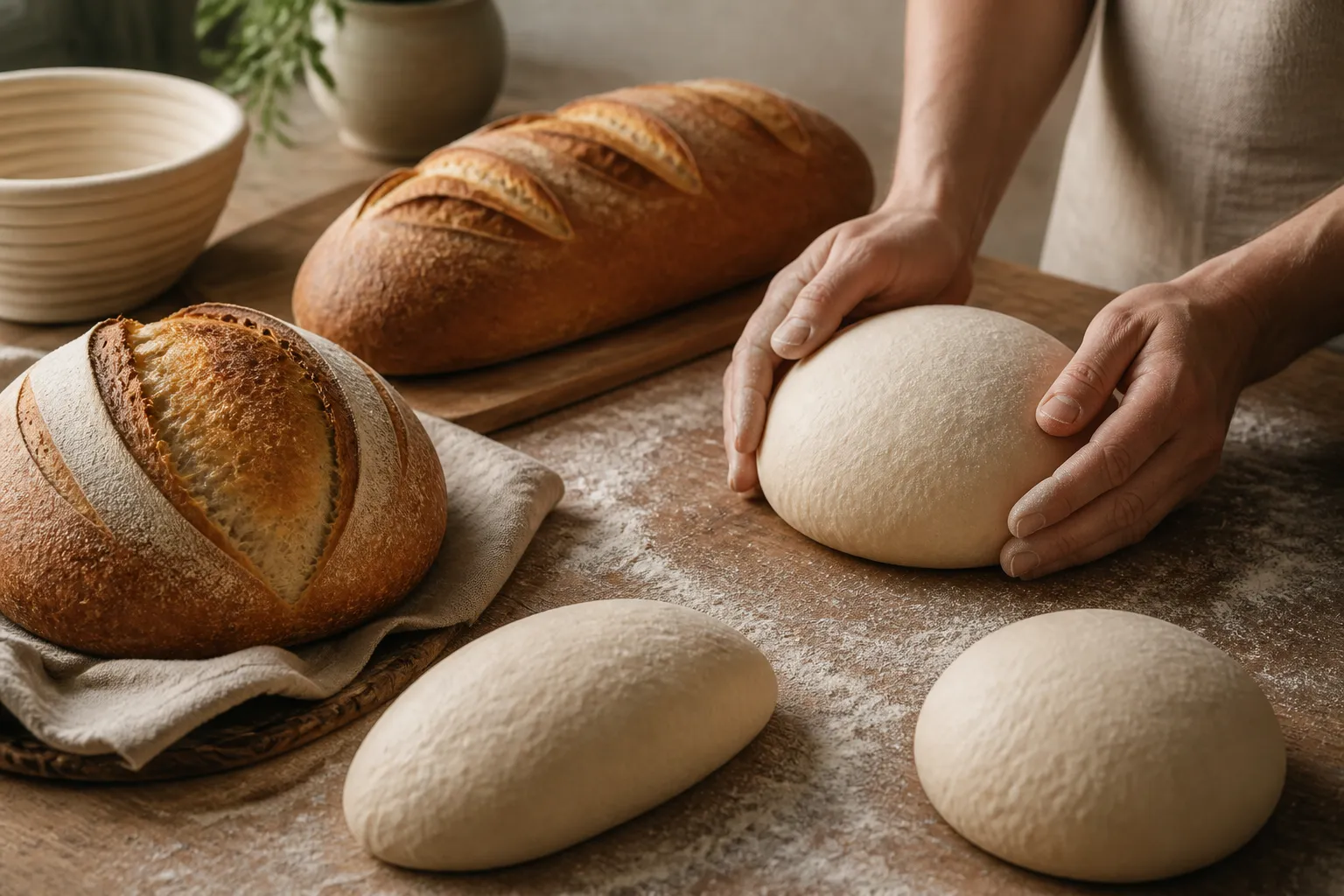
Shaping a Boule (The Round Loaf)
The boule is where every beginner should start. It’s more forgiving than a batard because the tension you’re building pulls evenly from every direction.
- Dust the top of your rested pre-shape with flour, then flip it so the floured side is facing down and the sticky side is up.
- Take the edge nearest you and fold it into the center, pressing lightly to seal it.
- Fold the left side to the center, then the right, then the far edge. What you’re left with looks like a sealed envelope.
- Flip the whole piece over so the seam sits face-down on a bare, unfloured section of your surface.
- Cup both hands around the dough and drag it toward you. The pull between dough and bare countertop is what builds tension across the top skin. Turn it slightly and drag again. Do this three or four times, until the surface looks smooth and drawn tight.
- You want to feel some resistance pushing back against your hands — that’s correct. If the skin splits open, you’ve overdone it. If it’s still slack and droopy, keep pulling.
Set the finished boule seam-side up into a floured banneton. The seam faces up now because the loaf gets flipped out onto a peel or parchment right before baking — which puts that seam on the bottom where it belongs.
Shaping a Batard (The Oval Loaf)
The batard is my go-to shape these days, but it took me far longer to master than the boule. The trick is spreading tension evenly along an elongated form without letting the ends taper too thin or the middle bulge out.
- Flour the top of your rested pre-shape, then flip it so the smooth side faces down.
- Gently stretch it into a rough rectangle — roughly 8 by 10 inches. Go easy on it; you don’t want to knock out the fermentation bubbles you worked to build.
- Bring the top third down toward the center and press the seam lightly with your fingertips.
- Bring the bottom third up over that first fold and press it down again.
- Roll the whole piece toward you, using the heel of your hand to close the seam as you go. You’ll end up with a log, seam facing down.
- Place both hands at the center of the log and roll outward toward each end to even things out. Push a little harder near the tips to shape the classic tapered batard look.
- Set it seam-side up into an oval banneton.
The mistake I see most often with batards is a seam that isn’t fully closed. Leave any gap and the loaf will split from underneath while it bakes. I run the heel of my hand along the whole seam after rolling, pressing firmly, until there’s not a trace of an opening left.
Checking Whether Your Tension Is Actually There
Once you’ve shaped either loaf, give it a light poke with a floured finger. The surface should push back like a fully inflated balloon. If your finger sinks in easily and the dough sags a bit, you haven’t built enough tension yet. Go back and cup-and-pull again for a boule, or tighten the roll further for a batard.
During my big-batch stretch, I picked up a fast visual test: a well-shaped loaf holds its dome for at least 5 minutes sitting on the counter before it starts to widen. If it flattens out right away, either the shaping was too loose or the dough has gone past its prime. If fermentation still looks okay, reshaping can sometimes rescue it — let it sit another 10 minutes and try the shape once more.
Shaping Mistakes I Made So You Can Skip Them
Overdoing the Flour
I used to dust my bench with a heavy hand out of fear the dough would stick. Problem is, all that flour kills the friction you need to build tension in the first place. Keep the flour light for pre-shaping and flipping — but the actual tensioning step, where you’re dragging the dough toward you, has to happen on bare, unfloured counter. The drag is what does the work.
Punching Out the Gas
Your gut reaction will be to press down hard. Resist it. Every time you flatten the dough with your palm, you’re wiping out the air structure you spent hours building during fermentation. Move with confident, gentle hands. Fold and roll — never press and squash.
Shaping Straight From the Fridge
Cold dough pulled straight from a chilled bulk container fights every move you make. The gluten seizes up and won’t cooperate. Always shape at room temperature — if you’re running a cold bulk, give the dough 15 to 20 minutes on the counter to warm up before you even start pre-shaping.
Rushing Past the Bench Rest
I can’t stress enough how much that rest between pre-shape and final shape matters. It’s always the step I want to cut when I’m short on time, and every time I do, the results suffer for it. The gluten needs that window to loosen up. Don’t rob it of the time.
The Tools I Reach For When Shaping
The right gear makes shaping considerably less of a fight, especially while you’re still building the skill.
A bench scraper is non-negotiable. I use a Ateco Stainless Steel Bench Scraper — simple, sturdy, and the right size for cupping and dragging. It’s what I’ve used for years and I see no reason to change.
On bannetons, I keep both round and oval versions on hand depending on what I’m shaping. For boules, I reach for the 10-Inch Round Banneton Proofing Basket with Linen Liner — that 10-inch size is a perfect match for a standard 900g to 1000g loaf. For batards, I use an Oval Banneton Proofing Basket for Sourdough, since getting the proportions right is essential for holding that elongated shape through proofing.
If you’d rather grab everything at once, the Sourdough Bread Baking Kit with Banneton Basket, Lame, and Bench Scraper Set is a dependable bundle that covers the essentials in one purchase.
There’s No Shortcut Except Reps
I’d love to hand you some trick that makes shaping click instantly. There isn’t one. It took roughly 30 loaves before my shaping started coming out consistent, and another 50 on top of that before I stopped thinking my way through it and my hands just knew what to do.
What sped things up more than anything was baking in bigger batches. Shaping 12 loaves back to back during one of those large baking weekends taught me more in a single afternoon than months of shaping one solitary loaf at a time ever did. If you have the ability, scale your recipe up and shape several loaves at once — the sheer repetition wires the muscle memory in fast.
This is a physical skill, plain and simple. Your hands have to learn what real tension feels like under them, and that only comes from repetition. Start with boules, work up to batards once you’ve got some confidence, and don’t let a few flat loaves along the way get you down. They still taste just fine.
| Shape | Starting Form | Folding Method | Tension Building | Banneton |
|---|---|---|---|---|
| Boule | Loose round | Fold edges to center like envelope | Cup hands and drag toward you 3-4 times | 10-inch round |
| Batard | Rough rectangle (8×10 in) | Fold top third down, bottom third over, roll toward you | Roll outward from center toward ends, press hard near tips | Oval |
| Pre-Shape | Loose sticky heap | Pull dough toward you, turn 90°, repeat 3-4 times | Gentle tension only | Bare counter, uncovered |
The Bench Scraper That Finally Gave Me Control Over My Dough
A flimsy bench scraper — or skipping one altogether — puts you at war with your dough right when it counts most: the moment you’re trying to build tension and lock in that tight skin. For two years I made do with whatever was rattling around in my kitchen drawer, and every loose, shapeless boule that came out of my oven proved it.
What earns its keep
- The stainless edge cuts and scrapes the dough cleanly instead of dragging on it, which counts for a lot when you’re trying to build tension without tearing the skin.
- The rigid, flat blade keeps its edge true and refuses to flex when you bear down during the final pre-shape, giving you real control instead of a mash job.
- It carries enough weight that you’re not muscling it through the dough — the heft does that for you — and it stays sharp long after cheaper versions would’ve dulled or dinged from hundreds of uses.
Where it falls short
- The metal handle turns slippery once wet dough gets on it — I keep a towel within reach now, especially in a humid fermentation setup.
- It’s sharper than most home bakers anticipate, which is really a plus, but you’ve got to handle it with respect or you’ll nick a knuckle mid-shape.
I nearly sent this one back after my first big batch-baking session because I thought the blade was too aggressive, but that “aggression” is exactly what lets you shape with precision instead of luck. Ateco Stainless Steel Bench Scraper
Frequently Asked Questions
Why does my sourdough loaf flatten instead of rising in the oven?
A flat loaf almost always traces back to shaping. Proper shaping builds surface tension — a taut skin that holds the dough together through proofing and baking. Without tension, the dough spreads sideways instead of climbing upward when heat hits it. Nine times out of ten, sloppy shaping is the culprit, not underfermentation.
What is pre-shaping and why should I do it?
Pre-shaping is a quick, gentle round done 15 to 25 minutes before your final shape. Fresh dough is too slack to shape properly, so pre-shaping nudges the gluten awake without shocking it. After a short rest, the gluten eases up just enough that your final shape comes together smoothly and builds real tension.
How do I know if my shaped loaf has enough tension?
Give your shaped loaf a light poke with a floured finger. The surface should push back like a fully inflated balloon. If your finger sinks in easily, you haven’t built enough tension. A well-shaped loaf holds its dome for at least 5 minutes on the counter before it starts to widen.
Should I shape my sourdough straight from the fridge?
No. Cold dough pulled straight from a chilled bulk container fights every move you make because the gluten seizes up. Always shape at room temperature. If you’re running a cold bulk, give the dough 15 to 20 minutes on the counter to warm up before you start pre-shaping.
About This Article

Written by Sam Whitaker. Sam Whitaker has been baking sourdough for over a decade, including three years baking commercially, and now works out of a home kitchen in the Pacific Northwest. Sam's eleven-year-old starter, Harold, is the foundation for every recipe and troubleshooting guide on Sourdough Rising — real bread tested over and over until it works. More about this site.
Scope and limits. Sam is a home baker with no formal culinary training. Follow current food safety guidance for storage and handling, particularly with enriched or filled doughs.
Verify this against a primary source
Specifics change, and your situation may differ from the one described here. These are the authorities worth checking directly:
- USDA FoodData Central — flour and ingredient composition data
- FoodSafety.gov — safe handling and storage