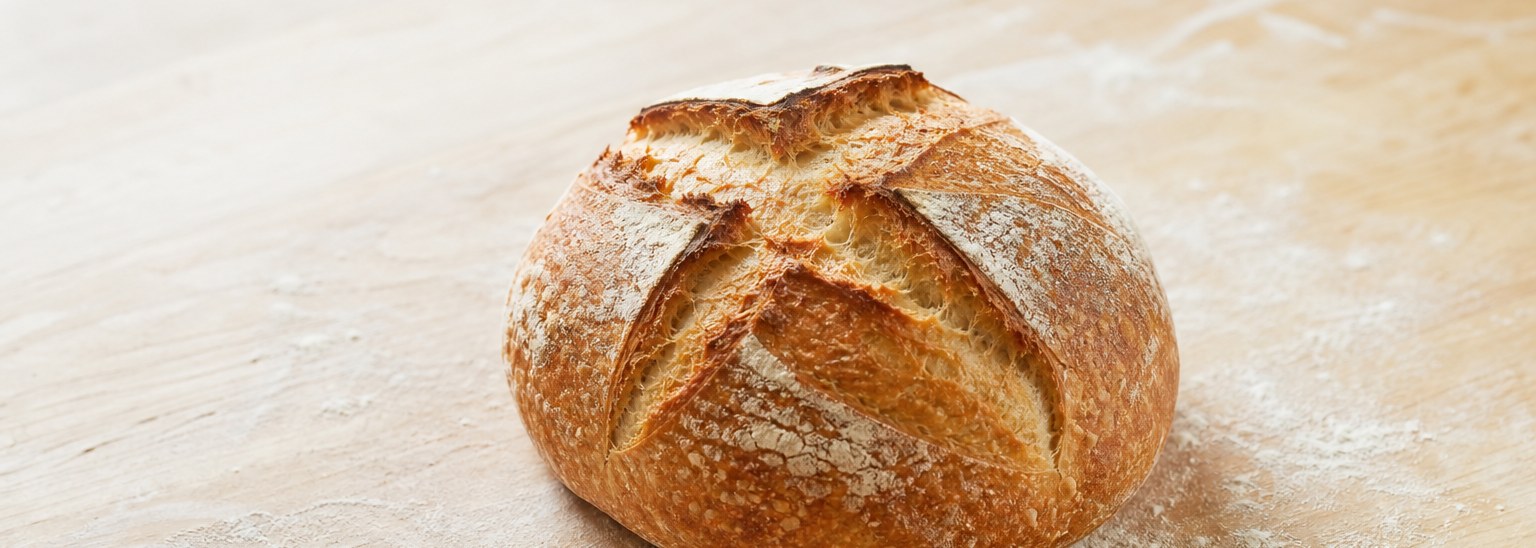
A brutal cold snap rolled through the week I’d confidently ordered what I assumed was some kind of “upgraded” bread flour online, and the dry, static-charged air in my kitchen turned my first four loaves — baked over two increasingly frustrating weekends — into something closer to dense crackers than actual bread. It wasn’t until my neighbor, clearly trying to be kind about it, asked why my sourdough “tasted almost like a cracker, but wetter,” that I realized the real culprit wasn’t just the weather. That clumsy, completely unplanned collision with high extraction flour sourdough baking ended up rewiring how I approach the whole process. And weirdly? It changed everything.
| Flour Type | Extraction Rate | Bran & Germ Content | Fermentation Speed |
|---|---|---|---|
| Standard White Bread Flour | 72–75% | Largely removed | Baseline |
| High Extraction Flour | 80–90% | More than white, less than whole wheat | Noticeably faster |
| Whole Wheat Flour | 100% | Nothing removed | Not specified |
Breaking Down High Extraction Flour — And Why the Name Sounds So Intimidating
Let me rewind a bit. Before the cracker-bread disaster, I’d already logged roughly two years baking sourdough with plain bread flour, occasionally mixing in whole wheat. Things were fine — my loaves were solid, nothing dramatic. Then, one late night, I fell into a sourdough forum spiral (never a good sign) and kept stumbling across mentions of high extraction flour, talked about like it was some closely guarded secret professional bakers refused to share.
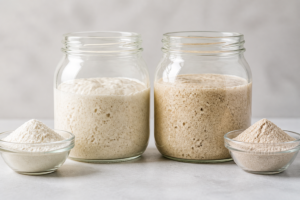
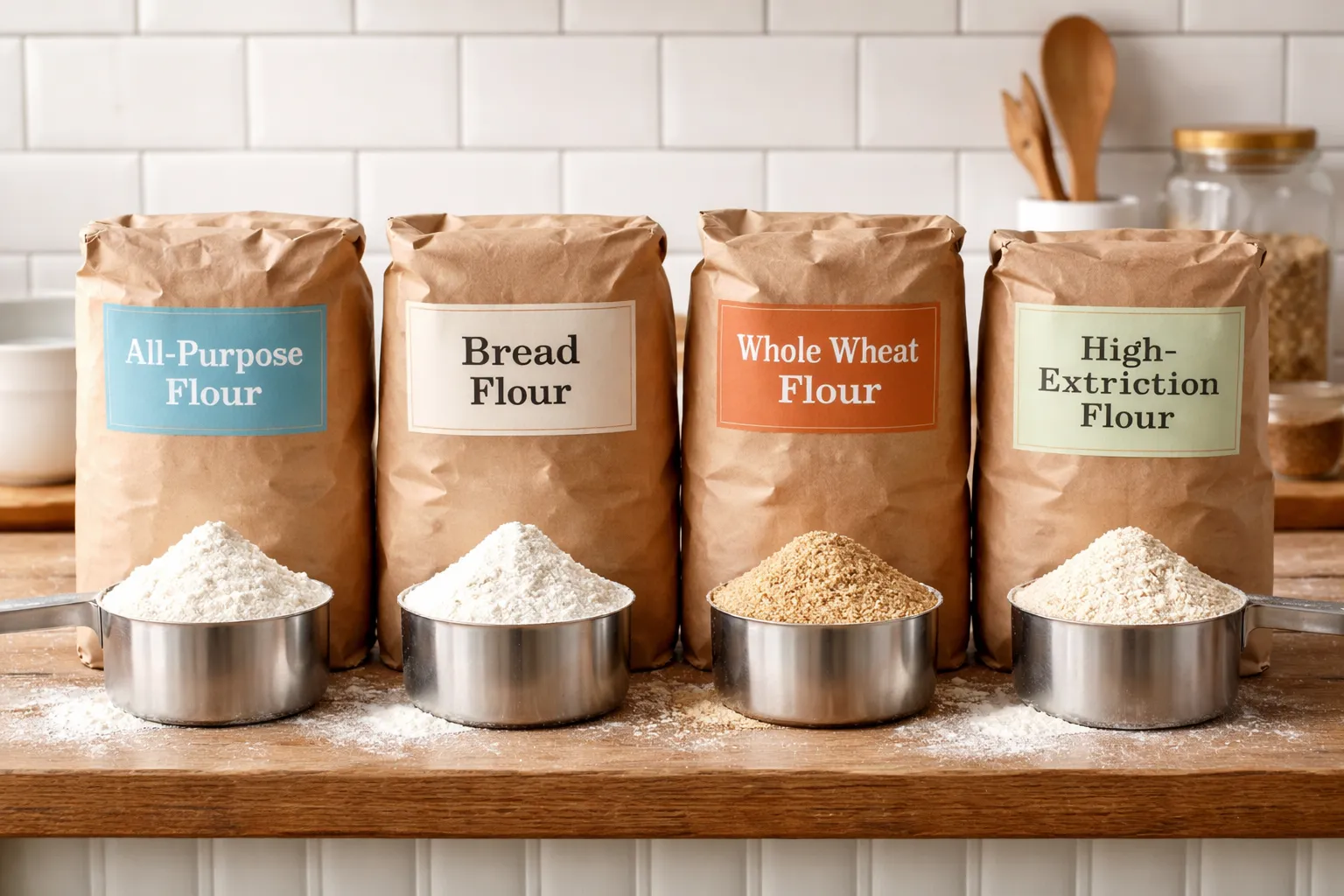
So what does it actually mean? Extraction rate simply describes how much of the original wheat berry survives the milling process and ends up in your bag of flour. Standard white bread flour typically sits around 72 to 75 percent extraction, meaning the bran and germ have largely been removed. Whole wheat flour, by contrast, is 100 percent extraction — nothing gets left behind. High extraction flour lands somewhere in between, generally 80 to 90 percent extraction, holding onto more bran and germ than white flour does, but noticeably less than whole wheat.
What you end up with is a flour that reads as slightly creamy or tan instead of stark white. It carries more minerals, more natural flavor, and a slightly different, more complex protein makeup. Bakers who reach for it consistently describe a deeper, nuttier flavor and a more open crumb than whole wheat typically allows — while still offering far more personality than plain white flour. Basically, it’s the middle child who quietly turned out to be the most interesting one at the table.
Why So Many Dedicated Sourdough Bakers Won’t Stop Talking About High Extraction Flour
Back to my cracker-bread saga. After absorbing my neighbor’s carefully worded feedback, I finally sat down and did some actual research instead of scrolling forum threads at midnight. Here’s what I uncovered about why so many serious sourdough bakers are genuinely enthusiastic about high extraction flour.
The Flavor Difference Is Real, Not Imagined
Those extra bits of bran and germ carry oils, sugars, and minerals that add serious depth of flavor. Once your wild yeast and bacteria get to work on those compounds over a long fermentation, you land on a complexity white flour simply can’t replicate. There’s a reason bakeries like Tartine built their reputation around high extraction flour — that wheaty, faintly tangy, deeply satisfying flavor doesn’t show up by chance.
Fermentation Doesn’t Play by the Same Rules
This is where things clicked for me. High extraction flour ferments noticeably faster than white flour, since those extra minerals and enzymes give your starter far more fuel to work with. That explains why my early loaves came out so dense and off — I was babying the dough exactly like a standard white flour dough, never accounting for the sped-up fermentation. It was over-proofing before shaping even entered the picture. Mystery solved, cracker-bread fully explained.
Here’s the practical fix: when you introduce high extraction flour into your mix, trim your bulk fermentation time by roughly 15 to 25 percent compared to a fully white-flour dough, especially if your kitchen runs warm. Read the dough itself, not the timer.
Your Hydration Level Needs a Small Correction
Because the bran particles soak up liquid, high extraction flour pulls in more water than white flour does. Plan on nudging your hydration up — start with roughly 5 percent more water than your standard recipe calls for, then fine-tune from there. The dough ends up feeling stickier and a bit livelier, which sounds worrying at first but becomes genuinely enjoyable once it clicks.
The Flour That Finally Got My High-Extraction Loaves to Actually Hold Their Shape
Working with high extraction flour means you need real protein strength — not something you can fake with whatever generic bread flour happens to be sitting in the pantry. I needed a flour capable of supporting all that bran and germ without collapsing into a dense brick, and that’s exactly why King Arthur’s version became a permanent fixture in my baking.
Where it delivers
- With 13.3% protein, you get real gluten development even with high-extraction grain in the mix — my dough stopped feeling mushy somewhere around the four-hour mark of bulk fermentation.
- It holds up consistently across a range of hydrations instead of turning to soup; I’ve taken loaves as high as 78% hydration without the dough spreading out like pancake batter on the bench.
- The organic version mills a touch coarser than all-purpose, which actually works in your favor — you can feel the bran particles and adjust technique on the fly instead of guessing blind.
Where it falls short
- It runs noticeably pricier per pound than commodity bread flour, and that cost stacks up fast if you’re baking twice a week the way I do.
- Because of the organic certification, batch-to-batch variation is genuinely a thing — I’ve picked up on subtle absorption differences between bags, so your water amount may need small tweaks each time.
I almost abandoned high-extraction baking altogether after those first four disasters, convinced the technique was beyond my skill level—until I actually tested this flour and realized the problem was never me, it was the flour. King Arthur 100% Organic Bread Flour turned those confusing failures into actual loaves.
Frequently Asked Questions
What extraction rate is high-extraction flour?
High extraction flour generally ranges from 80 to 90 percent extraction. Standard white bread flour sits around 72 to 75 percent extraction, while whole wheat is 100 percent extraction. High extraction flour retains more bran and germ than white flour but noticeably less than whole wheat.
How do I adjust bulk fermentation for high-extraction flour?
High extraction flour ferments noticeably faster than white flour due to extra minerals and enzymes. Trim your bulk fermentation time by roughly 15 to 25 percent compared to a fully white-flour dough, especially if your kitchen runs warm. Read the dough itself, not the timer.
Should I change hydration when using high-extraction flour?
Yes. Bran particles soak up liquid, so high extraction flour pulls in more water than white flour. Start by nudging your hydration up roughly 5 percent more water than your standard recipe calls for, then fine-tune from there based on how your dough feels.
Why did my high-extraction flour sourdough taste dense?
High extraction flour ferments much faster than white flour because the bran and germ provide extra fuel for your starter. Using standard white-flour timings causes over-proofing before shaping, resulting in dense, cracker-like bread. Reducing bulk fermentation by 15 to 25 percent solves this.
About This Article

Written by Sam Whitaker. Sam Whitaker has been baking sourdough for over a decade, including three years baking commercially, and now works out of a home kitchen in the Pacific Northwest. Sam's eleven-year-old starter, Harold, is the foundation for every recipe and troubleshooting guide on Sourdough Rising — real bread tested over and over until it works. More about this site.
Scope and limits. Sam is a home baker with no formal culinary training. Follow current food safety guidance for storage and handling, particularly with enriched or filled doughs.
Verify this against a primary source
Specifics change, and your situation may differ from the one described here. These are the authorities worth checking directly:
- USDA FoodData Central — flour and ingredient composition data
- FoodSafety.gov — safe handling and storage